
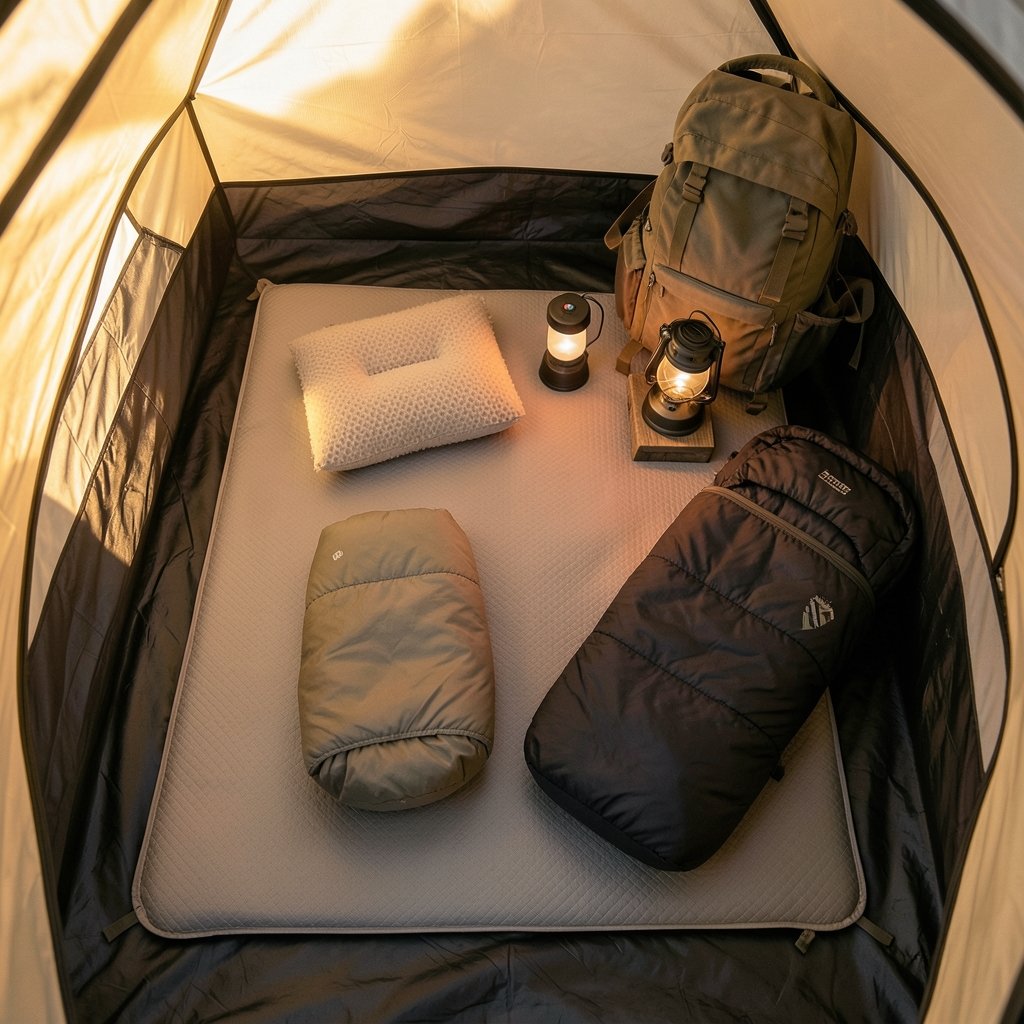
You wake at 5 a.m. with a stiff neck, a deflated pillow, and a nagging question: why is camping sleep so bad? A lot of it comes down to one small, underrated piece of gear. The best camping pillows add comfort, protect your neck, keep your head off cold ground, and make the difference between a restless night and real rest. Yet most people grab whatever is cheapest at checkout and regret it by midnight.
This guide breaks down pillow types, weights, materials, and the mistakes that ruin sleep in a tent. It also explains who should buy what, based on how you sleep rather than marketing claims.
Why a Camping Pillow Matters More Than You Think
Sleeping on the ground changes your posture. A thin foam pad and a bundled jacket rarely hold your head at the right height, and the result is often a kink in the neck or a shoulder pressed into hard earth. A dedicated pillow fills that gap and keeps your spine closer to neutral.
There is also a warmth factor. Cold ground pulls heat from your head, and a pillow adds a layer of insulation between you and the tent floor. On chilly nights, that small buffer matters.
Finally, comfort affects mood and energy. Poor sleep on night one makes the whole trip harder, from the hike to the camp cooking. A decent pillow is one of the cheapest upgrades in a sleep system. If you have ever wondered why your internet at home feels sluggish on a rainy evening, the same principle applies to camping gear: small, overlooked components cause most of the frustration. That idea shows up in explainers like this one on latency ping explained and why your internet feels slow, where tiny technical details quietly decide the whole experience.
The Main Types of Camping Pillows

Most camping pillows fall into three families. Each trades weight, pack size, and stability differently.
Inflatable Pillows
These are the lightest option, often weighing under 100 grams and packing to the size of a lime. They inflate in a few breaths and adjust firmness by air pressure. The downside is real: inflatables can feel bouncy, slippery, and noisy when you shift. A slow leak can leave you flat by 3 a.m. They suit ultralight backpackers who count every gram and accept a bit of fuss.
Foam and Compressible Pillows
Foam pillows use shredded memory foam, solid foam, or synthetic fill. They feel closer to a home pillow and stay put through the night. The cost is bulk and weight. A foam pillow might weigh 300 to 500 grams and take up real space in a pack. Car campers and base-campers usually prefer them because they do not carry gear far. (Wash pillows without ruining fill) (Pillow)
Hybrid and Self-Inflating Pillows
Hybrids combine a foam core with an air chamber. They offer more stability than a pure inflatable and pack smaller than solid foam. Self-inflating models open a valve and let foam expand to pull in air. They are a good middle ground for people who want support without a bulky load.
| Type | Typical Weight | Pack Size | Stability | Best For |
|---|---|---|---|---|
| Inflatable | 50–120 g | Very small | Low | Ultralight backpacking |
| Foam/compressible | 250–500 g | Medium to large | High | Car camping, base camps |
| Hybrid/self-inflating | 150–350 g | Small to medium | Medium | All-round backpacking |
| Stuff-sack (clothing) | 0 g extra | None | Varies | Emergency backup |
Match the Pillow to How You Sleep
Pillow height is a fit issue, not a spec sheet number. Side sleepers need more loft to fill the gap between the neck and the shoulder. Back sleepers need less height and more support under the curve of the neck. Stomach sleepers need the least height of all, sometimes almost none.
General sleep-health guidance ties pillow height to sleep position, and the same logic applies in a tent. A short overview of pillow types and how they suit different sleep positions is a useful starting point before you buy.
In practice, this means:
- Side sleepers should look for thicker inflatable or foam pillows, or stack a pillow on a folded jacket.
- Back sleepers do well with a medium hybrid that supports the neck without pushing the chin forward.
- Stomach sleepers should choose the thinnest option or skip the pillow entirely and use a small stuff sack.
A pillow that is too tall is worse than no pillow at all. It forces the neck into an unnatural angle and can cause morning headaches.
Weight and Packability: The Real Numbers
Weight ranges for camping pillows are wide, roughly 50 grams for the lightest inflatables up to 500 grams or more for plush foam models. Before buying, check the listed weight and packed dimensions rather than trusting a category label.
A few practical rules help:
- Weigh your pillow against your total pack. A 400-gram pillow is a big share of a 10-kilogram load.
- Test the packed size against your sleeping bag compartment.
- Consider a stuff sack and a spare shirt as a zero-extra-weight backup.
Backpackers on long trips often carry an inflatable and accept the trade-off. Weekend campers who drive to the site can bring the bulky foam pillow and sleep better for it.
Materials, Fabrics, and Durability
The fabric on a camping pillow affects comfort, noise, and lifespan.
- Polyester and nylon shells are common, light, and quick to dry. Some are noisy and slick.
- Brushed fabrics feel softer against the skin and reduce slipping.
- TPU-coated inflatables resist punctures but can delaminate over time.
- Memory foam offers pressure relief but absorbs moisture and needs airing out.
Check seams and valves on inflatables. A valve that does not seal is the most common failure point. For foam, look for a removable, washable cover. Hygiene matters on multi-day trips, and a cover you can launder keeps the pillow from smelling like a gym bag.
Pillowcase compatibility is worth checking too. Many camping pillows are sized to fit standard or travel pillowcases, but dimensions vary by brand. A pillowcase adds comfort and keeps the shell clean.
Common Mistakes That Ruin Camping Sleep
Plenty of campers buy a good pillow and still sleep badly. These mistakes show up again and again.
- Overinflating an air pillow. A rock-hard pillow pushes the head up and strains the neck. Let out a little air until it gives slightly under your hand.
- Ignoring the sleeping pad. A pillow cannot fix a bad pad. If your hips sink and your spine twists, no pillow will save the night.
- Skipping a test at home. Inflate the pillow and lie on it for twenty minutes before the trip. A return is easier from your living room than from a trailhead.
- Forgetting the backup. A stuff sack filled with a fleece makes a decent emergency pillow. Pack one even if you bring a fancy inflatable.
- Leaving gear out overnight. Damp ground and morning dew ruin foam. Store the pillow inside the tent and away from condensation.
The same “small fixes, big results” mindset appears in troubleshooting guides for gaming lag. Practical write-ups like this one on lower ping gaming fixes that actually work show how adjusting one small setting can transform an experience. Camping pillows work the same way: one tweak to firmness or height changes the whole night.
Field Care and Repair
A camping pillow should last several seasons with basic care.
- Rinse inflatables with fresh water after trips and dry them fully before storage. Trapped moisture breeds mold inside the shell.
- Store foam pillows uncompressed. Long-term compression breaks down the foam and flattens the loft.
- Patch punctures with the repair kit that comes with most inflatables. A tiny dab of seam sealant handles most leaks.
- Wash removable covers according to the label, and air-dry rather than tumble-dry.
If a pillow develops a persistent leak at a seam, it is usually time to replace it. Repair kits work on pinholes, not on failing welds.
Budget vs. Premium: What You Actually Pay For
Price does not always track quality, but a few features justify spending more.
| Feature | Budget Pillow | Premium Pillow |
|---|---|---|
| Weight | Often heavier or bulkier | Lighter, more packable |
| Valve quality | Basic, can leak | Better seals, one-way valves |
| Fabric feel | Slick, noisy | Brushed, quiet |
| Warranty | Short or none | Multi-year coverage |
| Adjustability | Fixed or simple | Fine-tuned firmness |
For occasional campers, a mid-range inflatable or hybrid is plenty. For frequent backpackers, the lighter premium models pay off in comfort and durability over years of use.
Safety and Gear Checks
Camping gear is generally low-risk, but a few checks are worth doing. Check the U.S. Consumer Product Safety Commission’s product recall database for any recall notices on camping gear before a big trip. It takes a minute and catches problems early.
Follow Leave No Trace principles by packing out all gear and food, and never leave a pillow or food bag unattended where animals can reach it. A pillow stuffed with food smells is a bad idea in bear country. (Food Safety Basics)
Conclusion
The best camping pillow is not the lightest or the most expensive. It is the one that matches your sleep position, fits your pack, and survives a full night without deflating or sliding away. Backpackers should lean toward a light inflatable or hybrid and accept some fussiness. Car campers should choose foam for stability and comfort. Everyone should test the pillow at home, adjust firmness carefully, and pack a stuff-sack backup.
Sleep is the foundation of a good trip. Get the pillow right, and the rest of the camp routine gets easier.
FAQ
What is the best camping pillow for side sleepers?
Side sleepers need more loft to fill the gap between the neck and shoulder. A thicker inflatable or a hybrid with a foam core usually works best. Look for a pillow that holds its height under pressure and does not collapse when you roll onto your side.
Are inflatable camping pillows worth it?
They are worth it for backpackers who count every gram. Inflatables pack tiny and weigh very little. The trade-off is less stability and the risk of leaks. If you sleep on your back or stomach and want minimal bulk, they are a solid choice.
How much should a camping pillow weigh?
It depends on how you camp. Ultralight backpackers often carry pillows under 100 grams. Car campers can comfortably bring 300 to 500 grams for better comfort. Weigh the pillow against your total pack load before deciding.
Can I just use a stuff sack as a pillow?
Yes, and many experienced campers do. Fill a stuff sack with a fleece or spare clothing and adjust the firmness by adding or removing layers. It weighs almost nothing extra and works well as a backup, though it shifts more than a dedicated pillow.
How do I stop my camping pillow from sliding?
Slippery shells are a common complaint. Try a pillowcase with a brushed fabric, or place the pillow inside a shirt or fleece. Some campers use a small strap or tuck the pillow under the sleeping bag hood to keep it in place.
How often should I replace a camping pillow?
Replace an inflatable when it develops leaks at the seams or the valve stops sealing. Foam pillows last longer but should be replaced when the fill flattens and no longer supports the neck. Proper storage and cleaning extend the life of both types.



