

What makes one SUV nameplate last more than three decades while rivals come and go? For the Jeep Grand Cherokee, the answer is a mix of timing, engineering, and a stubborn willingness to keep reinventing itself. Since it arrived for the 1993 model year, this vehicle has moved from rugged upstart to a genuine benchmark in the premium mid-size SUV class. It has carried families, towed trailers, and even, in one wild chapter, outrun sports cars. (Sport utility vehicle)
This article walks through the Grand Cherokee’s generation history, its engine options, the safety and ownership questions buyers actually ask, and the practical checks that separate a good used example from an expensive mistake. Whether you are shopping, comparing, or just curious about the badge, the details below should help you see the whole picture.
Where the Grand Cherokee Came From
The Grand Cherokee launched for model year 1993 and was unveiled in January 1992 at the North American International Auto Show in Detroit. It was developed under the internal codename “Grand Wagoneer,” a detail that hints at its mission: a more upscale, more comfortable Jeep than the boxy Cherokee it sat above.
That positioning worked. The model is widely credited with helping popularize the premium mid-size SUV segment, a category that barely existed in the early 1990s and is now crowded with contenders from nearly every major brand. The formula was simple enough: real off-road hardware underneath, a comfortable cabin on top, and enough space for a family.
One caution for shoppers: model-year boundaries differ by market. A vehicle sold as a 2022 in one country may correspond to a different production window elsewhere. Always confirm the exact model year from the VIN rather than trusting a listing.
The Five Generations at a Glance
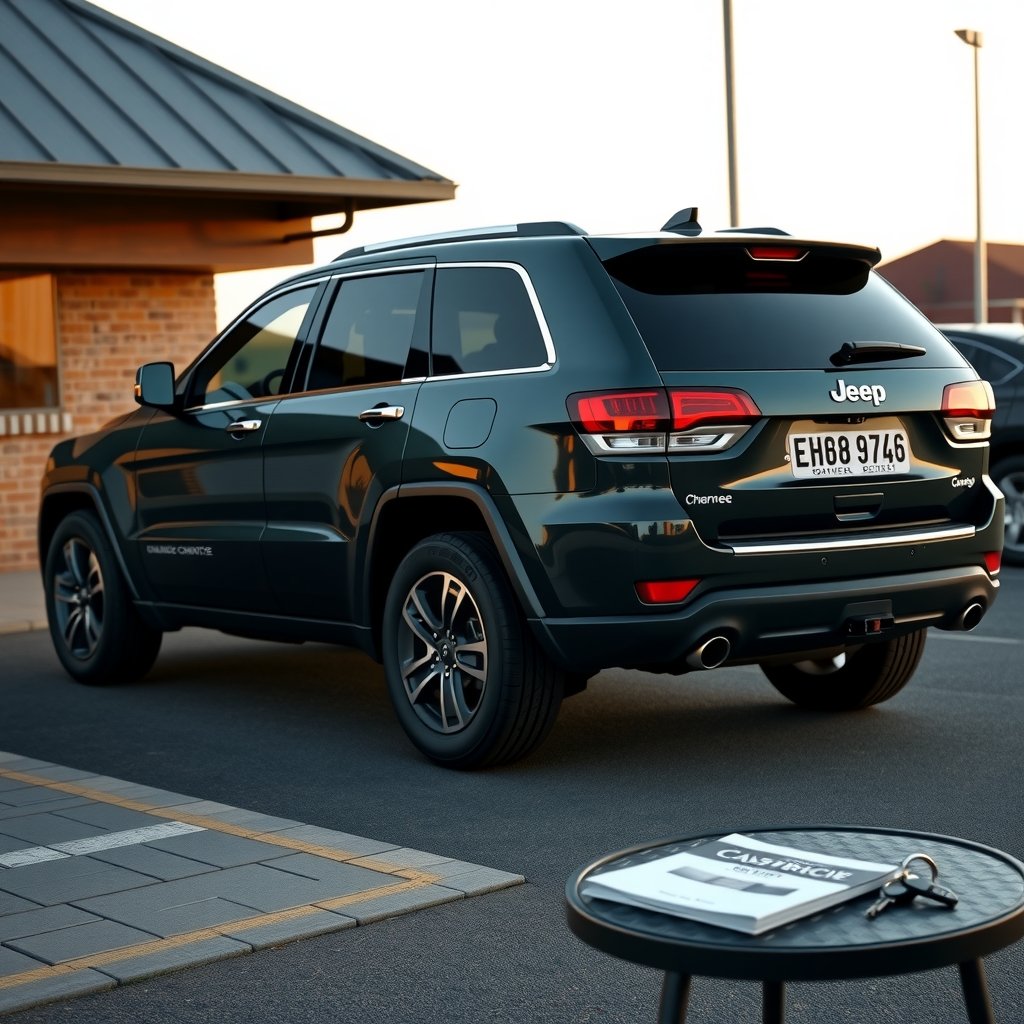
Jeep has run five distinct generations of the Grand Cherokee. Each one changed the recipe in some way, and knowing the codes helps when you are reading listings or forum threads.
| Generation | Code | Model Years | Defining Trait |
|---|---|---|---|
| First | ZJ | 1993–1998 | Launch generation, unibody construction |
| Second | WJ | 1999–2004 | Refined interior, stronger powertrains |
| Third | WK | 2005–2010 | Sharper on-road dynamics |
| Fourth | WK2 | 2011–2021 | Mercedes-derived architecture, first modern U.S. diesel |
| Fifth | WL | 2022–present | New platform, three-row L, 4xe plug-in hybrid |
The WK2 generation deserves special attention because it is the sweet spot for many used buyers. It was developed during the DaimlerChrysler era and shared a Mercedes-Benz-derived architecture, which brought a more sophisticated suspension setup and a noticeably better ride than earlier models. It was also the first Grand Cherokee in decades to offer a diesel engine in the U.S. market, a configuration that still has a loyal following for towing.
The current WL generation arrived with a new architecture and a new body style. The three-row Grand Cherokee L came first, followed by the traditional two-row model, and a 4xe plug-in hybrid variant joined the lineup afterward. Exact on-sale dates and 4xe availability vary by market, so verify locally.
Engines, Trims, and the Trackhawk Chapter
Engine choice matters more on the Grand Cherokee than on most SUVs, because the spread between the base V6 and the top performance model is enormous.
Across the generations, buyers have seen V6 and V8 gasoline engines, a diesel, and now a plug-in hybrid. The most famous outlier is the Trackhawk, sold from 2018 to 2021. It packed a 6.2-liter Hemi V8 with a blower, rated at 707 horsepower and 645 lb-ft of torque, and Jeep marketed it as the highest-output SUV of its time. Final model year and exact output figures should be confirmed against manufacturer specifications, because published numbers occasionally change between markets.
For most shoppers, though, the practical question is simpler. A V6 handles daily driving and light towing with lower running costs. A V8 suits heavy towing and rewards drivers who do not mind fuel stops. The diesel appeals to long-distance towers. The 4xe plug-in hybrid makes sense for people with short commutes who can charge at home.
Trim levels have proliferated over the years, from workhorse Laredo models to luxury-leaning Overland and Summit trims. Higher trims generally mean more features and more complicated electronics, which matters when the vehicle is out of warranty.
Safety, Recalls, and the Paperwork That Matters
The Grand Cherokee has been subject to multiple safety recalls over its history, including fuel-pump and electrical issues on various generations. That is not unusual for a model built in these volumes across three decades, but it does mean buyers should do their homework.
Before buying any used Grand Cherokee, look up the VIN in the federal recall database to see whether open recalls remain unrepaired. Recall work is generally performed at no cost by a franchised dealer, so an open recall is not automatically a dealbreaker, but it is leverage in negotiation.
Crash-test ratings also vary significantly by generation and model year. Independent ratings from the Insurance Institute for Highway Safety are organized by model year, so check the specific year you are considering rather than assuming results carry over. A body style change can reset everything. (NHTSA 5-Star Safety Ratings)
Fuel economy is another area where year and powertrain matter enormously. Official U.S. figures are published by the EPA by model year and configuration, and comparing them side by side is the fastest way to understand the real cost difference between, say, a V8 WK2 and a 4xe.
What Actually Works in Practice
Talk to owners and mechanics long enough and patterns emerge. Here is what tends to hold true, without any invented anecdotes.
First, service history beats mileage. A well-documented 120,000-mile example with regular fluid changes is often a safer bet than a neglected 70,000-mile one. Ask for records, not assurances.
Second, check the electronics thoroughly on later generations. Screens, cameras, parking sensors, and air suspension systems are expensive to repair and easy to overlook during a short test drive. Test every button.
Third, drive it cold. Arrive before the seller has warmed the engine and listen for unusual noises at startup. Transmission behavior on a cold first drive tells you more than a warm loop around the block.
Fourth, inspect the underside for rust, especially on older ZJ, WJ, and WK models in regions that use road salt. Frame and subframe corrosion is the quiet killer of otherwise solid vehicles.
Fifth, be honest about your towing needs. Buyers routinely overestimate what they will tow and underestimate what that costs at the pump. Match the powertrain to the actual job.
A common mistake is buying the highest trim for the badge and then discovering that air suspension repairs and complex electronics dominate the ownership experience. Another is assuming all four-wheel-drive systems are equal. They are not, and the differences affect both capability and maintenance.
For readers comparing the Grand Cherokee against other premium SUVs, model-specific resources such as the Jeep Grand Cherokee overview at OCCCY can help organize the comparison by generation and trim.
New Versus Used: A Practical Comparison
The decision between a new WL and a used WK2 comes down to priorities. Here is how they stack up.
| Factor | New WL (2022+) | Used WK2 (2011–2021) |
|---|---|---|
| Warranty | Full factory coverage | Expired or limited |
| Technology | Latest screens and driver aids | Dated but functional |
| Price | Highest | Depreciation already absorbed |
| Parts availability | Dealer-dependent | Wide aftermarket support |
| Risk | Low | Depends heavily on history |
The WK2’s long production run is an advantage for used buyers. Parts are plentiful, independent shops know the platform, and community knowledge is deep. The trade-off is that you inherit whatever maintenance the previous owner skipped.
The WL brings newer safety tech and the 4xe option, but it also means dealer-only service for many repairs and a higher entry price. Neither path is wrong. They simply suit different budgets and tolerances for risk.
Ownership Costs People Underestimate
Insurance, fuel, tires, and maintenance all scale with size and power. A V8 or Trackhawk will cost more to insure and feed than a V6, sometimes dramatically. Large wheels and performance tires wear faster and cost more to replace.
Depreciation is the biggest single cost for new buyers, and it hits hardest in the first few years. Buying a three- or four-year-old example lets someone else absorb that curve, provided the vehicle checks out.
Budget for a pre-purchase inspection by an independent mechanic who knows the platform. It is the cheapest money you will spend in the entire process, and it frequently pays for itself by uncovering issues the seller did not mention.
Conclusion
The Jeep Grand Cherokee has earned its place through consistency and reinvention. From the 1993 ZJ that helped create the premium mid-size SUV segment, through the Mercedes-derived WK2 and the 707-horsepower Trackhawk, to today’s WL with its three-row L and 4xe plug-in hybrid, the nameplate keeps adapting without abandoning its core identity.
For buyers, the practical takeaways are clear. Match the powertrain to real needs, verify the model year and recall status, demand service records, and pay for an independent inspection. Do those things and the Grand Cherokee rewards you with genuine capability and a deep support network. Skip them and you may inherit someone else’s deferred maintenance. The vehicle is forgiving, but it is not magic.
FAQ
What years did the Jeep Grand Cherokee use the WK2 platform?
The WK2 generation ran from model year 2011 through 2021. It was developed during the DaimlerChrysler era and used a Mercedes-Benz-derived architecture, which improved ride quality and handling compared with earlier generations. It was also the first Grand Cherokee in decades to offer a diesel engine in the U.S. market.
How much horsepower does the Trackhawk have?
The Trackhawk, sold from 2018 to 2021, used a 6.2-liter Hemi V8 with a blower, rated at 707 horsepower and 645 lb-ft of torque. Jeep marketed it as the highest-output SUV of its time. Buyers should confirm final model year and output figures against manufacturer specifications, because published numbers can vary by market.
Is the Grand Cherokee L the same as the regular Grand Cherokee?
No. The Grand Cherokee L is the three-row version that arrived with the WL generation, while the traditional two-row model followed. They share a generation and much of their engineering, but the L offers extra seating and length. The 4xe plug-in hybrid variant joined the lineup afterward.
How do I check if a used Grand Cherokee has open recalls?
Look up the vehicle identification number in the federal recall database maintained by the National Highway Traffic Safety Administration. Open recalls are generally repaired at no cost by a franchised dealer, so an outstanding recall is a negotiating point rather than an automatic reason to walk away.
Which Grand Cherokee generation is best for used buyers?
Many used buyers favor the WK2 generation because it combines a more refined chassis, a long production run, and wide parts availability. The best individual example, however, depends on service history, rust condition, and whether the specific powertrain matches your towing and commuting needs.
Does the Grand Cherokee come as a plug-in hybrid?
Yes. The 4xe plug-in hybrid variant joined the WL generation lineup after the initial launch. It suits drivers with short commutes who can charge at home. Availability and exact on-sale timing vary by market, so confirm local specifications before shopping.



