

What do a rugged business laptop in a boardroom, a gaming rig in a dorm room, and a server rack in a data center have in common? Quite often, the name Lenovo is stamped on all three. Yet for a company whose machines sit on millions of desks, Lenovo remains oddly misunderstood. Some people think it is purely a Chinese brand. Others assume it is an American one that happens to be made overseas. Neither picture is complete.
This article walks through what Lenovo actually is: its origins, the acquisitions that reshaped it, how its product lines differ, and what buyers should keep in mind before spending money on one of its machines.
A Beijing Startup That Became a Global PC Maker
Lenovo’s story starts in 1984, when a group of 11 engineers led by Liu Chuanzhi founded the company in Beijing under the name Legend. The firm began by distributing computer products before moving into manufacturing. That detail matters, because it explains a lot about how Lenovo operates today: it has always been as much a logistics and distribution business as an engineering one.
The company renamed itself Lenovo in the early 2000s as it pushed into international markets. Its shares have traded on the Hong Kong Stock Exchange since 1994, under ticker 992. For readers who want the full corporate timeline, the encyclopedia overview of Lenovo’s history and corporate structure covers the founding, the rebrand, and the deals described below in more detail.
The IBM Deal That Changed Everything
In December 2004, Lenovo announced it would buy IBM’s personal computer division. The deal closed in 2005 at roughly US$1.75 billion and instantly made Lenovo the world’s third-largest PC maker. It also handed Lenovo two things money usually cannot buy: the ThinkPad brand and a ready-made foothold in Western enterprise sales. (Lenovo)
The acquisition shaped the company’s unusual structure. Lenovo now runs dual headquarters, one in Beijing and one in Morrisville, North Carolina, the latter inherited from IBM’s PC operation. That split is why you will find ThinkPad design language that still feels faintly American sitting alongside phones and laptops designed primarily for Asian markets.
The Acquisition Spree: Servers, Phones, and Scale
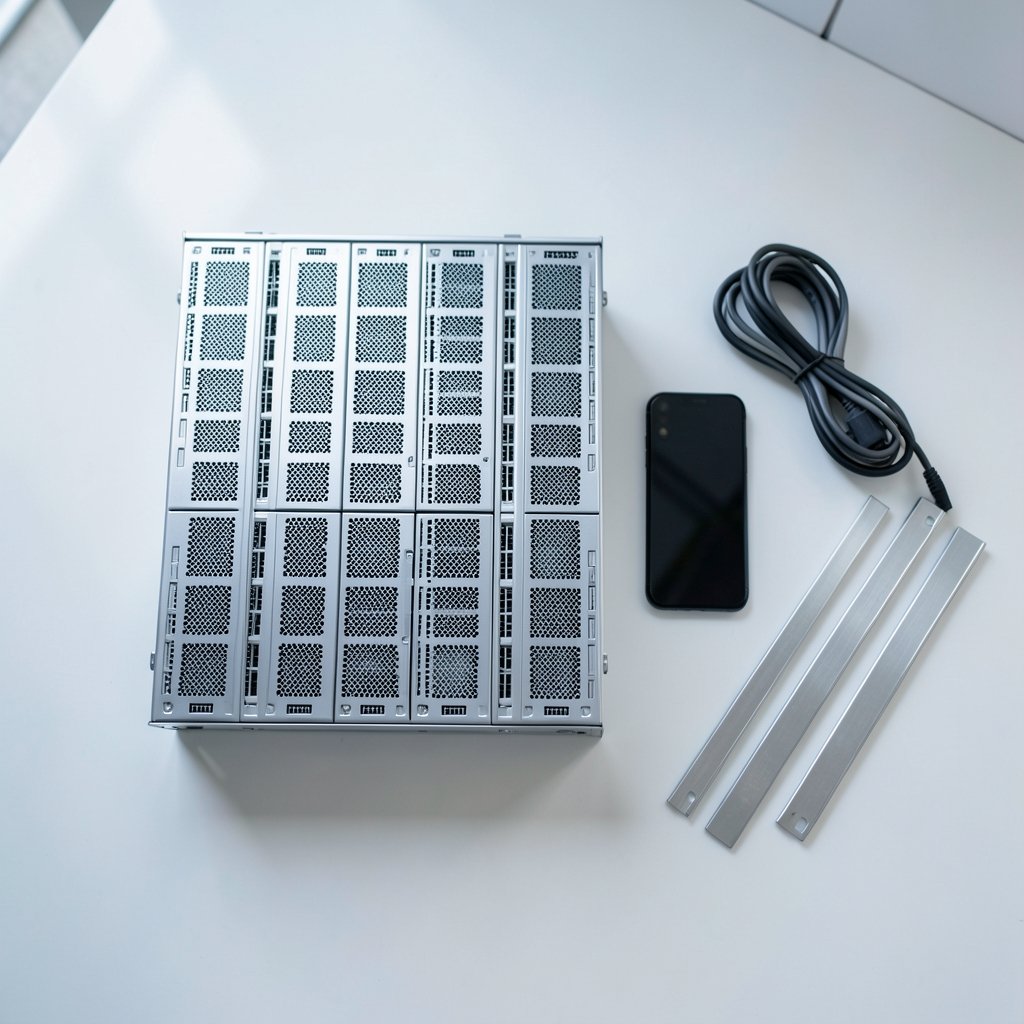
Lenovo did not stop at PCs. In 2014 it completed the purchase of IBM’s x86 server business, including the System x line, for approximately US$2.1 billion. That move pushed Lenovo into data center hardware and gave it the ThinkSystem and ThinkAgile server families it sells today.
The same year, Lenovo bought Motorola Mobility from Google. The deal was announced in January 2014 and closed in October 2014 for about US$2.91 billion. The history of Motorola Mobility explains how a storied American phone brand ended up under a Chinese parent, including the earlier Google chapter.
These deals explain a pattern worth understanding. Lenovo rarely builds a new category from scratch. It buys an established brand, keeps the name, and then squeezes costs out of the supply chain. Sometimes that works brilliantly. Sometimes it produces a confusing product lineup, which is a fair criticism of Lenovo’s phone business in particular.
Where Lenovo Sits in the PC Market Today
Lenovo has repeatedly ranked as the world’s largest PC vendor by unit shipments in recent years, a position it has held or contested with HP and Dell. Treat that ranking with care. Market share figures shift every quarter and differ between research firms, so any claim about who is “number one” should come with a date and a named source. For background on how the PC market itself is defined and segmented, the encyclopedia entry on personal computers is a useful starting point.
Revenue-wise, Lenovo is a Fortune Global 500 company with annual sales in the tens of billions of US dollars. Exact figures change every fiscal year, so anyone quoting a number should check Lenovo’s latest annual report rather than relying on a figure from an older article.
Lenovo’s Product Families, Explained
The biggest source of confusion for buyers is that Lenovo sells several brands that look similar but target very different people. Here is how the main lines break down.
| Brand | Main audience | Typical traits |
|---|---|---|
| ThinkPad | Business users, IT departments | Durable chassis, excellent keyboards, long support cycles |
| ThinkCentre | Office desktops | Compact form factors, easy fleet management |
| IdeaPad | Home and student buyers | Lower prices, varied build quality |
| Legion | Gamers | Dedicated graphics, higher refresh displays |
| ThinkSystem / ThinkAgile | Data centers | Rack and tower servers, virtualization support |
ThinkPad: The Business Workhorse
ThinkPad is the line most people associate with Lenovo, and for good reason. The ThinkPad brand and its IBM origins trace how a 1992 IBM design became one of the most recognizable laptops in the world. The black boxy look, the red TrackPoint nub, and the keyboard feel are not nostalgia for its own sake. Corporate buyers value them because they are consistent, repairable, and supported for years.
IdeaPad and Legion: Consumer and Gaming
IdeaPad covers the budget and midrange consumer space. Quality here varies enormously between models, which is the single most important thing to know before buying. Two IdeaPads with similar names can differ hugely in screen quality, cooling, and memory soldering.
Legion targets gamers with dedicated graphics and high refresh rate panels. These machines run hot and loud by design, so airflow and thermal paste quality matter more than the spec sheet suggests.
Budget Models and Regional Variants
Lenovo also sells many models that never appear in Western reviews. Regional variants, especially in Asia, often deliver strong value but come with trade-offs like soldered memory or smaller batteries. If you are shopping in that segment, a closer look at budget laptop buyers weighing the Lenovo Xiaoxin 14 SE and Intel Wildcat Lake is worth your time, since it covers the compromises these machines make and who should avoid them.
What Lenovo Does Well, and Where It Falls Short
Lenovo’s strengths are real and worth naming plainly.
- Supply chain efficiency. Few companies can match Lenovo on price for a given specification.
- Enterprise support. ThinkPad and ThinkCentre lines come with long warranty options and business-grade service.
- Keyboard quality. Even critics concede that ThinkPad keyboards remain among the best on any laptop.
- Repairability on business models. Many ThinkPads still use standard screws and replaceable components.
The weaknesses are equally real.
- Inconsistent consumer quality. IdeaPad models range from excellent value to genuinely poor, sometimes within the same product generation.
- Confusing naming. Model numbers change by region and year, making comparisons hard.
- Bloatware on consumer machines. Fresh consumer Lenovo laptops often ship with extra software that slows first boot.
- Screen lottery. Panel quality can vary between units of the same model, especially on budget lines.
Common Mistakes Buyers Make With Lenovo Laptops
A few practical habits separate happy Lenovo owners from frustrated ones.
- Buying by model name alone. Check the exact machine type number rather than relying on labels such as “IdeaPad 5” or “ThinkPad E14.” Specifications vary within a single name.
- Skipping the panel check. Confirm resolution, brightness, and color coverage before buying. Many budget models ship with dim, low-color screens.
- Assuming RAM is upgradeable. Soldered memory is increasingly common on thin models. Check before you buy.
- Ignoring the warranty tier. Consumer warranties are often one year; business warranties can extend to three or more with on-site service.
- Not reinstalling the OS. A clean install on a new consumer laptop removes bloatware and often improves responsiveness noticeably.
Display faults deserve their own warning. Lenovo laptops are not immune to screen defects, and a vertical or horizontal line appearing after a knock or a hinge flex is a known complaint pattern. If you are troubleshooting one, this guide to black lines on a Lenovo laptop screen, their causes and fixes walks through the tests that separate a cable problem from a failing panel.
Security, Scrutiny, and the Trust Question
Lenovo has faced U.S. government and congressional scrutiny over cybersecurity and alleged ties to the Chinese state. Some Lenovo products have been restricted in certain U.S. government contexts. The details and dates have shifted over the years, so anyone relying on this point for a purchasing decision should check primary government or congressional documents rather than summaries.
For most home and small-business buyers, the practical takeaway is simpler. Buy from a reputable seller, install updates promptly, and treat any preinstalled management software with the same caution you would apply to any vendor tool. For organizations handling sensitive data, procurement rules and internal security policy should drive the decision, not brand reputation alone.
How to Choose the Right Lenovo for Your Needs
The right Lenovo depends almost entirely on who you are.
Students and home users should look at midrange IdeaPads, but only after confirming the screen and memory situation. A slightly older ThinkPad with a better panel often beats a brand-new budget IdeaPad.
Businesses are usually best served by ThinkPad T or L series and ThinkCentre desktops, bought with an extended on-site warranty. Standardization across a fleet saves far more in IT time than chasing the lowest unit price.
Gamers should compare Legion models on cooling and screen refresh rate rather than only the graphics chip name. Read thermal reviews before committing.
Small servers and edge deployments point toward ThinkSystem hardware, though buyers should confirm local support coverage first.
A simple rule that works surprisingly well: if the machine will be repaired and kept for four or more years, buy business. If it will be replaced in two or three years and price is the main constraint, consumer models can make sense, provided you check the panel and memory first.
Conclusion
Lenovo is best understood as a company built by acquisition and refined by supply chain discipline. It started as an 11-person Beijing startup in 1984, became a global player by absorbing IBM’s PC division in 2005, and expanded into servers and phones in 2014. Today it sells everything from budget IdeaPads to data center hardware, and it competes for the top spot in global PC shipments.
That breadth is both the appeal and the trap. The ThinkPad line remains genuinely excellent for business use. The consumer lines are a mixed bag that rewards careful research and punishes impulse buys. Know which Lenovo you are actually buying, check the exact model number, and confirm the parts that cannot be upgraded later. Do that, and the brand’s value proposition holds up well.
FAQ
Is Lenovo a Chinese company?
Yes. Lenovo was founded in Beijing in 1984 and remains headquartered there, with a second headquarters in Morrisville, North Carolina. Its shares trade on the Hong Kong Stock Exchange. The American association comes from its 2005 acquisition of IBM’s PC division, which brought the ThinkPad brand and a large Western workforce into the company.
Is ThinkPad still made by IBM?
No. IBM sold its personal computer division to Lenovo in a deal announced in December 2004 and completed in 2005. Lenovo has owned the ThinkPad brand ever since. IBM no longer makes or sells ThinkPad laptops, though the design language and keyboard layout trace directly back to the original IBM models.
Are Lenovo laptops good quality?
It depends heavily on the line. ThinkPad and ThinkCentre business machines are generally well built, repairable, and supported for years. IdeaPad consumer models vary widely, with some offering excellent value and others cutting corners on screens, cooling, or upgradeability. Always check the exact model number and read reviews of that specific configuration.
What is the difference between IdeaPad and ThinkPad?
ThinkPad is Lenovo’s business line, focused on durability, keyboard quality, security features, and long warranty and support cycles. IdeaPad is the consumer line, focused on lower prices and home use. ThinkPads typically cost more but hold up better over time and are easier to service.
Does Lenovo own Motorola?
Yes. Lenovo acquired Motorola Mobility from Google in a deal announced in January 2014 and completed in October 2014 for about US$2.91 billion. Lenovo has continued to sell Motorola-branded smartphones since then, alongside its own Lenovo-branded phone models in some markets.
Why do Lenovo model names vary by country?
Lenovo sells region-specific variants to match local pricing, regulations, and retail channels. The same underlying design may ship under different names, with different memory, screens, or batteries. This is why buyers should confirm the exact machine type number rather than relying on a model name alone, especially when comparing prices across regions.



