

What actually changes when you move from building in Minecraft to building in Hytale? Players who have spent years in one block game often assume the skills transfer cleanly. They rarely do. The two games look similar on the surface, but the way you make things in each one is built on very different ideas about who does the creating and how much the game hands you versus how much you assemble yourself.
This comparison breaks down the workflow differences that matter most. It looks at how content gets made, how tools are organized, and what kind of habits each game rewards. It also flags the one big uncertainty that hangs over the whole topic.
Why the comparison is harder than it looks
Here is the awkward part that most comparison articles skip. Hytale was announced in December 2018 and later acquired by Riot Games in April 2020, but it has not had a straightforward public release history. A planned launch window did not hold, and the status of the game has shifted repeatedly since.
That means any honest 2027 comparison has to acknowledge a gap. Minecraft is a shipped, mature product with millions of players and a decade-plus of tooling around it. Hytale is a game whose design has been described in detail through announcements and trailers, but whose finished workflow may differ from what was promised. Treat the Hytale side of this article as a description of a stated design philosophy, not a guarantee of the shipped experience.
With that caveat set, the design philosophies are genuinely different, and understanding them is useful whether or not you ever install Hytale.
The core difference: first-party tools versus a community toolchain
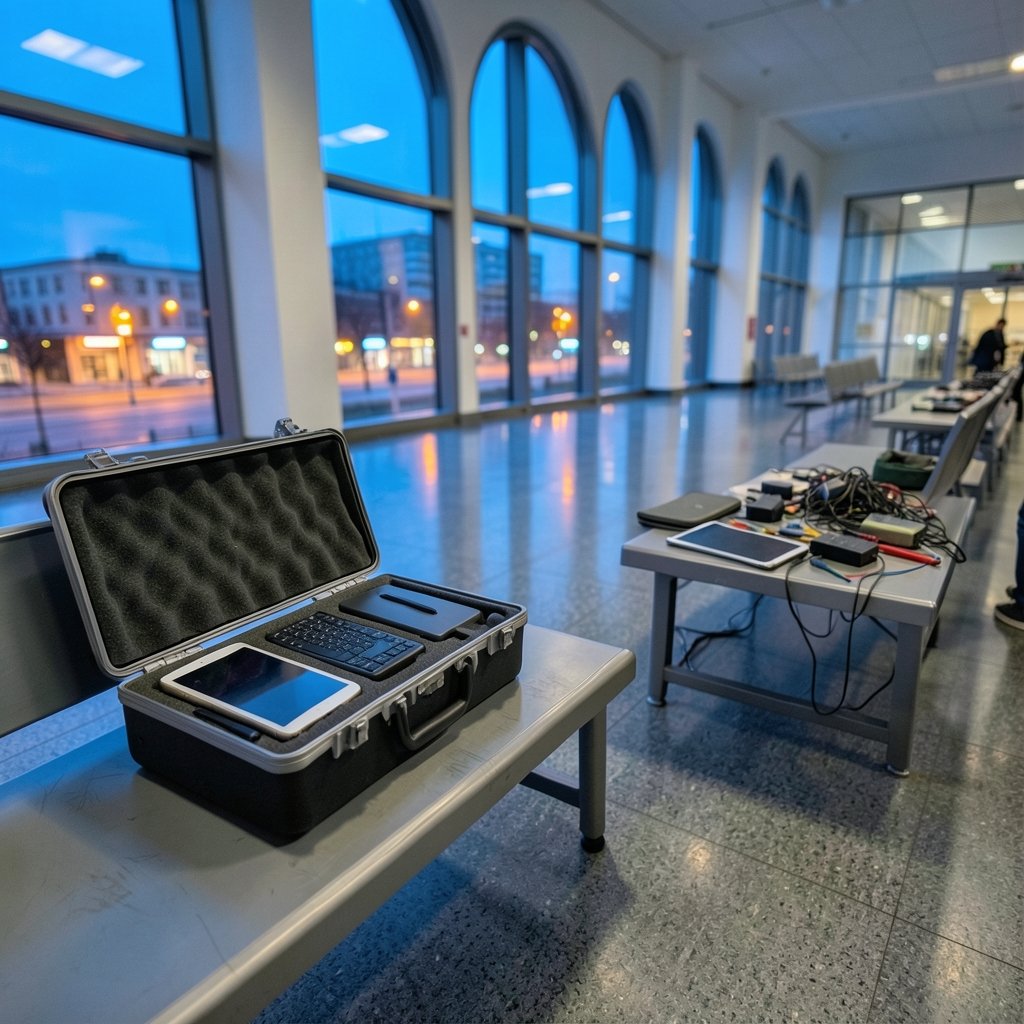
The cleanest way to frame the split is this: Hytale’s stated approach is a first-party integrated pipeline, where the creation tools come from the developer and run inside the game itself. Minecraft’s approach is a platform plus community toolchain, where the base game is the platform and outside projects do the heavy lifting.
| Dimension | Hytale (stated design) | Minecraft Java | Minecraft Bedrock |
|---|---|---|---|
| Who makes the tools | Developer, in-house | Community projects | Microsoft, official |
| Where tools live | Inside the game | External, separate apps | Add-on packs, scripting API |
| Version tracking | Single shipped pipeline | Each loader tracks versions | Official API versions |
| Entry barrier | Designed to be low | Depends on loader and mod | Moderate, documented |
That table is the whole argument in miniature. Everything else is detail.
What the Hytale workflow is designed to feel like
Hytale’s pitch has always leaned on creation. The announcements emphasized an in-engine scripting system, a model maker, animation tools, and a pipeline built so that the people making content are working with the same tools the studio uses.
In practice, that design implies a few workflow habits:
- You stay in one place. Modeling, scripting, and animation are described as part of the same environment, so you are not exporting files between four separate programs.
- The game ships with creation in mind. Rather than treating modding as an afterthought bolted on later, the tools are meant to be a headline feature.
- The learning curve is deliberately softened. Integrated tools usually come with more guardrails than raw external frameworks, which lowers the barrier for someone who has never written a script.
The tradeoff is that integrated pipelines tend to be more opinionated. When the developer controls the whole chain, you get consistency but less freedom to swap in your own favorite external tool. A modeler who loves a specific third-party animation suite may find the built-in one limiting.
What the Minecraft workflow actually involves
Here is where a lot of newcomers trip up: “Minecraft workflow” is not one thing. Java Edition and Bedrock Edition are effectively different platforms with different rules.
Java Edition: the community toolchain
Java modding is built on external, community-maintained frameworks layered on top of the official game. The best-known are Forge, Fabric, and NeoForge. Each one is a mod loader, which is a piece of software that lets the game accept outside code and run it.
The workflow looks like this:
- Install the game and pick a loader that matches your target game version.
- Set up a development environment outside the game, usually with a code editor and build tools.
- Write or edit code against that loader’s API.
- Build the mod into a file and load it back into the game.
- Repeat, because each game update can break the loader and force you to re-check everything.
That last step is the part people underestimate. Mod loaders track each game version, so a major game update can leave your project broken until the loader catches up. This is why serious Java modders often pin themselves to an older version for months at a time.
The freedom is enormous. You can change almost anything. The cost is that you maintain a toolchain as well as making content. If you are weighing where to keep project files and notes while juggling versions, Obsidian vs Logseq local first notes compared by workflow is relevant, because tracking versions across a long project takes substantial work.
Bedrock Edition: the official add-on route
Bedrock is a different animal. It uses a Microsoft-published add-on system built on behavior packs, resource packs, and a scripting API. This is the closest thing Minecraft has to Hytale’s first-party approach, because the documentation and the API come from the platform owner rather than a volunteer project.
The workflow is more documented and more stable, but also more constrained. You work within the boundaries the API sets. For players who want to make something and share it without maintaining a codebase, Bedrock is often the smoother path.
Practical differences that shape your day
Abstract philosophy is fine, but what does it feel like to sit down and build? A few concrete contrasts stand out.
Tool switching. In Java, a typical content project touches a code editor, an image editor, a model tool, and the game itself. In a fully integrated pipeline, that number drops. Fewer windows means less friction, but also fewer escape hatches when a built-in tool does not do what you need.
Version drift. Java modders live with constant version churn. An integrated pipeline, if it works as described, would centralize that problem in the developer’s hands instead of yours.
Documentation quality. Community toolchains have excellent documentation in places and gaps in others. Official APIs tend to be more consistent but slower to cover edge cases.
Community size. Minecraft has a large community, so someone has likely solved your problem already. A newer game’s community starts smaller, so early adopters do more original problem-solving.
If you are the kind of person who enjoys tinkering with hardware while a project builds, the same instincts apply to tuning a keyboard for long editing sessions, and keyboard foam mod sound differences actually changes covers how small physical tweaks shift the feel of hours of work.
Where AI tools fit into either workflow
One change that spans both games is the rise of AI-assisted writing and scripting. Whether you are drafting quest dialogue for a mod or writing documentation for a behavior pack, a structured approach saves time. A guide to the use claude writing practical workflow that actually works walks through a repeatable process rather than one-off prompts. (Voxel)
The caveat is real, though. AI is good at boilerplate and bad at knowing your specific loader’s API quirks. Treat it as a drafting partner, not an authority.
Common mistakes people make when switching
Players moving between these ecosystems repeat the same errors. Here are the ones worth avoiding.
- Assuming skills transfer one-to-one. Knowing Minecraft commands does not mean you know a scripting language. The concepts overlap; the syntax usually does not.
- Starting with a big project. The first thing you build in any new pipeline should be tiny, ideally something you can finish in an afternoon.
- Ignoring version pinning. In Java especially, decide which game version you are targeting before you write a single line, and stick to it.
- Skipping the official docs. Both Bedrock and any integrated pipeline reward reading the documentation first. It is boring and it saves days.
- Underestimating asset pipelines. Models and textures are often the slow part, not the code.
How to choose which workflow to learn first
The answer depends on what you want out of it.
If your goal is to make something playable quickly and share it with friends, the official Bedrock add-on route is the gentlest on-ramp. The documentation is there, the API is stable, and you are not maintaining a build system.
If your goal is deep, unrestricted modification and you do not mind learning external tools, Java Edition with a community loader gives you more control. It is also the more fragile path.
If your goal is to be ready for a game built around creation from day one, the Hytale pipeline is the one to watch, with the caveat that its shipped form may differ from its announced form. Anyone planning a long project should check the current release status before committing.
There is a related consideration for younger players or families: picking a game is also a question of safety and privacy settings, and Minecraft safe private everyday use parents players should covers the settings that matter for everyday play.
What this means for 2027
Looking ahead, the interesting question is not which game is “better.” It is which model of creation wins more creators.
Minecraft’s strength is that it lets a thousand tools bloom. That produces incredible depth and constant churn. Hytale’s stated strength is coherence: one pipeline, one set of tools, one place to work. Coherence tends to win over newcomers; chaos tends to win over power users.
The most likely outcome is that both models persist, and creators pick based on temperament. People who like assembling their own workshop stay with the community toolchain. People who want the workshop provided stay with the integrated one.
Conclusion
The workflow gap between these two games comes down to a single question: do you want to build your own tools, or do you want tools handed to you? Minecraft Java answers “build your own,” Bedrock answers “here is an official API,” and Hytale’s stated design answers “everything in one place.” None of those answers is wrong. They just suit different people. The smart move in 2027 is to pick the workflow that matches how you like to work, verify the current state of any game you are betting on, and start with a project small enough to finish.
FAQ
Is Hytale actually released?
That is the question to verify before you plan anything around it. The game was announced in 2018 and acquired by Riot Games in 2020, but its release history has been uneven, with at least one planned window that did not hold. Check current official announcements rather than older articles, because the status can change.
Can I use Minecraft modding skills in Hytale?
Partly. The ideas transfer, such as how entities, blocks, and game logic fit together. The specific tools and syntax usually do not. Treat it like moving between two programming languages: concepts carry over, but you will relearn the practical details.
Which Minecraft edition is easier for a beginner creator?
Bedrock Edition is generally the gentler start. Its add-on system uses official documentation and a scripting API, so you are not maintaining external build tools. Java gives you more control but requires more setup and more maintenance across game versions.
Do I need to know how to code to make content?
Not for everything. Building, modeling, and texture work require design skills rather than programming. Scripting and behavior logic do involve code, though some systems are more visual than others. Start with the parts that do not need code and add scripting later.
Why do Minecraft mods break after updates?
Because Java mods depend on external loaders that track each game version. When the game updates, the loader has to catch up, and mods written against the old version may stop working. This is a structural feature of the community toolchain model, not a bug.
What is the biggest practical difference between the two workflows?
Tool switching. A Java project typically moves between several separate programs, while an integrated pipeline is designed to keep modeling, scripting, and animation in one environment. Fewer tools means less friction, but also less flexibility to swap in your own favorites.



