
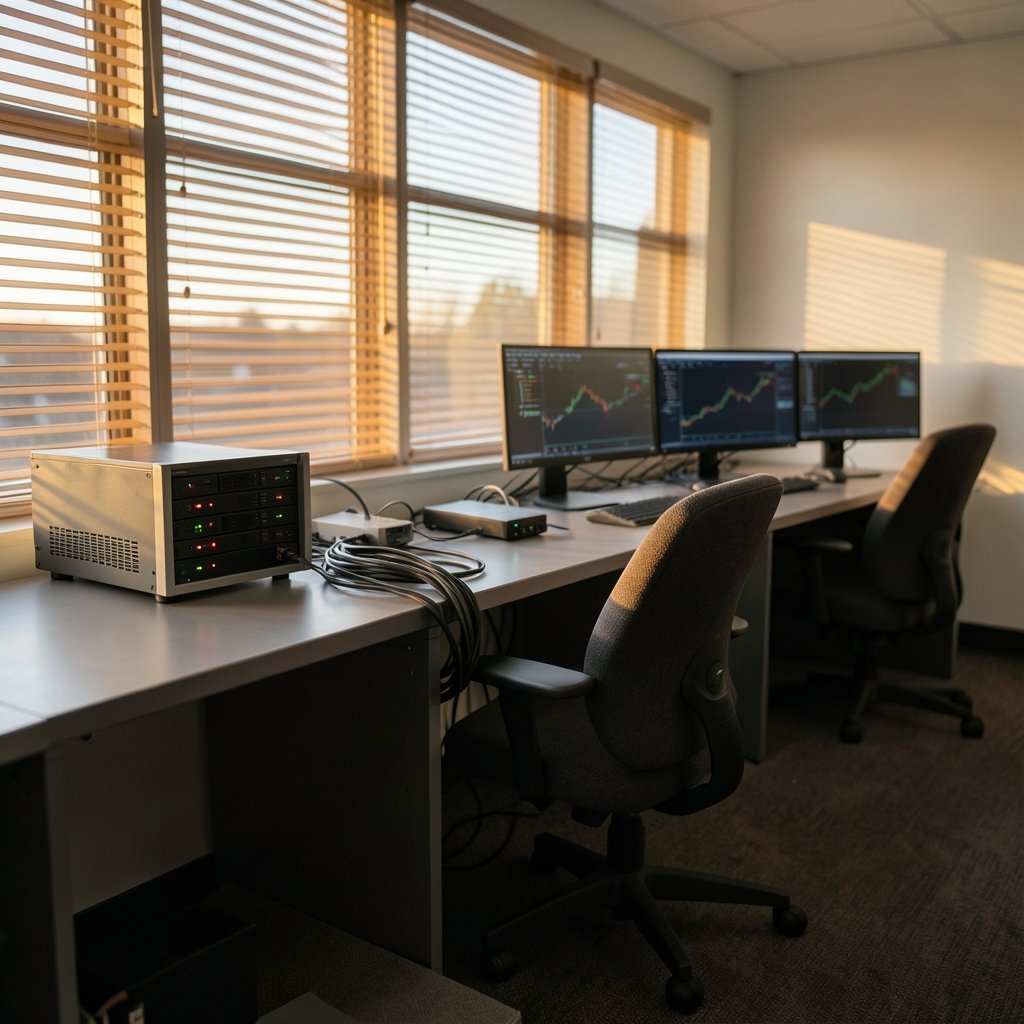
What actually happens inside a security operations center at 2 a.m. when a network detection tool fires an alert nobody expected? The answer depends far less on the marketing brochure than on how each platform expects its analysts to work. Darktrace, Vectra, and ExtraHop all sell network detection and response, and all three can find attackers hiding in traffic. But they hand the analyst three very different jobs. (Keyboard foam mod sound differences actually changes) (NIST SP 800-137: Information Security Continuous Monitoring)
That distinction matters more than any feature checklist. A tool that automates containment fits a lean team with no overnight coverage. A tool built around deep packet forensics fits a team that wants to investigate before it acts. Choosing wrong means paying for capability the team never uses, or buying a workflow the team cannot staff. (Use claude writing practical workflow that actually works)
This guide breaks down the workflow differences between the three platforms, flags what is projection versus fact for 2027, and explains what to test before signing anything.
Why the 2027 Framing Deserves Skepticism
A quick honesty check first. No vendor has published a detailed 2027 workflow roadmap that can be cited as fact. Any article claiming specific 2027 feature differences is projecting, not reporting. Corporate ownership has also shifted in recent years across the NDR market, and product naming and roadmaps can change with it. (Obsidian vs logseq local first notes compared by workflow)
So treat 2027 as a planning horizon, not a crystal ball. The durable differences between these platforms are structural: how detection works, how much the tool acts on its own, and how deep the investigation goes. Those fundamentals change slowly. Feature names change fast. Build your evaluation on the fundamentals and verify current specifics directly with each vendor before you commit.
The Three Products in One Table

| Dimension | Darktrace | Vectra | ExtraHop |
|---|---|---|---|
| Detection model | Self-learning baseline of “normal” | Behavior scoring of attacker tactics | Rules plus machine learning on full traffic |
| Analyst starting point | Triage of autonomous findings | Prioritized attack signals | Packet-level investigation |
| Response style | Aggressive automated action | Guided response with automation options | Evidence-first, act after confirmation |
| Investigation depth | Summary and timeline views | Context around the attack signal | Deep packet capture and decryption |
| Best fit | Small teams wanting autonomy | Teams wanting prioritized signal | Teams wanting forensic proof |
The table is a starting map, not a verdict. Each row hides a workflow decision that deserves its own section.
Detection Philosophy Shapes the Daily Queue
The single biggest workflow difference is what lands in the analyst’s queue each morning.
Darktrace built its reputation on unsupervised, self-learning detection. The platform learns what normal looks like across a network and flags deviations, without relying on signatures or hand-written rules. The workflow consequence is real: analysts spend less time tuning rules and more time reviewing what the model surfaced. The trade-off is explainability. When a self-learning system flags something, the analyst has to trust the model’s reasoning or dig into the supporting evidence.
Vectra takes a different route. It scores network behavior against known attacker tactics, prioritizing signals by how far an attack has progressed. The workflow consequence is a ranked list: the analyst works top-down through signals that represent real attacker behavior rather than raw anomalies. That suits teams that want a clear “start here” every morning.
ExtraHop leans on rules plus machine learning applied to full traffic, with packet capture underneath. The workflow consequence is that every alert can be traced to actual packets. Analysts who want proof before they act get it without leaving the console.
A practical tip: ask each vendor to show you a real morning queue, not a demo scenario. Count the alerts. Ask how many are false positives. Ask what the analyst does first. That single exercise reveals more than any feature matrix.
How Much the Tool Acts Without You
Autonomy is where these platforms diverge most sharply, and where buying decisions go wrong most often.
Darktrace is known for the most aggressive autonomous response in this group. The platform can take containment actions on its own when it detects threatening behavior. For a team with no overnight staff, that is a genuine safety net. For a team that wants a human in the loop on every action, it is a governance problem waiting to happen. The common mistake is buying autonomy and then switching it to alert-only mode out of fear, which means paying for a capability the team never uses.
Vectra and ExtraHop sit closer to the guided end of the spectrum. Both offer automation, but the default posture leans toward recommending action and letting the analyst confirm. That fits organizations with mature change control, where an automated block on a critical server would trigger an incident review of its own.
The practical rule: decide your autonomy policy before the demo, not after. Write down which actions the tool may take alone, which need approval, and who approves at 3 a.m. Then test whether each platform can enforce that policy cleanly. Change one control at a time and verify the result before adjusting the next.
Investigation Depth and the Forensic Trail
When an alert turns out to be real, the workflow shifts from triage to investigation. This is where ExtraHop’s packet-level approach earns its keep. Full packet capture means an analyst can reconstruct exactly what happened on the wire, including traffic that was encrypted in transit. For incident response and post-incident review, that evidence quality is hard to match.
Darktrace and Vectra both provide investigation context, but their strength is the detection narrative rather than raw packet proof. That is not a weakness; it is a different job. A team that mainly needs to know “is this an attack and how far has it gone” gets more value from behavior scoring than from packet dumps. A team that regularly supports legal, compliance, or root-cause reviews needs the packets.
A habit worth building: before any incident, run a tabletop exercise where each tool must answer three questions. What happened? What was affected? What is the evidence? Whichever platform answers all three with the least tool-switching is the one your analysts will actually use under pressure.
Integration and the Analyst’s Real Desktop
No NDR tool lives alone. The workflow question is how it fits the rest of the stack: SIEM, endpoint detection, ticketing, and identity systems.
All three integrate with the major platforms, so the differentiator is friction. Does an alert arrive in the ticketing system with enough context to act, or does the analyst click back into the NDR console for every detail? Does the tool enrich alerts with identity data, or does the analyst cross-reference a separate directory? Small frictions compound across hundreds of alerts a week.
Map your alert path end to end before the demo, and make each vendor walk it. The winning tool is the one that matches how work already flows, not the one with the longest feature list.
Deployment Reality: Sensors, Cloud, and OT
Deployment shapes workflow more than vendors admit. Physical and virtual sensors, cloud coverage, and OT/IoT visibility all determine what the tool can see and who has to maintain it.
Darktrace and Vectra both offer broad deployment options across on-premises and cloud environments, with coverage extending to operational technology in some configurations. ExtraHop’s packet-capture model means sensor placement matters more: capture points must sit where the traffic you care about actually flows. Get placement wrong and the forensic depth evaporates.
The common mistake is underestimating sensor maintenance. Every capture point is something to patch, monitor, and budget for. Ask each vendor for a realistic sensor count for your network, then ask who maintains them. A tool that needs twice the sensors for the same coverage carries a hidden workflow cost.
Staffing: The Constraint Nobody Budgets For
The hardest workflow question is who does the work. NDR tools do not reduce headcount; they redistribute attention. (CISA cyber threat information sharing overview)
A two-person security team should weight autonomy and prioritized signals heavily. A larger team with dedicated incident responders can absorb a forensic workflow and will get more from it. A team with a compliance-driven mandate needs evidence quality above all.
Before shortlisting, write a one-page staffing reality: how many analysts, what hours are covered, what skills exist. Then score each platform against that page. Vendors will happily demo capabilities your team cannot staff. The evaluation is yours to keep honest.
What to Verify Before You Decide
Because 2027 specifics cannot be cited as settled fact, build verification into the buying process:
- Confirm current corporate ownership and product naming for each vendor directly.
- Ask for the current detection and response documentation, not a slide deck.
- Request a proof of concept that mirrors your real alert volume and staffing.
- Test the autonomy policy from the section above in the proof of concept.
- Measure time-to-investigation for a simulated incident on each platform.
- Get sensor counts and maintenance requirements in writing.
Run the same scenario against all three. Same attack simulation, same analysts, same clock. The platform that gets your team from alert to confident decision fastest wins, regardless of what any roadmap promises.
Conclusion
Darktrace, Vectra, and ExtraHop are not three versions of the same product. They are three different answers to the question of how detection work should flow through a security team. Darktrace bets on autonomy and self-learning. Vectra bets on prioritized attacker behavior. ExtraHop bets on forensic proof.
The 2027 framing is useful only as a prompt to plan, not as a promise to rely on. Ownership changes, rebranding, and roadmap shifts are normal in this market, and no citable 2027 roadmap exists today. What survives those shifts is the workflow logic: how alerts arrive, how much the tool acts alone, how deep the investigation goes, and who on your team does the work.
Choose the workflow your team can actually run at 2 a.m. Then verify everything else before you sign.
FAQ
What is the main workflow difference between Darktrace, Vectra, and ExtraHop?
Darktrace centers on self-learning detection with aggressive automated response. Vectra centers on prioritized attacker-behavior signals that guide triage. ExtraHop centers on packet-level forensics, so analysts can prove what happened before acting. The difference is where the analyst spends time, not solely what the tool detects.
Is Darktrace more autonomous than Vectra and ExtraHop?
By reputation, yes. Darktrace is best known for taking containment actions without waiting for a human. Vectra and ExtraHop offer automation but lean toward recommending action for analyst confirmation. Confirm current behavior with each vendor, since product capabilities change.
Which tool is best for a small security team?
A small team usually benefits most from autonomy and a prioritized queue, which favors Darktrace or Vectra depending on how much automated action the organization will tolerate. A small team rarely has time to exploit deep packet forensics, which is ExtraHop’s strength.
Do these tools replace a SIEM?
No. All three feed a SIEM and integrate with endpoint, ticketing, and identity systems. They add detection and investigation depth; they do not replace log aggregation, correlation, or compliance reporting. Evaluate them as part of the stack, not as a substitute for it.
Can I trust published 2027 roadmaps for these products?
Treat them as projections, not commitments. No citable 2027 workflow roadmap exists publicly for these platforms, and ownership or naming changes can reset plans. Verify current documentation and run a proof of concept instead of planning around announced futures.
What should I test in a proof of concept?
Run one simulated attack against all three platforms with your own analysts and your real alert volume. Measure time from alert to confident decision, count false positives in the morning queue, and test whether each tool can enforce your autonomy policy. Sensor count and maintenance load belong in the test too.



