
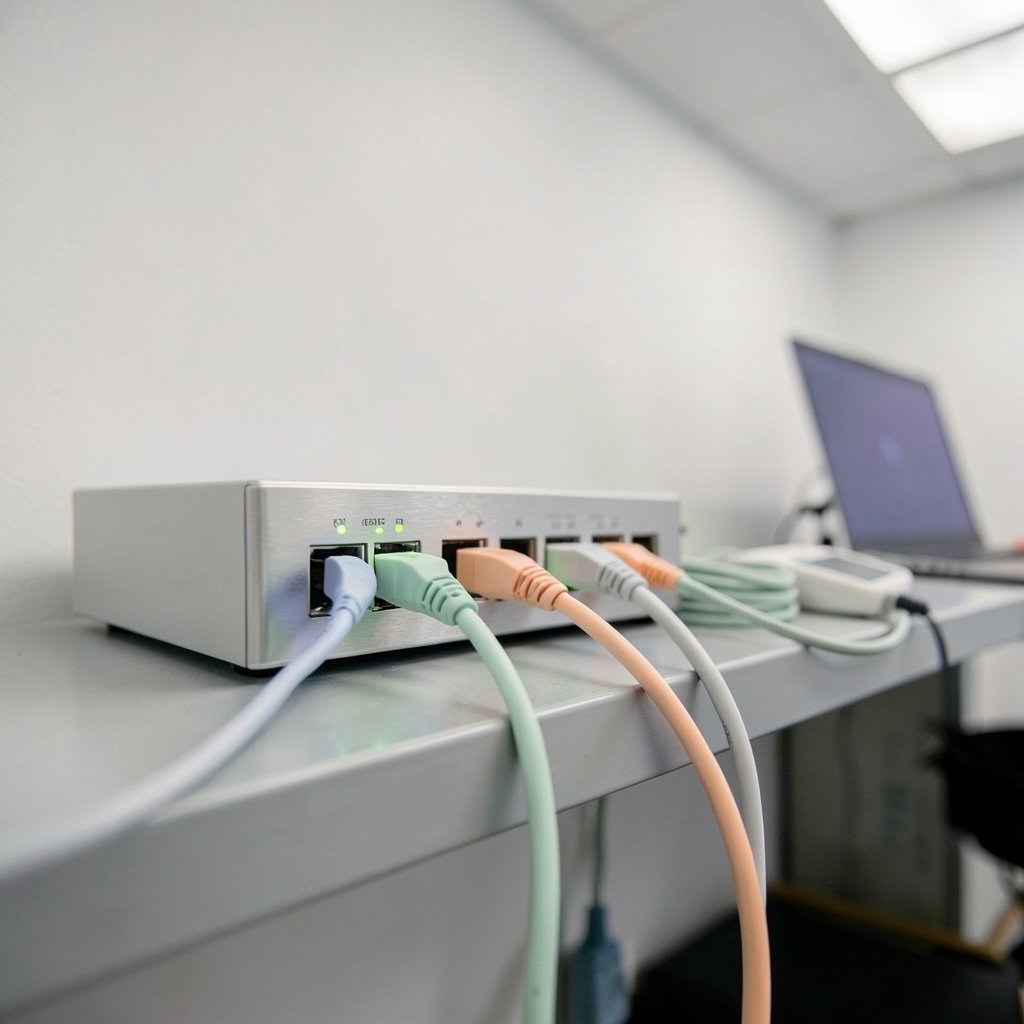
What if the network you trust most is the one quietly handing out too much access? That is the uncomfortable question behind the Tailscale, Twingate, and NetBird debate. All three promise a simpler, safer way to connect people to private systems without punching holes in a firewall. None of them promises to protect everything. The gap between what they protect and what people assume they protect is where real incidents live.
This breakdown looks at the architecture each tool uses, the risks it genuinely reduces, and the places where it stops. It also flags which claims need re-checking against vendor documentation before anyone signs a purchase order.
The shared idea: identity replaces the open door
Traditional VPNs put a user on the network and let routing rules do the rest. Once inside, a laptop can often reach far more than the person needs. Overlay networks flip that. Access is tied to an identity, and policy decides which resources that identity can touch.
Under the hood, most of this generation of tools leans on WireGuard, a compact, modern VPN protocol. Tailscale and NetBird build on it directly. Twingate uses its own connectors and relays and does not publicly describe itself as WireGuard-based. That difference matters less than it sounds, because the real security decision is not the tunnel. It is the authorization model sitting above the tunnel. (WireGuard)
A useful neutral reference for judging any “zero trust” marketing is the NIST Zero Trust Architecture framework, which treats trust as something continuously evaluated rather than granted once at login. Public-sector buyers often compare products against a maturity model that scores identity, devices, networks, applications, and data separately. That framing is helpful because it shows a network access tool covers only part of the picture.
Tailscale: the mesh that gets out of the way

Tailscale is a mesh overlay with a coordination service that distributes keys and access rules. When two devices can reach each other directly, traffic flows peer to peer. Relay servers act as a fallback when a direct path fails. The control plane handles identity and policy, not the payload in the common case.
Its access model is policy-driven. Administrators write rules that describe who can reach which machines, and those rules are enforced at the device level. This is genuinely powerful for small teams and developers who need to reach internal services without a full network engineering project.
What Tailscale actually protects
- It shrinks the exposed surface. Services stop listening on the public internet.
- It ties access to a real identity, usually through an existing single sign-on provider.
- It makes per-device and per-user rules practical instead of theoretical.
- It gives a clear audit trail of which device joined and when.
Where it stops
Tailscale controls who can reach what. It does not inspect what happens inside an allowed session. If a permitted user’s laptop is compromised, the attacker inherits that user’s reach. Device posture checks exist but are coarse compared with dedicated endpoint tools. It is not a firewall, not a data loss prevention system, and not an endpoint detection product.
That distinction is easy to blur. Teams sometimes deploy an overlay and assume the endpoint problem is solved. It is not. If you want a plain-language primer on the wider risk, this explanation of supply chain security for beginners and where your risk actually sits is a good companion read, because the weakest link is usually a dependency or a device, not the tunnel. (RFC 8446: The Transport Layer Security (TLS) Protocol Version 1.3)
Twingate: brokered access, not a flat network
Twingate takes a different shape. Connectors sit inside the private network, and a cloud controller brokers connections. Users do not join a shared network in the traditional sense. They get authorized to specific resources, and split tunneling is the default rather than an afterthought.
This makes Twingate feel closer to zero trust network access than to a classic VPN. The design goal is that no inbound ports are open and each request is checked against policy. For organizations that want per-resource authorization without building a mesh, that model is appealing.
What Twingate actually protects
- It limits lateral movement by design, because users are not placed on a shared subnet.
- It reduces the blast radius of a stolen credential, since access is scoped to resources.
- It removes the need to expose internal services to the internet.
- It centralizes policy in one place rather than scattering it across firewall rules.
Where it stops
Twingate is an access product. It is not a packet-level segmentation enforcement platform, and it is not a network observability tool. It will not tell you what a user did inside an application once they were allowed in. It also does not replace endpoint security. A compromised device with valid authorization is still a compromised device.
NetBird: the self-hosted option changes the calculus
NetBird is the open-source entry in this comparison, and that single fact reshapes the risk conversation. It offers a self-hostable control plane, which neither Tailscale (closed control plane, open client) nor Twingate (closed) offers in the same way.
For teams with data-sovereignty requirements, audit obligations, or a strict internal rule that identity metadata cannot leave their infrastructure, self-hosting is not a nice-to-have. It is the deciding factor. Running your own coordination server means you own the logs, the keys, and the uptime.
What NetBird actually protects
- It gives the same core benefit: private services without public exposure.
- It keeps control-plane data inside your own environment when self-hosted.
- It supports peer-to-peer mesh connectivity with policy-based access.
- It lets security teams inspect and audit the code path, which closed products cannot offer.
Where it stops
Self-hosting shifts operational risk onto your team. You now own patching, backups, certificate rotation, and availability. A misconfigured self-hosted control plane can be worse than a managed one, because nobody is watching it at 2 a.m. Open source is not automatically safer. It is auditable, which is different.
Side-by-side: what each one covers
| Question | Tailscale | Twingate | NetBird |
|---|---|---|---|
| Core model | Mesh overlay with coordination service | Brokered access with connectors | Mesh overlay, self-hostable |
| Built on WireGuard | Yes | No (own connectors/relays) | Yes |
| Self-hosted control plane | No | No | Yes |
| Per-resource authorization | Yes, via policy | Yes, core design | Yes, via policy |
| Traffic inspection | No | No | No |
| Endpoint protection (EDR) | No | No | No |
| Replaces a firewall | No | No | No |
The pattern is obvious once it is on one screen. All three solve the same narrow problem well. None of them solves the endpoint problem, the data problem, or the application-layer problem.
The limit all three share: the path is not the endpoint
This is the sentence worth taping to a monitor. These tools protect the path between a user and a resource. They do not protect the endpoint, and they do not protect the data once it is in front of a user.
If a laptop is infected with credential-stealing malware, the overlay still hands the attacker whatever that identity is allowed to reach. If an insider copies a customer list into a personal drive, the tunnel never notices. If a SaaS integration is over-permissioned, the network layer has no opinion.
That is why mature programs pair network access with endpoint detection, data loss prevention, and identity monitoring. A comparison of data loss prevention versus alternatives and what actually protects data is worth reading before assuming an overlay covers data movement, because it does not. (Benefits canva alternatives where other tools actually win)
Practical tip: run a short exercise. Pick one critical internal app and ask three questions. Who can reach it today? What would they see if they were already inside? What would stop them from copying it out? If the third answer is “nothing,” the overlay is doing its job and the rest of the stack is not.
Common mistakes teams make
Assuming zero trust is a product. It is an architecture. Buying a tool does not install the discipline. NIST’s framework is explicit that policy, identity, and continuous verification are the substance, and the vendor is just plumbing.
Skipping the posture conversation. Coarse device checks feel sufficient until a personal, unpatched machine joins the tailnet. Decide up front what a “trusted device” means.
Forgetting the logs. Self-hosted NetBird gives you control of logs and also the responsibility for them. Managed options put logs somewhere you may not be allowed to keep them. Check data residency before rollout, not after.
Treating the tunnel as a compliance certificate. None of these three products is a compliance certification. GDPR, HIPAA, and SOC 2 claims depend on deployment model, data residency, and logging configuration. The tool is one input, not the answer.
Ignoring the browser layer. A huge share of real risk now arrives through the browser and through DNS. If queries leak or resolve to the wrong place, the tunnel is irrelevant. A look at which best DNS servers for privacy actually protect your queries is a sensible pairing with any overlay rollout.
Where the 2027 question gets honest
Anyone claiming certainty about 2027 product roadmaps is guessing. Vendor feature sets move fast, and comparisons written today can be stale in a quarter. What is stable is the architecture-level analysis: mesh versus brokered, managed versus self-hosted, path protection versus endpoint protection.
The safe prediction is that the lines will blur. Access products will add more posture signals. Endpoint vendors will add more network context. Buyers will keep being sold “zero trust” using definitions that do not match. The defense is the same each year: ask what the tool enforces, at which layer, and what it explicitly does not do.
If your team is also tightening the endpoint side of the stack, a review of the best free antivirus software in 2026 and whether it actually protects you is a reasonable next stop, since overlay access and endpoint hygiene are two halves of the same problem.
How to choose without regret
- List the resources you need to protect and who needs them.
- Decide whether control-plane data may leave your infrastructure. If not, self-hosting becomes a hard requirement.
- Map what happens after access is granted. If the answer is “nothing,” plan the next layer.
- Check logging, residency, and retention against your actual obligations.
- Pilot with one team and one critical app before a company-wide rollout.
- Re-verify every vendor claim against current documentation before signing.
Conclusion
Tailscale, Twingate, and NetBird are good tools solving a real problem: getting rid of exposed services and replacing network-level trust with identity-based policy. Tailscale wins on developer simplicity, Twingate on brokered per-resource access, and NetBird on self-hosting and auditability.
What none of them does is protect the endpoint or the data after access is granted. The honest framing for 2027 is that these products shrink one attack surface very well and leave the others untouched. Teams that understand that boundary build layered defenses. Teams that confuse the tunnel with total security get a false sense of safety and a very ordinary breach.
FAQ
What is the main difference between Tailscale, Twingate, and NetBird?
Tailscale and NetBird are mesh overlays built on WireGuard, with Tailscale using a managed coordination service and NetBird offering a self-hostable control plane. Twingate uses a brokered model with connectors in the private network and a cloud controller, which is closer to classic zero trust network access.
Do these tools replace a VPN?
In many small and mid-sized setups, yes, they replace the traditional remote-access VPN. They remove public exposure and tie access to identity. They do not replace site-to-site networking in every case, and they do not replace a firewall at the network edge.
Are Tailscale, Twingate, or NetBird zero trust products?
They implement parts of a zero trust architecture, mainly identity-based access and per-resource authorization. Zero trust as defined in standards work covers identity, devices, networks, applications, and data. A network access tool addresses one slice, not the whole model.
Which one is best for data sovereignty?
NetBird, because it is the only one of the three that offers a self-hosted control plane. That keeps identity and coordination data inside your own environment. Tailscale and Twingate are managed services, so residency depends on their infrastructure and configuration.
Do these tools protect against a compromised laptop?
No. They control which resources an identity can reach, not what happens on the device. If a laptop is compromised, the attacker inherits whatever access that identity has. Endpoint detection and response, plus device posture checks, are separate layers.
Will these products look different in 2027?
Almost certainly, since feature sets change quickly and vendors add posture, logging, and policy features regularly. The architecture-level differences, meaning mesh versus brokered and managed versus self-hosted, are the stable part of the comparison and the safest basis for a decision.



