
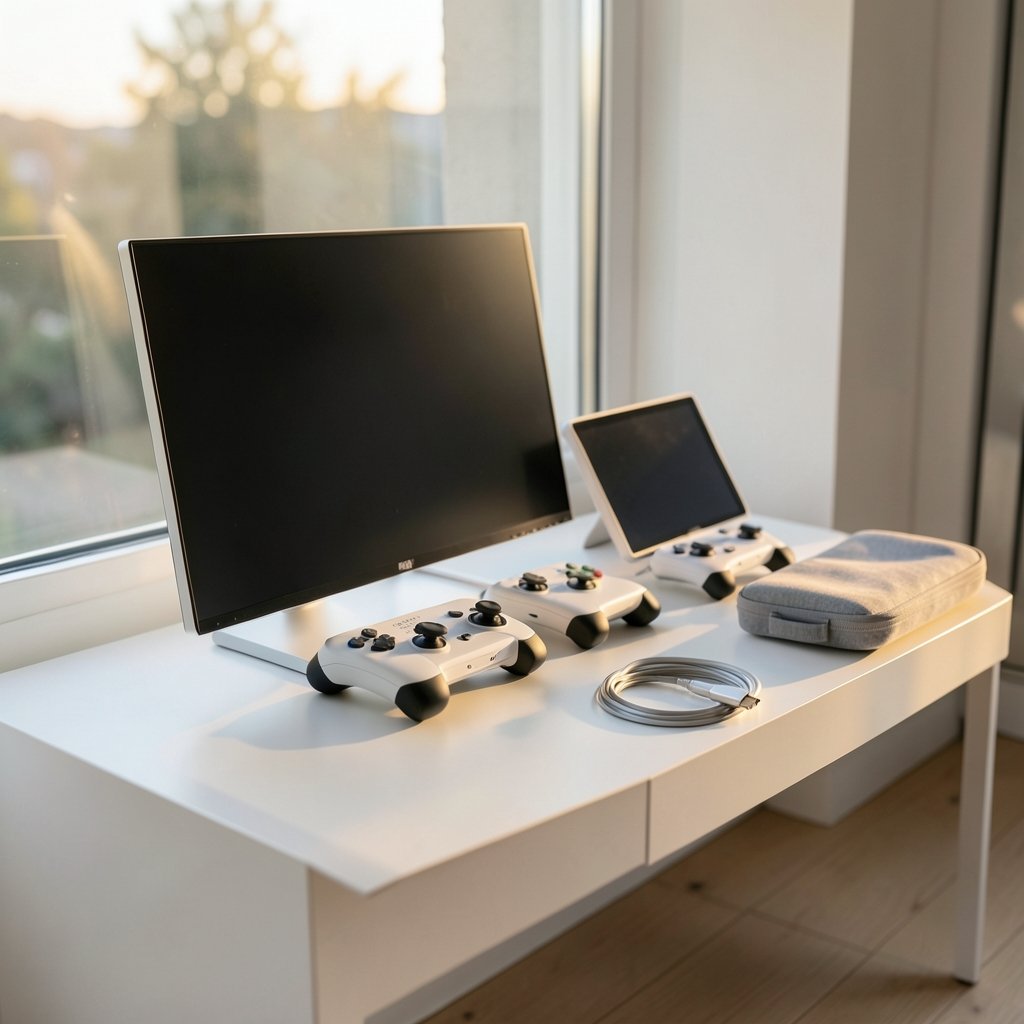
What actually changes your day-to-day play on a Windows handheld: the chip inside, or how the device fits into how you game? That question drives any Onexplayer Arc G3 vs X2 Mini Pro comparison. Both machines belong to the same family of Windows handheld gaming PCs, and both promise console-style convenience with desktop-level flexibility. The differences in how you use them can affect where you play and how often you reach for a charger. This comparison lays out the practical distinctions, flags what remains unconfirmed about these specific models, and explains how to evaluate them without getting lost in marketing language. (Handheld PC)
Why Workflow Beats Spec Sheets on Windows Handhelds
A Windows handheld differs from a smaller laptop. You hold it, tilt it, pocket it, and charge it in unfamiliar places. That physical reality means workflow often matters more than raw benchmark scores. A handheld with a slightly slower chip but better cooling, a smarter launcher, and a comfortable grip can feel faster in real use than a spec-sheet champion that throttles after twenty minutes.
The category itself has matured quickly. Handheld gaming PCs now span tiny pocketable units to near-laptop-sized machines, and the software layer has grown just as fast. Vendors ship custom overlays, per-game profiles, and fan-curve tools on top of Windows 11. Steam Big Picture and controller-first interfaces add another layer. The result is that two devices with similar internals can feel completely different in daily use, purely because of how their software and hardware cooperate.
That is the lens to use here. Instead of asking which handheld wins on paper, ask which one fits the way you actually play.
What Each Name Likely Tells You
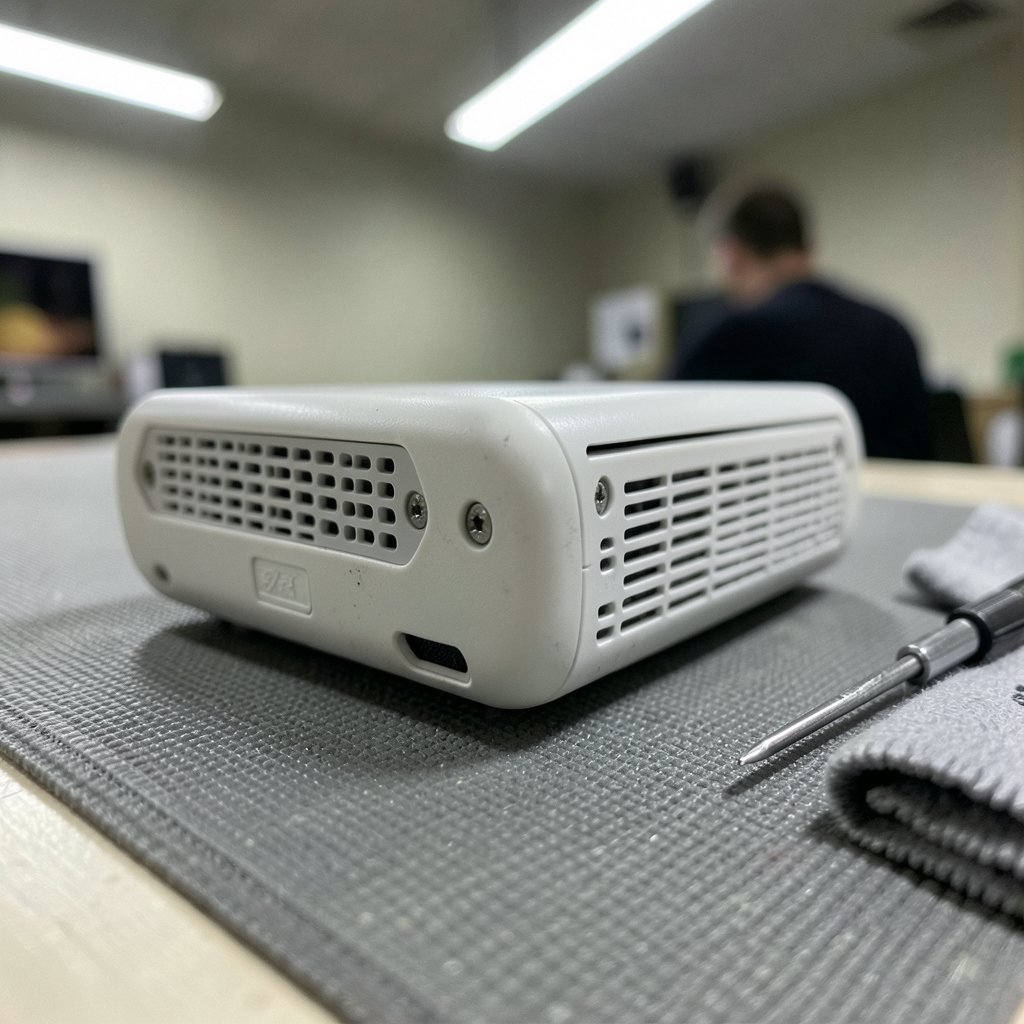
Before comparing, it helps to be honest about uncertainty. OneXPlayer is a brand of One-netbook, a Shenzhen company known for Windows handheld gaming PCs. Its lineup has historically included models like the OneXPlayer 1S, Mini, F1, and X1, offered in both Intel and AMD variants. The X2 Mini Pro naming suggests a compact, roughly 7-to-8-inch class device, since “Mini” has usually meant a smaller screen and lower thermal targets than the brand’s larger models. (AMD Ryzen 7040 Series Review)
The Arc G3 label is less clear. It could point to an Intel Arc GPU generation, or it could be a marketing suffix attached to a particular configuration. Intel’s Arc architecture and driver stack are documented officially, but pinning a specific GPU to this model without a primary source would be guesswork. Treat any firm spec claim as a lead to verify, not a fact.
One more caution: a 2027 framing is speculative. No confirmed 2027 roadmap from OneXPlayer exists in available knowledge, so any forward-looking claims in this article should be read as projection rather than announcement.
The Screen and Chassis Trade-Off
The most visible workflow difference between a “Mini” device and a larger sibling is physical size. A compact chassis changes three things at once:
| Factor | Compact “Mini” Class | Larger Handheld Class |
|---|---|---|
| Screen size | Smaller, often 7–8 inches | Larger, easier to read UI text |
| Thermal headroom | Limited by small body | More room for cooling |
| Weight and grip | Lighter, more pocketable | Heavier, better for long sessions |
| Battery space | Constrained | Usually larger cell |
A smaller screen is not automatically worse. Many players find a tighter display keeps UI elements within easy reach of the thumbs and makes text-heavy strategy games feel more intimate. But small screens punish games with tiny fonts and dense HUDs. If you play a lot of RPGs with quest logs or sims with spreadsheets, a larger panel saves eye strain.
The chassis also dictates thermal headroom. Smaller bodies dissipate heat less effectively, which usually means lower sustained power limits. That is not a flaw; it is physics. The practical question is whether the device’s cooling design keeps frame rates stable during a two-hour session or lets them sag after the first twenty minutes.
Performance Expectations and the Cooling Reality
Vendor marketing tends to quote peak numbers measured in short bursts. Independent reviews measure sustained performance, and the gap between the two is often significant. This is the single most common mistake buyers make: trusting a headline frame rate that only holds for a few minutes.
For any handheld, watch for these signals in reviews:
- Sustained frame rates over 30-plus minutes, not peak scores.
- Surface temperatures at the grips and screen edges.
- Fan noise measured in decibels at typical play distance.
- Throttling behavior when the device is plugged in versus on battery.
If the Arc G3 turns out to carry a discrete Intel Arc GPU, that would be a meaningful architectural difference from integrated graphics, with its own driver considerations. Intel’s Arc line has improved substantially through driver updates, but older titles can still behave inconsistently. A device with a discrete GPU may reward tinkering; an integrated-graphics Mini may simply work with less fuss. Neither outcome is guaranteed until independent testing confirms it.
Software Layer: Where Workflows Really Diverge
Here is the part most comparisons skip. On Windows handhelds, the software layer often decides whether a device feels smooth or fiddly. Both machines run Windows 11, and both can launch Steam Big Picture or similar controller-first interfaces. The divergence comes from vendor utilities: per-game profiles, TDP sliders, fan curves, button remapping, and quick-access overlays.
A well-designed overlay lets you switch from a battery-sipping profile for indie games to a full-power profile for a demanding title without leaving the game. A poorly designed one buries those settings three menus deep. When you evaluate these devices, look for:
- Whether TDP and fan settings can be changed mid-game.
- Whether profiles save per title automatically.
- Whether the overlay is readable on a small screen.
- Whether button remapping covers non-Steam launchers.
Third-party tools fill gaps when vendor software falls short, but relying on community utilities adds setup time and occasional breakage after updates. A device that ships with competent first-party software saves hours over a year of use.
For players who also keep notes, guides, or mod lists on their device, the choice of note-taking app matters as much as the launcher. A local-first setup such as Obsidian versus Logseq compared by workflow explains how offline-first tools behave when a handheld drops Wi-Fi mid-session.
Ports, Storage, and the Desk-to-Couch Workflow
Handhelds increasingly double as tiny desktops. Plug one into a monitor and keyboard, and it becomes a workstation for light tasks. That dual role makes port layout a workflow issue, not a spec-sheet footnote. A single USB-C port that handles charging, video output, and data is convenient until you need all three at once.
Storage deserves equal attention. Modern games routinely exceed 100 GB, so a 512 GB drive fills fast. Check whether the microSD slot is fast enough for playable load times, and whether the internal drive is user-replaceable. A device you can upgrade cheaply has a longer useful life than one sealed shut.
If you plan to dock the handheld at a desk, display matching becomes its own project. A guide to choosing monitors that match a Mac mini desk workflow covers the same resolution and scaling questions that apply when a handheld becomes your secondary desktop.
Battery, Charging, and Real-World Endurance
Battery life is where compact designs usually pay a price. A smaller chassis holds a smaller cell, and a power-hungry chip drains it faster. The practical workflow question is not “how many hours” in the abstract, but “how many hours at the settings I actually use.”
Testers typically report battery life at several TDP levels, because a 15-watt profile can double runtime compared with a 28-watt profile. If you mostly play indie games and stream, a lower-power profile may be entirely sufficient. If you chase AAA titles at high settings, plan on short sessions or a power bank.
Charging speed matters too. A device that charges slowly from empty forces you to plan around outlets. Look for reviews that measure charge time from 10 percent to 80 percent, and check whether the device can run at full power while charging or throttles to protect the battery.
Accessories and the Gear Around the Device
The handheld itself is only one part of the kit. Cases, docks, screen protectors, and controller grips all shape the experience. A device with broad accessory support is easier to live with: you can find a grip that suits your hands or a dock that fits your TV stand.
There is also the question of what else sits on your desk. Many handheld owners run a small home server or NAS for game backups and media. A comparison of mini PC NAS picks and their trade-offs walks through how these boxes fit into a home setup, which is useful if you want a central place to store saves and captures.
Common Mistakes Buyers Make
A few traps show up again and again when people compare handhelds:
- Comparing peak benchmarks. Sustained performance tells the real story.
- Ignoring the software. A great chip with clumsy utilities feels worse than a modest chip with polished ones.
- Underestimating screen size. Small panels are charming until you squint at inventory text.
- Skipping the port audit. Count how many devices you need to plug in simultaneously.
- Assuming 2027 roadmaps. Future models are rumors until announced.
The safest approach is to shortlist based on workflow needs, then confirm with independent reviews of the exact configuration you plan to buy. Model names often hide multiple variants with different chips and memory, so verify the specific SKU.
How to Decide Between Them
If both devices eventually prove to be real, shipping products, the decision likely comes down to two questions. First, do you value portability and a compact grip over sustained performance? The Mini-style device wins there. Second, do you want maximum headroom for demanding titles and a larger screen for long sessions? The larger device wins that one.
A simple way to frame it:
| Your priority | Likely better fit |
|---|---|
| Commuting, short sessions, light games | Compact Mini-style device |
| Long sessions, AAA titles, docking | Larger handheld with more cooling |
| Tinkering and per-game tuning | Device with deep software controls |
| Minimal fuss, plug and play | Device with polished first-party utilities |
Neither answer is universal. The right choice depends on the games you play and where you play them, not on which device wins a synthetic benchmark.
Conclusion
The Onexplayer Arc G3 vs X2 Mini Pro comparison is less about declaring a winner and more about matching a device to a workflow. A compact handheld rewards players who value portability, quick sessions, and a light bag. A larger machine rewards players who want sustained performance, a readable screen, and room to dock. The chip inside matters, but the software layer, cooling design, port layout, and battery behavior matter just as much in daily use.
Treat unconfirmed specs with healthy skepticism, verify configurations before buying, and lean on independent reviews that measure sustained performance rather than peak numbers. Do that, and the choice becomes far clearer than any spec sheet suggests.
Frequently Asked Questions
What is the Onexplayer Arc G3?
It appears to be a Windows handheld gaming PC from OneXPlayer, a brand of One-netbook. The “Arc G3” label may reference an Intel Arc GPU or a configuration suffix, but the exact specification is not confirmed by a primary source. Buyers should verify the specific SKU before purchasing.
How does the X2 Mini Pro differ from a larger handheld?
The “Mini” naming suggests a compact chassis, likely in the 7-to-8-inch screen class. That usually means a smaller battery, less thermal headroom, and lower sustained power limits compared with larger models, traded for lighter weight and easier portability.
Are 2027 model claims reliable?
No confirmed 2027 roadmap from OneXPlayer exists in available knowledge. Any 2027 claims should be treated as projection or rumor until the company announces products officially. Base buying decisions on devices that currently exist and have been independently reviewed.
Why does software matter so much on Windows handhelds?
Because both devices run Windows 11, the difference comes from vendor utilities: TDP sliders, fan curves, per-game profiles, and overlays. Good software lets you switch power modes mid-game and saves settings automatically. Poor software buries those controls and forces workarounds.
What should I check in independent reviews?
Look for sustained frame rates over at least 30 minutes, surface temperatures at the grips, fan noise in decibels, throttling behavior on battery versus plugged in, and charge time from 10 to 80 percent. These measurements reveal how the device behaves in real sessions.
Can a handheld replace a desktop for light work?
Often, yes. Many Windows handhelds support video output over USB-C, so they can drive a monitor with a keyboard and mouse. Check port count, whether charging shares the same port as video output, and whether the device sustains performance while docked.
