
A gardener steps onto a lawn that suddenly feels spongy. Over by the flower bed, a neat cone of fresh soil has appeared overnight. Was it a mole or a vole? Getting the answer right matters more than most people realize, because these two animals look nothing alike up close, eat completely different things, and need opposite approaches if you want them to stop wrecking your yard. Misidentify the culprit and you can spend months fighting the wrong animal.
The confusion is understandable. Both are small, brownish, ground-dwelling mammals that spend much of their lives out of sight. Both leave signs in lawns and gardens. And both have names that sound almost interchangeable. But a mole and a vole sit on entirely different branches of the mammal family tree, and once you know what to look for, telling them apart takes about ten seconds.
One Is a Digger, the Other Is a Nibbler
The single most useful way to think about this pairing is by lifestyle. A mole is a tunneling machine that eats meat. A vole is a small plant-eater that scurries along the surface and through shallow channels in the grass.
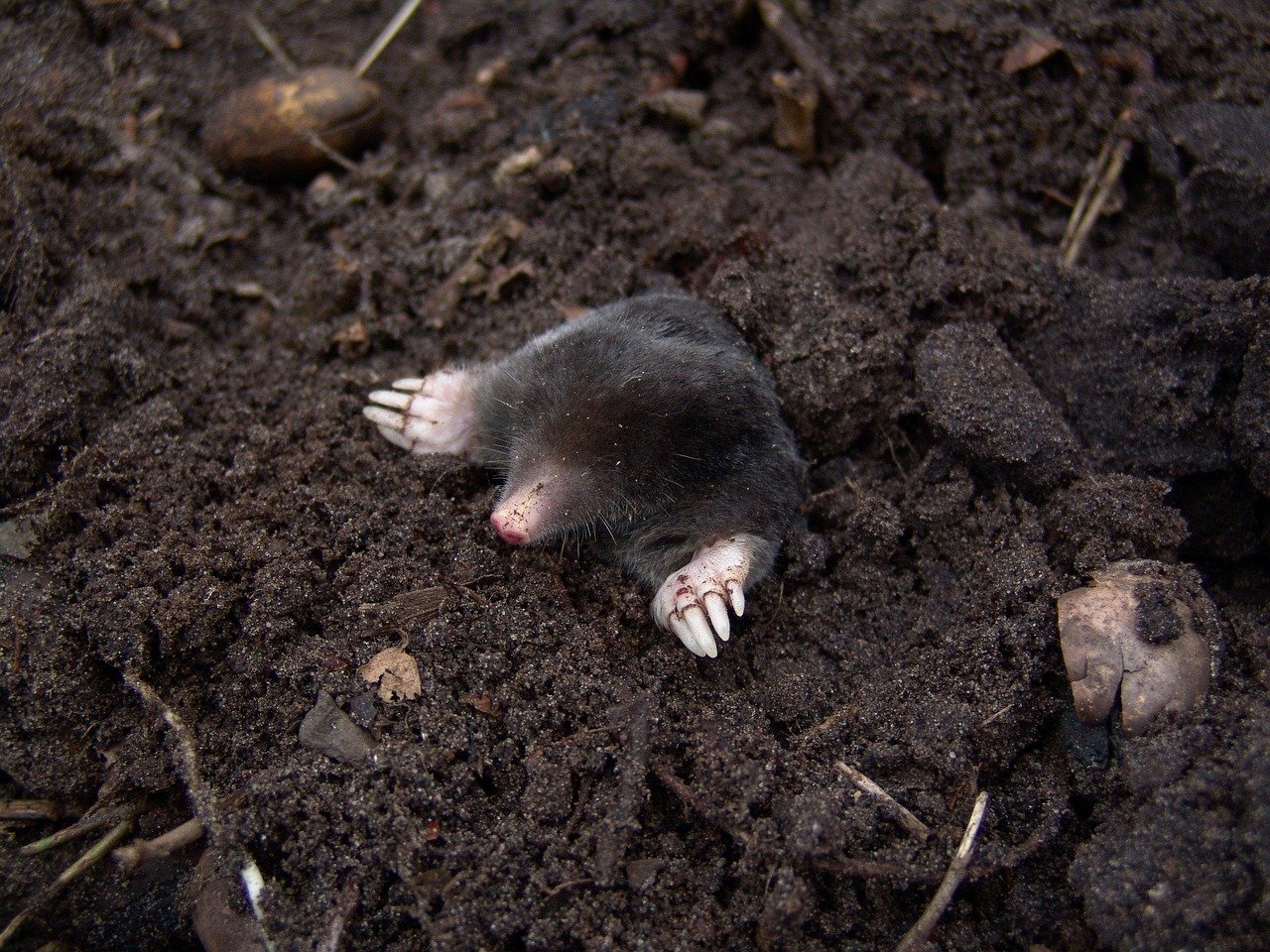
Moles belong to the family Talpidae, an insectivore lineage. Their bodies are built for a life underground: cylindrical torsos, velvety fur that lies flat in any direction, and those famous broad, shovel-like forepaws with claws that point outward. Their eyes are tiny or effectively hidden, and they have no visible external ears. Everything about a mole says “I live in the dark and I dig.”
Voles are rodents, members of the family Cricetidae and the subfamily Arvicolinae. They have mouse-like bodies, clearly visible eyes and ears, and ordinary rodent feet built for walking and running rather than excavation. If you ever get a clear look at one, you will see a compact, rounded animal with a blunt snout and a short tail, not a furry torpedo with paddles.
| Feature | Mole | Vole |
|---|---|---|
| Family | Talpidae (insectivore lineage) | Cricetidae, subfamily Arvicolinae (rodent) |
| Body shape | Cylindrical, built for digging | Mouse-like, rounded |
| Front paws | Broad, shovel-like, claws outward | Ordinary rodent feet |
| Eyes and ears | Tiny or hidden; no visible ear flaps | Clearly visible |
| Diet | Earthworms and soil invertebrates | Grasses, roots, bark, seeds |
| Main sign | Conical soil mounds and deep tunnels | Surface runways and gnaw marks |
| Social style | Largely solitary and territorial | Social, fast-breeding |
That table is the whole comparison in miniature. The rest of this article explains what each row means in practice.
What Moles Actually Do in a Yard
Moles are carnivores in the practical sense, even if their official diet is invertebrates. Earthworms form the bulk of their menu, supplemented by insect larvae and other soil-dwellers. They do not eat bulbs, roots, or your vegetable seedlings. This is a crucial point, because a huge share of “mole damage” is nothing of the sort.
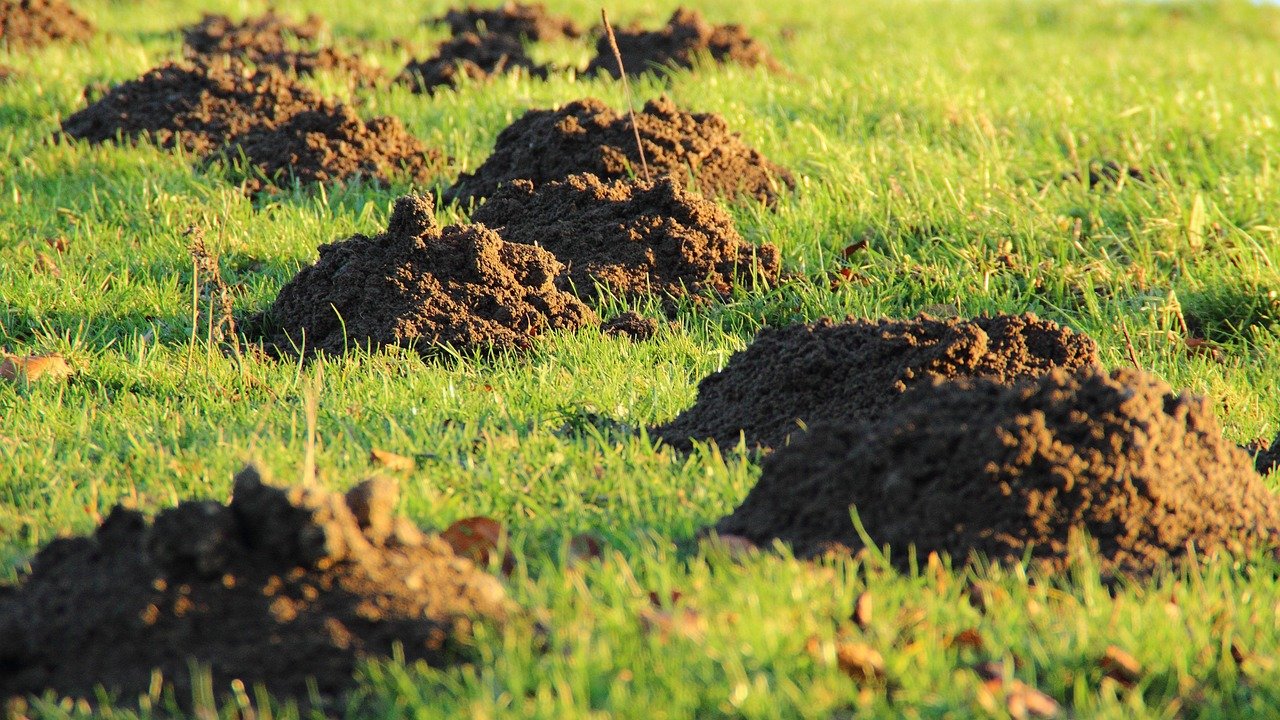
The classic mole sign is the molehill, a conical mound of pushed-up soil that appears where the animal has driven a shaft upward while excavating. Below the surface, moles carve networks of tunnels, and they are strong, fast diggers for their size. They are also largely solitary and territorial, so a lawn with many hills usually holds just a few animals, not dozens.
Here is where the practical tips come in. The most common mistake people make is assuming that because a molehill appeared near chewed plants, the mole chewed the plants. It almost certainly did not. Voles frequently use mole tunnels as ready-made highways, popping up to feed on roots and bulbs right next to fresh mole activity. The mole gets blamed; the vole did the eating. Before buying any control product, walk the yard and separate the evidence: mounds and deep tunnels point to moles, while gnawed stems and surface runways point to voles.
A second common mistake is trying to fix a mole problem with poison baits aimed at rodents. Mole diets are not grain-based, so rodent-style baits hold little appeal, and using them loosely creates risks for pets and wildlife. Trapping and habitat management remain the standard approaches, and local rules vary, so it pays to check what is permitted where you live.
What Voles Actually Do in a Yard
Voles are herbivores through and through. They eat grasses, roots, bark, and seeds, and they are remarkably industrious about it. Their signature is the surface runway: a narrow, worn path through grass or mulch, often leading to a small burrow entrance. Runways look like tiny trenches pressed into the lawn, and you may find clipped grass stems or small piles of droppings along them.
The damage that matters most happens in cold months and around woody plants. Voles gnaw the bark at the base of young trees and shrubs, a behavior called girdling, which can kill a plant by cutting off the flow of nutrients under the bark. They also eat bulbs and roots, which is why tulip beds sometimes come up mysteriously empty. Orchards and home gardens take the heaviest hits.
Voles are social and can breed rapidly, and many northern species show well-documented population cycles, with boom years followed by crashes. That means a vole problem can appear almost overnight and then fade on its own. A practical tip that actually works: keep grass trimmed and clear mulch a few inches away from tree trunks in fall, and wrap the lower trunk of young trees with a physical guard. Voles dislike crossing open, exposed ground, so removing cover and debris around prized plants reduces pressure without any bait at all.
Telling the Signs Apart Without Seeing the Animal
Most people never catch a glimpse of either animal, so field signs do the talking. A simple decision process sorts out nearly every case:
- Look at the soil. A conical mound of fresh dirt means a mole has been pushing soil up from below.
- Look at the grass surface. Narrow worn paths pressed into the lawn, with no mound nearby, mean voles.
- Check stems and trunks. Gnaw marks, stripped bark, and clipped stems at ground level mean voles.
- Feel the ground. Sinkage underfoot over a wide area often follows shallow tunneling, which points to moles.
- Note the season. Winter damage to bark and bulbs is a vole trademark; molehills can appear year-round.
If you find mounds and gnawed bark in the same bed, assume both animals are present. This is common, and it is exactly why blanket assumptions go wrong.
Why the Confusion Persists
Part of the problem is language. Common names shift by region: meadow vole, field vole, and water vole are different species, and laypeople routinely misidentify voles as moles or shrews. Any single “voles vs moles” comparison is therefore species-dependent, and the picture shifts depending on where in the world you are standing.
The other part is that both animals are secretive. Moles rarely surface, and voles freeze or dart for cover when disturbed. People see the aftermath, not the culprit, and the aftermath looks similar from a distance: disturbed ground and unhappy plants.
Legal status adds another layer. In the UK, for example, moles have some protection under the Wild Mammals (Protection) Act 1996, and various voles are covered by wildlife legislation too. Rules differ widely by jurisdiction, so confirm local requirements before setting traps or using any control method. It is a boring step that saves real trouble.
If You Would Rather Watch Than Worry
Not everyone wants to evict these animals. Some gardeners take a live-and-let-live view, especially once they realize moles are eating grubs and worms rather than prize plants. For readers who enjoy small burrowing mammals in a gentler context, there is even a retro gaming angle: a pair of classic Game Boy titles featuring burrowing critters, avenging spirit and Mole Mania on Nintendo Switch Online, shows how deeply the mole has burrowed into popular culture. It is a lighthearted reminder that the animal under your lawn has fans.
Practical Control That Actually Works
The best results come from matching the method to the animal, not from buying the strongest product on the shelf.
For moles, trapping along active tunnels is the traditional and most reliable approach where it is legal. Find a straight run between two fresh mounds, probe gently to locate the tunnel, and set the trap there. Repellents and noise devices have a mixed record, and home remedies tend to disappoint.
For voles, habitat management beats everything else. Mow close in late fall, clear mulch back from trunks, guard young trees, and remove brush piles that offer cover. Snap traps placed under a small board along active runways can knock down populations quickly where permitted.
The biggest mistake in both cases is acting before identifying. Treating a vole problem as a mole problem wastes money and time, and the reverse is just as true. Five minutes of careful observation before you buy anything is the highest-value step in the entire process.
Conclusion
Voles and moles share a habitat and a reputation, but almost nothing else. One is a solitary, insect-eating digging machine in the family Talpidae; the other is a social, plant-eating rodent in the subfamily Arvicolinae. Moles leave conical mounds and deep tunnels and rarely touch a plant. Voles leave surface runways and gnaw marks and can girdle a young tree in a single winter. Read the signs before you act, protect your trees in fall, and check your local wildlife rules. Do those three things and the question of voles versus moles stops being a mystery and becomes a straightforward piece of detective work.
What is the main difference between a vole and a mole?
A mole is an insectivore-lineage digger in the family Talpidae that eats earthworms and soil invertebrates, while a vole is a rodent in the subfamily Arvicolinae that eats grasses, roots, bark, and seeds. Their bodies reflect that split: moles have shovel-like forepaws and hidden eyes, and voles have mouse-like bodies with visible eyes and ears.
How can I tell a molehill from a vole runway?
A molehill is a conical mound of pushed-up soil created as a mole drives a shaft to the surface. A vole runway is a narrow, worn path pressed into grass or mulch at ground level, often with clipped stems or droppings nearby. Mounds mean moles; flat surface paths mean voles.
Do moles eat plants or bulbs?
No. Moles feed mainly on earthworms and other soil invertebrates and do not eat bulbs, roots, or seedlings. When bulbs vanish or bark gets chewed next to fresh mole activity, voles using the mole tunnels are usually the real culprits.
Why do voles damage trees in winter?
Voles gnaw bark at the base of young trees and shrubs, a behavior called girdling, and winter is when food is scarce and cover is good. Wrapping the lower trunk with a physical guard and clearing mulch a few inches back from the trunk in fall are the most effective preventive steps.
Are moles solitary?
Yes, moles are largely solitary and territorial, so a lawn with many hills usually holds only a few animals. Voles are the opposite: they are social and can breed rapidly, and many northern species show documented population cycles with boom years and crashes.
Is it legal to trap moles and voles?
It depends entirely on where you live. In the UK, for example, moles have some protection under the Wild Mammals (Protection) Act 1996, and several vole species are covered by wildlife legislation as well. Check your local rules before setting traps or using any control method.



