
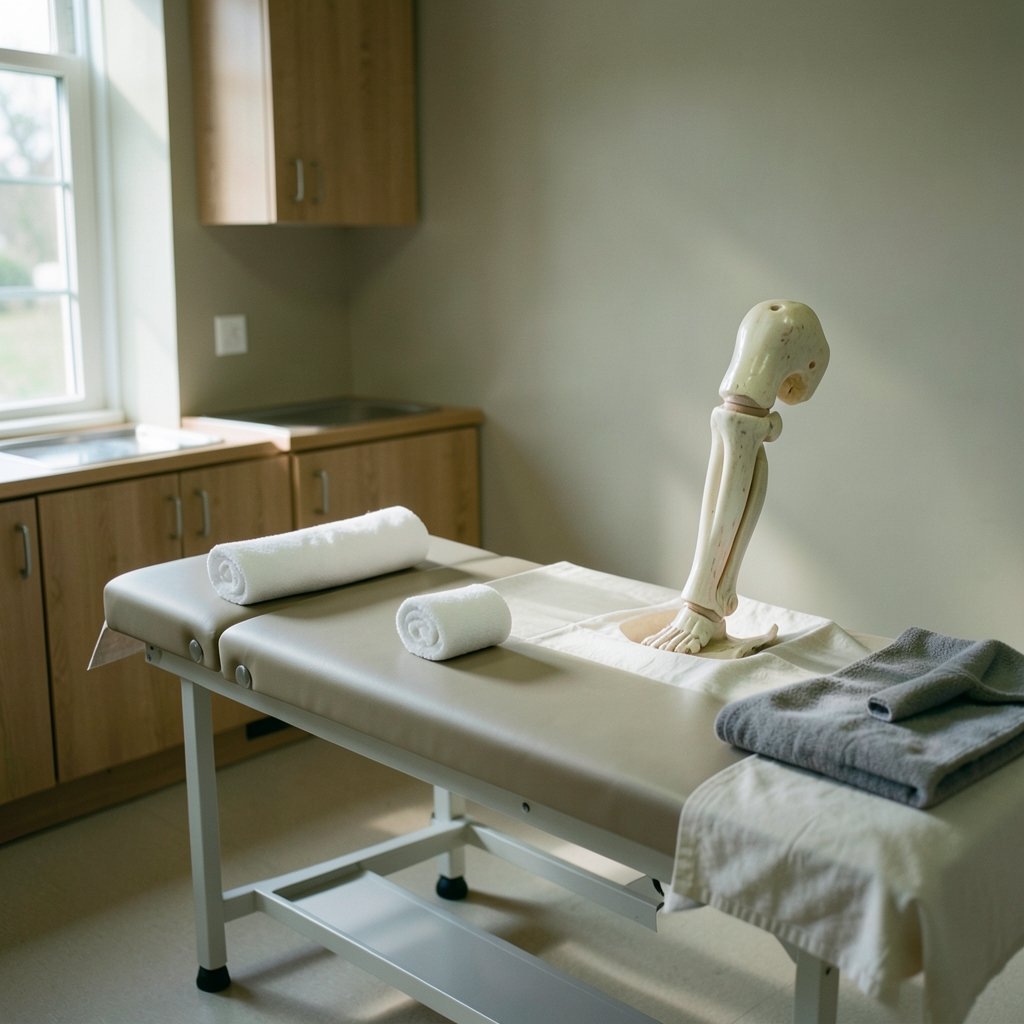
What happens when a doctor grips your thigh, pulls your shin forward, and asks you to relax every muscle in your leg? For anyone who has landed awkwardly on a ski slope or twisted a knee on a soccer field, that moment can feel like the longest few seconds of the year. The maneuver being performed is the Lachman test, and it remains the single most trusted hands-on check for an anterior cruciate ligament (ACL) injury. This article walks through how the test works, what the grades mean, why clinicians trust it over older alternatives, and where it can let you down.
What Is the Lachman Test?
The Lachman test is a physical examination maneuver used to assess the integrity of the anterior cruciate ligament, the band of tissue that keeps the shin bone from sliding too far forward under the thigh bone. Clinicians widely describe it as one of the most sensitive and specific hands-on tests for a torn ACL.
The idea behind it is straightforward. If the ACL is intact, it acts like a tether, stopping the tibia from translating forward. If the ligament is torn or stretched, that tether is gone, and the shin moves farther than it should. The examiner feels both the amount of movement and, crucially, the quality of the stop at the end of the pull.
How the Lachman Test Is Performed
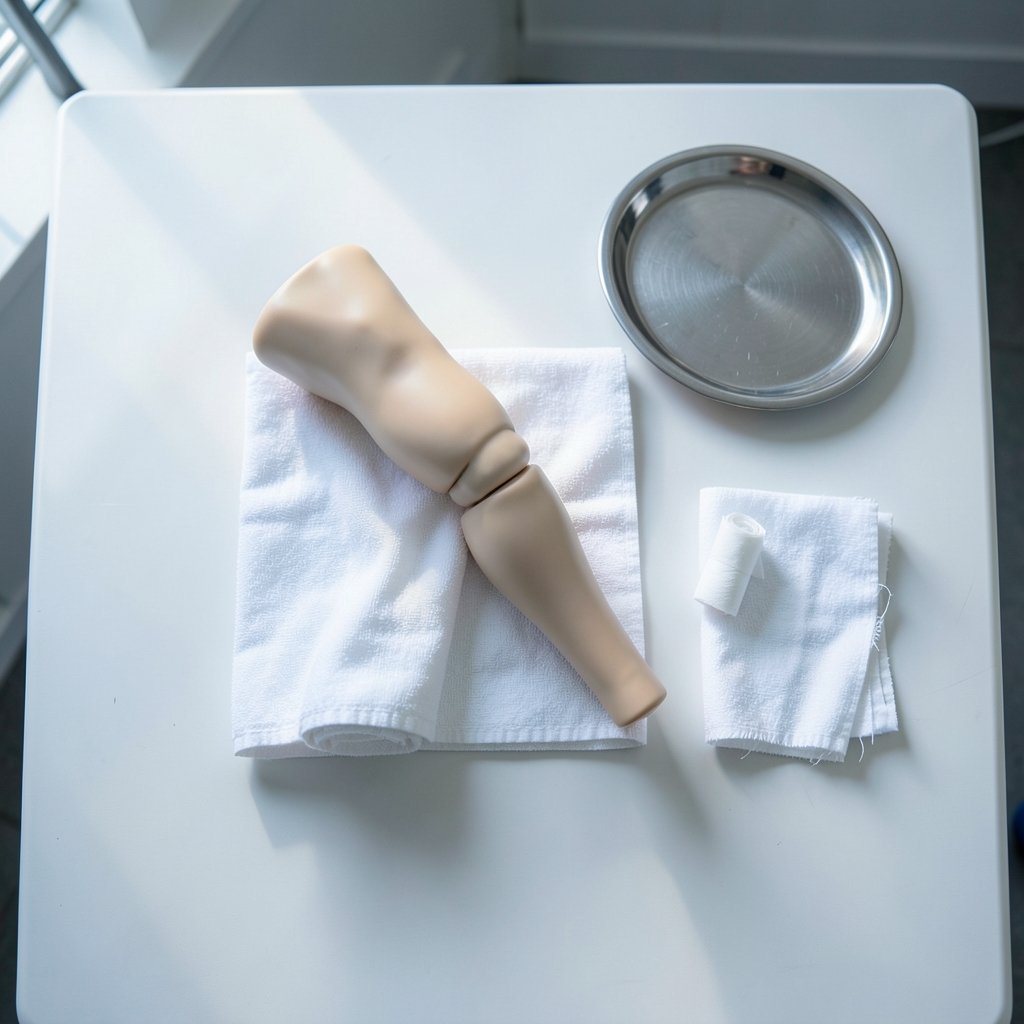
The test is quick, requires no equipment, and is usually done with the patient lying flat on an examination table. Here is the standard sequence:
- The patient lies supine (on their back) with the knee flexed to roughly 20 to 30 degrees. A small towel rolled under the knee can help hold that position.
- The examiner stabilizes the distal femur (the lower end of the thigh bone) with one hand.
- With the other hand, the examiner grips the proximal tibia (just below the knee) and pulls it gently but firmly anteriorly (forward).
- The examiner assesses two things: how far the tibia translates and whether the movement ends with a firm endpoint or a soft, mushy one.
That last detail matters more than most patients realize. A knee that moves a little but stops hard is usually a good sign. A knee that moves a lot and then just keeps going, with no clear stop, is the classic picture of ACL deficiency. The test is then repeated on the other leg so the examiner has a baseline for comparison.
Common Mistakes During the Test
Even experienced clinicians can get a misleading result. The most frequent problems include:
- Poor relaxation. If the patient guards or tenses the hamstring muscles, the shin will not translate properly, and a torn ACL can look intact.
- Wrong knee angle. Too much flexion (beyond about 30 degrees) engages other structures that resist translation and can mask a tear.
- Pulling instead of positioning. The examiner needs a stable femur. If the thigh rolls or shifts, the reading is unreliable.
- Skipping the comparison leg. Without a baseline, small differences are easy to miss.
A Short History of the Test
The maneuver carries the name of John Lachman, and it entered wider clinical use in the 1970s and 1980s. It is often credited with being brought into mainstream practice by Torg, Conrad, and Kalen in 1976. Exact attribution and dating vary across sources, so anyone quoting a specific year should check the original description first.
What is not disputed is why the test caught on. Before it became standard, clinicians leaned heavily on the anterior drawer test, which is performed with the knee bent to about 90 degrees. The Lachman test moved the knee into a more extended position, which turns out to be a much better angle for isolating the ACL.
How to Interpret Lachman Test Results
Interpretation rests on two variables: how much the tibia moves and what the endpoint feels like. A firm endpoint with limited translation generally counts as a negative (intact) result. Increased translation with a soft or absent endpoint points toward ACL deficiency.
Grading schemes exist, typically running from 1+ to 3+, but they are not standardized across sources. A rough common framework looks like this:
| Grade | Anterior Translation | Endpoint | Typical Interpretation |
|---|---|---|---|
| Negative | Minimal, similar to the other knee | Firm | ACL likely intact |
| 1+ | Slightly more than the other knee | Firm | Possible mild sprain |
| 2+ | Clearly increased | Soft or indistinct | Likely partial or complete tear |
| 3+ | Markedly increased | Absent | Likely complete tear |
Treat these grades as a communication tool rather than a precise measurement. Two examiners can disagree on the difference between 2+ and 3+, which is one reason imaging is usually part of the workup. If you want to understand how much measurement error can creep into any physical test, the same principle applies to digital diagnostics, as this breakdown of what a browser fingerprinting test score really tells you shows.
How Accurate Is the Lachman Test?
Systematic reviews and meta-analyses of physical tests for ACL injury generally rank the Lachman test highly, with sensitivity commonly cited in the range of roughly 80 to 95 percent, alongside high specificity. Exact pooled values differ by study and by the population being tested, so the honest answer is that you should cite a specific meta-analysis rather than a broad range.
The practical takeaway is that the Lachman test generally outperforms the anterior drawer test for detecting ACL tears. That is not a knock on the drawer test so much as a reflection of anatomy: the extended knee position used in the Lachman test puts the ACL under more direct tension, making a deficiency easier to feel.
Lachman vs. Other Knee Tests
| Test | Knee Position | Sensitivity | Specificity | Best Use |
|---|---|---|---|---|
| Lachman | 20 to 30 degrees flexion | High | High | First-line screen for ACL tears |
| Anterior drawer | About 90 degrees flexion | Lower | Moderate to high | Supporting evidence, chronic cases |
| Pivot shift | Near extension, with rotation | Lower | High | Confirming instability, often under anesthesia |
The pivot-shift test is often described as more specific but less sensitive than the Lachman test. In plain terms, a positive pivot shift is strong evidence of instability, but a negative one does not rule out a tear. That is why clinicians rarely rely on a single maneuver and instead build a picture from history, several tests, and imaging.
Where the Test Fits in Clinical Guidelines
Clinical practice guidelines from orthopaedic and sports-medicine bodies typically recommend the Lachman test as a first-line physical examination for suspected ACL injury. The usual pathway combines the hands-on exam with other tests and confirms with MRI when surgery or a major treatment decision is on the table. Guideline wording and editions change over time, so check the current version from the relevant body before quoting one.
This layered approach makes sense because no single test is perfect. A clinician examining a knee is doing something similar to a technician running a set of checks on a display panel: one test flags a problem, and a second confirms it. The same logic drives this guide on how to spot vertical banding on a TV before you buy it, where a single pattern on screen is never the whole story.
Limitations and When the Test Falls Short
The Lachman test is excellent, but it is not magic. Reliability depends on several factors:
- Examiner experience. Feeling a soft endpoint is a skill built over many knees.
- Patient relaxation and guarding. A tense patient can defeat even a skilled examiner.
- Knee size and shape. Very large or very muscular legs are harder to assess.
- Acute injury. A swollen, painful knee in the first hours after injury is notoriously difficult to test, because swelling and pain limit both movement and relaxation.
- Associated injuries. Damage to other structures can confuse the picture.
In acute settings, clinicians sometimes delay the exam, drain a swollen knee, or rely more heavily on imaging. Some also use examination under anesthesia, where guarding disappears entirely and the pivot-shift test becomes far more informative.
A Note on Confusing Terminology
The term “Lachman test” is distinct from the “Lachman maneuver” used in some shoulder examination literature. If you encounter the phrase in an ambiguous context, confirm which joint and which structure are being discussed. Usage varies between sources, so it is worth a quick check rather than an assumption.
What Patients Should Know Before the Exam
If a clinician is about to test your knee, a few practical points make the experience more useful and less uncomfortable:
- Wear loose shorts or pants that let the examiner access the knee.
- Let the leg go limp. Actively trying to help by holding the leg steady works against the test.
- Speak up about pain. Discomfort is information, not a failure.
- Expect a comparison. The other knee will be tested too, and that is normal.
- Ask what the result means. A grade without context is not helpful; ask whether imaging is the next step.
It also helps to understand that a physical exam is one data point among several. The same caution applies to any diagnostic shortcut. Anyone who has ever run a quick check on a memory card knows that a single passing result does not guarantee the whole story, which is why guides on how to test a fake SD card’s capacity before you lose data stress verification over a one-off glance.
How the Lachman Test Compares to Imaging
The Lachman test is fast, free, and available in any clinic room. MRI is expensive and slower but shows the ligament directly, along with bone bruises and other damage. In practice, the two are complementary. A clear positive Lachman in a patient with a classic injury story may be enough to start planning treatment, while an equivocal exam in a swollen knee usually sends the patient for imaging.
Clinicians also combine the Lachman test with the pivot-shift test and the anterior drawer test to build a fuller picture of knee stability. Each test loads the joint differently, and together they cover more ground than any single maneuver.
Conclusion
The Lachman test has earned its reputation. It is quick, needs no equipment, and outperforms older alternatives for detecting ACL tears, which is why guidelines place it near the front of the examination sequence. Its weaknesses are real, though. Swelling, guarding, and examiner inexperience can all blur the result, and grading remains more art than measurement. The sensible approach is the one most clinicians already take: use the Lachman test as a strong first signal, compare both knees, add other tests, and confirm with imaging when the stakes are high. If you take one thing away, make it this: a firm endpoint is reassuring, a soft one deserves a closer look, and no single test should ever carry the whole diagnosis on its own.
Frequently Asked Questions
What does a positive Lachman test mean?
A positive Lachman test means the tibia moves farther forward than it should and the movement ends with a soft or absent endpoint. That pattern suggests the ACL is torn or significantly stretched. It is not a diagnosis by itself, but it is a strong signal that prompts further evaluation, often including imaging.
Is the Lachman test painful?
It can be uncomfortable, especially in the first days after an injury when the knee is swollen and inflamed. The test itself involves gentle translation rather than force, so most people describe pressure rather than sharp pain. If it is very painful, the examiner may modify the approach or rely more on imaging.
How accurate is the Lachman test compared with an MRI?
The Lachman test is highly regarded among physical tests, with sensitivity often reported in the range of roughly 80 to 95 percent. MRI remains the reference standard because it shows the ligament directly. In practice, a clear exam plus a typical injury story is often enough to act on, while uncertain cases go to imaging.
Can the Lachman test miss an ACL tear?
Yes. A tense patient, a swollen knee, a very muscular leg, or an inexperienced examiner can all produce a false negative. Partial tears are especially tricky because the remaining ligament fibers may still create a firm endpoint. That is why clinicians combine several tests rather than relying on one.
How is the Lachman test different from the anterior drawer test?
The main difference is knee position. The Lachman test is done with the knee bent only about 20 to 30 degrees, while the anterior drawer test uses roughly 90 degrees of flexion. The more extended position puts the ACL under more direct tension, which is why the Lachman test is generally considered more sensitive.
Do I need the Lachman test if I am having knee surgery anyway?
Probably yes. Even when surgery is likely, the exam helps confirm which structures are involved and gives the surgeon a baseline for comparison. Some clinicians repeat the test under anesthesia, where guarding disappears and the pivot-shift test becomes much easier to interpret.



