
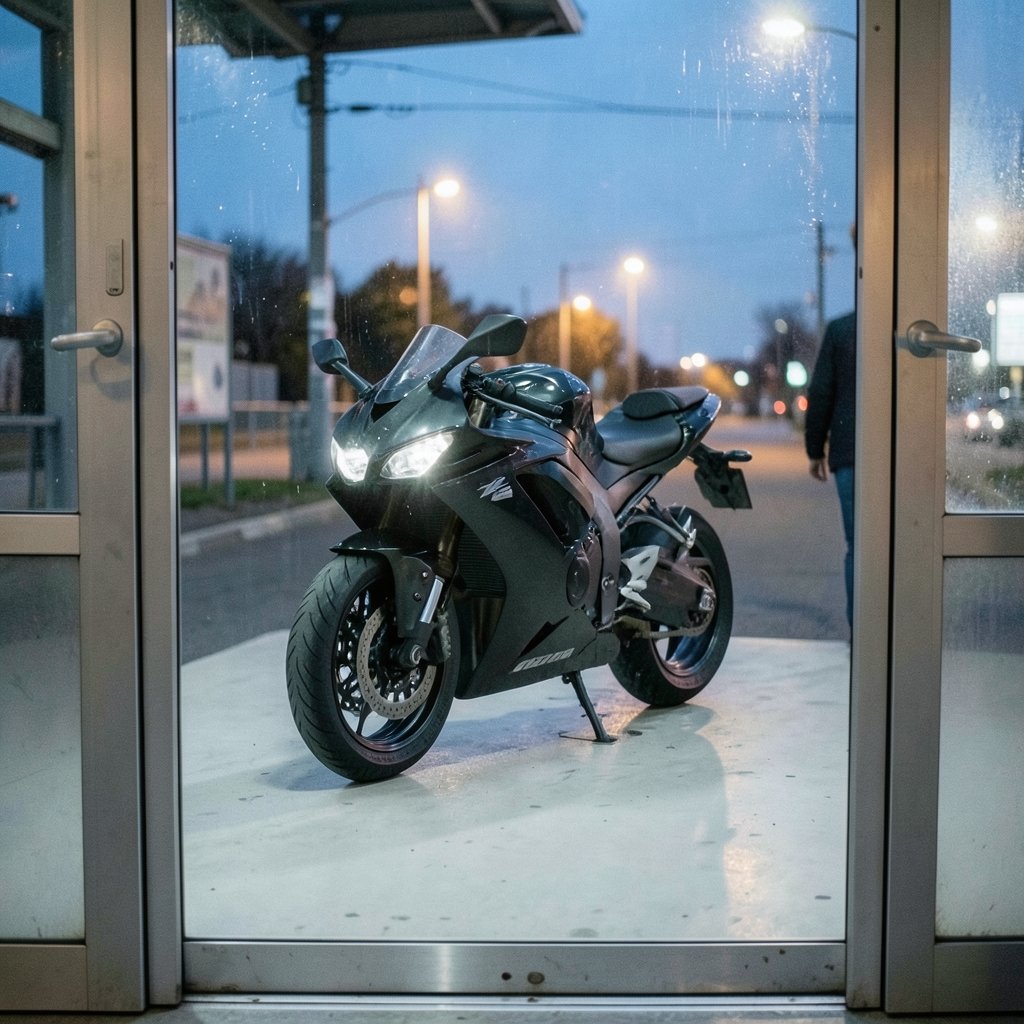
What comes to mind when someone says “ninja motorcycle”? For most riders, it’s a green sport bike with sharp bodywork and a name that sounds fast even when it’s parked. That association is no accident. Kawasaki has spent four decades turning “Ninja” into one of the most recognized badges in motorcycling, and in the process the word has slipped into everyday speech as a catch-all for any faired sport bike.
But the Ninja story is bigger than a single model, and it’s more complicated than a marketing slogan. The name has covered everything from a 250 cc beginner bike to a supercharged 300-horsepower missile. It has meant different machines in different countries. And it has been the subject of more bench-racing arguments than almost any other motorcycle label. Here’s what the Ninja name actually means, where it came from, and how to think about it whether you’re shopping, riding, or just curious.
What Is a Ninja Motorcycle?
A Ninja motorcycle is a Kawasaki sport bike sold under the Ninja trademark. That’s the short answer. The longer answer is that Ninja is a model family, not a single machine. Kawasaki has applied the name to dozens of motorcycles since the mid-1980s, spanning displacements from roughly 250 cc up to 1400 cc and covering several distinct categories: entry-level sport bikes, track-focused supersports, comfortable sport-tourers, and hyperbikes.
The name isn’t a technical classification. It doesn’t describe engine layout, riding position, or performance level. Two Ninjas sitting side by side in a showroom can have almost nothing in common beyond the badge and the family styling. One might be a lightweight parallel-twin commuter machine; the other might be a supercharged inline-four built for straight-line violence.
That breadth is exactly why the term confuses people. Someone who rode a Ninja 250 in the 2000s and someone who owns a Ninja H2 are technically talking about the same family, but they’re describing completely different experiences.
How the Ninja Name Began
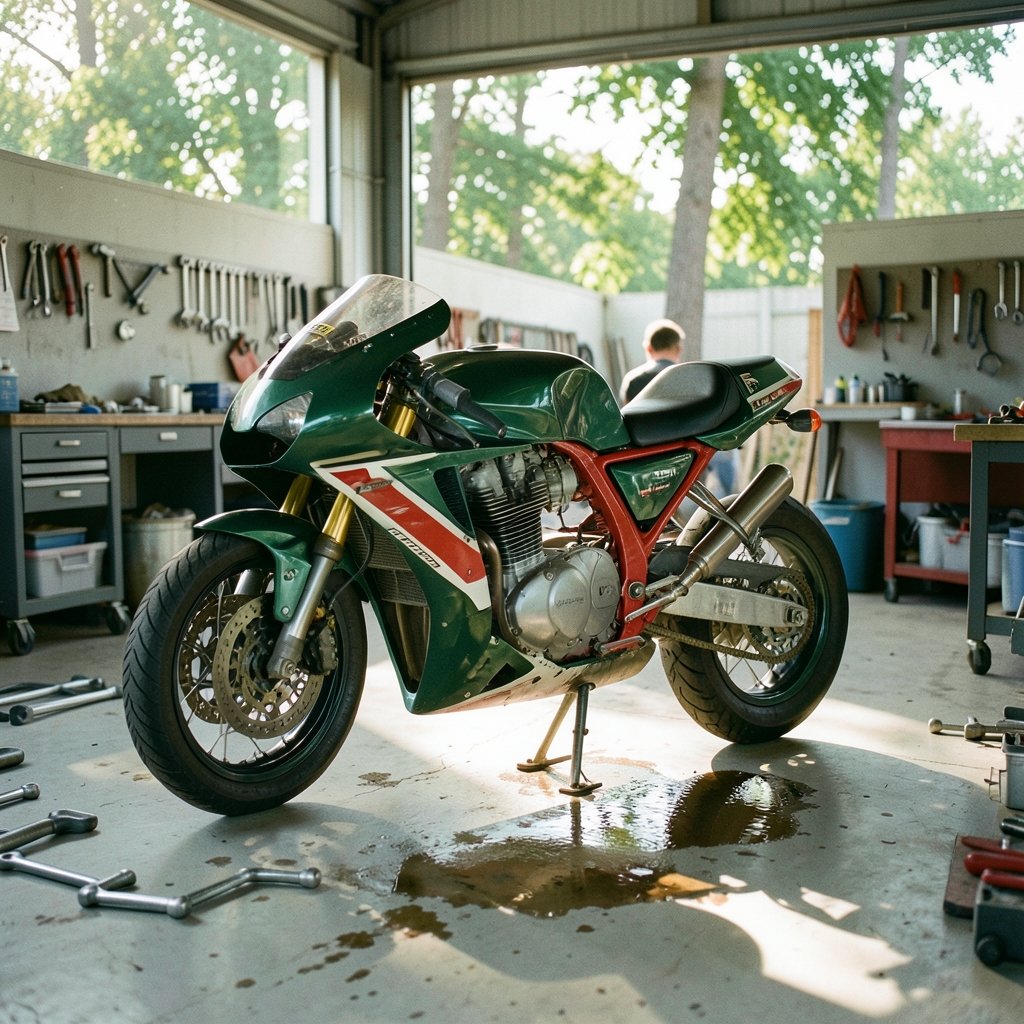
Kawasaki introduced the Ninja name in the United States in 1984, attached to the GPZ900R, which American buyers knew as the Ninja 900. The bike was a landmark: a liquid-cooled inline-four with 16 valves, wrapped in bodywork that looked like it had been shaped in a wind tunnel.
The GPZ900R is widely credited in motorcycle press and enthusiast histories as the first production motorcycle to break 150 mph, roughly 240 km/h. That claim is repeated constantly, but it’s worth treating as an attributed piece of lore rather than a certified fact. Top-speed figures from that era were measured by magazines under varying conditions, and different sources credit different machines with the milestone. What’s not disputed is the impact: the Ninja 900 set the template for the modern sport bike and gave Kawasaki a name it would lean on for decades.
There’s also genuine disagreement about which model deserves the “first Ninja” label. Some histories point to earlier GPZ models; others insist the 1984 GPZ900R is the true origin point. The confusion partly comes from regional naming, which brings us to an important quirk.
One Name, Many Markets
Kawasaki sells motorcycles worldwide, and the Ninja badge hasn’t been applied identically everywhere. Some models sold as Ninjas in the United States have carried different names in Europe and Japan, where labels like ZZR and GPZ have appeared on machines that are essentially the same or closely related.
This matters for anyone researching a used bike or ordering parts. A forum thread about a “Ninja 600” might be describing a machine that a European owner knows by an entirely different name. Before you buy, confirm the exact model code, usually stamped on the frame and printed on the title or registration. Model codes cut through naming confusion in a way that marketing names never will.
The naming inconsistency also explains why spec sheets sometimes seem to contradict each other. Two sources can be perfectly accurate and still disagree, because they’re describing regional variants of the same platform.
The Ninja Family Tree
The line has branched in several directions over the years. Here’s a rough map of the major groupings, though exact model years vary by market and should be checked against regional sources.
| Family | Character | Typical Displacement | Who It Suits |
|---|---|---|---|
| Entry-level Ninjas | Lightweight, forgiving, affordable | 250–400 cc | New riders, commuters |
| Mid-displacement sport | Balanced power and weight | 500–650 cc | Riders stepping up |
| Supersport (ZX line) | Track-focused, aggressive | 600–1000 cc | Experienced sport riders |
| Sport-touring | Comfortable, long-distance capable | 1000 cc+ | Tourers who want speed |
| Hypersport and H2 | Extreme performance | 1000–1400 cc | Collectors, thrill seekers |
The Ninja 250R, built on the EX250 platform, is a good example of how long a single design can run. It was sold in the US from roughly 1986 to 2012 before being replaced by the Ninja 300 in 2013. Exact start and end years differ by market, so a bike advertised as a “2012 Ninja 250” in one country might have a different production history in another. That little twin earned a reputation as one of the most approachable sport bikes ever built, and it’s still a common first bike recommendation.
At the other end sits the Ninja H2, announced in 2014 and on sale as a 2015 model. It’s a supercharged production motorcycle, and Kawasaki describes it as the first production bike with a supercharger designed in-house. The track-only H2R version is claimed to produce around 300 PS. Those are manufacturer claims, and they’re dramatic enough that they’ve spawned endless debate online, but the engineering itself is real and unusual.
Then there’s the Ninja ZX-14R, a large-displacement hypersport that has been the subject of countless top-speed and quarter-mile tests in the motorcycle media. Treat specific performance numbers you see quoted as media-tested results rather than manufacturer-certified figures. Conditions, rider skill, and setup all move the needle.
“Ninja” as Everyday Language
Here’s where things get linguistically messy. In casual conversation, “ninja bike” often means any sport bike, regardless of brand. The word has become generic in some circles, the way “kleenex” means tissue or “band-aid” means adhesive bandage.
That’s usage, not definition. A Honda CBR owner might call their bike a ninja in passing, and nobody at the coffee shop will correct them. But the term is also a registered trademark of Kawasaki Heavy Industries in motorcycle classes, and using it on a different product category can create real legal problems. Trademark status varies by jurisdiction and should be checked through the relevant trademark office if it matters for a business or product name. For riders, this is mostly trivia. For anyone naming a product, it’s a genuine risk.
Practical Buying Advice
If you’re shopping for a used Ninja, a few habits separate a smooth purchase from an expensive lesson.
- Decode the model code first. Don’t rely on the seller’s description or the sticker on the fairing. Find the frame stamp and match it to the actual model and year.
- Check which market the bike was built for. Grey imports and regional variants can complicate insurance, parts availability, and resale.
- Inspect the fairings closely. Sport bike bodywork hides crash damage well. Look for mismatched paint, stress marks around mounting points, and non-factory fasteners.
- Verify service history on high-strung models. Supersport and hypersport engines reward maintenance and punish neglect. A cheap ZX-10R with no records is rarely a bargain.
- Match the bike to the rider. A 300 cc Ninja and a ZX-14R share a badge and nothing else. Be honest about experience level.
A common mistake is buying on badge reputation alone. Someone hears “Ninja” and assumes race-bred performance, then ends up with a friendly commuter twin, or the reverse: a nervous new rider buys a supersport because the name sounded exciting. Both scenarios end badly. The badge tells you it’s a Kawasaki sport bike. It doesn’t tell you which one.
Another frequent error involves parts. Because the name spans so many models and markets, ordering the wrong component is easy. Always cross-reference by model code and year, not by the name on the decal. Owners who learn this early save themselves a lot of return shipping.
For those curious about how branding and ownership shape motorcycle history, the story of another American marque offers a useful parallel: the question of who owns indian motorcycle company shows how corporate identity and model naming intertwine over decades. Kawasaki’s Ninja line is a similar case study in how a single trademark can stretch across an entire product range.
Riding Impressions and What Actually Matters
Strip away the marketing and the forum arguments, and the Ninja family’s real strength is range. Few nameplates cover such a wide span of ability. A rider can start on a small Ninja, spend years learning, and eventually move up through the line without ever leaving the family. That continuity builds loyalty, and it’s a big reason the badge has survived so long.
The trade-off is that “Ninja” tells you almost nothing on its own. It’s a starting point for research, not a conclusion. The practical move is to ignore the name and look at the numbers: displacement, weight, seat height, power delivery, and service intervals. Those determine whether a bike suits you. The decal on the tank determines whether you smile when you walk into the garage.
There’s also a maintenance angle worth mentioning. Faired sport bikes take more time to service than naked bikes because bodywork has to come off for basic jobs. If you’re doing your own work, budget for that. It’s not a dealbreaker, but it’s the kind of thing riders discover after the first oil change, usually with a few misplaced clips and a scratched panel. Keeping fasteners organized and photographing the disassembly saves real frustration. The same principle of finding the root cause rather than chasing symptoms applies to mechanical troubleshooting as much as to anything else, much like learning to get rid of gnats by finding the breeding site and stopping the cycle rather than swatting them one at a time. Diagnose the source, not the symptom.
The Confusion Around “First” and “Fastest”
Motorcycle history is full of contested claims, and the Ninja line sits at the center of several. Which model was the first true Ninja? Which one actually broke 150 mph first? Which hypersport is genuinely fastest? Sources disagree, sometimes sharply.
The honest answer is that these questions don’t have clean resolutions. Production dates vary by market, magazine tests used different methods, and manufacturer claims aren’t always comparable. Anyone who tells you there’s a single definitive answer is probably repeating something they read once. Treat bold claims with polite skepticism and look for primary documentation when it matters.
For readers interested in how model naming and ownership records get tangled across brands, the history of who owned indian motorcycles is a reminder that corporate lineage is rarely a straight line. Kawasaki’s own naming history follows a similar pattern of regional variation and evolving trademarks.
Conclusion
The ninja motorcycle is less a single machine than a forty-year conversation between Kawasaki and its riders. It began in 1984 with the GPZ900R, a bike that reshaped what a production sport bike could be, and it has since stretched across entry-level twins, track weapons, supercharged exotics, and comfortable tourers. The name carries real weight, but it also carries real ambiguity, because it has been applied to so many different machines in so many different markets.
The practical takeaway is simple. If you’re buying, research the specific model code and year rather than the badge. If you’re riding, appreciate the range the line offers. And if you’re just curious, enjoy the fact that a single word can mean a 250 cc starter bike and a 300-horsepower supercharged monster at the same time. Few names in motorcycling carry that kind of span, and fewer still have earned it.
Frequently Asked Questions
What is a ninja motorcycle?
A ninja motorcycle is any Kawasaki sport bike sold under the Ninja trademark. The name covers a whole family of models rather than one machine, ranging from small entry-level bikes to supercharged hypersports. It’s a brand label, not a technical category.
Was the Ninja 900 the first Ninja?
The GPZ900R, sold in the US as the Ninja 900 in 1984, is the model most often credited as the first Ninja. However, some histories point to earlier GPZ models, and sources genuinely disagree. Treat the claim as widely accepted but contested.
Is a Ninja a good beginner motorcycle?
Some Ninjas are excellent beginner bikes, particularly the smaller-displacement models. Others, like the ZX supersport and H2 lines, are absolutely not suitable for new riders. The badge alone tells you nothing; the specific model and engine size matter far more.
Why do Ninja model names differ between countries?
Kawasaki has used different naming conventions in different markets, so some machines sold as Ninjas in the US have carried names like ZZR or GPZ elsewhere. This creates confusion when researching used bikes or ordering parts, which is why the frame model code is the reliable reference.
Is “Ninja” a trademark?
Yes. Ninja is a registered trademark of Kawasaki Heavy Industries in motorcycle classes. Using the term for unrelated products can raise legal issues. Registration status varies by jurisdiction and should be checked with the relevant trademark office if it matters for a business.
What’s the fastest Ninja ever made?
Kawasaki claims roughly 300 PS for the track-only Ninja H2R, making it the most powerful machine in the line. However, top-speed and power figures quoted in media tests vary by conditions and method, so specific numbers should be treated as claims rather than certified facts.



