
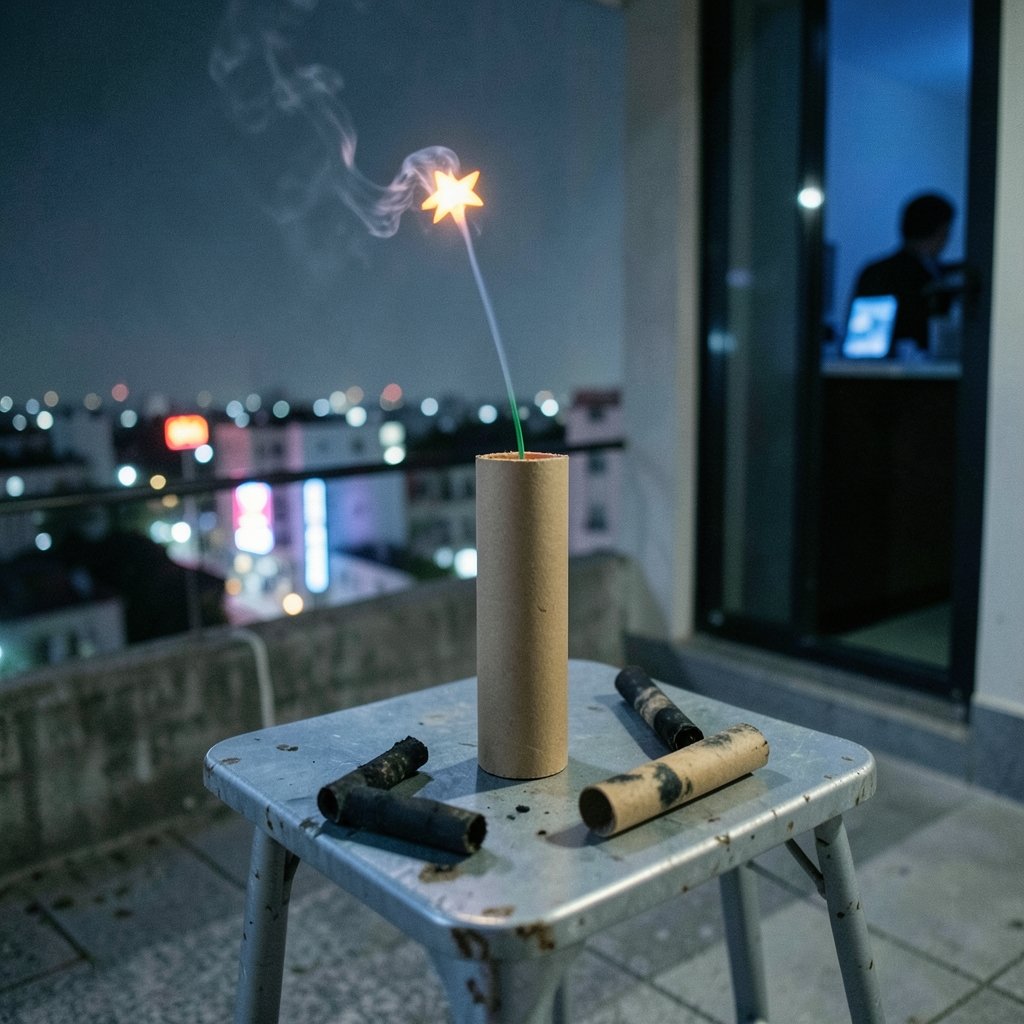
What firework sits quietly on the driveway, looks like a plain cardboard tube, and then launches a slow parade of glowing balls into the night sky one at a time? If you pictured a fountain or a sparkler, guess again. The answer is a roman candle, one of the oldest and most recognizable consumer fireworks on the market. It is also one of the most misunderstood, which is why it deserves a closer look before you light one.
This guide breaks down how a roman candle is built, what happens after the fuse is lit, how it compares with other backyard fireworks, and where the real safety risks hide. Whether you are a curious first-time buyer or a longtime backyard pyro, there is something here worth knowing.
What Is a Roman Candle, Exactly?
A roman candle is a tube-shaped firework that shoots individual pyrotechnic stars, or balls, upward one at a time, usually with a short delay between each shot. Think of it as a mini launching pad rather than a single explosion. Instead of one big burst, you get a rhythmic sequence: pop, pause, pop, pause, pop.
The device is typically a paper or cardboard tube with a clay plug at the base, alternating layers of lift charge and a star packed inside, and a fuse at the top. The lift charge is a small amount of powder that pushes each star out of the tube. The star is the part you actually see, a burning ball of color that arcs into the air and fades.
Most consumer roman candles sold in the United States hold between five and ten shots, though the exact count depends on the maker and the tube length. Some are thin and compact; others are thick tubes that stand upright on a base. The name itself is a bit of a mystery. There is no documented link to the Roman Empire that anyone can confirm, so treat any colorful origin story you hear with suspicion.
How a Roman Candle Actually Works
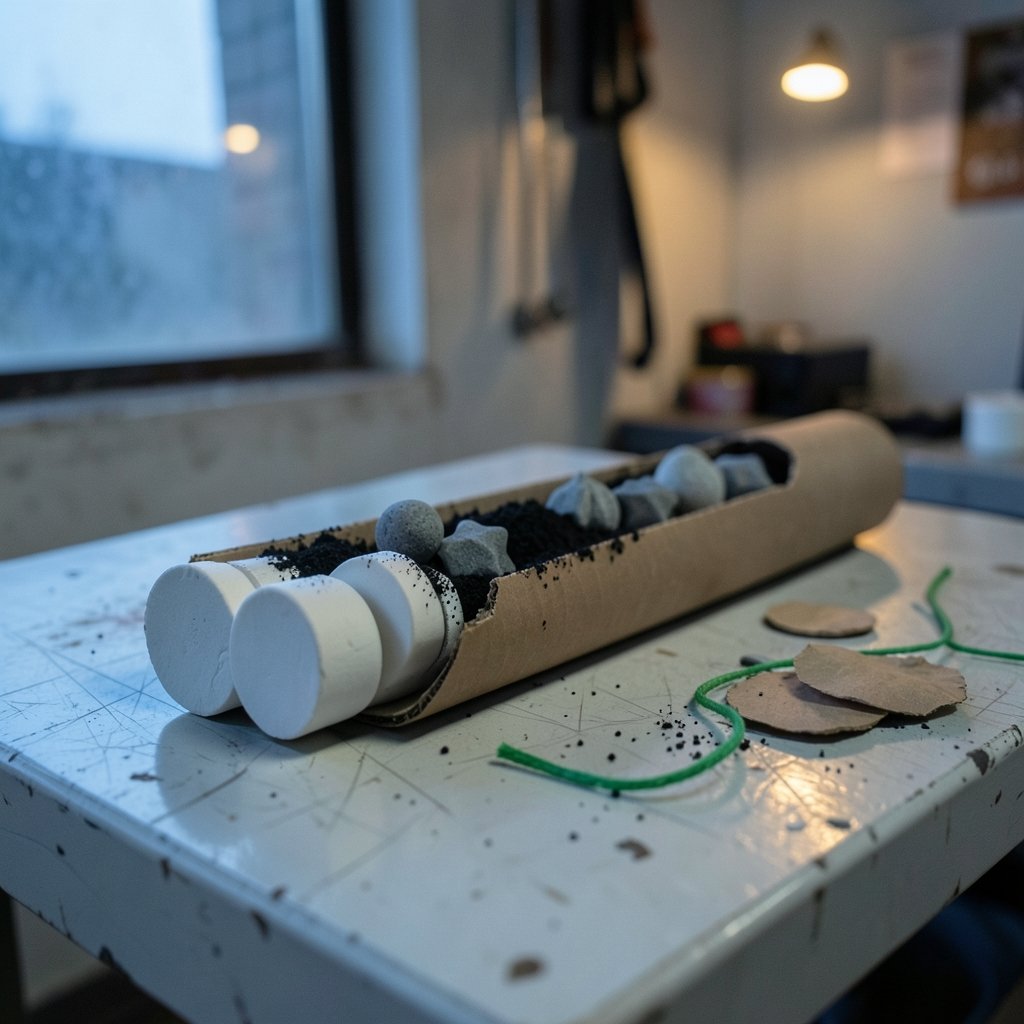
The magic of a roman candle comes down to timing. Here is the basic sequence, step by step:
- The fuse burns down and ignites the first lift charge at the top of the tube.
- The lift charge burns fast and creates gas pressure that pushes the top star out of the tube.
- The star ignites as it leaves, flying upward and burning in the air.
- The burning lift charge also lights a delay element, which smolders for a moment.
- The delay element ignites the next lift charge, and the cycle repeats.
- This continues until the tube runs out of shots.
The delay between shots is what gives a roman candle its signature rhythm. Too short, and the shots blur together. Too long, and people lose interest and start wandering closer, which is exactly when accidents happen. Good manufacturing keeps that timing consistent, and that consistency is one reason quality varies so much between brands.
One practical detail that surprises a lot of people: the tube gets hot and can scorch or catch fire on dry grass. Setting a candle directly on a lawn in August is a genuinely bad idea. A flat, non-flammable surface such as a paved driveway or a sheet of plywood is far safer.
Roman Candle vs. Other Backyard Fireworks
It helps to see where roman candles fit in the wider lineup. The table below compares them with a few common alternatives.
| Feature | Roman Candle | Fountain | Bottle Rocket | Sparkler |
|---|---|---|---|---|
| Shape | Upright tube | Cone or block | Small rocket on a stick | Thin wire or stick |
| Effect | Series of launched balls | Ground-level shower of sparks | Single aerial flight and burst | Handheld spark shower |
| Duration | Several seconds, multi-shot | Often 30 seconds or more | A few seconds | 30 to 60 seconds |
| Needs open sky | Yes | No | Yes | No |
| Stability concern | Must be braced upright | Sits flat | Needs a launch stand | Handheld |
The key difference is that a roman candle launches projectiles. A fountain stays put. That single fact drives most of the safety rules that follow.
The Real Safety Picture
Fireworks send thousands of people to U.S. emergency departments every year, and hands, fingers, eyes, and the head are among the most commonly injured areas. Roman candles and similar devices show up in those case records. The pattern is consistent: the injuries are rarely random. They cluster around a handful of predictable mistakes.
Here are the mistakes that show up again and again in practice.
Holding the candle by hand. This is the big one. A roman candle is designed to sit on the ground, not in your fist. People grab one to “aim” it, the tube gets hot, the shots come out at an angle, and the next thing you know someone is burned. Never hold one.
Pointing it at people or houses. A candle that tips over does not stop firing. It keeps launching balls, now horizontally. Bracing the tube so it cannot fall is not optional.
Standing too close. The recommended viewing distance for consumer fireworks is generally around 25 feet or more, and longer is better. People creep closer to watch the colors, which puts them right in the path of a low shot.
Relighting a dud. If a candle stops partway through, do not walk up and put a lighter to it. Wait at least 15 to 20 minutes, then soak it in water. A smoldering delay element can reignite when you least expect it.
Skipping the water bucket. A bucket of water and a hose nearby cost nothing and solve a lot of problems. Dry grass, a tipped tube, and a breeze are a bad combination.
Letting kids handle them. Age limits exist for a reason. In the UK, adult fireworks including roman candles are sold under the Fireworks Regulations 2004, with age limits and sale-period rules. In the U.S., consumer fireworks are regulated at the federal level, and many states and localities restrict or ban them outright.
Rules and Regulations You Should Check Before Buying
This is the part people skip, and it is the part that can get you a fine or worse. Fireworks law in the United States is a patchwork. The federal government sets baseline safety standards for consumer fireworks, but states, counties, and cities layer their own rules on top. A candle that is perfectly legal in one town may be banned in the next one over.
In the U.S., consumer fireworks including roman candles are regulated federally, and they ship under a specific hazard classification (UN 0336, also labeled 1.4G) that separates them from professional display fireworks. That classification matters because it tells you these are consumer-grade devices with limited explosive content, not display shells.
Before you buy, do three things:
- Check your state’s current fireworks rules, not a blog post from five years ago.
- Check your city or county ordinance, which is often stricter than the state.
- Check whether your area is under a fire ban, which can override everything else during dry season.
Rules change, sometimes quickly after a bad fire season. A quick call to the local fire department is the fastest way to get a straight answer.
Buying and Storing Roman Candles Sensibly
When you are shopping, look for a few practical signals of quality. A well-made candle has a sturdy tube, a clean clay plug at the base, a fuse that is easy to see, and clear labeling with the shot count and the manufacturer’s name. Flimsy tubes that flex in your hand are a warning sign. So is a fuse that looks loose or frayed.
Storage is where people get careless. Fireworks belong in a cool, dry place away from the house, not in a garage next to the lawnmower fuel. Keep them in their original packaging, away from any heat source, and out of reach of children. Do not stockpile them for years; older fireworks can become unpredictable.
One more buying tip that actually works: read the label for the number of shots and the effect description before you commit. A ten-shot candle with color-changing stars is a very different experience from a five-shot tube that just pops. If you are planning a small backyard show, mixing a couple of multi-shot candles with fountains gives you variety without needing a permit.
Setting Up for a Safe Backyard Show
Setup is where amateurs and experienced users separate. Here is a routine that works.
- Pick a clear, flat area away from dry grass, trees, cars, and buildings.
- Place each candle on a stable, non-flammable surface, or push its base into soft ground or a bucket of sand so it cannot tip.
- Space candles well apart so one does not ignite another.
- Keep spectators behind a clear line at a safe distance, and keep pets indoors.
- Have water ready: a bucket, a hose, or both.
- Light one device at a time, then step back immediately.
- Never lean over a lit candle to check on it.
The tipping problem deserves extra emphasis. A roman candle that falls over mid-show turns into a ground-level projectile launcher. Sand, soil, or a proper base solves this cheaply. If you are setting up several candles, a board with holes drilled for the tubes is a simple, effective trick that keeps everything upright.
Common Myths About Roman Candles
A few persistent myths are worth clearing up.
Myth: They are basically giant sparklers. Not even close. Sparklers burn slowly and stay in your hand. Roman candles launch burning projectiles into the air. The risk profiles are completely different.
Myth: The name comes from ancient Rome. The etymology is genuinely uncertain. Anyone who tells you a confident origin story is guessing.
Myth: A dud is dead. A candle that stops firing may still have live charges inside. Soak it, do not poke it.
Myth: Bigger tubes mean better quality. Tube size varies by design, not by quality. A compact candle with tight construction can outperform a fat, sloppy one.
Conclusion
The roman candle earns its place in the backyard lineup for a simple reason: it delivers a real show, shot by shot, from a device that costs a few dollars. Understanding how it works makes it more fun to watch and much safer to use. The tube, the clay plug, the alternating lift charges and stars, and that steady rhythm of pops are all part of a design that has barely changed in generations.
The rules are not complicated. Brace the tube so it cannot tip. Keep everyone back at a safe distance. Never hold one. Soak the duds. Check your local laws before you buy. Do those things, and the roman candle stays what it was meant to be: a small, loud, colorful piece of entertainment rather than a trip to the emergency room. For more practical guides on fireworks, safety, and backyard events, visit
Frequently Asked Questions
How many shots does a roman candle have?
Most consumer roman candles hold between five and ten shots, though the exact number depends on the manufacturer and the tube length. The shot count is usually printed on the label, so check before you buy. More shots generally means a longer show, but not necessarily a better one.
Can you hold a roman candle in your hand?
No. A roman candle is designed to sit on the ground and launch projectiles upward. Holding one exposes your hand to a hot tube and aims burning stars in unpredictable directions. Always place it on a stable, non-flammable surface before lighting it.
What should you do with a roman candle that stops firing?
Leave it alone. Do not pick it up, look down the tube, or try to relight it. Wait at least 15 to 20 minutes, then soak it thoroughly in water before disposing of it. A stalled candle can still contain live charges that may reignite.
Are roman candles legal everywhere?
No. Fireworks laws vary widely by country, state, county, and city, and they change over time. Some places allow them freely, others restrict when and where they can be sold and used, and some ban them outright. Always check your local rules and any active fire bans before buying.
What is the difference between a roman candle and a fountain?
A fountain stays on the ground and sprays sparks upward in a stationary shower. A roman candle launches individual burning balls into the air one at a time. The fountain is stationary; the candle is a repeating launcher, which is why it needs open sky and careful bracing.
How far away should spectators stand from a roman candle?
Keep spectators well back, generally around 25 feet or more, and further for larger devices. The person lighting the candle should step back immediately after ignition. Never let anyone lean over a lit candle to watch the shots leave the tube.



