

What crosses your mind when you see a small hoop hugging the center of someone’s nose? Maybe you love the look. Maybe you wonder how much it hurt. Maybe you’re quietly thinking about getting one yourself and want the real story before you sit in a piercer’s chair.
Septum rings have moved from punk subculture into the mainstream, and they’re now one of the most requested facial piercings. But a good experience comes down to more than picking a shiny piece of metal. Placement, jewelry fit, aftercare, and knowing when something is wrong all matter. This guide walks through each of those, with practical detail rather than hype. (Your video doorbell rings nobody there)
What a Septum Piercing Actually Is
A septum piercing passes through the tissue dividing the two nostrils. The key detail is that it usually goes through the thin, fleshy membrane just in front of the cartilage, often called the “sweet spot.” That spot is soft and flexible. The hard cartilage sits further back and higher up.
This distinction explains a lot. A piercing through the sweet spot tends to be less painful and faster to heal than one forced through cartilage. A skilled piercer feels for the soft tissue and places the needle there. If someone tells you the piercing always goes through cartilage, that’s a red flag. Placement conventions vary between piercers, so it’s fair to ask how they locate the sweet spot before any needle comes out of the package.
The piercing also has genuine cultural roots. It has been worn by various Indigenous peoples of the Americas, including groups in the Pacific Northwest and Plains regions, and it appears in South Asian traditions as well. Broad claims about “ancient origins” often flatten those specific histories, so treat culture-specific statements carefully and look for ethnographic sources rather than general-interest websites.
How Much Does It Hurt?
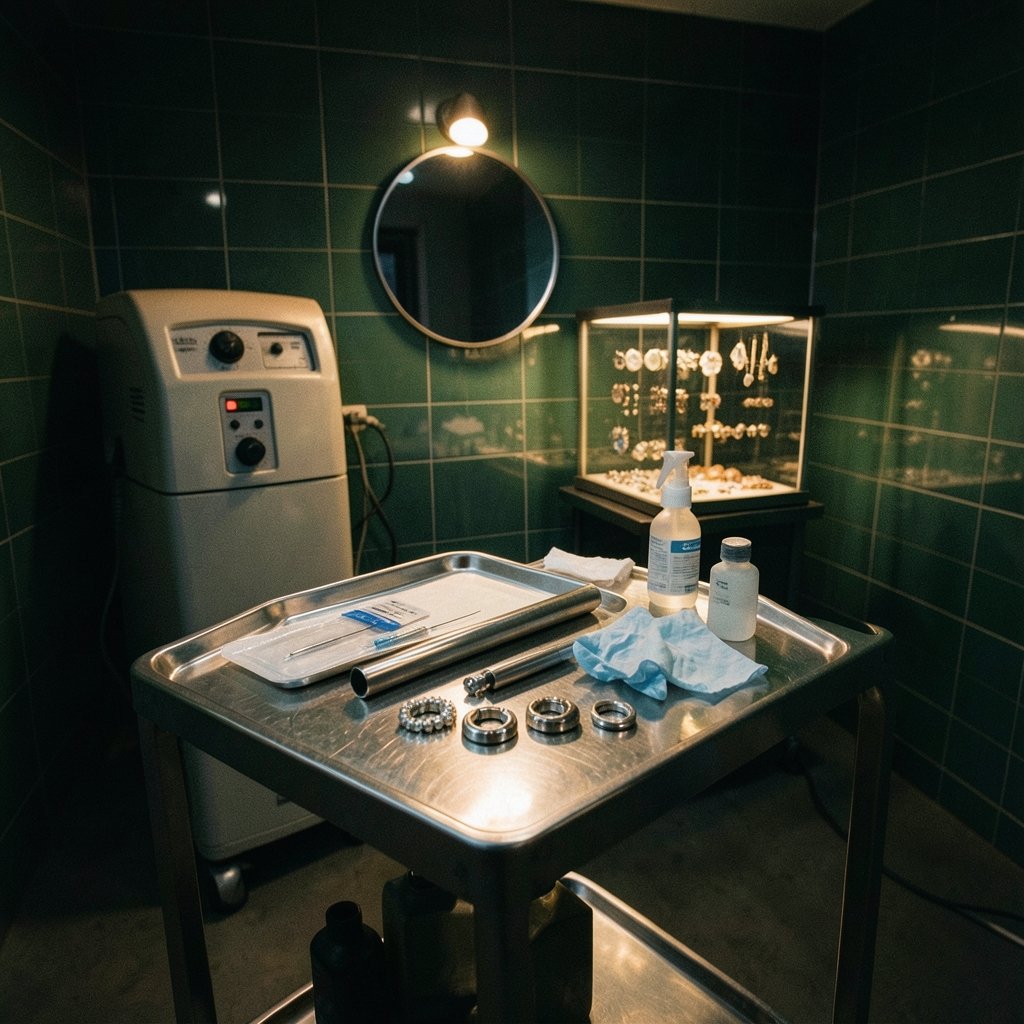
The honest answer: less than most people expect. Because the sweet spot is soft tissue, many people describe the needle as a sharp pinch that lasts a second or two. Eyes water automatically, which is a reflex, not a sign of distress. The soreness afterward is usually mild compared with earlobe piercings that get bumped.
Pain is personal, though. Placement, individual anatomy, and the piercer’s speed all affect it. If the needle goes through cartilage instead, expect noticeably more discomfort and a longer recovery.
Choosing Jewelry That Fits and Works
Jewelry choice is where many first-timers go wrong. The most common styles:
| Style | What it looks like | Good for |
|---|---|---|
| Circular barbell (horseshoe) | A curved bar with balls on each end | Fresh piercings, since it can be flipped up to hide |
| Captive bead ring | A full ring with a bead holding it closed | Healed piercings, a classic look |
| Seamless or segment ring | A ring with a hidden or plain seam | Healed piercings, a clean continuous circle |
| Septum clicker | A hinged ring that snaps closed | Easy changes once healed |
Two numbers matter for fit. Gauge is the thickness of the metal. Diameter is the width of the ring. A first piercing usually starts at a thinner gauge with a slightly larger diameter to leave room for swelling. A ring that’s too small can press on the tissue; one that’s too large catches on things and shifts around.
Material matters too. Implant-grade titanium and surgical steel are the usual safe choices. Cheap fashion jewelry with unknown metal content is a common cause of irritation and allergic reactions. If you’re also shopping for other rings, the sizing logic is different from what you’d use for a finger, so it helps to know how to measure ring size at home without guessing before you buy anything online.
One practical tip: for a fresh piercing, ask for a horseshoe. It can be tucked up inside the nostrils during work or school while it heals, which protects it from bumps and keeps it out of sight if that matters to you.
What Healing Really Looks Like
Healing timelines vary widely between sources, and that’s worth saying plainly. Soft-tissue septum piercings often settle down within a few weeks to a few months, while cartilage piercings generally take longer. Treat any single number you see online as a rough range, not a promise.
During healing, the standard aftercare advice is consistent:
- Clean gently with sterile saline solution, usually once or twice a day.
- Wash hands before touching the area at all.
- Leave crusties alone or soften them with saline rather than picking.
- Avoid twisting or rotating the jewelry, which irritates healing tissue.
- Keep makeup, lotions, and harsh facial cleansers away from the site.
- Don’t swim in pools, lakes, or hot tubs until healing is well along.
That last point surprises people. If a hot springs trip is on the calendar, it’s worth checking the healing timeline first. Soaking in communal water early on raises infection risk, and the best places for hot springs will still be there in a few months.
Common mistakes are predictable. Over-cleaning with alcohol or hydrogen peroxide dries out the tissue and slows healing. Touching the jewelry constantly introduces bacteria. Changing jewelry too soon tears the fragile healing channel. And sleeping face-down on a fresh piercing is a quiet saboteur that causes irritation bumps.
Infection Risk and When to Get Help
Any piercing breaks the skin, so sterile technique is not optional. A reputable studio uses single-use needles, an autoclave for reusable tools, and gloves changed between steps. Body piercing rules are set at state or local level in the United States and by local authorities in the United Kingdom, so standards vary by location. Asking about sterilization practices is normal and expected.
Watch for signs that something is wrong rather than just irritated:
- Spreading redness, warmth, or swelling
- Thick yellow or green discharge
- Fever or feeling unwell
- Pain that gets worse after the first week instead of better
Mild redness and clear fluid in the first days are typical. The pattern above is not. Seek medical advice if it appears, and don’t remove the jewelry on your own during an infection without professional guidance, since trapping infection under the skin is a real concern.
Placement, Symmetry, and the Flipping-Up Question
Symmetry is the detail people notice later. The septum should sit centered, and a good piercer checks the angle from the front and the side before piercing. Slight deviations are common because noses aren’t perfectly symmetrical, but a clearly crooked piercing is worth discussing immediately rather than “letting it settle.”
The flip-up question comes up constantly. Yes, a horseshoe can be rotated up into the nostrils, and many people heal a piercing that way. But flipping it up and down repeatedly during healing is exactly the kind of friction that causes irritation. Pick a position and leave it there for the bulk of the healing period.
Gauges, Stretching, and Long-Term Wear
Some people stay at their initial gauge forever. Others stretch gradually to a larger size for a bolder look. Stretching should be slow, with weeks or months between sizes, and it should never hurt sharply. Skipping sizes risks tearing and scar tissue. If bigger jewelry is the goal, talk to a piercer about a realistic timeline rather than rushing it.
Long-term wear is mostly maintenance. Clean the jewelry when you clean your face, check that beads and seams stay tight, and replace anything with scratches or pitting, since rough metal harbors bacteria. If your daily routine already includes other wearables, the same habits apply: a bit of consistent care beats occasional deep cleaning. Anyone comparing devices for sleep and recovery might find a whoop vs oura ring vs apple watch breakdown useful for context, because the principle is identical: small, consistent attention produces the results. (Eoir case status check immigration court hearings)
Cost, Studio Choice, and Red Flags
Prices vary widely by city and studio, but the cheapest option is rarely the best value. What to look for:
- A portfolio of healed septum work in addition to fresh photos
- Single-use needles opened in front of you
- Autoclave logs available on request
- Clear aftercare instructions in writing
- Willingness to answer questions without pressure
Walk away from any studio that pierces with a piercing gun. Guns crush tissue rather than cutting cleanly, and they can’t be properly sterilized for this kind of work. Also walk away from anyone who won’t discuss placement or who rushes you.
Living With It Day to Day
Once healed, a septum ring is low maintenance. Blowing your nose takes a little practice. Some people find a tissue wrapped around a finger works better than a full tissue. Contact lenses and glasses are unaffected. Colds and allergies can make the area tender temporarily, which is normal.
If you wear other tech on your face or hands, you already know the adjustment period that comes with any new accessory. The same logic applies here: a short learning curve, then it disappears into your routine. Anyone curious about that broader category might enjoy a practical guide to AI wearables like smart glasses, pins, and rings, if only to see how quickly “weird” becomes “normal.”
Conclusion
Septum rings reward a little preparation. The piercing itself is usually quicker and milder than people fear, especially when it goes through the soft sweet spot rather than cartilage. The parts that trip people up are almost always the same: jewelry that doesn’t fit, over-cleaning, fidgeting with a healing piercing, and skipping the questions at the studio. Get the placement right, choose implant-grade metal in a sensible size, follow simple saline aftercare, and give it time. Do that, and a small hoop in the center of your face becomes one of the easiest body modifications you’ll ever own. If you’re still deciding, visit a reputable studio for a consultation. Most piercers will happily talk placement and jewelry with no commitment, and that conversation usually answers more than any article can.
How long does a septum piercing take to heal?
Sources disagree, which is worth knowing upfront. Soft-tissue septum piercings commonly settle within a few weeks to a few months, while cartilage placements take longer. Treat any single figure as a rough range. Full comfort and easy jewelry changes often take longer than the visible healing.
Does getting a septum piercing hurt a lot?
Most people describe a brief sharp pinch and automatic eye watering. Because the needle typically passes through soft tissue rather than cartilage, it’s often less painful than expected. Cartilage placement is noticeably more uncomfortable, which is one reason placement matters so much.
Can I hide a septum ring while it heals?
Yes. A circular barbell, often called a horseshoe, can be rotated up inside the nostrils. The catch is that flipping it up and down repeatedly causes irritation. Choose a position and leave it alone for most of the healing period rather than adjusting it daily.
What jewelry should I get for a first septum piercing?
A circular barbell in implant-grade titanium or surgical steel at a moderate gauge and diameter is the usual starting point. It leaves room for swelling and can be hidden. Avoid unknown metals and avoid changing to a decorative ring until healing is complete.
What happens if I get an infection?
Watch for spreading redness, warmth, thick yellow or green discharge, fever, or pain that worsens after the first week. Those are reasons to seek medical advice. Don’t remove the jewelry yourself during an active infection without professional guidance, because trapping infection under the skin can make things worse.
Is a septum piercing safe long term?
With sterile technique, quality jewelry, and sensible aftercare, it’s generally well tolerated. Risks are the standard ones for any skin-penetrating procedure: infection, irritation, and allergic reaction to metal. Choosing a studio that uses single-use needles and following basic cleaning habits covers most of the risk.



