

Can a chipped front tooth really be fixed in a single sitting, without drilling, needles, or a lab-made crown? For many people, yes. Teeth bonding is one of the most straightforward ways to repair small flaws in the smile, and it has been around long enough that dentists treat it as routine work rather than a specialty trick. But “simple” does not mean “one-size-fits-all.” Bonding has real limits, a finite lifespan, and cost rules that surprise a lot of patients.
This guide walks through what bonding actually is, how the appointment unfolds, where it beats veneers and crowns, where it falls short, and the practical details nobody mentions until you are already in the chair.
What Is Teeth Bonding, Exactly?
Teeth bonding is a direct restorative and cosmetic procedure. A dentist applies a tooth-coloured resin composite to the surface of a tooth, sculpts it into shape, hardens it with a curing light, and polishes it smooth. “Direct” is the key word: the material is built up on the tooth itself in a single visit, rather than being manufactured in a dental lab and glued on later.
The material is the same family used in tooth-coloured fillings: a resin-based composite made of acrylic resin mixed with glass or ceramic filler particles. Because the dentist can layer and shape it by hand, bonding works well for small, precise corrections. Because it is applied freehand, it also depends heavily on the dentist’s skill and eye for proportion. Two dentists can bond the same chipped incisor and produce noticeably different results.
People often confuse bonding with veneers. They are not the same thing. A veneer is a thin shell, usually made in a lab, that covers the front of a tooth. Bonding is sculpted directly onto the tooth from soft composite. One is custom-built; the other is built in place.
What Problems Can Bonding Fix?
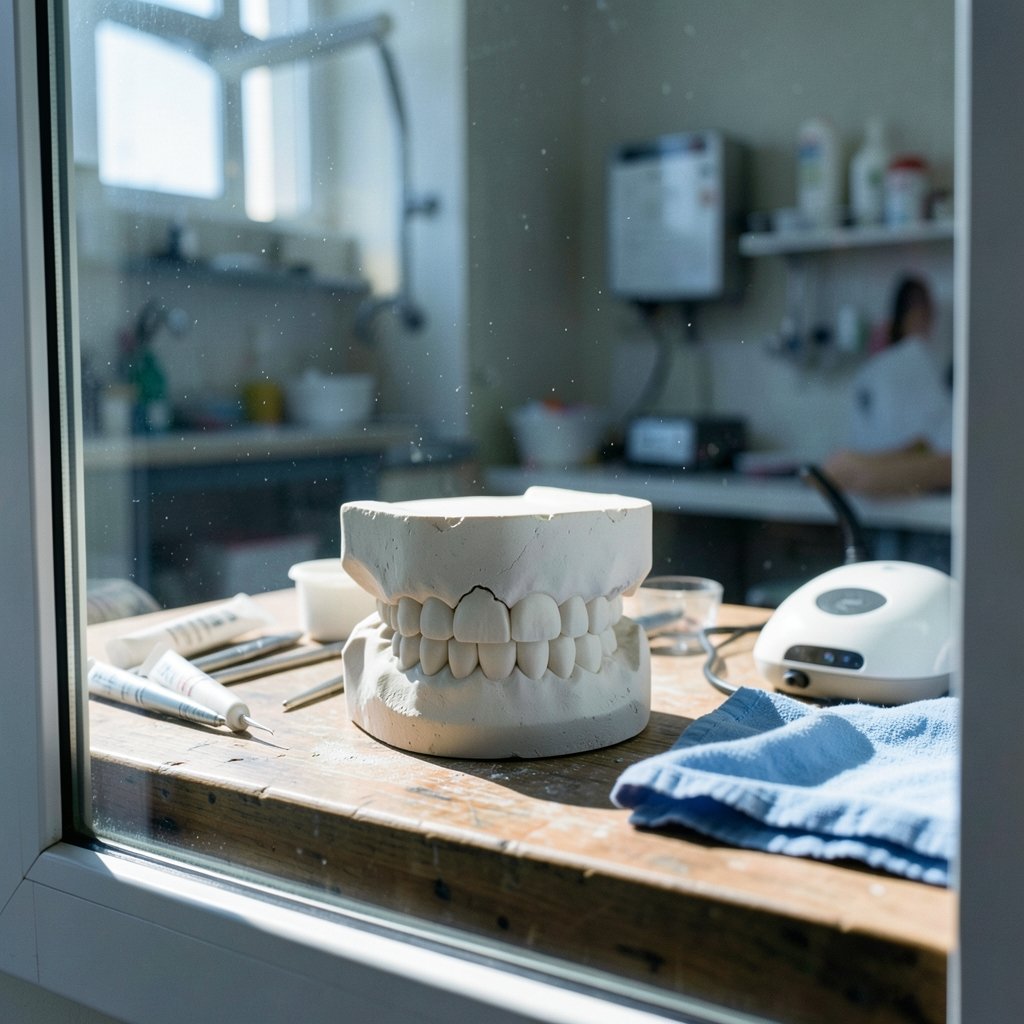
Bonding is at its best on small, localized problems. Common uses include:
- Chipped or cracked teeth, especially front teeth damaged in a fall or while eating something hard
- Small gaps between teeth, where orthodontics is more than the patient wants to take on
- Discoloured teeth, where whitening has not worked or is not appropriate
- Short or uneven teeth, where a slightly longer or more even shape would balance the smile
- Small cavities, particularly in front teeth where appearance matters
- Exposed tooth roots caused by gum recession, which can make teeth look long and feel sensitive
What bonding is not good at: closing large gaps, correcting significantly rotated or crowded teeth, or replacing a tooth that is heavily broken down. In those cases, a dentist will usually steer toward orthodontics, a crown, or a veneer. A good rule of thumb is that bonding adds material to a tooth. If the problem is the position or size of the tooth itself, adding material can look bulky rather than natural.
How a Bonding Appointment Actually Works
Most bonding appointments follow a predictable sequence:
- Assessment and shade matching. The dentist checks the tooth, confirms the problem is suitable for bonding, and picks a composite shade that matches the surrounding teeth. This step matters more than patients expect, because composite cannot be whitened later the way natural enamel can.
- Surface preparation. The tooth is cleaned and lightly etched, then a bonding agent is applied. This creates the microscopic grip that holds the composite in place.
- Application. The composite is placed in layers, shaped with small instruments, and cured with a light between layers. Building in layers lets the dentist control thickness and translucency.
- Shaping and polishing. Once the final layer is cured, the dentist trims the edges, smooths the surface, and polishes it so it blends with the neighbouring teeth and feels smooth against the tongue.
For a single small chip, the whole thing can take well under an hour. Multiple teeth, or a full smile makeover, will take longer and may need more than one appointment. Anaesthesia is often not needed for superficial cosmetic bonding, which is one reason nervous patients tend to tolerate it well. Deeper work, or bonding near the gum line, may call for a local anaesthetic.
Bonding vs. Veneers vs. Crowns: An Honest Comparison
Patients usually arrive with three options on the table. Here is how they actually differ in practice:
| Feature | Bonding | Veneers | Crowns |
|---|---|---|---|
| Where it is made | Built directly on the tooth | Usually made in a lab | Made in a lab |
| Visits | Typically one | Usually two or more | Usually two or more |
| Tooth removal | Little to none | Some enamel removed | Significant tooth reduction |
| Durability | Lower; needs repair or replacement sooner | Higher | Highest |
| Best for | Small chips, gaps, stains | Moderate cosmetic changes | Heavily damaged or root-treated teeth |
| Reversibility | Largely reversible | Permanent | Permanent |
The trade-off is straightforward. Bonding preserves the most natural tooth structure and costs the least up front, but it wears, stains at the edges, and chips over time. Veneers and crowns last longer but require permanent removal of enamel. For someone with one chipped front tooth, bonding is usually the sensible first move. For someone wanting a full cosmetic change across ten teeth, a dentist may recommend a different route.
Anyone weighing cosmetic options across a broader set of procedures will find that the same logic applies to other famous smile makeovers: the cheapest, least invasive option is rarely the longest lasting, and the most expensive option is not automatically the right one. The same principle shows up when people compare the best bond movies and discover that bigger budgets do not guarantee a better result.
How Long Does Teeth Bonding Last?
This is where sources disagree, and patients deserve the honest version: there is no single agreed lifespan for bonding. Consumer health sources often quote ranges of roughly three to ten years, but those figures vary by source and depend heavily on the patient. Nobody can promise a specific number.
What actually drives longevity is well understood, even if the exact years are not:
- Habits. Nail biting, pen chewing, and opening packaging with the teeth are the classic ways to chip bonding. So is crunching ice.
- Diet and staining. Composite is more porous than enamel and picks up colour from coffee, tea, red wine, and tobacco. Bonding on front teeth can yellow over time even when the natural teeth do not.
- Oral hygiene. Bonded edges are a common place for plaque to collect. Good brushing and flossing around the margins keeps the composite looking clean and the gum tissue healthy.
- Bite forces. People who grind or clench at night put far more stress on bonding. A night guard is often worth discussing.
- Dentist skill and material choice. Freehand sculpting and polishing quality both affect how well the bonding holds up and how natural it looks.
When bonding does fail, it usually fails gradually: a small chip, a stained edge, a slightly rough margin. Repairs are typically simple and can often be done by adding fresh composite to the existing work. That repairability is a genuine advantage over veneers, which generally have to be replaced rather than patched.
Does Insurance Cover Teeth Bonding?
The answer depends on why the bonding is being done and where the patient lives. The general pattern is this: bonding for purely cosmetic reasons is often not covered, while bonding to restore a decayed or damaged tooth may be. But coverage rules are set by individual insurers and national health systems, and they vary widely. No single rule applies everywhere.
The practical move is to ask two specific questions before treatment: is this being coded as restorative or cosmetic, and what will the patient actually pay out of pocket? A dentist’s front desk can usually give a written estimate. Getting that estimate in writing before the appointment prevents the most common billing surprise in cosmetic dentistry.
What Are the Risks and Downsides?
Bonding is low-risk, but it is not risk-free. The realistic downsides are:
- Staining over time, particularly at the edges where composite meets tooth
- Chipping, especially on front teeth that take an impact
- A slightly bulkier feel if too much material is added or the shaping is imprecise
- Colour mismatch if the composite shade was chosen poorly or the surrounding teeth are whitened later
- Gum irritation if the margins are not finished smoothly
One point that surprises people: bonding does not whiten with the rest of the teeth. If someone plans to whiten, it is usually better to whiten first and match the composite afterward. Whitening after bonding can leave the bonded areas looking darker than the natural teeth beside them.
Practical Tips That Actually Help
A few habits make a real difference, and they are the ones dentists repeat most often:
- Bring photos or be specific about the goal. “Fix the chip” and “make my smile look even” are different requests. Showing what you mean helps the dentist plan the shape.
- Ask about shade before, not after. If whitening is on the horizon, say so at the consultation.
- Treat the first week as a test drive. Bonding can be polished and adjusted easily in the days after placement. If the bite feels off or an edge feels rough, call back rather than living with it.
- Skip the tooth-as-tool habits. Tearing tape, opening packets, and chewing ice are the top causes of avoidable chips.
- Book a check-up if an edge feels sharp. Small rough spots are easy to polish early and harder to fix once they chip further.
The most common mistake is treating bonding as permanent. It is not. It is a maintenance item, closer to a good haircut than to a set of braces, and patients who expect that going in tend to be far happier with the result. For anyone comparing cosmetic dental work more broadly, the same cost-versus-durability math applies across procedures, much like the debate over the best james bond movies where popular favourites and critical darlings rarely line up.
Conclusion
Teeth bonding is a genuinely useful tool: fast, conservative, usually painless, and far cheaper than lab-made restorations. It shines on small chips, minor gaps, and localized stains, and it can be repaired rather than replaced when it wears. It is also not a permanent fix, it does not whiten, and it rewards careful habits and a skilled hand. The honest summary is that bonding is an excellent first option for small problems and a poor fit for big ones. Anyone considering it should ask about lifespan expectations, coverage, and what happens if the bonding chips, then decide with realistic expectations rather than a brochure.
Frequently Asked Questions
Does teeth bonding hurt?
Usually not. Most superficial cosmetic bonding is done without anaesthesia, and patients typically describe it as a strange sensation rather than a painful one. Deeper work, or bonding close to the gum line, may involve a local anaesthetic. Any soreness afterward is generally mild and short-lived.
Can bonding be whitened later?
No. Composite resin does not respond to whitening gels the way natural enamel does. If whitening is planned, it should generally be done first, with the composite shade matched afterward. Whitening after bonding can leave the bonded areas looking darker than the surrounding teeth.
How much tooth is removed for bonding?
Very little, and often none. Unlike veneers or crowns, bonding typically requires no significant removal of tooth structure. The surface is cleaned and lightly prepared so the composite can grip, but the tooth itself stays largely intact. This is one of bonding’s biggest advantages.
Is bonding better than a veneer?
It depends on the problem. Bonding suits small chips, minor gaps, and single-tooth fixes, and it preserves more natural tooth. Veneers last longer and handle bigger cosmetic changes but require permanent enamel removal. For one chipped front tooth, bonding is usually the sensible first step; for a full smile redesign, a dentist may recommend otherwise.
How soon can someone eat after bonding?
Most dentists advise waiting until any anaesthesia has worn off, then avoiding very hard or staining foods for the first day or so while the material settles. After that, normal eating resumes. The bigger long-term rule is to avoid using bonded teeth as tools for opening packaging or chewing ice.
What happens if bonding chips?
It is usually repairable. A dentist can often add fresh composite to the chipped area and polish it to blend with the existing work, which is quicker and cheaper than replacing a veneer or crown. Small rough edges are best dealt with early, before they turn into larger chips.



