
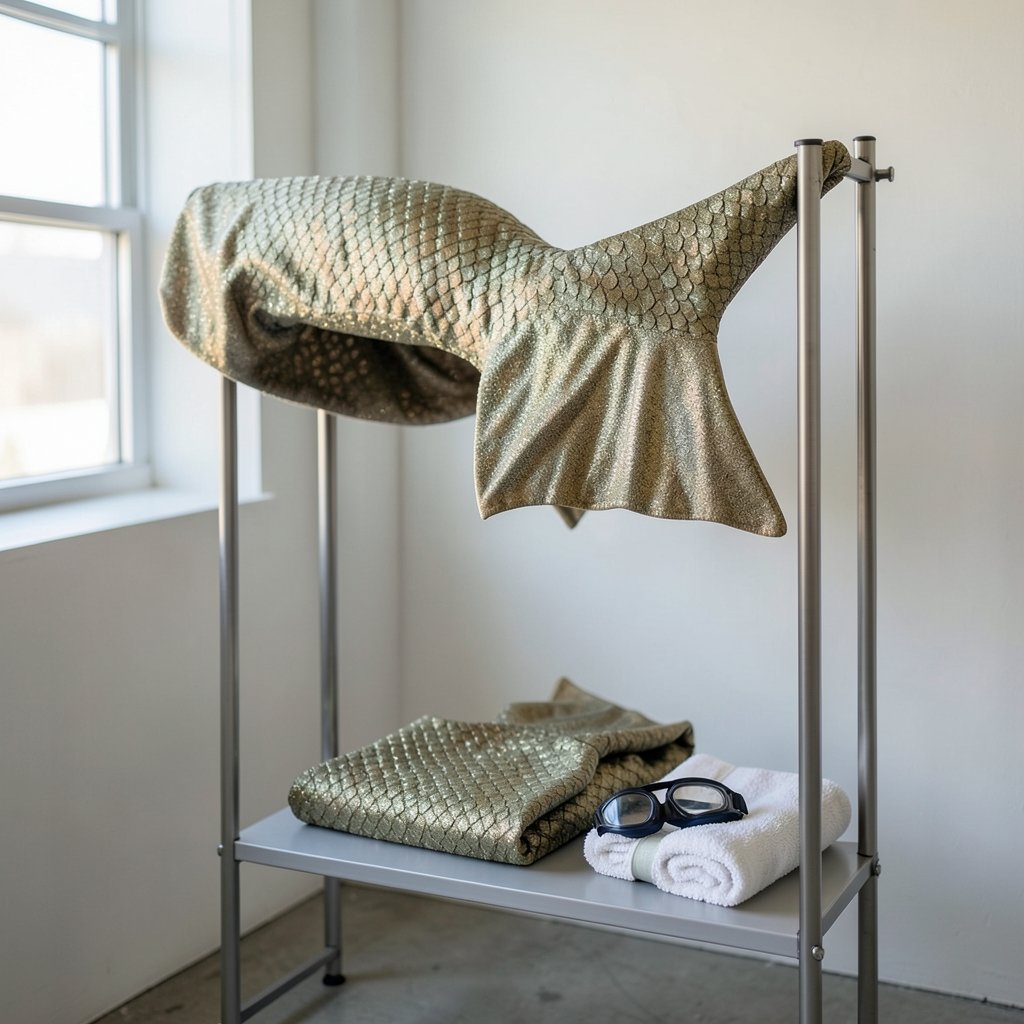
What would happen if you strapped both feet into a single wide fin and pulled a glittering fabric tail over your legs? That is the basic idea behind a mermaid tail, one of the fastest-growing pieces of recreational swim gear in the world. It looks like a costume. It behaves like a piece of sporting equipment. And that gap between how it looks and how it works is exactly where the important information lives.
This guide covers what mermaid tails are, where they came from, how the materials compare, what the real safety risks are, and what actually works in practice for beginners.
What Is a Mermaid Tail, Exactly?
A mermaid tail is a swim product worn over both legs together, usually combined with a monofin — a single wide fin that both feet slide into. The fabric or rubber skin covers the legs from the waist down and hides the fin, so the swimmer appears to have one long tail instead of two legs.
Two parts matter:
- The monofin. This is the engine. It is a rigid or semi-rigid blade, often fiberglass, polypropylene, or rubber, with two foot pockets. Kicking with both legs together drives the blade up and down like a dolphin’s fluke.
- The tail skin. This is the cosmetic layer. It can be a simple spandex sleeve or a full silicone sculpture with individual scales. The skin does not create propulsion; the fin does.
That distinction is the single most useful thing a beginner can learn. A cheap tail with a floppy plastic fin will feel completely different from a silicone tail built around a stiff fiberglass blade, even if the two look similar in photos.
The swimming motion itself is called the dolphin kick or undulatory kick. Swimmers bend at the knees and hips in a wave, keeping the legs together. Competitive swimmers use a version of this in butterfly and underwater off turns, which is why swim coaches often recognize the movement immediately.
Where the Idea Came From
The mermaid as a character is ancient. Greek myth gave us the siren, Irish folklore the merrow, and the image of a woman with a fish’s lower half appears in stories across many cultures. Hans Christian Andersen’s “The Little Mermaid” was published in 1837 and reshaped the modern version of the tale into something wistful and romantic rather than monstrous.
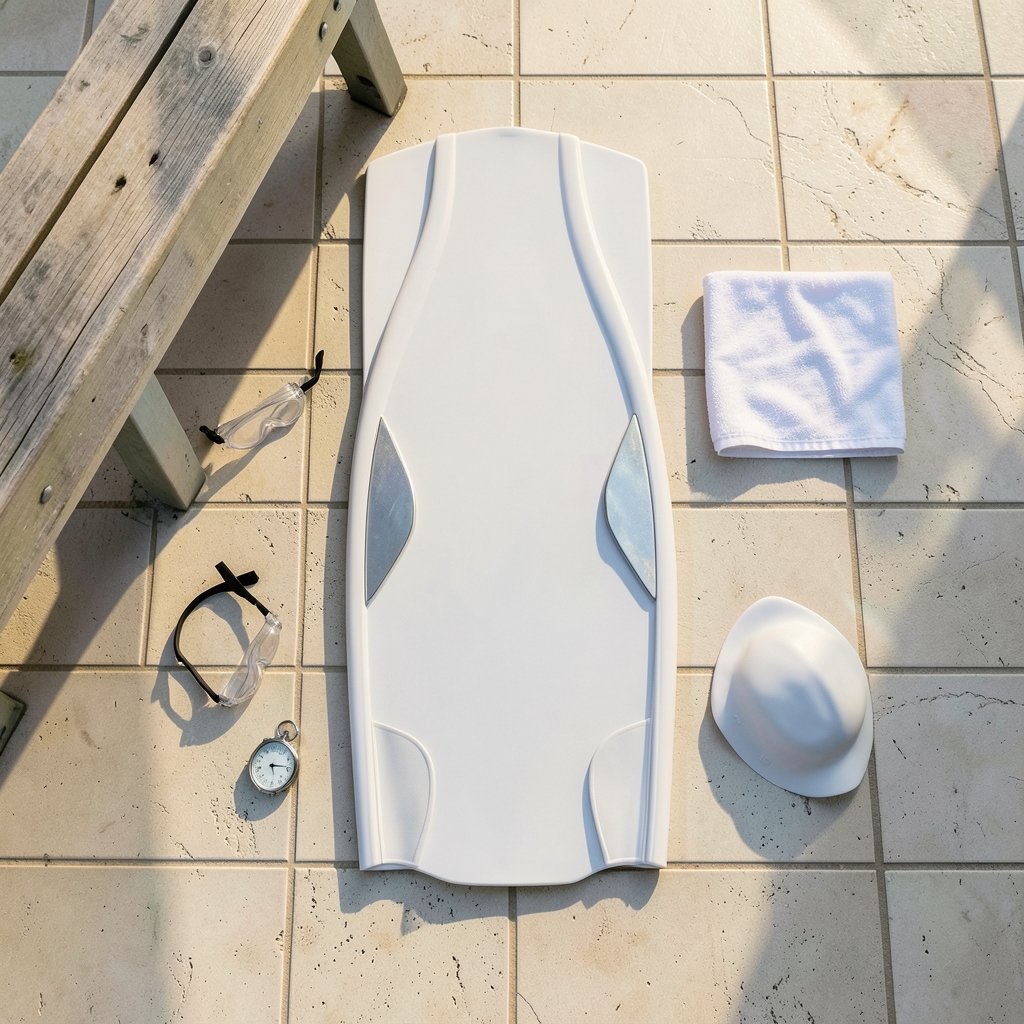
The equipment has a much more practical origin. The monofin was developed in the Soviet Union during the 1960s and 1970s for finswimming, a competitive sport now governed internationally by CMAS, the world governing body for underwater activities. Finswimming is a serious athletic discipline with races at the surface and underwater, and monofins are standard equipment there.
So the modern mermaid tail is a mashup: a folkloric character on top, a competitive swimming tool underneath. Disney’s animated The Little Mermaid in 1989, and the live-action remake in 2023, are widely credited with pushing recreational interest upward, though that link is a reasonable inference rather than a measured finding.
A Quick Comparison of Tail Types
Materials drive cost, weight, comfort, and risk. Here is how the main options stack up.
| Type | Material | Weight in water | Cost level | Best for |
|---|---|---|---|---|
| Fabric tail | Spandex or lycra over a plastic fin | Light, nearly neutral | Low | Kids, first-timers, pool play |
| Neoprene tail | Neoprene skin with a stronger fin | Moderate | Mid | Regular swimmers, cooler water |
| Silicone tail | Silicone skin, often fiberglass monofin | Heavy, can sink | High | Performers, photographers, experienced mermaiders |
| Training monofin only | Fiberglass or polypropylene blade | Varies | Mid | Learning the kick before adding a skin |
A practical tip that saves money: buy or borrow a standalone monofin first and learn the dolphin kick without a tail skin. Many people buy a beautiful tail, discover they cannot control the fin, and quit. Learning the fin separately removes the costume pressure and makes the first tail swim far less stressful.
Another common mistake is sizing. Monofin foot pockets are unforgiving. A fin that is slightly too large will slip and cause blisters; one that is too tight will cramp the feet within minutes. Feet should be measured, not guessed, and the fin should be tested in shallow water before any deep-end attempt.
The Safety Conversation Nobody Should Skip
This is the part that deserves the most attention, because mermaid tails genuinely change how a body behaves in water.
Restricted legs mean a slower path to the surface
With both legs bound together, a swimmer cannot tread water normally, cannot push off the bottom with two feet, and cannot easily roll into a rescue position. If something goes wrong, the recovery options are narrower. That is a physical fact, not a scare tactic.
Breath-holding is the real danger
Many mermaiding videos show long underwater sequences. The temptation to copy them is strong, especially for kids and teens. But breath-hold training in a pool without supervision carries a well-documented risk of hypoxic blackout — a loss of consciousness from low blood oxygen that can occur without warning, often right at the surface after a long hold. Public health and drowning-prevention guidance consistently warns against unsupervised breath-hold work for exactly this reason.
The practical rule that experienced mermaiders follow: never swim a tail alone, never hold your breath to the point of discomfort, and never practice underwater distance in a pool without a trained observer watching specifically for you.
Pool rules vary, and they are not optional
Many public pools and aquatic centers restrict or ban monofins and mermaid tails outright, or require a swim test and direct supervision. There is no single national standard to point to, which means the rule at your local pool may differ from the one two towns over. The workable approach is to call ahead, ask specifically about monofins, and ask whether a lifeguard needs to be present. Showing up with a tail and hoping for the best is the most common way people get turned away.
Children’s products deserve a second look
In the United States, children’s swim aids and toys fall under Consumer Product Safety Commission oversight, and the Consumer Product Safety Improvement Act of 2008 sets limits on lead and phthalates in children’s products. That matters for cheap imported tails with painted or printed finishes, especially for younger kids who may chew or handle the material. Buying from sellers who can state their materials clearly is a reasonable precaution.
How Mermaiding Compares to Other Water Gear
If a reader is weighing options, it helps to see where tails sit relative to other equipment.
| Activity | Propulsion | Leg freedom | Supervision need |
|---|---|---|---|
| Snorkeling with two fins | Two independent fins | Full | Moderate |
| Finswimming (competitive) | Monofin, trained technique | Restricted | High, coached |
| Recreational mermaiding | Monofin plus tail skin | Restricted | High, buddy required |
| Plain swimming | None | Full | Low to moderate |
The key takeaway from that table is not that tails are dangerous in themselves. It is that they sit closer to a coached sport than to a pool toy. Treating them like a swim noodle is the mismatch that causes trouble.
Anyone comparing privacy-focused networking tools will recognize a similar pattern of “the product looks simple, the underlying mechanics are not.” The same logic applies to swim gear: the visible layer is not the working layer. For readers who enjoy that kind of breakdown, this piece on tailscale vs wireguard 2026 protocol vs product choose makes the same distinction between a friendly wrapper and the engine underneath, and tailscale vs wireguard it protects where its limits begin explores where convenience stops being enough. It is the same question a mermaid tail raises: what does the pretty outer layer actually do, and what does it leave to you?
What Actually Works in Practice
A few habits separate people who enjoy mermaiding for years from people who try it once.
Start in shallow water with a spotter. Waist-deep water, one adult within arm’s reach, no exceptions for beginners.
Learn the kick before the costume. Ten minutes with a bare monofin teaches more than an hour wrestling with a wet silicone tail.
Practice the safety exit. Agree on a signal for “I need to surface now.” A raised hand or a double tap works. Underwater, sound does not carry, so a visual signal is essential.
Watch for cramping. The dolphin kick uses the core and lower back heavily. Cramps in the feet and calves are common in the first sessions, especially in cold water.
Rinse and dry everything. Chlorine degrades spandex quickly, and silicone tails left damp can develop odor and mildew. A fresh-water rinse and full air-drying after every session noticeably extends life.
Store monofins flat. Fiberglass blades can warp if left leaning against a wall or under heavy bags for months.
For readers who think in terms of layered systems, the comparison piece on tailscale vs twingate vs netbird each protects where limits is a useful parallel: each option has a zone where it works well and a boundary where it does not. A mermaid tail has the same shape of answer. In a supervised pool with a trained kick, it is joyful. In open water, in surf, or alone, it is a different proposition entirely.
Is Mermaiding a Sport or a Hobby?
Both, depending on who is doing it. Competitive finswimming is a recognized international sport with organized championships and a governing body. Recreational mermaiding is a hobby and performance community, with meetups, photo shoots, and informal competitions. There is no single authoritative governing body for recreational mermaiding that can be cited with confidence, and standards vary by region and by pool.
That ambiguity is worth naming honestly. It means the burden of safety planning falls on the swimmer and the parent, not on an official rulebook. The upside is a welcoming, creative community. The downside is that quality and safety information is uneven, and viral videos rarely show the spotter standing just out of frame.
Conclusion
Mermaid tails are a genuinely lovely piece of gear with a surprisingly serious engineering story behind them. The monofin came out of competitive finswimming, the character came out of centuries of folklore, and the modern product sits somewhere between costume and sporting equipment.
The people who get the most out of mermaiding are not the ones with the most expensive silicone tail. They are the ones who learned the dolphin kick first, checked their pool’s rules before showing up, kept a buddy within arm’s reach, and never treated breath-holding as a party trick. Get those four things right, and the tail becomes what it should be: a strange, delightful way to move through water.
Frequently Asked Questions
Are mermaid tails safe for kids?
They can be, with conditions. A child should be a confident swimmer, wear a properly fitted monofin, stay in shallow water, and have an adult within arm’s reach at all times. Fabric tails with soft fins are the usual starting point. Breath-holding games should be off the table entirely for children.
Do you need a monofin to swim in a mermaid tail?
Yes, for any real swimming. A tail skin without a monofin is essentially a fabric sleeve that binds the legs and provides no propulsion, which is worse than useless in water. The monofin is what makes the dolphin kick possible.
Why do some pools ban mermaid tails?
Because bound legs reduce a swimmer’s ability to surface quickly and tread water, and because lifeguards cannot easily distinguish a swimmer in trouble from one performing. Many facilities require a swim test, direct supervision, or restrict tails to certain sessions. Rules are set locally, so calling ahead is the only reliable way to know.
How much do mermaid tails cost?
Fabric tails with a basic plastic fin sit at the low end, neoprene in the middle, and full silicone tails with fiberglass monofins at the high end. Silicone is the most expensive because it is hand-cast, heavy, and durable. Buying a standalone monofin first is a cheaper way to test whether the sport suits you.
What is the difference between mermaiding and finswimming?
Finswimming is a competitive sport governed internationally, with races and standardized monofin equipment. Mermaiding is a recreational and performance hobby built around the same fin but with a costume layer and no single governing body. The kick is shared; the rules and oversight are not.
Can adults use mermaid tails?
Absolutely, and many do. Adult mermaiders often favor silicone tails for the realism and weight, and use them for photography, performance, and pool events. The safety principles are identical regardless of age: a buddy, shallow water to start, and no unsupervised breath-holding.



