
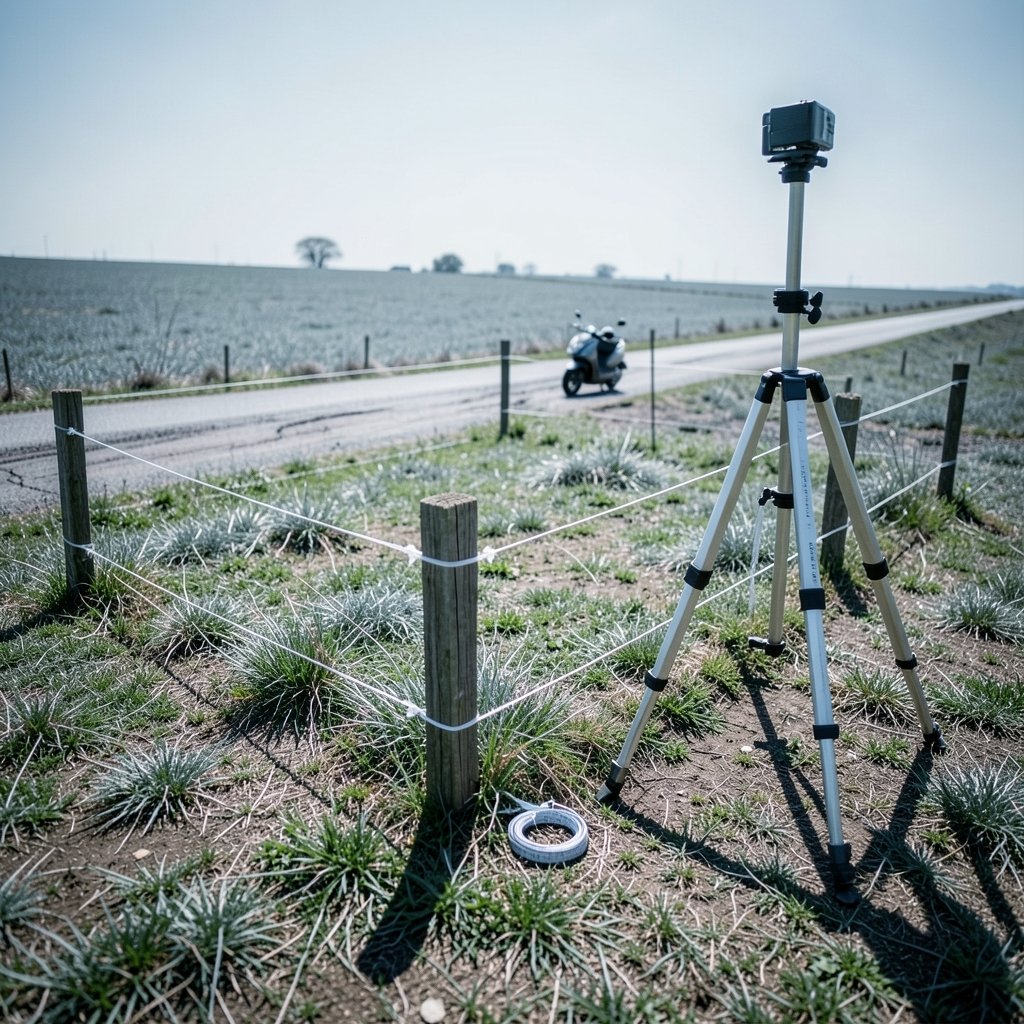
Quick Answer: How large is an acre?
An acre is a unit of area equal to 43,560 square feet, 4,840 square yards, or about 4,046.86 square meters. In plain terms, it is roughly the size of a football field minus the end zones, or a square about 208.7 feet on each side. You will run into acres most often when buying rural land, reading farm listings, or comparing property sizes in the United States.
It is not the same as a hectare, which is about 2.47 acres, so an acre is a little under half a hectare. A square mile holds 640 acres, which is why large ranches are sometimes described in sections rather than acres.
Before you act on any land deal, check the surveyed boundaries, the shape of the parcel, zoning rules, access rights, and whether the listed acreage includes roads or water.
Why the Acre Still Matters

Have you ever stood on a piece of land and tried to guess how big it was, only to find out later you were off by a mile? Land size is one of those things that feels obvious until you actually have to measure it. The acre has been the go-to unit for American land for centuries, and it is not going anywhere.
The word itself comes from Old English æcer, meaning “open field.” Historically, the size was tied to how much land one yoke of oxen could plough in a day. That was never a precise standard, which is why the modern definition had to be nailed down to an exact number: 43,560 square feet. That figure is what surveyors, real estate agents, and farmers use today.
The acre survives because it sits in a useful middle ground. It is big enough to describe a farm or a large lot, but small enough to be meaningful for a single property. A square foot is too tiny for land, and a square mile is too sprawling for most purchases. The acre fits neatly in between.
The Numbers Behind an Acre
Before visual comparisons, it helps to have the raw figures straight. These are the conversions that come up again and again.
| Unit | Equivalent |
|---|---|
| Square feet | 43,560 |
| Square yards | 4,840 |
| Square meters | About 4,046.86 |
| Hectares | About 0.4047 |
| Square rods | 160 |
| Acres per square mile | 640 |
One acre is exactly 4,046.8564224 square meters. That precision comes from the 1959 international agreement that fixed one yard at exactly 0.9144 meters. Before that, the math was slightly messier.
If you want the simplest mental model, picture a square. The square root of 43,560 is about 208.7, so a perfectly square acre is roughly 208.7 feet on each side. That is a bit longer than two-thirds of a football field.
Putting an Acre in Perspective
Numbers on a page are easy to read and hard to feel. Here are comparisons that actually stick.
The Football Field Comparison
A US American football field, including both end zones, measures 360 feet by 160 feet. That works out to 57,600 square feet, or about 1.32 acres. Strip out the end zones and you get 300 feet by 160 feet, which is 48,000 square feet, or roughly 1.10 acres.
So an acre is a little smaller than a football field’s playing surface. If you have ever watched a game and thought “that looks like about an acre,” you were close. This is one of the most useful comparisons because most people have a feel for a football field even if they have never measured one.
The Tennis Court Comparison
A tennis court, including the runoff space around it, is often cited as roughly a quarter of an acre. Four tennis courts, side by side with their surrounding space, come close to one acre. This helps when you are thinking about a suburban lot rather than open farmland.
The City Block Comparison
City blocks vary wildly, so this one is rough. A typical square block in a dense city might be a fraction of an acre, while a large suburban block with wide streets could be several acres. Do not rely on block size unless you know the specific city’s grid.
The Walking Comparison
If you walk the perimeter of a square acre, you cover about 835 feet, or roughly a sixth of a mile. Walking across it from one side to the other is about 208 feet, or a little over 60 meters. That is a short stroll, maybe 30 seconds at a normal pace.
Acres, Hectares, and Square Miles
Mixing up acres with hectares is one of the most common mistakes in land conversations, especially when dealing with international listings. A hectare is 10,000 square meters, which is about 2.47 acres. So if someone tells you they have a 10-hectare farm, that is roughly 24.7 acres.
The reverse trips people up too. A 100-acre property is only about 40.5 hectares. If you are comparing listings across countries, convert both to the same unit before you form any impression. The gap is large enough to change a deal.
Square miles matter for very large tracts. There are 640 acres in a square mile. A ranch described as “10 sections” is 6,400 acres, which is 10 square miles. This shorthand is common in parts of the American West.
For readers who like to dig into how units and measurement systems get defined and standardized, the logic behind conversions is worth understanding. The same discipline of precision shows up in technical fields like computing, where getting the scale right changes everything, whether you are comparing small language models vs large language models or sizing a data array.
Why Shape Matters More Than You Think
Here is a trap that catches buyers: an acre is an area, not a shape. A long, skinny strip of land can be exactly one acre and still be nearly useless for building.
Imagine a parcel 10 feet wide and 4,356 feet long. That is one acre. It is also a ribbon of land more than three-quarters of a mile long that you cannot put a house on comfortably. Meanwhile, a square acre of 208.7 feet per side gives you plenty of room for a home, a driveway, and a yard.
This is why surveyors and buyers care about frontage, depth, and usable area, not the headline acreage alone. A 5-acre lot that is mostly wetland may be worth less than a dry 2-acre lot. The number on the listing is only the starting point.
Practical tip: always ask for the plat or survey map. It shows the actual boundaries, easements, and shape. If a seller cannot produce one, that is a red flag worth investigating before any money changes hands.
How to Estimate an Acre Without Tools
You will not always have a measuring tape. Here are a few field-tested tricks.
Pacing is the oldest method. An average adult stride is about 2.5 feet. To pace out a square acre, you would walk roughly 83 to 84 paces per side. It is not precise, but it gets you in the ballpark.
Another approach is the “car length” method. A typical sedan is about 15 feet long. An acre’s side of 208.7 feet is roughly 14 car lengths. Stack 14 cars in a row, then imagine a square that size.
For larger estimates, use the “football field” anchor. If a field is about 1.1 acres, then a plot that looks like two football fields laid end to end is a bit over 2 acres.
A GPS app on a phone can trace a boundary and give you an area estimate. These are surprisingly accurate for open land, though tree cover and buildings can throw them off. Treat the result as a rough guide, not a legal measurement.
Common Mistakes People Make With Acreage
The first mistake is assuming the listed acreage is exact. Rural listings are often rounded, and older deeds sometimes describe land in vague terms like “more or less.” A parcel listed as 10 acres might be 9.6 or 10.4 on the ground.
The second mistake is ignoring topography. Ten flat, dry acres and ten acres of steep, rocky hillside are not the same asset. Slope affects building costs, drainage, and how much land you can actually use.
The third mistake is forgetting about access. A parcel with no legal road frontage can be landlocked, which severely limits its value. Check for recorded easements and confirm the property touches a public road or a deeded access route.
The fourth mistake is mixing units. Someone who reads “0.4 hectares” and thinks “0.4 acres” is off by a factor of more than two. Always confirm which unit a listing uses, especially on international sites.
The fifth mistake is underestimating the cost of improvements. Clearing brush, drilling a well, running power, and building a driveway can cost far more than the land itself on a raw acre. Budget for infrastructure as well as the purchase price.
Acres in Real Estate and Agriculture
In the United States, the acre remains the standard unit for land transactions and farm reporting. Crop yields are often described per acre, and government farm programs frequently use acreage as the basis for eligibility and payments.
In the United Kingdom, the acre is still used informally, though metric units dominate official trade. If you are reading UK property listings, expect a mix of acres and hectares, and convert before comparing.
For farmers, the practical question is how many productive acres the farm has, not the total acreage alone. A 200-acre farm with 40 acres of woods and 20 acres of wetland has 140 workable acres. That distinction drives equipment planning, seed costs, and revenue projections. The same lesson about scale and real-world constraints shows up in agriculture technology, where the gap between headline numbers and field reality is a recurring theme, much like the farm drones and the 16.4 million acre question that gets debated among growers.
How the Acre Compares to Everyday Spaces
Sometimes the best way to grasp an acre is to stack it against familiar places.
| Familiar Space | Approximate Size |
|---|---|
| Average suburban home lot | 0.15 to 0.25 acres |
| Tennis court with runoff | About 0.25 acres |
| Football field (no end zones) | About 1.1 acres |
| Football field (with end zones) | About 1.32 acres |
| City block (varies widely) | 0.5 to 5 acres |
| Central Park, New York | 843 acres |
That last figure is a good reality check. Central Park is 843 acres, which sounds enormous until you realize it sits inside a city of millions. An acre, multiplied 843 times, becomes a landmark.
For a different kind of scale comparison, think about how big numbers behave in other contexts. A large balance in a bank account feels different from a large balance on paper, and the perception gap is real, as explored in whether a large bank account balance really changes things. Land works the same way: the number on the deed and the experience of standing on it are two different things.
Converting Acres Quickly
Here are the conversions worth memorizing.
To go from acres to square feet, multiply by 43,560. To go from square feet to acres, divide by 43,560. To go from acres to hectares, multiply by 0.4047. To go from hectares to acres, multiply by 2.471. To go from acres to square miles, divide by 640.
A quick sanity check: if a lot is 100 feet by 200 feet, that is 20,000 square feet, or about 0.46 acres. Just under half an acre. That matches the typical suburban lot size.
If you are working with digital files and large transfers, the same principle of unit confusion applies. People mix up megabytes and megabits, or hit errors when a file will not fit, much like the frustration covered in why a USB drive says the file is too large for the destination. Getting the unit right is half the battle.
Conclusion
An acre is 43,560 square feet, roughly a square 208.7 feet on each side, or a football field minus the end zones. It is a little under half a hectare and one-640th of a square mile. Those numbers are simple enough, but the real lesson is that area alone never tells the whole story.
Shape, slope, access, and usability decide what a piece of land is actually worth. Whether you are buying a rural lot, comparing farm listings, or just trying to win a trivia night, the acre rewards anyone who looks past the headline figure. Measure twice, convert carefully, and always ask for the survey.
FAQ
How many square feet are in an acre?
An acre contains exactly 43,560 square feet. That is the figure surveyors and real estate professionals use, and it traces back to the definition of 4,840 square yards. If you need square meters, multiply by 0.092903, which gives about 4,046.86 square meters.
Is an acre bigger than a hectare?
No. A hectare is larger. One hectare equals 10,000 square meters, which is about 2.47 acres. Put another way, an acre is a little under half a hectare. This is one of the most common conversion mistakes, so double-check which unit a listing uses before comparing prices.
How long does it take to walk around one acre?
Walking the perimeter of a square acre covers about 835 feet, or roughly a sixth of a mile. At a normal walking pace of about 3 miles per hour, that takes around three to four minutes. Crossing the middle from one side to the other is about 208 feet and takes well under a minute.
Why is an acre 43,560 square feet instead of a round number?
The figure comes from older English land measurement traditions, where an acre was tied to the area a team of oxen could plough in a day. Over time, that loose definition was standardized into a fixed number of square feet. The odd figure stuck because it was already embedded in deeds and surveys.
Can an acre be any shape?
Yes. An acre is a measure of area, not shape. It can be a square, a long rectangle, a triangle, or an irregular polygon. A 10-foot-wide strip more than three-quarters of a mile long is still one acre, which is why buyers should always check the survey and the usable dimensions, not the acreage alone.
How many acres are in a square mile?
There are 640 acres in one square mile. This conversion is standard and is often used to describe large ranches and rural tracts. A parcel described as one “section” in the American West is typically one square mile, or 640 acres.



