

What if the paperwork that eats your week as an exporter could be checked, matched, and approved before you finish your coffee? That is the promise artificial intelligence is making to trade finance. For small exporters, though, the gap between the pitch deck and the reality at the bank counter is still wide. This guide walks through what is actually changing, what is still hype, and how a small shipper can prepare without betting the business on it.
Why trade finance is suddenly an AI story
Trade finance has always been a document business. A letter of credit can require a dozen separate papers, each with strict rules about wording, dates, and figures. A single typo can trigger a discrepancy, and a discrepancy can delay payment by weeks.
That is exactly the kind of repetitive, rule-bound work that machine learning handles well. Banks and platforms have been piloting AI for document examination against rule sets like UCP 600, the ICC’s framework for documentary credits. The ICC also publishes electronic rules, including eUCP and eURC, that govern how documents can be presented digitally.
The legal ground is shifting too. The UNCITRAL Model Law on Electronic Transferable Records, adopted in 2017, gives countries a template for recognizing electronic bills of lading and bills of exchange. The UK’s Electronic Trade Documents Act 2023 put that idea into national law. When documents can legally be digital, software can read them at scale. That is the hinge on which most 2027 predictions turn.
What AI actually does well in trade finance today
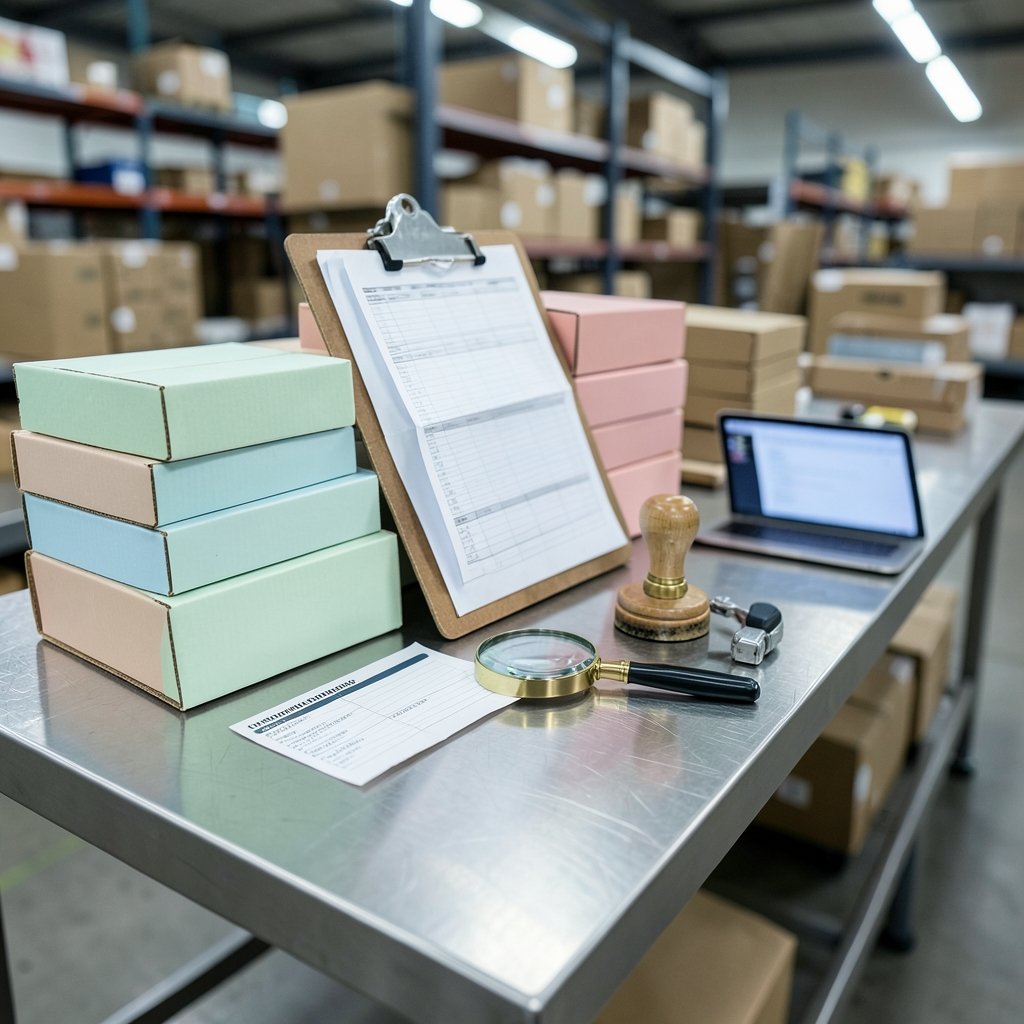
Strip away the marketing and a few use cases stand out as genuinely useful for smaller players.
Document checking. Software can compare a commercial invoice, packing list, and bill of lading against the terms of a credit and flag mismatches. This is pattern matching, and it is the strongest current use case.
Name and sanctions screening. Every bank must screen counterparties against sanctions lists. AI helps sort through the noise, though false positives remain a well-known headache.
Fraud and anomaly detection. Trade-based money laundering is a documented concern, and typologies published by bodies like the FATF describe how invoices get inflated or goods misdescribed. Anomaly detection tools look for those patterns.
Credit scoring with alternative data. Small exporters often lack the collateral or trading history that traditional lenders want. Models that read payment behavior, shipping records, and platform activity are pitched as a way to widen access. The evidence at scale is still thin, so treat this one as promising rather than proven.
Where the hype outruns the evidence
Here is the uncomfortable part. There is no widely accepted public benchmark showing that AI document checking beats experienced human examiners on error rates. Banks run pilots and report improvements, but the numbers are rarely comparable across institutions.
Interoperability is another soft spot. Digital trade documents only help if every party in the chain can read them. Standards work through the DCSA, the FIT Alliance, and the ICC Digital Standards Initiative is moving, but adoption is uneven. A small exporter shipping to three countries may face three different levels of digital readiness.
Cost is the third barrier. Enterprise trade finance platforms were built for banks and large corporates. A firm shipping a few containers a month is not the target customer, and per-transaction pricing can be hard to justify.
The regulatory layer small exporters cannot ignore
Two regulatory threads matter more than most exporters realize.
The first is data protection. AI models need data, and trade data crosses borders constantly. GDPR and similar regimes constrain how exporter and counterparty information can be shared, stored, and used for training. If a platform asks for broad data rights, read the terms.
The second is the EU AI Act, Regulation (EU) 2024/1689, which sets risk-based obligations for AI systems. Whether a given trade finance tool falls in scope depends on how it is used. A document-matching tool carries different obligations than a system that scores a company’s creditworthiness. This is a legal question, not a technical one, and it deserves a lawyer’s eye if you operate in or sell into the EU.
How small exporters should prepare in practice
The practical work is less glamorous than the headlines but far more useful. Here is what tends to work.
- Clean up your document templates first. AI reads what you give it. Inconsistent invoice layouts, missing reference numbers, and mismatched product descriptions confuse software as much as they confuse clerks. Standardize before you automate.
- Digitize your document flow end to end. Scanned PDFs of paper forms are a dead end. If your bill of lading is a phone photo, no model can reliably extract from it.
- Ask vendors specific questions. Which rule set does the tool check against? What happens when it flags a discrepancy? Who reviews the flag? How is your data stored and for how long?
- Keep a human in the loop. Document examination errors are expensive. A second pair of eyes on anything the system flags is not old-fashioned; it is prudent.
- Test on your own paperwork. Run a past shipment through any trial. Real documents expose weaknesses that demos hide.
A common mistake is buying a tool to solve a process problem. If your internal approvals take five days, faster document checking will not fix the bottleneck. Map the process before you shop for software.
What changes by 2027 and what does not
The realistic 2027 picture is incremental, not revolutionary. More banks will run AI-assisted document checks as standard. Electronic bills of lading will gain ground in corridors where law and infrastructure align. SME credit scoring will improve at the margins.
What will not change: someone still has to be accountable when a document is wrong. Regulators will keep asking who is responsible for an automated decision. And small exporters will still need to understand the terms of their credits, because no model will negotiate them for you.
For readers tracking how fast the hardware and software around them are moving, the same pattern applies across consumer tech. The debates over what buyers actually get versus what is announced, covered in this look at handheld console prices in 2027, mirror the trade finance gap between confirmed capability and reported capability. The lesson is the same: verify the claim before you budget for it. (Arc x1 handheld 308 cloud emulation 2026 buyers need know)
Choosing between tools without getting burned
When vendors pitch, the comparison usually comes down to a few dimensions. The table below sketches how the options tend to differ.
| Option | Best for | Typical weakness |
|---|---|---|
| Bank-provided portal | Exporters already using that bank for credits | Limited to that bank’s flows; little flexibility |
| Standalone document-checking tool | Firms with high document volume | Integration work; per-document fees |
| Freight forwarder platform | Exporters who lean on a forwarder | Coverage only as good as the forwarder’s network |
| Spreadsheet plus human review | Very low volume | Does not scale; error-prone |
There is no universal winner. A firm shipping twice a year should probably stay manual. A firm shipping weekly to multiple markets should test at least one tool properly.
The skills question
AI does not remove the need for trade finance knowledge. It raises the value of it. Someone on your team needs to understand what a discrepancy is, why a bill of lading date matters, and how a credit’s terms interact with the underlying contract. That person can then judge whether a system’s output is trustworthy.
If you are building that knowledge, the adjacent debates about AI and content are worth following. Questions about whether it is legal to use AI-generated content in commercial settings echo the compliance questions exporters face when AI touches contractual documents. The principle is consistent: disclosure and accountability matter more than the tool itself.
Common mistakes to avoid
Three mistakes show up again and again.
Assuming AI means no human review. It does not, and regulators increasingly expect a named person to own automated decisions.
Ignoring the data terms. Broad data clauses can hand a vendor rights you did not intend to give.
Chasing the newest tool over the oldest problem. Most export delays come from incomplete documents and slow internal sign-off, not from a lack of artificial intelligence. Fix the basics first.
Conclusion
AI in trade finance is real, but it is arriving as a set of practical tools rather than a single transformation. For small exporters, the winning move in 2027 is unglamorous: standardize your documents, digitize your flow, ask hard questions of vendors, and keep a knowledgeable human in the loop. The firms that benefit most will not be the ones that bought the flashiest platform. They will be the ones whose paperwork was already clean enough for any system to read.
Frequently Asked Questions
Will AI replace trade finance staff at small exporters?
No, not in the near term. AI handles document matching and screening, but someone still has to interpret discrepancies, negotiate terms, and take responsibility for decisions. The realistic shift is that routine checking gets faster while judgment work becomes more valuable.
Do I need special software to benefit from AI in trade finance?
Not necessarily. Many gains come from cleaner processes: standardized templates, digital rather than scanned documents, and consistent reference numbers. That groundwork makes any later tool more effective and costs little beyond time.
Is electronic documentation legally valid for my shipments?
It depends on the countries involved. The UNCITRAL Model Law on Electronic Transferable Records gives countries a template for recognizing electronic records, and some have adopted it into national law, such as the UK’s Electronic Trade Documents Act 2023. Check the rules in both the origin and destination markets before switching.
How do I check whether a vendor’s AI tool is trustworthy?
Ask which rule set it checks against, how it handles flagged discrepancies, who reviews them, and how your data is stored and shared. Then run a past shipment through a trial. Real documents reveal far more than a demo.
What does the EU AI Act mean for trade finance tools?
Regulation (EU) 2024/1689 sets risk-based obligations for AI systems, and whether a tool falls in scope depends on its use. A document-matching tool and a credit-scoring system carry different obligations. If you operate in or sell into the EU, get legal advice on the specific tool.
Should a very small exporter bother with AI at all?
Often, not yet. If you ship a handful of times a year, manual review with good templates may be cheaper and safer. Revisit the question when document volume or discrepancy rates start costing you real money.
The safer path is to pilot narrowly, measure honestly, and scale only where the evidence supports it. ## A short checklist before you sign Anything you commit to in 2027 should survive a simple test. Does the tool reduce discrepancies on your own documents? Can you export your data if you leave? Is there a clear owner for flagged items? Are the fees predictable at your volume? If any answer is vague, wait. The market is moving quickly, and the cost of being a year late is far lower than the cost of being locked into the wrong contract. ## Final thought The gap between what AI in trade finance promises and what it delivers is narrowing, but it has not closed. Small exporters do not need to lead the adoption curve. They need clean documents, realistic expectations, and a clear line of accountability when something goes wrong. Get those right, and the technology becomes a useful assistant rather than an expensive distraction.



