

Is there a 2027 Toyota Corolla yet, or is the internet getting ahead of itself? That question matters more than it sounds. Search for the 2027 Corolla and you will find a confusing mix of speculation, recycled renderings, and confident claims about a car Toyota has not officially detailed. So here is the honest, practical breakdown: what is actually known, what is reasonable to expect, and how to avoid the traps that catch buyers who plan too far ahead.
The Short Answer: Toyota Has Not Announced a 2027 Corolla
As of now, Toyota has not publicly detailed a 2027 model year Corolla. No official release names a 2027 Corolla, and no confirmed specifications, pricing, or powertrain lineup exist for it. That is not a small caveat. It is the single most important fact in this article. (Best ai stock video b roll generators 2027 actually holds up 2)
The current Corolla is the E210 generation. The hatchback arrived in 2018, the sedan in 2019, and a mid-cycle refresh landed around 2022 to 2023. A next-generation model is widely expected in the mid-2020s, but expectation is not confirmation. Anyone presenting a full 2027 Corolla spec sheet today is working from inference, not from Toyota.
There is also a timing wrinkle worth understanding. Model-year conventions differ by market. In the United States, a model year typically goes on sale in the prior calendar year, so a “2027 Corolla” would likely appear on US lots during 2026. Other markets use different conventions entirely. Two people arguing about the “2027 Corolla” online may not even be talking about the same car.
What the Current Corolla Gets Right
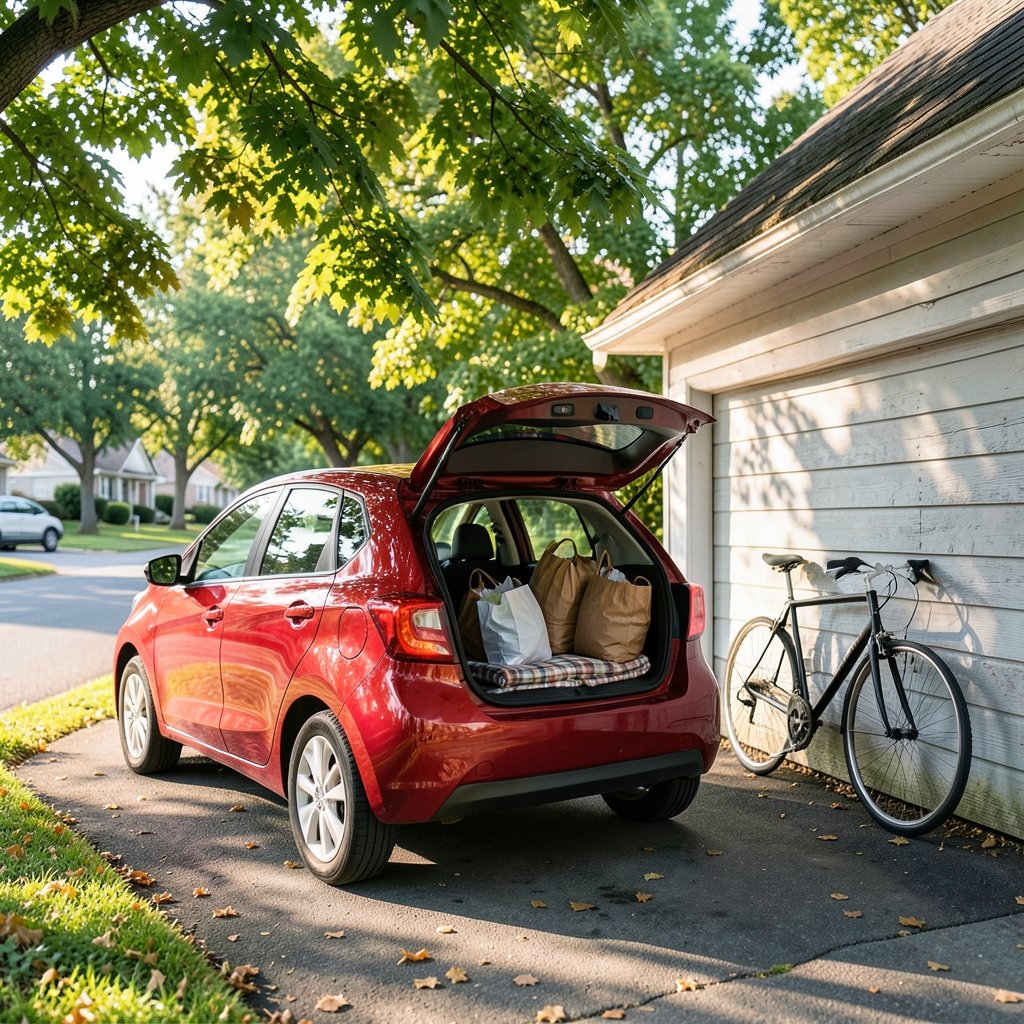
Before projecting forward, it helps to understand the baseline. The E210 Corolla earned its reputation the boring way: it works.
Hybrid is the mainstream powertrain in most markets, and Toyota has been expanding hybrid-only trims in some regions. That shift matters because it signals where the lineup is heading. The Corolla has quietly become a hybrid-first car in many showrooms, with conventional gasoline engines playing a supporting role rather than leading.
The practical strengths are consistent:
| Strength | Why it matters to owners |
|---|---|
| Hybrid efficiency | Real-world fuel savings without plugging in |
| Safety suite | Toyota bundles driver assistance broadly across trims |
| Reliability record | Long-term ownership costs stay predictable |
| Resale strength | Strong demand keeps used values firm |
The weaknesses are equally consistent. The Corolla is not exciting to drive. Cabin materials in lower trims feel economy-grade. The infotainment system has improved but still trails the best in class. None of that is new information, and none of it is likely to change dramatically without a full redesign.
What a Next-Generation Corolla Would Likely Change
If a new generation does arrive in the 2027 timeframe, certain changes are near-certain because the entire industry is moving that way. Others are genuine guesses. Keeping those categories separate is the difference between planning and wishful thinking.
Near-certain directions
- More hybrid, less gasoline. Toyota has been steadily pushing hybrid across its lineup. A next-gen Corolla that reverses that trend would be a surprise.
- Updated safety compliance. New generations must meet current crash and emissions standards, and those standards have tightened. US federal safety and emissions rules and Europe’s Euro 7 framework shape what engineers can build.
- Better cabin technology. Larger screens, faster processors, and over-the-air updates are now table stakes in the compact class.
- Refined driver assistance. Expect the safety suite to expand rather than shrink.
Genuine unknowns
- Plug-in hybrid availability. A PHEV Corolla is plausible and frequently rumored, but unconfirmed.
- A performance variant. Enthusiasts want one. That does not mean it is coming.
- Pricing direction. Compact car prices have climbed across the board. Assuming a new generation holds the line is optimistic.
- Design language. Renderings circulating online are fan art, not leaks. Treat them accordingly.
The Practical Problem With Planning Around a 2027 Corolla
Here is where real-world experience is worth more than speculation. Buyers who wait for an unannounced model year routinely end up in a worse position than buyers who act on what exists today. Three patterns show up again and again.
First, the waiting trap. Someone needs a car in the next six months but decides to hold out for the 2027 model. Eighteen months later, they are still waiting, still driving a failing vehicle, and the announcement has slipped again. Model-year timing is not a promise.
Second, the first-year risk. Buying the first year of any redesigned generation means accepting early-production quirks. Infotainment bugs, trim fit issues, and untested long-term reliability are standard first-model-year territory. The last year of a mature generation is often the smartest buy in the entire cycle.
Third, the deal illusion. A new generation rarely launches with incentives. Dealers have no reason to discount a car everyone wants to see. Meanwhile, the outgoing generation frequently carries the best financing and lease terms of its entire life. If budget matters, the math often favors the car already on the lot. Shoppers comparing monthly costs should look at real Toyota Corolla lease deals rather than assuming the newest badge means the best value.
How to Read 2027 Corolla Rumors Without Getting Fooled
The rumor ecosystem around popular cars is relentless. A few habits separate useful information from noise.
- Check the source type first. A Toyota press release is evidence. A rendering credited to an independent artist is entertainment. Both get shared with the same confident tone online.
- Look for model-year language. Official announcements use precise phrasing about model years and markets. Vague claims like “coming soon” usually mean nothing has been announced.
- Distrust leaked spec sheets. Real specifications leak rarely, and when they do, they are traceable. Screenshots with no origin are fiction.
- Watch for recycled images. The same unofficial renderings resurface every few months with new headlines attached.
- Verify timing claims against market conventions. A US model year and a European model year are not the same thing.
This same discipline applies across consumer technology, where hype cycles move even faster. If you want a masterclass in separating genuine capability from marketing noise, the analysis in this breakdown of the best AI chatbots, GPT-5 and Claude under the hood in 2027 follows the same evidence-first logic. It is a useful mental model: verify the source, ignore the render, trust the documentation.
Where the Corolla Still Makes Sense
Strip away the speculation and the Corolla’s core argument remains intact. It is a compact car built for people who want transportation to be uneventful.
That is not a knock. For a commuter, a first car, or a household second vehicle, uneventful is exactly the goal. The hybrid trims deliver genuinely strong fuel economy. The safety equipment is comprehensive rather than reserved for the top trim. Maintenance costs are predictable, parts are everywhere, and any independent mechanic can work on one.
The flip side is that the Corolla asks you to accept compromises. If cabin quietness matters, rivals do it better. If driving engagement matters, rivals do it better. If you want the latest screen technology, the Corolla is not the leader. The car wins on total cost of ownership and dependability, not on excitement.
For buyers cross-shopping compact cars, the honest framing is this: the Corolla is the safe choice, and “safe” is a feature, not an insult.
What to Do If You Need a Car Before 2027
Waiting is a strategy only if you can afford to wait. If you cannot, here is a practical sequence.
- Set a real deadline. Decide the date by which you must have a car. Everything else follows from that.
- Price the current generation properly. Get actual out-the-door quotes, not advertised starting prices.
- Compare leasing against buying. Lease terms on a mature model year are often the strongest available.
- Check insurance and total ownership costs. A cheaper purchase price can hide higher running costs.
- Inspect the specific car, not the model. Condition and service history matter more than badge loyalty.
- Reassess when Toyota makes an announcement. If a new generation is confirmed before your deadline, factor it in. If not, proceed.
The same measured approach pays off in other purchase decisions where hype outruns reality. Buyers weighing subscription tools, for example, benefit from honest guidance like this look at when NOT to use an AI chatbot in 2027, which makes the case for matching the tool to the job rather than chasing the newest option. Cars and software have more in common than people admit: the newest thing is rarely the best value, and the mature thing is rarely as outdated as it feels.
The Bottom Line on the 2027 Corolla
Toyota has not announced a 2027 Corolla. That is the fact everything else hangs on. The current E210 generation is mature, well understood, and still competitive on the metrics that matter most to compact car buyers: efficiency, safety, reliability, and resale value.
A next-generation Corolla is likely coming at some point in the mid-2020s, and it will probably lean harder into hybrid power, better cabin technology, and updated safety compliance. It may bring a plug-in hybrid. It may bring sharper design. None of that is confirmed, and none of it should drive a purchase decision made today.
The smart play is unglamorous. If you need a car now, buy or lease the current generation with clear eyes about its compromises. If you can genuinely wait, wait, but set a deadline and hold yourself to it. And when the rumors fly, check the source before you check your bank balance.
Frequently Asked Questions
Has Toyota confirmed a 2027 Corolla?
No. Toyota has not publicly detailed a 2027 model year Corolla, and no official release names one. Anything presented as confirmed 2027 Corolla specifications, pricing, or powertrain details should be treated as speculation until Toyota announces it directly.
When will the next-generation Corolla arrive?
A next-generation model is widely expected in the mid-2020s, but Toyota has not confirmed a date. The current E210 generation launched in 2018 for the hatchback and 2019 for the sedan, with a refresh around 2022 to 2023. A redesign is due by normal cycle timing, though due and announced are different things.
Will the 2027 Corolla be hybrid only?
Unconfirmed. Hybrid is already the mainstream powertrain for the current Corolla in most markets, and Toyota has been expanding hybrid-only trims in some regions. A next generation leaning further into hybrid power is a reasonable expectation, but it is not an official plan.
Why do US and European buyers mean different things by “2027 Corolla”?
Model-year conventions vary by market. In the United States, a model year typically goes on sale during the prior calendar year, so a 2027 Corolla would likely reach US dealers in 2026. Other markets use different conventions, which means the same label can describe different timing and sometimes different vehicles.
Should I wait for the 2027 Corolla or buy the current model?
It depends on your timeline. If you need a car within the next year, waiting on an unannounced model is risky and often leaves buyers worse off. The current generation is mature, well understood, and frequently carries stronger lease and financing offers than a freshly launched model would.
What should I check before trusting a 2027 Corolla rumor?
Start with the source. Official Toyota communications are evidence; independent renderings and unattributed spec sheets are not. Look for precise model-year and market language, be skeptical of screenshots with no origin, and expect the same recycled images to resurface with new headlines every few months.
Conclusion
The 2027 Corolla story is really a story about patience and evidence. Toyota has said nothing official, the current generation remains genuinely competitive, and the loudest voices online are usually the least informed. Buyers who understand that dynamic make better decisions than buyers who chase headlines. Whether the next Corolla arrives next year or the year after, the fundamentals will not change: efficiency, safety, and dependability will still be the pitch, and the smart money will still go to whoever checks the source before signing the paperwork.



