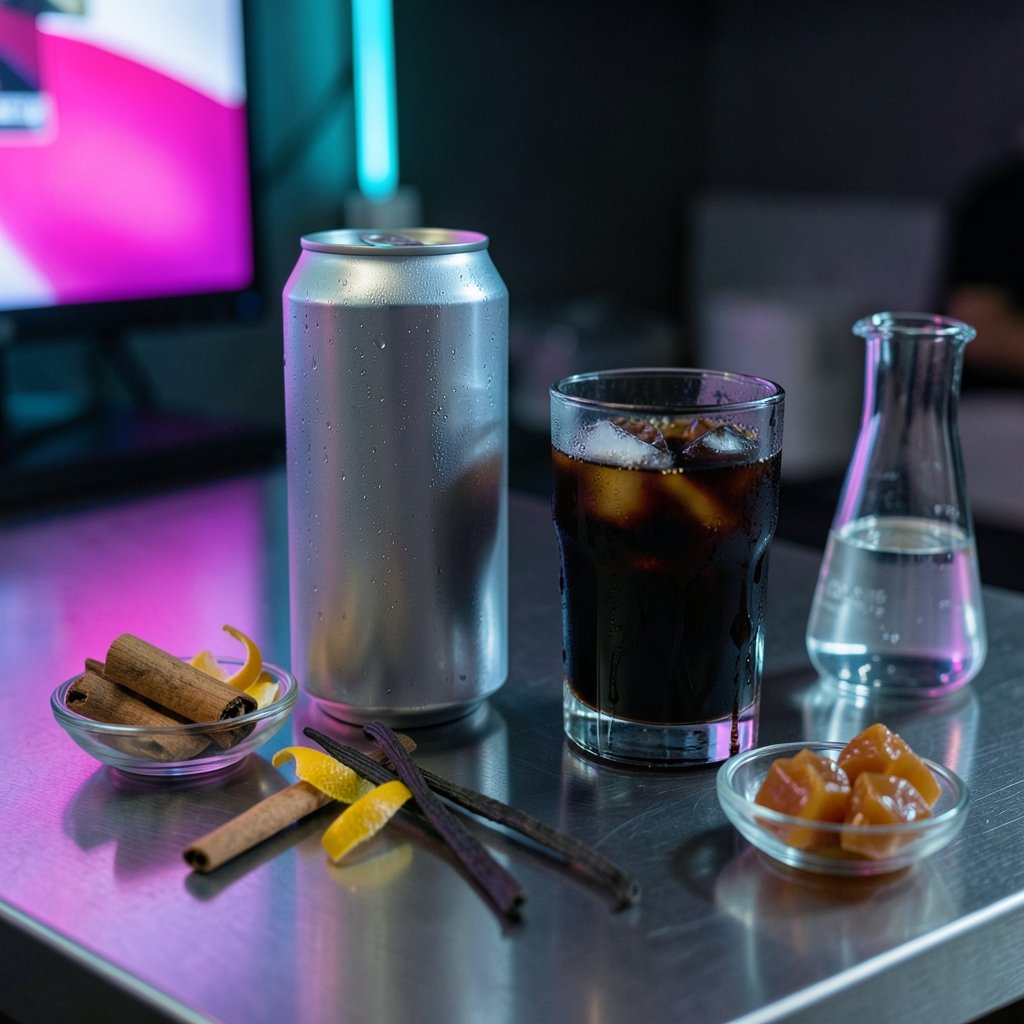
What will actually be different about a can of cola in 2027? Not the fizz. Not the shape of the can. The change is happening on the ingredient list and in the water supply behind every bottling plant. Two regulatory deadlines land in 2027, and together they touch the two things a cola cannot exist without: its flavor system and its water. For shoppers, that means some familiar formulas will quietly change. For brands, it means reformulation work that has to be finished before the clock runs out. (10 best ai chatbots gpt 5 claude under hood 2027)
This article unpacks what the 2027 dates really cover, what they do not cover, and where the popular assumptions go wrong. It also covers the practical side: what reformulation actually costs, why some substitutions fail in blind tastes, and how to read a label without panicking.
What “cola 2027” actually refers to
The phrase has no single official meaning. It is a shorthand that has attached itself to a cluster of food and beverage rules with 2027 deadlines. Two of them matter most.
The first is brominated vegetable oil, or BVO. BVO is a additive used in small amounts to keep citrus flavoring evenly spread through a drink instead of floating to the top. The FDA proposed in November 2023 to revoke the regulation that authorizes it as a food additive, pointing to thyroid effects seen in animal studies. The proposal was published in the Federal Register in January 2024. BVO has historically appeared in some citrus-flavored sodas, which is why it gets filed under “cola” even though plain cola rarely used it.
The second is California’s AB 418, signed in October 2023. The law bans the manufacture and sale in California of foods containing four additives: BVO, Red Dye No. 3, potassium bromate, and propylparaben. Its effective date is January 1, 2027. That is the hardest, clearest 2027 date in this whole story, and it is the one driving most of the reformulation chatter. (Best ai translation tools 2027 deepl vs chatgpt vs google)
A third item sits alongside them. The FDA revoked authorization for FD&C Red No. 3 in food and ingested drugs in a notice dated January 15, 2025, with food manufacturers given until January 15, 2027 to comply. Red No. 3 is not typical in standard cola, but it shows up in cherry and fruit-flavored sodas, which is close enough to the same shelf.
The 2027 dates, side by side

| Rule | What it covers | Key date | Who it hits |
|---|---|---|---|
| California AB 418 | BVO, Red No. 3, potassium bromate, propylparaben in food sold in California | January 1, 2027 | Any brand selling into California, including out-of-state makers |
| FDA Red No. 3 revocation | FD&C Red No. 3 in food | January 15, 2027 (food); 2028 for drugs | National US food manufacturers |
| FDA BVO proposal | Brominated vegetable oil as a food additive | Compliance date tied to the final rule, not the proposal | Makers of citrus-flavored sodas |
| EU Drinking Water Directive (EU) 2020/2184 | Water quality standards, including PFAS limits | January 12, 2027 for most new values | Beverage bottlers using municipal water in the EU |
The table hides an important wrinkle. California’s law does not care where the product was made. A bottler in another state that ships into California has to meet the standard or stop selling there. In practice, most national brands reformulate once for the whole country rather than run two separate recipes, because splitting production is expensive and creates labeling headaches.
Why BVO became the poster child
BVO is a strange additive to build a movement around. It does one narrow job: it keeps citrus oils suspended so the drink looks uniform. Without it, orange and citrus sodas can show a ring of flavoring at the top of the bottle.
The problem is what the additive does in the body. The FDA’s own proposal cited thyroid effects in animal studies as the reason to revoke authorization. That is a regulatory risk assessment, not a claim that a can of soda will harm a drinker, and the distinction matters. Regulators act on margins of safety, not on proof of harm at normal exposure.
What actually happened in the market is more interesting than the science. Several major brands had already dropped BVO years before the FDA acted, reformulating with alternatives like glycerol ester of wood rosin or simply adjusting the emulsion system. That is the practical lesson for anyone watching 2027: the deadline is often the end of a process that started long before. Brands that waited are now paying for speed.
What reformulation actually costs
Replacing an additive sounds like a swap. It is not. A flavor emulsion is a system, and changing one component ripples through taste, mouthfeel, shelf life, and cost.
Here is what the work typically involves, in the order it usually happens:
- Find a functional replacement. The substitute has to keep the flavoring suspended, survive pasteurization and storage, and stay stable for the product’s full shelf life.
- Run blind taste panels. Consumers notice mouthfeel changes before they notice flavor changes. A drink that tastes right but feels thin will still fail.
- Re-run stability testing. Heat, light, and time all behave differently with a new emulsion. This stage eats months.
- Update labels and paperwork. Ingredient declarations, allergen statements, and supplier documentation all change.
- Phase out old inventory. Retailers holding older stock create a window where both versions sit on the same shelf.
The mistake people make when they read about these deadlines is assuming reformulation is fast. It is not. Stability testing alone can run past a year, which is why a January 2027 deadline meant serious work had to begin in 2024 or 2025. A brand that starts in mid-2026 is already behind.
The second common mistake is assuming the substitute is automatically better. Some replacements carry their own regulatory scrutiny. Swapping one additive for another that later gets flagged is a costly loop, and it happens more than the industry likes to admit.
The water side of the story
Cola is mostly water. That makes drinking-water rules a beverage rule, even though they are written for utilities.
The recast Drinking Water Directive (EU) 2020/2184 sets a compliance deadline of January 12, 2027 for most new parametric values. Two parts matter for bottlers. First, new limits on PFAS, the long-lasting chemicals often called “forever chemicals.” Second, a risk-based approach to materials that come into contact with drinking water, which reaches into pipes, tanks, and the equipment a plant uses.
For a bottling operation, this is not abstract. Water that meets the new standards may need different treatment, and treatment changes can shift the mineral profile. Mineral profile affects taste. A plant that switches treatment without re-testing its finished product can end up with a drink that tastes subtly wrong and no obvious cause.
The practical tip here is unglamorous but real: test the finished beverage in addition to the incoming water. Water quality data and product taste data are two different things, and the gap between them is where problems hide.
What 2027 does not change
A lot of the noise around “cola 2027” implies a broader crackdown than the rules actually deliver.
The 2027 deadlines do not ban cola. They do not ban caffeine, sugar, or carbonation. They do not set a national sugar limit. They target four specific additives in California and one color additive nationally, plus water quality standards in the EU.
Sugar policy is a separate conversation entirely. Guidance recommending that free sugars stay under 10% of energy intake, with further reduction to 5% for extra benefit, has been around for years and has driven sugar-sweetened beverage taxes in several countries. The UK’s Soft Drinks Industry Levy, in force since April 2018, is the most-cited model. None of that carries a 2027 deadline. It is context, not a countdown.
That distinction matters because it shapes how shoppers should react. If a label changes in 2027, it is probably because of an additive rule, not because someone decided cola should be healthier.
How to read the change as a shopper
The instinct when a label changes is to assume something got worse. Usually the opposite is true, or at least neutral.
A few habits help. Compare the ingredient list on the new version against the old one rather than against memory. Check whether the change is an additive removal or a sweetener swap, because those have very different taste consequences. And give a reformulated drink two or three tries before deciding, since mouthfeel adjustments often read as “off” on the first sip and normal by the third.
For anyone tracking the wider tooling around retail and product data, the same discipline applies: the interesting signal is in the details, not the headline. That is true whether you are comparing chatbot performance in a head-to-head output quality test or reading a soda label.
Where the timeline gets murky
One honest caveat. The BVO story is less settled than the California story. The FDA’s 2023 action was a proposal, and the compliance date attaches to the final rule, not the proposal. Anyone stating a precise federal BVO deadline should be able to point to the final notice. California’s January 1, 2027 date, by contrast, is written into the statute.
That asymmetry is worth keeping in mind when reading coverage. A state law with a fixed effective date and a federal rulemaking still in motion get reported with the same confident tone, and they should not.
There is also a broader pattern worth naming. Reformulation deadlines tend to arrive in clusters, and clusters create supply chain pressure. When several brands need the same replacement ingredients at the same time, prices move and lead times stretch. Brands that reformulate early avoid that squeeze. Brands that wait pay a premium for speed.
Conclusion
Cola in 2027 will look almost identical on the shelf and read differently on the label. California’s AB 418 sets a firm January 1, 2027 date for removing four additives from food sold in the state, and the federal revocation of Red No. 3 sets a January 15, 2027 deadline for food manufacturers. The EU’s drinking-water rules add a January 12, 2027 layer that most drinkers will never see but every bottler has to manage.
The takeaway is not that cola is in trouble. It is that the boring parts of the supply chain, emulsions and water treatment, are where the real work happens. Brands that started early will glide through 2027. Brands that treated the deadline as a formality will be reformulating under pressure, and drinkers will taste the difference before they read about it.
FAQ
What is BVO and why is it being removed from soda?
BVO stands for brominated vegetable oil. It is an additive used in small amounts to keep citrus flavoring evenly dispersed in a drink. The FDA proposed revoking its authorization as a food additive in late 2023, citing thyroid effects in animal studies. California’s AB 418 bans it in food sold in the state starting January 1, 2027.
Does the 2027 deadline mean cola is banned in California?
No. AB 418 bans four specific additives, not cola itself. Those are BVO, Red Dye No. 3, potassium bromate, and propylparaben. A cola that does not contain any of them can be sold in California exactly as before. Most standard colas never used BVO in the first place, since it was mainly a citrus-soda ingredient.
Is Red Dye No. 3 in regular cola?
Usually not. Red No. 3 is a red colorant, and standard cola gets its color from caramel coloring, not red dye. The additive shows up more often in cherry and fruit-flavored sodas. The FDA revoked its authorization for food in a notice dated January 15, 2025, with food manufacturers given until January 15, 2027 to comply.
Will my cola taste different after reformulation?
Possibly, but the change is often smaller than people expect. The bigger risk in reformulation is mouthfeel rather than flavor. A drink can taste correct and still feel thinner or flatter if the emulsion system changes. That is why brands run blind panels and stability testing before switching, and why giving a new version two or three tries is fairer than judging the first sip.
What does the EU water rule have to do with soda?
Cola is mostly water, so drinking-water standards are effectively beverage standards. The recast Drinking Water Directive sets a January 12, 2027 deadline for most new parametric values, including limits on PFAS and a risk-based approach to materials in contact with water. New treatment can change a water’s mineral profile, which can shift the taste of the finished drink.
Are there other food rules with 2027 deadlines I should know about?
The additive and water rules are the main ones tied to cola. Sugar policy is a separate track with no 2027 date attached. Guidance recommending free sugars stay under 10% of energy intake, and sugar-sweetened beverage taxes in several countries, have been shaping formulations for years. Those are ongoing pressures rather than a single deadline.