Will the 2027 M3 be the last great gasoline-powered BMW sports sedan, or the first truly electric one? Right now, the honest answer is that nobody outside BMW’s development halls knows for sure. That uncertainty is exactly why the “2027 M3” search term has become such a rabbit hole. Fans want a definitive spec sheet. What they get instead is a tangle of official hints, trade-press speculation, and forum rumor.
This piece sorts the signal from the noise. It covers what BMW has actually confirmed, what credible reporting suggests, where the conflicting stories come from, and how a buyer should think about timing a purchase around a car that may not exist in the form people expect.
Why the 2027 M3 Is So Hard to Pin Down
The confusion starts with the name itself. “2027 M3” could mean several different things, and mixing them up leads to bad conclusions.
The most likely reading is the next-generation BMW M3, widely expected to arrive around 2027 or 2028. The current car, the G80 generation, launched in 2020 and gained a Touring wagon variant in 2022. A car arriving in 2027 would be a full new generation, not a facelift. That matters because a new generation usually brings a new platform, new engines or motors, and a new interior.
The second reading is a 2027 model year car. In the United States, a model year typically begins sales in the prior calendar year, so a vehicle badged as a 2027 model could be on dealer lots before January 2027. A buyer who hears “2027 M3” might be picturing a car that goes on sale in 2026. (Best ai translation tools 2027 deepl vs chatgpt vs google)
The third reading is that the term refers to something else entirely. It could be a trim level, an unrelated product, or a typo. Anyone writing or reading about this topic should confirm the subject before treating any spec as fact.
What BMW Has Actually Confirmed
Strip away the speculation and the confirmed list is short but significant.
BMW has publicly discussed a fully electric M3. M division management, including Frank van Meel, has spoken about a battery-electric M car on multiple occasions since roughly 2023. The timeline floated in those discussions lands around 2027 to 2028. That is a signal of intent, not a signed production order with a date stamped on it.
BMW has also confirmed the Neue Klasse architecture, announced in 2023 for launch from 2025 onward, starting with an SUV in the iX3 class. A performance M3 built on that platform would be a later application, not the debut vehicle. The platform itself is real and shipping. An M3 variant of it is the inference.
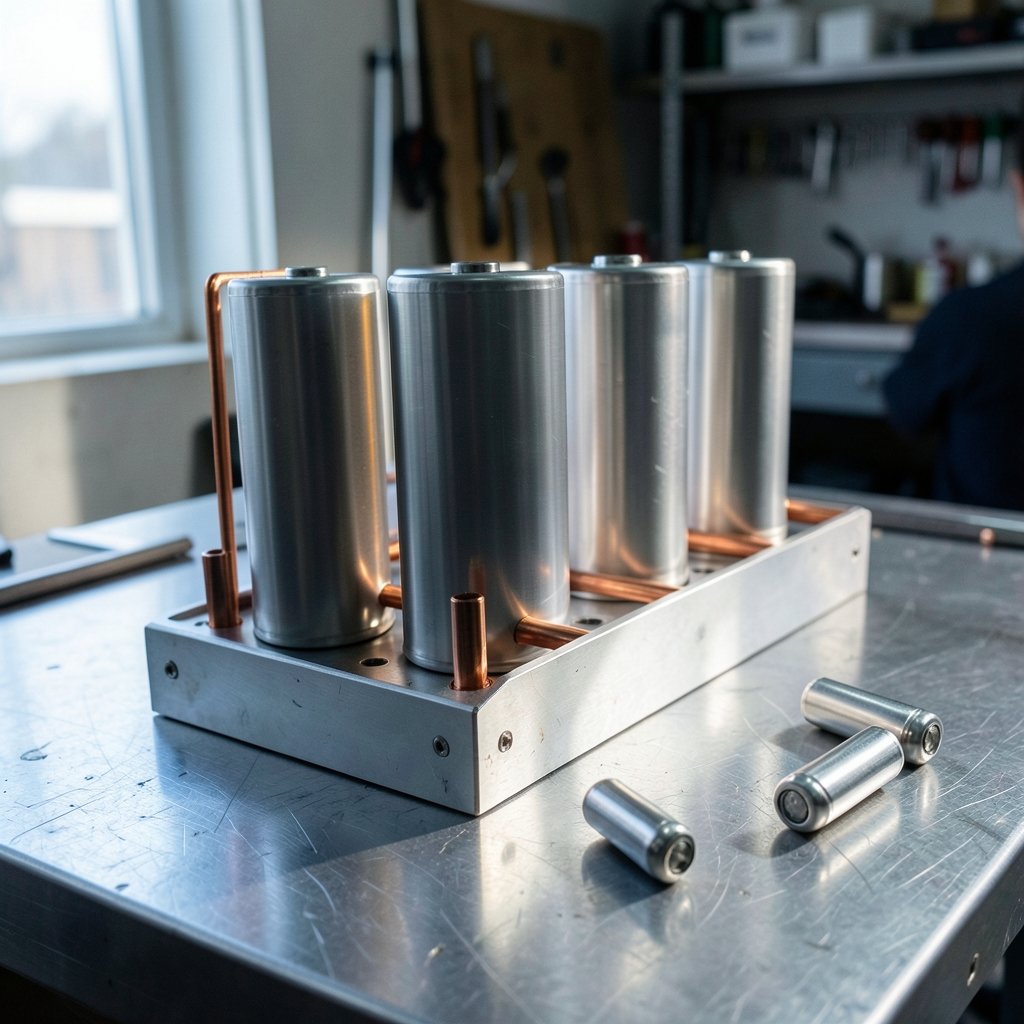
On the battery side, BMW announced in 2022 that Neue Klasse cars would use cylindrical cells rather than prismatic ones, with claims of improved range and charging performance. That detail matters for anyone imagining an electric M3, because track-capable performance depends heavily on how a pack handles heat and repeated fast charging.
Perhaps the most important confirmed position is strategic. BMW has indicated it will keep combustion-engine M cars alongside electric ones for a period rather than flipping a switch. That is consistent with the company’s broader flexible-powertrain approach across its lineup. It also means the question “is the 2027 M3 electric?” may have a genuinely unsatisfying answer: possibly both, sold side by side.
The Powertrain Question Nobody Has Settled
Here is where most articles go wrong. They pick a side and write as if it were decided. It is not.
Three plausible outcomes exist for a car arriving in the 2027 window, and the evidence supports all three to varying degrees.
| Scenario | Supporting signal | Confidence level |
|---|---|---|
| Pure combustion, new generation | BMW’s stated plan to keep ICE M cars alive for a period | Moderate |
| Hybrid, likely plug-in | M division already sells the XM plug-in hybrid; hybridization is a known M strategy | Moderate |
| Fully electric | Public statements about a battery-electric M3 around 2027–2028 | Moderate to high for existence, low for exact timing |
The hybrid path deserves more attention than it usually gets. BMW’s M division launched the XM plug-in hybrid in 2022, which proved the division was willing to electrify a performance model before going fully battery-electric. A hybrid M3 would be a logical bridge, letting BMW keep the sound and character that M buyers pay for while meeting tightening emissions rules.
The naming is equally unsettled. Some reporting speculates the electric car could wear an iM3 badge or similar, leaving the plain M3 name for combustion models. BMW has not confirmed this. Treat any badge claim as speculation until it appears in an official release.
What the Neue Klasse Platform Means for Performance
Platform talk can sound abstract, so here is the practical version. Neue Klasse is BMW’s dedicated electric architecture, designed from the start around a flat floor and a large battery pack rather than adapted from a combustion car.
For a performance sedan, that brings real trade-offs.
The upside: a low center of gravity, near-instant torque delivery, and the packaging freedom to stretch the wheelbase for cabin space without ruining proportions. Cylindrical cells, if they deliver on the range and charging claims, address the biggest worry performance EV buyers have, which is heat management during repeated hard driving.
The downside: weight. Big battery packs are heavy, and M cars have built their reputation on agility, not straight-line thrust alone. An electric M3 will need serious chassis work, likely including advanced torque vectoring, to feel like an M car rather than a very fast appliance. BMW has not published a spec sheet for an M3 on this platform, so any weight or power figure circulating online is guesswork.
Practical Buying Advice for the 2027 Window
This is where firsthand buying experience matters more than spec sheets. A few patterns show up repeatedly when people try to time a purchase around an unreleased performance car.
Mistake one: waiting for a car that keeps slipping. Launch windows for new M generations routinely move. If someone needs a car in 2026, waiting for a 2027 M3 that may arrive in 2028 is a bad plan. Buy for the need, not for the rumor.
Mistake two: assuming the current car will be cheap at the end of its run. It often is not. Final-run performance models frequently hold value because buyers know the next generation may be electric, heavier, or different in character. Scarcity of the old formula can push prices up, not down.
Mistake three: ignoring the model-year trap. A 2027 model year car can be on sale in 2026. Anyone tracking “2027 M3” news should check whether a headline refers to the model year or the calendar year before drawing conclusions about timing.
What actually works: decide on the powertrain you want first, then the timing. If a combustion engine and manual gearbox matter to you, the current generation is the known quantity. If you want the newest platform and are open to electric, waiting is reasonable, but budget for a longer horizon than the headlines suggest.
The Software Side Buyers Underestimate
Modern performance cars are as much software as hardware, and buyers routinely get surprised by this. An electric M3 will succeed or fail based on how well its thermal management, launch control, and regenerative braking are tuned, and horsepower figures alone will not decide it.
That tuning is iterative. Early production cars from any new platform tend to receive over-the-air updates that meaningfully change behavior in the first year. Buyers who want the most polished version of a new platform often do better waiting for the second model year rather than the first. This is a general pattern across the industry, not an M3-specific claim, but it applies here.
The same logic applies to driver-assistance and infotainment. Neue Klasse introduces a substantially new electronics architecture, and new architectures have teething periods. Anyone planning to keep the car a decade should factor that in.
How This Compares to the Rest of the Market
The 2027 M3 will not arrive in a vacuum. The performance sedan segment is being reshaped by electrification across every major brand, and buyers cross-shopping will find very different philosophies.
Some rivals have gone all-in on hybrid performance, keeping engines but adding electric assistance for low-end torque. Others have committed to full electric with heavy emphasis on software and charging speed. BMW’s stated flexible approach sits between those camps, which is either prudent or indecisive depending on who you ask.
For readers tracking how AI tools are changing the way people research and buy cars, including chatbot-driven shopping assistants and dealer-side automation, there is useful context in this breakdown of the 10 best AI chatbots, GPT-5 and Claude under the hood in 2027. Dealerships increasingly lean on these tools for lead qualification, which changes how a buyer gets a test drive scheduled.
If the plan is to configure and price a car online before visiting a showroom, the shopping experience itself has been transformed. Guides like this roundup of AI tools for e-commerce stores that boost conversion in 2027 explain the machinery behind those configurators and finance calculators. Knowing how the funnel works helps a buyer spot when a “limited-time” offer is automated urgency rather than a real deal.
Where the Rumor Mill Goes Wrong
A quick audit of common claims circulating about the 2027 M3 is worth doing, because several are stated far more confidently than the evidence allows.
Claim: the electric M3 is confirmed for 2027. Public statements point to a window around 2027–2028. No official launch date has been fixed. Anyone quoting a specific month is guessing.
Claim: the M3 name is being retired for electric models. Speculative. Some reporting suggests an iM3 badge, but BMW has not confirmed a naming decision.
Claim: the combustion M3 ends in 2027. Contradicted by BMW’s stated plan to run combustion and electric M cars alongside each other for a period. The length of that overlap is unknown.
Claim: the next M3 will be hybrid only. Possible, not confirmed. The XM proves capability, not a plan for the M3 specifically.
The pattern here is that capability gets reported as commitment. A brand showing it can build something is not the same as a brand announcing it will. Readers should look for the word “confirmed” only when an official release backs it up.
What to Watch For Next
Rather than refreshing rumor pages daily, watch for a small number of high-signal events. An official BMW announcement naming the next M3 generation and its powertrain is the big one. A public debut at a major auto show usually follows within months of that. Regulatory filings, which often surface dimensions and power figures before a launch, are another reliable early indicator.
Until then, the sensible position is this: BMW has confirmed an electric M car is coming and has confirmed the platform it will likely use. Everything else, from the badge to the launch month to whether a combustion version survives alongside it, remains open.
Conclusion
The 2027 M3 is best understood as a moving target with a few fixed points around it. BMW has committed to an electric M future and to the Neue Klasse platform that will underpin it. The company has also signaled that combustion M cars will not disappear overnight. Between those two facts sits a lot of genuine uncertainty about timing, naming, and powertrain mix.
For buyers, that uncertainty argues for clarity about personal priorities rather than chasing the newest rumor. If the sound and feel of a combustion M car is the point, the current generation is a known quantity with a real warranty and a real dealer network. If the appeal is a new platform with the latest battery and software architecture, patience is the price of admission, and the wait may run longer than the headlines imply. Either way, the smart move is to verify claims against official announcements and treat confident spec sheets for an unlaunched car with healthy skepticism.
FAQ
Is the 2027 M3 electric?
BMW has publicly discussed a fully electric M3 arriving around 2027 to 2028, and the company has confirmed the Neue Klasse electric platform it would likely use. However, no official launch date or final powertrain decision has been announced, and BMW has said it will keep combustion M cars alongside electric ones for a period. An electric M3 is likely to exist, but calling it confirmed for 2027 overstates the evidence.
Will there still be a gasoline-powered 2027 M3?
Possibly. BMW has indicated it will run combustion-engine M cars alongside electric ones rather than switching abruptly, consistent with its broader flexible-powertrain strategy. That suggests a gasoline or hybrid M3 could overlap with an electric version, but the exact overlap period and whether a 2027 car is combustion, hybrid, or electric has not been confirmed.
What platform will the next M3 use?
The next-generation M3 is widely reported to use BMW’s Neue Klasse architecture, announced in 2023 for launch from 2025 onward. The M3 would be a later, performance-tuned application rather than the debut vehicle. BMW has not published a full spec sheet for an M3 on this platform, so power, weight, and range figures circulating online are unverified.
Is the next M3 called the iM3?
That is speculation. Some trade reporting has floated an iM3 or similar badge for the electric version, reserving the plain M3 name for combustion models. BMW has not confirmed any naming decision. Treat badge claims as rumor until an official release settles it.
When does a 2027 model year car actually go on sale?
In the United States, a model year typically begins sales in the prior calendar year, so a vehicle badged as a 2027 model could reach dealers before January 2027. This is a general industry convention rather than an M3-specific fact. It means headlines about a “2027 M3” may refer to the model year rather than the calendar year, which changes how you should read launch timing.
Should I wait for the 2027 M3 or buy the current one?
It depends on what you value. If a combustion engine, manual gearbox, and the current car’s established character matter most, the present generation is a known quantity available now. If you want the newest platform, battery technology, and software architecture, waiting is reasonable, but budget for a longer horizon than the rumors suggest, since launch windows for new M generations often slip.