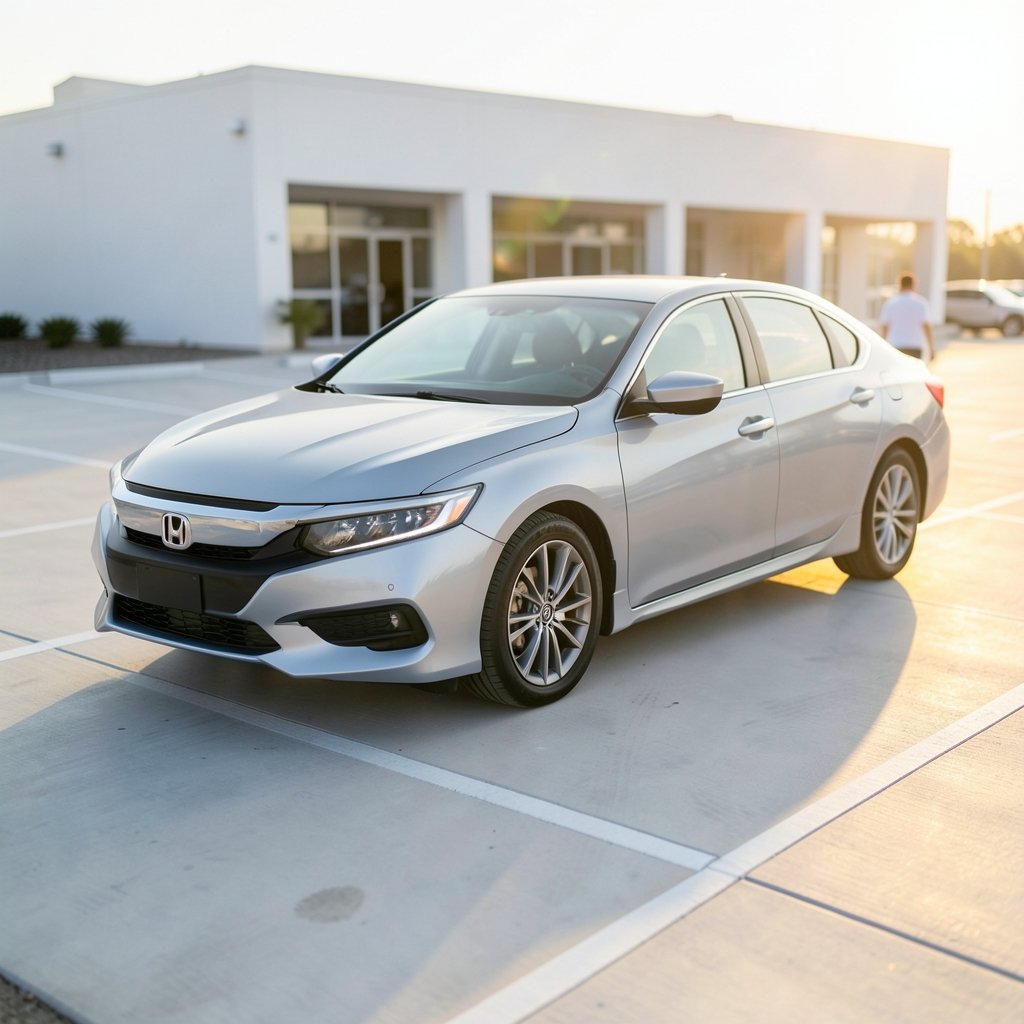
Will the 2027 Honda Accord be a carryover, a refresh, or something entirely new? That question has been circulating in forums and comment sections for months, and the honest answer is less satisfying than most shoppers want: Honda has not publicly announced a 2027 Accord. There is no confirmed debut date, no confirmed powertrain lineup, and no confirmed pricing. What follows is a careful separation of what is known about the Accord as a nameplate, what the model-year calendar suggests, and how to read the speculation without getting burned. (10 best ai chatbots gpt 5 claude under hood 2027)
The Starting Point: No Confirmed 2027 Announcement
The most useful thing a buyer can do right now is understand the information gap. Honda’s official press channel is the primary source for model-year announcements, and as of the latest available information, no 2027 Accord release has been published there. That is an absence of information, not a denial. Automakers routinely stay quiet about the next model year until inventory of the current one needs clearing. (10 best ai chatbots e commerce 2027 that rescue abandoned)
This matters because the internet fills silence fast. Some outlets speculate about a full redesign or an electric Accord variant. Others expect a straightforward carryover. Those claims directly conflict, which is the clearest signal that neither is confirmed. Until Honda says otherwise, treat every specific 2027 claim as unverified.
What the Current-Generation Accord Actually Is
The Accord is one of the longest-running nameplates in the U.S. market, sold here since 1976. The current car is the 11th generation, introduced for the 2023 model year with a debut in November 2022. That generation launched with hybrid and turbo gasoline powertrains, including a 1.5-liter and a 2.0-liter turbo, with the hybrid positioned as a volume trim rather than a niche halo model.
That last detail is worth pausing on. Honda made a deliberate bet that most Accord buyers would accept a hybrid as the mainstream choice, not a premium upgrade. In practice, that bet shapes everything about how the next model year is likely to be positioned, whether it arrives as a carryover or something more substantial.
For context on how car-buying research has evolved alongside AI tooling, shoppers now routinely cross-check dealer claims against AI assistants, and the same skepticism applies here: verify against primary sources.
The Model-Year Math Most Shoppers Get Wrong
Here is a practical tip that saves real confusion. In the U.S., vehicles typically go on sale in the calendar year before their model year. A 2027 model year car would generally arrive at dealers in 2026. Individual launches vary, but the convention holds often enough to plan around.
The common mistake is assuming that because it is a given calendar year, the corresponding model year is already on lots. It usually is, but the transition timing differs by model and by region. If you are waiting for a 2027 Accord, the practical question is not “when is the model year?” but “when does Honda stop building the current one?” Dealers know this weeks before the public does.
A second mistake: assuming a new model year means new hardware. Many model years are carryovers with trim reshuffles, color changes, or feature packaging adjustments. Assuming a redesign because the number changed is how people end up disappointed, or worse, paying a markup for a car that is mechanically identical to last year’s.
What Is Genuinely Unknown About the 2027 Accord
Pricing, EPA fuel-economy ratings, and safety ratings for a 2027 Accord are all unknown. Any specific figure you see quoted online should be traced back to Honda, the EPA, or NHTSA and IIHS before you believe it. Those three sources are the only ones that publish authoritative numbers for a U.S. model year.
| Information type | Status for 2027 Accord | Where it must come from |
|---|---|---|
| Existence of a 2027 model year | Unconfirmed | Honda official announcements |
| Body style and platform | Unconfirmed | Honda official announcements |
| Powertrain lineup | Unconfirmed | Honda official announcements |
| Pricing | Unknown | Honda pricing release |
| Fuel economy | Unknown | EPA published ratings |
| Crash safety ratings | Unknown | NHTSA and IIHS testing |
The table is short on answers, and that is the point. Anyone presenting a filled-in version of it right now is guessing.
The Electrification Question Hanging Over the Accord
Honda has publicly committed to battery-electric and fuel-cell vehicles, including its 2021 electrification announcements and the 2024 Honda 0 Series concept direction. Whether any of that applies to a 2027 Accord is genuinely unknown.
This is where speculation gets slippery. Corporate strategy announcements are about the company’s direction over a decade, not about one sedan’s next model year. A brand can commit to EVs broadly while continuing to sell hybrids and gasoline cars for years. Reading a corporate EV pledge as a promise about a specific 2027 trim is a leap the evidence does not support.
What is fair to say is that emissions regulations shape U.S. powertrain lineups, and California’s Advanced Clean Cars program is one of the forces pushing hybrid and electric adoption across the industry. How that pressure lands on the Accord specifically, though, is a question only Honda can answer.
How to Read the Rumors Without Getting Fooled
Practical experience with model-year speculation suggests a few reliable filters.
- Check the source date. A rumor from eighteen months ago that has not been followed by an official announcement is probably dead or wrong.
- Look for a Honda press release, not a Honda paraphrase. Aggregator sites often restate each other until a guess sounds like a fact.
- Distinguish “expected” from “confirmed.” Words like “reportedly,” “could,” and “may” are doing heavy lifting in most 2027 Accord coverage.
- Watch dealer allocation, not blog posts. When dealers start getting allocation notices, real information is flowing.
- Ignore leaked spec sheets without a photo of the source. They are trivially easy to fake.
The pattern is familiar to anyone who follows consumer tech. When a product is genuinely close to launch, information gets specific and consistent across independent outlets. When it is not, coverage stays vague and contradictory. Right now, Accord coverage sits firmly in the second category, a dynamic that mirrors how hype cycles play out in coverage of AI chatbots, where confident-sounding claims often outrun confirmed facts.
If You Need a Car Before the 2027 Arrives
Here is the honest consumer advice. If you need a mid-size sedan in the next six to twelve months, waiting for an unconfirmed model year is a bad trade. The current 11th-generation Accord is a known quantity with published fuel economy, published safety ratings, and available inventory. The 2027 is a rumor.
If you can wait, the smarter approach is to set a decision date rather than an open-ended wait. Pick a month, check Honda’s official announcements at that point, and decide based on what is actually confirmed. That prevents the classic trap of waiting a year for a car that turns out to be a carryover with a new paint color.
There is also a negotiation angle worth knowing. Dealers discount outgoing model years aggressively when a new one is imminent. If the 2027 turns out to be a carryover, the 2026 sitting on the lot is the same car for less money. Buyers who understand this consistently do better than buyers chasing the newest badge.
What the Competition Is Doing While Everyone Waits
The mid-size sedan segment has thinned out considerably over the past decade, which changes the Accord’s strategic position. Fewer rivals means less pressure for dramatic year-over-year changes, and it also means Honda can afford a slower cadence. A carryover year is more plausible in a segment with fewer players than in a crowded one.
That said, the broader car market’s shift toward electrification and software features creates pressure from a different direction. Buyers now expect better infotainment, driver-assistance systems, and connectivity with each cycle. Even a carryover model year usually picks up feature updates to stay competitive, so “carryover” does not necessarily mean “identical.”
Where to Verify Before You Buy
The verification path is straightforward and worth bookmarking. Honda’s official newsroom is where model-year announcements appear first. The EPA publishes fuel-economy and emissions data by model year. NHTSA publishes five-star safety ratings, and IIHS publishes independent crash-test results. Generation history and model-year timelines are documented in encyclopedic references, though those should be treated as secondary sources.
The discipline of checking primary sources is the same one that pays off in other purchase categories. Anyone comparing tools, for instance, benefits from the same rigor: the marketing copy is loud, the verified data is quiet, and the quiet data is what you should act on.
The Bottom Line on the 2027 Accord
The 2027 Honda Accord is, at this moment, an unconfirmed future model year of a well-documented sedan. The nameplate has been sold in the U.S. since 1976, the current car is the 11th generation that arrived for 2023, and it launched with hybrid and turbo gasoline powertrains with the hybrid as a volume trim. Everything beyond that, including whether a 2027 model year exists at all, is unverified.
That is not a satisfying answer, but it is an accurate one, and accuracy is worth more than a confident guess when you are about to spend tens of thousands of dollars. Watch Honda’s official channel, set a decision date, and let confirmed information drive the purchase. If you are weighing a sedan against other big-ticket decisions this year, the same patience applies to reading handheld console prices for 2027, where the gap between rumor and reality is just as wide.
FAQ
Has Honda confirmed a 2027 Accord?
No. Honda has not published a confirmed 2027 Accord announcement. Whether a 2027 model year exists, and whether it is a carryover, a refresh, or a redesign, is unverified. Check Honda’s official press channel for the first authoritative word. (Best ai translation tools 2027 deepl vs chatgpt vs google)
When would a 2027 Accord go on sale?
Under the usual U.S. convention, a 2027 model year vehicle would generally arrive in calendar year 2026. Individual launches vary, so treat that as a planning guideline rather than a promise.
What engines does the current Accord offer?
The 11th-generation Accord, introduced for the 2023 model year, launched with hybrid and turbo gasoline powertrains, including 1.5-liter and 2.0-liter turbo engines. The hybrid was positioned as a volume trim in the U.S. lineup rather than a niche option.
Will the 2027 Accord be electric?
Unknown. Honda has committed publicly to battery-electric and fuel-cell vehicles, but whether that strategy applies to a 2027 Accord has not been stated. Corporate electrification pledges cover a decade of product planning, not one sedan’s next model year.
Where can I find official fuel economy and safety ratings?
Fuel-economy and emissions data by model year come from the EPA, while crash-test ratings come from NHTSA and IIHS. Any figures quoted elsewhere should be traceable to those sources before you rely on them.
Should I wait for the 2027 or buy the current Accord?
If you need a car within six to twelve months, the current 11th-generation Accord is a known quantity with published ratings and available inventory, while the 2027 is unconfirmed. If you can wait, set a specific decision date and check for official announcements then rather than waiting indefinitely.