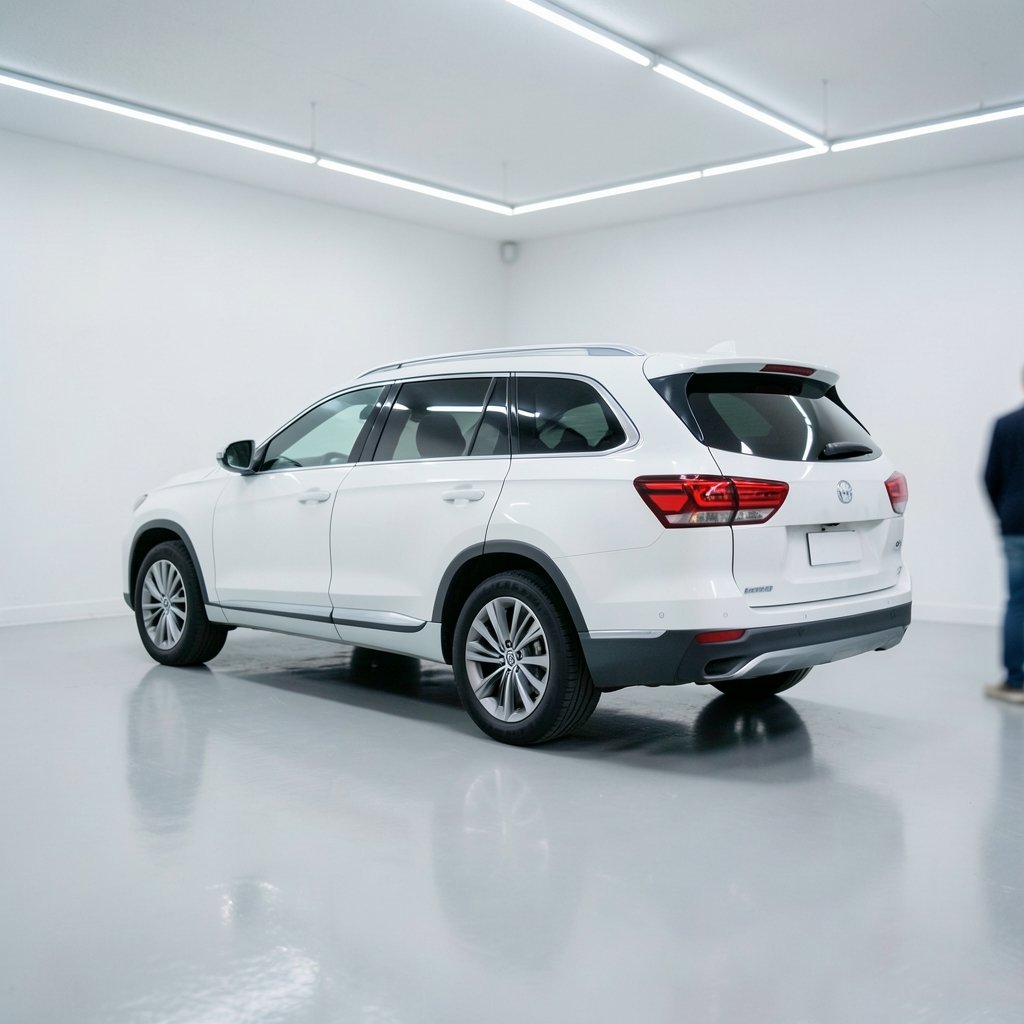
Is the 2027 Honda Pilot a real, confirmed vehicle you can order today, or a rumor that keeps getting recycled in forum threads? That question matters more than it sounds, because the three-row family SUV segment rewards patience poorly. If a refreshed Pilot is around the corner, buying a 2026 model at full sticker could sting. If nothing is changing, waiting costs you nothing but time. So here is a clear-eyed look at what is actually known about the 2027 Pilot, what is inference, and what is pure speculation dressed up as insider news.
The Short Answer: Treat 2027 Pilot Details as Unconfirmed
The Honda Pilot is a three-row midsize crossover SUV sold mainly in North America, in production since the 2003 model year. The current fourth generation launched for the 2023 model year with a new platform, a 3.5-liter V6, and a redesigned interior. Those are solid, well-established facts.
Everything beyond that gets murky fast. There is no verified public confirmation of a specific 2027 Pilot announcement, no confirmed powertrain decision, and no confirmed pricing or trim structure. Honda typically announces each model year’s changes in the preceding calendar year, which means 2027 details would most likely surface during 2026. Whether those details are public yet depends entirely on Honda’s newsroom, and that is the one place worth checking before you believe anything else.
This is the single biggest mistake shoppers make with upcoming model years: they read a speculative article, treat it as a launch date, and then either overpay for the outgoing model or stall indefinitely. A better habit is to separate confirmed facts from industry-pattern guesses, and to check the manufacturer’s own press releases rather than aggregator sites.
Why a Refresh Around 2026-2027 Makes Sense
Here is where reasonable inference begins. A mid-cycle refresh, often called a facelift, is the typical next step for a generation like this one, usually landing three to four years after launch. A 2023 launch puts a refreshed Pilot plausibly around the 2026 or 2027 model year.
That is an inference from industry norms, not a confirmed Honda announcement. Treat it as speculation, but useful speculation. It tells you what to watch for: revised front and rear styling, an updated infotainment interface, possibly reshuffled trim content, and occasionally a new wheel or color palette. Refreshes rarely touch the fundamental bones of a vehicle.
For context on how much difference a generation or refresh actually makes in daily use, the same judgment problem shows up in software tooling, where buyers constantly overestimate the impact of a version bump. Articles like this comparison of cursor vs github copilot 2027 which ai ide earns its make the same point: the headline version number matters far less than whether the underlying platform fits how you actually work. A Pilot refresh is similar. Styling changes grab attention; the seating, cargo, and driving character that determine whether you like the vehicle year after year usually carry over.
What the Fourth-Generation Pilot Already Gets Right
If the 2027 model turns out to be a light refresh or a carryover, buyers are still getting a genuinely competitive family vehicle. The current generation’s strengths are well documented in owner experience and reviewer consensus.
Space and packaging
The Pilot’s core appeal is honest packaging. Three rows, a usable third row for kids and shorter adults, and cargo volume that stays respectable even with all seats up. The second row slides and reclines on most trims, which is the feature parents notice most when installing child seats. The lower load floor and wide door openings make everyday errands less annoying than they sound on paper.
The V6 and drivetrain
The 3.5-liter V6 is the known quantity here. It is not thrilling, but it is smooth, proven, and paired with an automatic transmission that behaves well in traffic. All-wheel drive is available across much of the lineup, and the Pilot’s towing capability sits in the range families actually use for small trailers, boats, and campers.
Ride and refinement
The fourth generation moved to a platform shared with related models in the lineup, and the result is a quieter, more settled ride than earlier Pilots. Highway manners are a genuine strength. If your use case is long family road trips rather than off-road weekends, this matters more than any spec sheet number.
Where it falls short
Be honest about the weaknesses too. Fuel economy is merely average for the class, and the V6 has no electrified option confirmed for 2027. The infotainment system, while improved, is not the segment’s most responsive. Third-row access still requires some climbing. And the Pilot’s interior materials, while durable, do not feel as premium as some rivals at the top trims.
Powertrain: The Biggest Open Question
This is where speculation runs hottest and facts run thinnest. Honda has publicly discussed electrification plans for its light-truck lineup, but no specific 2027 Pilot powertrain decision can be confirmed. Do not state a hybrid, plug-in hybrid, or electric 2027 Pilot as fact, because nobody outside Honda can currently back that up.
What you can do is think in scenarios:
| Scenario | Likelihood signal | What it means for buyers |
|---|---|---|
| V6 carryover with minor efficiency tweaks | Consistent with a light refresh cycle | Safest assumption; buy with confidence |
| Hybrid added as a new trim | Plausible given segment pressure | Worth waiting only if you keep vehicles 8+ years |
| Full redesign or new platform | Unlikely this soon after 2023 | Would justify waiting; unconfirmed |
| Plug-in hybrid or EV variant | Speculative | Do not plan a purchase around it |
The practical takeaway: if fuel economy is your top priority, a hybrid Pilot is a hope, not a plan. If you need a vehicle this quarter, the current V6 is a known quantity with a long track record.
How to Verify 2027 Pilot Information Yourself
Rather than trusting a single article, run a short verification routine. It takes fifteen minutes and saves months of regret.
- Check the manufacturer’s official newsroom for a Pilot-specific press release, not a general homepage.
- Look for model-year change summaries, which manufacturers publish closer to launch.
- Cross-check safety ratings on the official government safety database and the independent insurance-industry testing body for the specific model year.
- Confirm fuel economy figures on the government fuel economy site for the exact model year and drivetrain.
- Ask a dealer for the current order guide, which lists trims, colors, and available options before public marketing begins.
- Search enthusiast forums for spy photos and prototypes, but treat them as entertainment rather than evidence.
The order guide step is the one most shoppers skip, and it is often the most useful. Dealers receive ordering information before the public does, and a salesperson will usually tell you plainly whether a given model year is a carryover.
Practical Buying Advice If You Cannot Wait
Plenty of households need a three-row SUV now, not in eighteen months. If that is you, here is what actually works in practice.
Negotiate on the outgoing model year. If a refresh is coming, dealers face pressure to clear inventory. End-of-model-year timing, particularly late in the calendar year, is when discounting is most aggressive. Lease incentives tend to be richer than purchase incentives on family SUVs, so compare both structures rather than assuming financing is better. If leasing appeals, it is worth understanding how Honda pilot lease deals are typically structured before you walk in, because residual values and money factors vary far more between trims than most buyers expect.
Do not buy the first year of a refresh. This is a common mistake. A refreshed model often brings new infotainment hardware and revised assemblies, and the first production run is where small issues surface. Waiting for the second year of a refreshed generation is usually the smarter play.
Match trim to actual use. The mid-level trims typically deliver the best value: the features families use daily, without the top trim’s cosmetic extras. Heated seats, adaptive cruise, and a decent camera system matter more than a premium audio badge.
Test the third row with your actual passengers. Bring the car seats. Bring the tallest family member. Fold the seats. This sounds obvious and almost nobody does it.
Check insurance and tire costs before signing. Three-row SUVs vary meaningfully in both, and the difference over five years can exceed a trim upgrade.
There is a broader lesson here about buying decisions under uncertainty, one that shows up in executive tooling choices too. A piece on best ai tools ceos 2027 decision autopilot really delivers makes a similar argument: the winning move is rarely the most hyped option, it is the one whose real-world behavior you have actually verified. Applied to the Pilot, that means driving the current generation rather than waiting on a rumor.
Comparing the Pilot Against Its Own Future
It helps to frame the decision as a comparison between two real options rather than between a car and a wish.
| Consideration | Buy current Pilot now | Wait for confirmed 2027 details |
|---|---|---|
| Price leverage | Strong at model-year end | Unknown; launch pricing is firm |
| Fuel economy | Known, average for class | Possibly better, unconfirmed |
| Risk | Low; proven platform | First-year-refresh risk if changed |
| Timing | Immediate | Indefinite until announcement |
| Feature content | Known and testable | Speculative |
If your current vehicle has another two years of life in it, waiting is low-cost and gives you optionality. If it does not, the current Pilot is a defensible purchase today, and the arrival of a refresh does not make your vehicle worse.
What About the Related Models?
The Pilot shares a platform and architecture with other three-row and two-row models in the same corporate family, which is worth knowing because it spreads risk. Shared platforms mean shared parts availability, shared recall campaigns, and shared aftermarket support. It also means that if a major change lands on the platform, it likely lands across several models at once rather than on the Pilot alone.
That has a practical upside for buyers: even if the 2027 Pilot itself is a modest update, the platform underneath it will be well understood by then. You are not buying an orphan.
Conclusion: Buy on Facts, Wait on Evidence
The 2027 Honda Pilot is best understood as an open question rather than a product. The current fourth-generation Pilot, launched for 2023, is a known and genuinely capable three-row family SUV with strong packaging, a proven V6, and a comfortable highway ride. A mid-cycle refresh around the 2026 or 2027 model year is a reasonable expectation based on how the industry cycles generations, but it is an inference, not a confirmed plan. No 2027 powertrain, pricing, or trim structure can be stated as fact right now.
The smart approach is unglamorous. Check the manufacturer’s own newsroom for a Pilot-specific release. Ask a dealer for the order guide. Test-drive the current model with your real family and real cargo. If you need a vehicle now, negotiate hard on the outgoing model year and let someone else pay launch pricing. If you can wait, set a reminder to re-check in a few months and revisit the question with fresh evidence. Either way, decide on verified information rather than on a rumor that has been circulating since the day the current generation launched.
Frequently Asked Questions
Has Honda officially confirmed a 2027 Pilot?
No specific 2027 Pilot announcement can be verified as public. Honda typically announces model-year changes in the preceding calendar year, so 2027 details would most likely appear during 2026. The reliable move is to check the manufacturer’s official newsroom for a Pilot-specific press release rather than relying on aggregator coverage.
Will the 2027 Pilot be a redesign or just a refresh?
A mid-cycle refresh is the more plausible outcome. The fourth generation launched for the 2023 model year, and refreshes typically arrive three to four years after launch, which points toward the 2026 or 2027 model year. That is an inference from industry patterns, not a confirmed Honda plan, and a full redesign this soon would be unusual.
Will the 2027 Pilot get a hybrid powertrain?
That cannot be confirmed. Honda has discussed electrification plans for its light-truck lineup generally, but no specific 2027 Pilot powertrain decision is verifiable. Buyers who need a vehicle soon should plan around the proven 3.5-liter V6 rather than waiting for a hybrid that may not arrive on their timeline.
Should I wait for the 2027 Pilot or buy the current model?
It depends on your timeline and your current vehicle. If you have a year or two of life left in your existing car, waiting costs little and preserves optionality. If you need a three-row SUV now, the current generation is a proven platform, and end-of-model-year timing typically brings the strongest discounts and lease incentives.
What should I check before believing 2027 Pilot rumors?
Verify four things: a Pilot-specific press release from the manufacturer, the dealer order guide for trims and options, official safety ratings for the exact model year, and official fuel economy figures for the exact drivetrain. Spy photos and forum posts are entertainment, not evidence, and should never drive a purchase decision.
Is the current Pilot still a good family SUV if a refresh is coming?
Yes. A refresh does not retroactively make an existing vehicle worse. The current Pilot offers three usable rows, a comfortable highway ride, a proven V6, and available all-wheel drive. The main compromises, average fuel economy and an infotainment system that trails the best in class, are worth weighing against whatever discount you can negotiate on the outgoing model year.