

Did you know that 2026 has 53 weeks on the international calendar while 2027 has only 52? That single oddity trips up payroll systems, project schedules, and anyone who books time off by week number. The 2026 and 2027 calendar pair is quietly unusual in several ways, and knowing the quirks before January arrives can save a lot of confusion.
This guide walks through the structure of both years, the holidays that shift, the events worth circling, and the practical mistakes people make when planning across the two. It covers the Gregorian calendar as used in the United States and most of the world, with clear notes where other countries differ.
The Basic Shape of Both Years
Neither 2026 nor 2027 is a leap year. Neither number is divisible by four, so February gets 28 days in both cases and each year runs exactly 365 days. That part is simple.
What is less simple is where the days fall. 2026 begins on a Thursday, and 2027 begins on a Friday. That one-day shift changes almost everything downstream: which dates land on weekends, when school breaks fall, and how many working days each month contains.
| Feature | 2026 | 2027 |
|---|---|---|
| Total days | 365 | 365 |
| Leap year | No | No |
| First day | Thursday | Friday |
| Last day | Thursday | Friday |
| ISO weeks | 53 | 52 |
| Western Easter | 5 April | 28 March |
| Orthodox Easter | 12 April | 2 May |
That 53-week figure for 2026 deserves attention. Under ISO 8601, the international standard for date and time formats, a year gets 53 weeks when it begins on a Thursday, or when it is a leap year beginning on a Wednesday. 2026 starts on a Thursday, so it qualifies. ISO week 1 of 2026 actually begins on Monday 29 December 2025, and week 53 runs from 28 December 2026 to 3 January 2027.
In practice, this means anyone scheduling by week number needs to check which system their tools use. Many software platforms default to a simple “week 1 starts January 1” model, which does not match ISO numbering. If a contract says “delivery in week 12,” the two systems can disagree by a full week. That is the kind of gap that turns into a missed deadline.
Why the Week-53 Quirk Matters More Than It Sounds
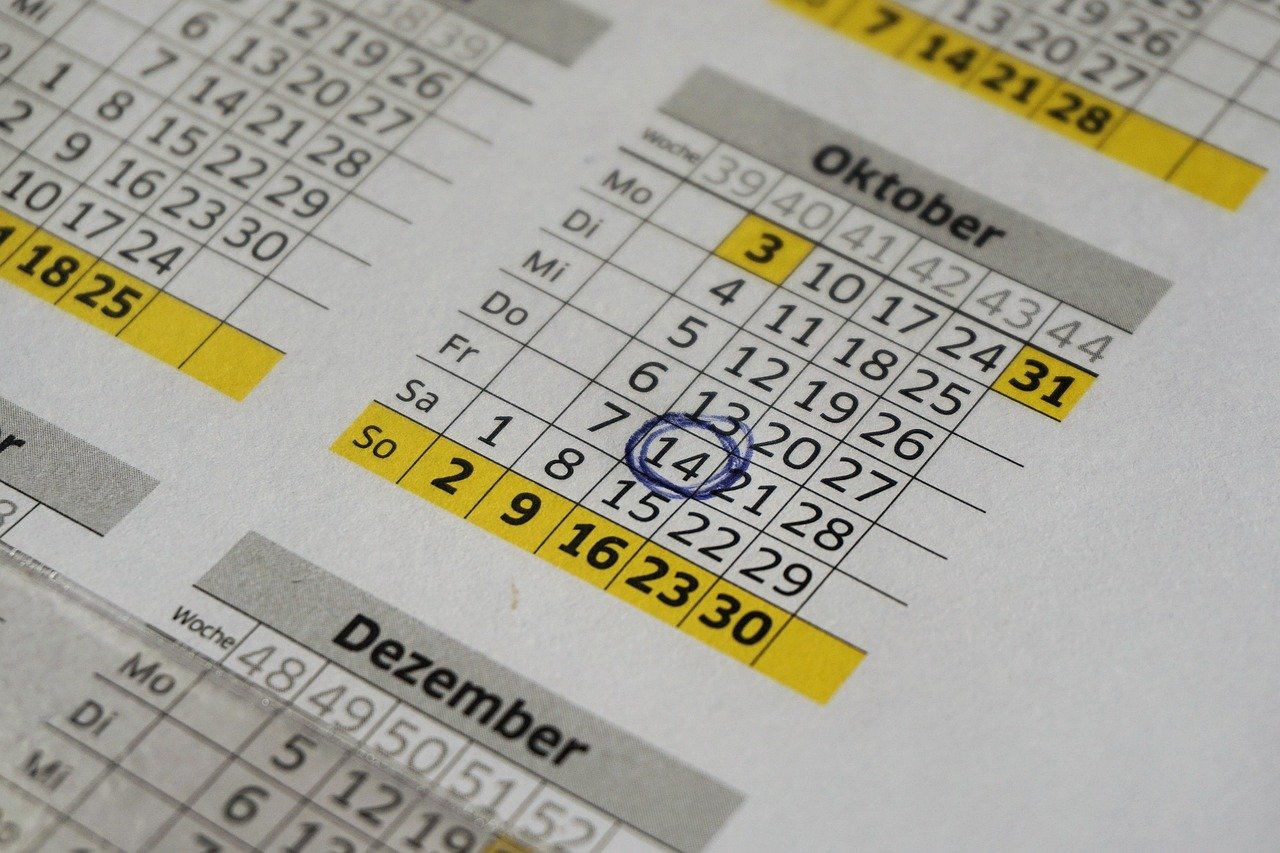
Most people never think about week numbering until it bites them. The common failure points are payroll, manufacturing, retail replenishment, and academic timetables.
Payroll is the biggest one. Companies that pay biweekly rather than weekly will see 27 pay periods instead of 26 in some years, depending on where the cycle starts. A 53-week year does not automatically create a 27th payday, but it raises the odds, and payroll teams that do not check in advance sometimes face a budget surprise in December.
Retail and logistics plan by week number because suppliers ship on fixed weekly cycles. When one system says “week 53” and another rolls straight into “week 1,” inventory counts drift.
Schools and universities usually publish term dates by calendar date rather than week number, which sidesteps the issue. But sports leagues, exam boards, and accreditation bodies often use week numbers, and that is where confusion creeps in.
The practical fix is boring but effective: whenever a date matters, write it out in full (day, date, month, year) rather than relying on a week number alone. If you are building a content plan around weekly cadences, tools designed for that job help; a roundup of the best AI content calendar tools for planning 30 days in 30 minutes covers how different apps handle week numbering and recurring schedules. The same logic applies to personal scheduling, where picking a calendar app that actually fits how you work matters more than the feature list suggests.
Holidays That Move: The Weekend Rule
In the United States, federal holidays are set by statute, and the rule for weekend holidays is fixed. When a holiday falls on a Saturday, it is observed the preceding Friday. When it falls on a Sunday, it is observed the following Monday.
That rule creates some notable shifts across the two years.
Independence Day, 4 July 2026, falls on a Saturday. The observed federal holiday is therefore Friday 3 July 2026, which turns into a three-day weekend for many offices. Christmas Day 2027 falls on a Saturday, so the observed holiday is Friday 24 December 2027.
New Year’s Day is worth flagging too. 1 January 2027 falls on a Friday, which means the holiday lands on a working day and the following weekend is a normal one. By contrast, 1 January 2028 falls on a Saturday, so the observed holiday shifts back to Friday 31 December 2027. That gives the 2027 calendar an unusual ending: a federal holiday on the final day of the year.
A few more that catch people out:
- Juneteenth (19 June): falls on a Friday in 2026 and a Saturday in 2027, so 2027 observance moves to Friday 18 June.
- Veterans Day (11 November): Wednesday in 2026, Thursday in 2027. No shift either year.
- Thanksgiving: fourth Thursday of November, so 26 November 2026 and 25 November 2027.
The important caveat is jurisdiction. Holiday sets vary enormously by country and, within the US, by state. A “2026 and 2027 calendar” article that does not say which country it covers is only half useful. Always confirm against the official table for your own jurisdiction before locking in leave or payroll dates.
Easter, DST, and the Movable Dates
Easter is the trickiest date on any Western calendar because it moves. In 2026, Western Easter falls on Sunday 5 April. In 2027, it comes much earlier: Sunday 28 March.
Orthodox Easter follows a different calculation. In 2026 it falls on 12 April, and in 2027 on 2 May. Anyone planning around Greek, Russian, Serbian, or other Orthodox communities should use those dates instead. The gap between the two Easters is unusually wide in 2027, which matters for anyone coordinating international events or family travel across both traditions.
Daylight saving time in the US follows a predictable pattern under current federal rules: it begins the second Sunday in March and ends the first Sunday in November. That gives:
- 2026: DST from 8 March to 1 November
- 2027: DST from 14 March to 7 November
One caution here. Legislation to make daylight saving time permanent has been proposed repeatedly, and the rule in force at publication may not be the rule in force later. Anyone scheduling recurring meetings across time zones should verify the current rule rather than assuming the pattern holds.
Events Worth Circling
Two major sporting events anchor the 2026 calendar. The 2026 Winter Olympics were held in Milan and Cortina d’Ampezzo, Italy, from 6 to 22 February 2026, with the Winter Paralympics following from 6 to 15 March 2026. The 2026 FIFA World Cup, hosted jointly by Canada, Mexico, and the United States with an expanded 48-team field, ran from 11 June to 19 July 2026. Both have now concluded, but their dates remain useful reference points for anyone reviewing the year or planning around similar events in future cycles.
Looking ahead, the standout astronomical event of 2027 is a total solar eclipse on 2 August 2027. The path of totality crosses southern Spain, Gibraltar, Morocco, Algeria, Libya, Egypt, Saudi Arabia, Yemen, and Somalia, with totality lasting up to roughly six minutes and twenty seconds at maximum. That duration is exceptionally long for a land-based eclipse, and it has already generated significant travel planning interest. Anyone thinking about booking accommodation along the path should start early; eclipse chasers book years ahead.
2027 also carries a cluster of centenaries. Charles Lindbergh’s solo transatlantic flight took place on 20 and 21 May 1927. The first feature-length talking picture, The Jazz Singer, premiered in October 1927. Museums, broadcasters, and publishers tend to plan heavily around anniversaries like these, so expect a wave of related programming and releases across the year.
Planning Across Two Years: What Actually Works
The most common mistake people make with a two-year view is treating the second year as a copy of the first. Because 2026 starts on a Thursday and 2027 on a Friday, every date-dependent plan shifts by one day. A conference that worked well on the second Tuesday of September in 2026 lands on a different date in 2027.
A second common mistake is assuming school terms, fiscal quarters, and pay cycles line up neatly. They rarely do. Fiscal years vary by organization, and a 53-week year can push a fourth quarter into a fifth reporting period for some retailers.
What works in practice:
- Build the calendar once, in full. Lay out both years side by side before committing to anything recurring.
- Anchor on fixed dates, not week numbers. Convert every week-number reference into an explicit date.
- Check holiday observance rules for each jurisdiction you operate in. Do not assume the US federal rule applies elsewhere.
- Flag the 53-week issue in any contract or schedule that uses ISO weeks. One sentence of clarification prevents months of confusion.
- Verify movable dates annually. Easter, DST, and lunar-based holidays are not fixed and should be re-checked each year rather than copied forward.
For teams juggling recurring work across both years, the technology angle is worth a look. The industry conversation about the AI infrastructure race and the echoes of the 2000 telecom bust is a reminder that planning cycles increasingly run on software platforms with their own release cadences, and those cadences do not always match the calendar year.
A Note on Regional Variation
It is worth stating plainly: there is no single global 2026 and 2027 calendar. The Gregorian structure is shared, but holidays are not. Islamic holidays follow a lunar calendar and shift by roughly eleven days each year. Chinese New Year falls on 17 February 2026 and 6 February 2027. India’s holiday landscape varies by state and by community.
Anyone publishing or relying on a calendar should name the jurisdiction explicitly. A US federal calendar is not a UK bank holiday calendar, and neither is a school term calendar. The structure of the year is universal; the content is local.
Conclusion
The 2026 and 2027 calendar pair looks ordinary at a glance, but the details reward attention. A 53-week ISO year in 2026, a one-day shift in the starting weekday, an early Easter in 2027, and a handful of weekend-shifted federal holidays all add up to real planning consequences. The total solar eclipse on 2 August 2027 gives the second year a genuine headline moment, and the centenaries clustered through 2027 will shape cultural programming for months.
The takeaway is straightforward. Treat the calendar as infrastructure, not decoration. Write dates in full, verify observance rules for your jurisdiction, convert week numbers into explicit dates, and check movable holidays every year rather than assuming last year’s pattern holds. Do that, and the quirks become manageable details rather than surprises.
FAQ
Is 2026 a leap year?
No. 2026 is not divisible by four, so it is a common year of 365 days. 2027 is also a common year. The next leap year after 2024 is 2028.
Why does 2026 have 53 weeks?
Under ISO 8601, a year has 53 weeks when it begins on a Thursday, or when it is a leap year beginning on a Wednesday. 2026 begins on a Thursday, so it gets 53 ISO weeks. Week 1 of 2026 actually starts on Monday 29 December 2025.
When is Easter in 2026 and 2027?
Western Easter falls on Sunday 5 April 2026 and Sunday 28 March 2027. Orthodox Easter falls later in both years: 12 April 2026 and 2 May 2027.
What happens when a US federal holiday falls on a weekend?
When a fixed-date federal holiday falls on a Saturday, it is observed the preceding Friday. When it falls on a Sunday, it is observed the following Monday. So Independence Day 2026, which falls on a Saturday, is observed on Friday 3 July 2026.
When is the next total solar eclipse visible from land?
The next total solar eclipse visible from land occurs on 2 August 2027. The path of totality crosses southern Spain, Gibraltar, Morocco, Algeria, Libya, Egypt, Saudi Arabia, Yemen, and Somalia, with totality lasting up to about six minutes and twenty seconds.
Do all countries observe the same holidays in 2026 and 2027?
No. The Gregorian year structure is shared, but holidays vary widely by country and often by region within a country. Islamic holidays shift each year on the lunar calendar, and Chinese New Year falls on different dates in each year. Always check the official holiday table for your specific jurisdiction.



