

What if the biggest change coming to 2027 cars has almost nothing to do with the cars themselves? That is the strange position the industry finds itself in as it approaches the 2027 model year. The hardware keeps improving, but the rules around it are shifting faster than the sheet metal. Emissions standards tighten, tax credits vanish, battery chemistry splits in two directions, and a wave of software regulations lands on every new model. Buyers who plan to shop in 2027 need to understand the rulebook as much as the spec sheet.
This guide walks through what is genuinely locked in, what is still being argued over, and what shoppers should watch before signing anything.
The Rulebook Tightens Before the Cars Arrive
Start with Europe. Regulation (EU) 2019/631 sets a 2030 target of a 55% cut in average new-car CO₂ compared with a 2021 baseline, with a 15% target covering 2025 through 2029. Cars first registered in 2027 fall squarely inside that 15% window. That matters because it is the first real compliance stretch after years of easy gains, and it pressures automakers to keep selling efficient models even when demand for them softens.
The 2035 date is a different story. The same regulation calls for a 100% CO₂ reduction for new cars from 2035, but the European Commission committed to reviewing that target, with a review expected around 2026. Anyone planning a 2027 purchase should treat the 2035 ban as under active debate, not settled law. The direction of travel is clear; the exact finish line is not.
Emissions hardware is firmer. Euro 7, adopted as Regulation (EU) 2024/1257, applies to new passenger cars and vans from 29 November 2026. Most 2027-model cars sold in Europe will therefore be Euro 7-compliant, which means tighter limits on exhaust, brakes and tires too. In practice, buyers will see more particulate filters and stronger onboard monitoring, and less of the “cheat device” gray area that plagued earlier standards.
Across the Atlantic, the US EPA finalised multi-pollutant standards for model years 2027 through 2032, making 2027 the first year of that rule. California’s Advanced Clean Cars II program separately requires 35% of new light-duty sales in the state to be zero-emission by model year 2026, rising to 68% by 2030 and 100% by 2035. Model year 2027 sits mid-ramp. Several other states adopted ACC II, though some have since paused or reconsidered, so the state-level picture is genuinely volatile.
The practical takeaway: a 2027 car is the first model year where all of these regimes overlap. That overlap is why so many 2027 launches look like compliance plays rather than passion projects.
The Money Changed, and That Reshapes the Lineup
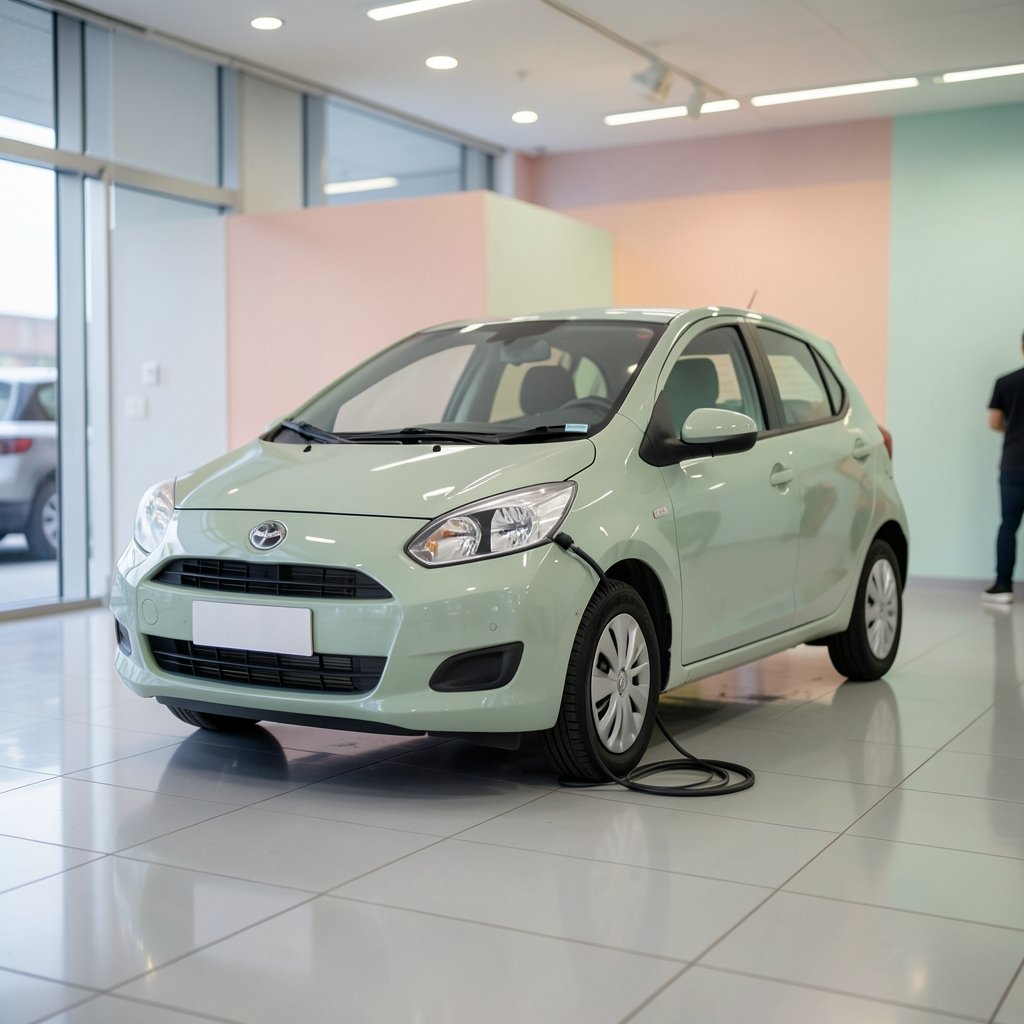
Here is the fact that will hit buyers hardest. The US federal clean-vehicle tax credit under Section 30D was terminated for vehicles acquired after 30 September 2025 under the 2025 reconciliation law. That single change rewrites the pricing math for 2027 EVs.
When a credit worth thousands of dollars disappears, automakers face three options: absorb the cost, cut features, or build cheaper cars. Most will do some combination of all three. Expect more entry-level trims with smaller batteries, fewer luxury EVs aimed at credit-eligible price caps, and a lot more marketing around total cost of ownership rather than sticker price.
This is also where the used market starts to matter. A 2025 or 2026 EV bought with a credit and sold in 2027 will compete directly with new 2027 models that never had one. If you are shopping in 2027 and see a nearly-new EV priced close to a new one, check whether the new one is actually cheaper after incentives, insurance, and charging costs. The sticker price is no longer the whole story.
Battery Chemistry Splits in Two
The 2027 lineup will be defined by a quiet fork in battery strategy. Automakers have been shifting toward LFP (lithium iron phosphate) cells for lower-cost models and toward higher-nickel chemistries for long-range models. LFP’s share of EV batteries has grown sharply since about 2021, and 2027 models are likely to reflect that split clearly.
What does that mean for a buyer? LFP packs tend to be cheaper, longer-lasting, and safer in thermal terms, but they hold less energy per kilogram. A 2027 compact EV with an LFP pack might offer 250 miles of range and a 10-year lifespan, while a premium model with a nickel-rich pack offers 400 miles and a shorter replacement window. Neither is “better” in the abstract. The question is how you drive.
Then there is solid-state. Several automakers and suppliers have announced pilot lines and limited production around 2027 to 2028, but volume deployment is uncertain and has been repeatedly delayed. Treat any “2027 solid-state” claim as a claim, not a fact. If a dealer tells you a 2027 model has a solid-state battery, ask for the production volume and the warranty terms. Pilot-line cars exist; mass-market ones mostly do not yet.
If you want to see how AI tools are being used to compare and shop for these vehicles, the roundup of 10 best ai chatbots gpt 5 claude under hood 2027 is a useful starting point for understanding what the shopping assistants can and cannot do.
Software Is Now a Safety Feature
The 2027 model year is also when UN Regulations R155 and R156 become unavoidable. R155 covers cybersecurity management, and R156 covers software update management. Vehicles launched for 2027 in the EU and other adopting markets will generally need type approval under both.
For buyers, this is mostly good news. It means the car has a documented process for handling security vulnerabilities and over-the-air updates, rather than an ad-hoc system. But it also means software updates can change how the car behaves after purchase. A 2027 model might gain features over time or lose them, depending on what the manufacturer decides to support.
The practical tip: before buying, ask how long the manufacturer commits to software support. A car with a 10-year update promise is a fundamentally different asset than one with a three-year promise. This is the new version of asking about the warranty.
A Realistic Comparison of 2027 Buyer Priorities
| Priority | What Changed for 2027 | What to Check |
|---|---|---|
| Purchase price | US federal EV credit gone for cars acquired after Sept 30, 2025 | Compare new vs. nearly-new pricing |
| Emissions compliance | Euro 7 applies to new cars from Nov 29, 2026 | Confirm Euro 7 status on the spec sheet |
| Battery type | LFP for value models, high-nickel for range | Match chemistry to your driving pattern |
| Software | UN R155 and R156 type approval | Ask for the software support commitment |
| Charging | Unchanged hardware, shifting incentives | Check home charging cost and range |
Mistakes Buyers Make With 2027 Models
The most common mistake is assuming a 2027 model is a clean-sheet redesign. Many are mid-cycle refreshes with new software and emissions hardware bolted onto an older platform. That is not automatically bad, but it means the reliability record of the previous generation still applies.
The second mistake is over-indexing on range. With LFP packs becoming common, a 250-mile car with a durable battery can be a better long-term buy than a 350-mile car with a chemistry that degrades faster in extreme heat. Look at the battery warranty terms as well as the EPA estimate.
The third mistake is ignoring the resale curve. The end of the US credit changes how 2027 EVs will depreciate relative to 2025 and 2026 models that captured it. If you plan to sell in three years, model the depreciation as well as the monthly payment.
For a broader look at how AI is reshaping the retail side of this market, the analysis of 10 best ai chatbots e commerce 2027 that rescue abandoned shows how dealers are using automation to handle the new complexity in pricing and incentives.
What to Watch Before You Buy
Three signals are worth tracking through 2026 and into 2027. First, the EU review of the 2035 target: if it softens, expect more plug-in hybrids and fewer pure EVs in 2027 lineups. Second, US state-level ACC II status: if more states pause, the zero-emission mix shifts. Third, solid-state production announcements: distinguish pilot from volume, and ignore any claim that does not come with a warranty.
Also watch China’s NEV credit system. The dual-credit framework has required rising NEV credit ratios since 2019, and the 2027 requirement level should be checked against the most recent MIIT announcement. China’s policy shapes global battery supply and therefore the price of every 2027 EV sold elsewhere. That connection is easy to miss but hard to avoid.
If you are comparing how AI models handle the flood of conflicting vehicle data, the head-to-head on deepseek vs chatgpt vs gemini judge output quality 2027 is worth a read before you trust any single assistant’s recommendation.
Conclusion
2027 cars are not a single story. They are the first model year where tighter emissions rules, the end of a major US tax credit, a split battery market, and mandatory software security all land at once. The cars themselves will be better than their 2024 counterparts in measurable ways: cleaner, safer to update, and more honest about what their batteries can do. But the buying decision is harder, because the incentives and regulations around them are in motion.
The smart approach is unglamorous. Confirm the emissions standard. Ask about battery chemistry and warranty length. Check the software support commitment. Model the resale value with the credit gone. Do that, and a 2027 car can be a genuinely good purchase rather than a compliance experiment you financed.
FAQ
Are 2027 cars required to meet Euro 7?
Yes, for new passenger cars and vans sold in the EU. Euro 7, adopted as Regulation (EU) 2024/1257, applies to new passenger cars and vans from 29 November 2026, so most 2027-model cars in Europe will be Euro 7-compliant.
Is the 2035 EU petrol and diesel ban final?
Not yet. The regulation sets a 100% CO₂ reduction for new cars from 2035, but the European Commission committed to reviewing that target, with a review expected around 2026. Treat the date as under active debate rather than settled.
Can I still get a US federal EV tax credit on a 2027 car?
No, not under Section 30D. The clean-vehicle credit was terminated for vehicles acquired after 30 September 2025 under the 2025 reconciliation law. Any 2027 model bought new will not qualify for that credit.
Will 2027 cars have solid-state batteries?
Most will not. Several automakers and suppliers have announced pilot lines and limited production around 2027 to 2028, but volume deployment is uncertain and repeatedly delayed. Treat solid-state claims as claims until production volume and warranty terms are confirmed.
What is UN R155 and why does it matter for 2027 cars?
UN R155 is the cybersecurity type-approval regulation. Vehicles launched for 2027 in the EU and other adopting markets will generally need approval under it, alongside UN R156 for software update management. In practice, it means the car has a documented process for security and updates.
Should I buy a 2027 EV or a nearly-new 2026 model?
It depends on price and battery chemistry. A 2026 model may have captured a tax credit that a 2027 model cannot, which can make it cheaper. But a 2027 model may have better software support and Euro 7 compliance. Compare total cost, warranty length, and resale value rather than sticker price alone.



