
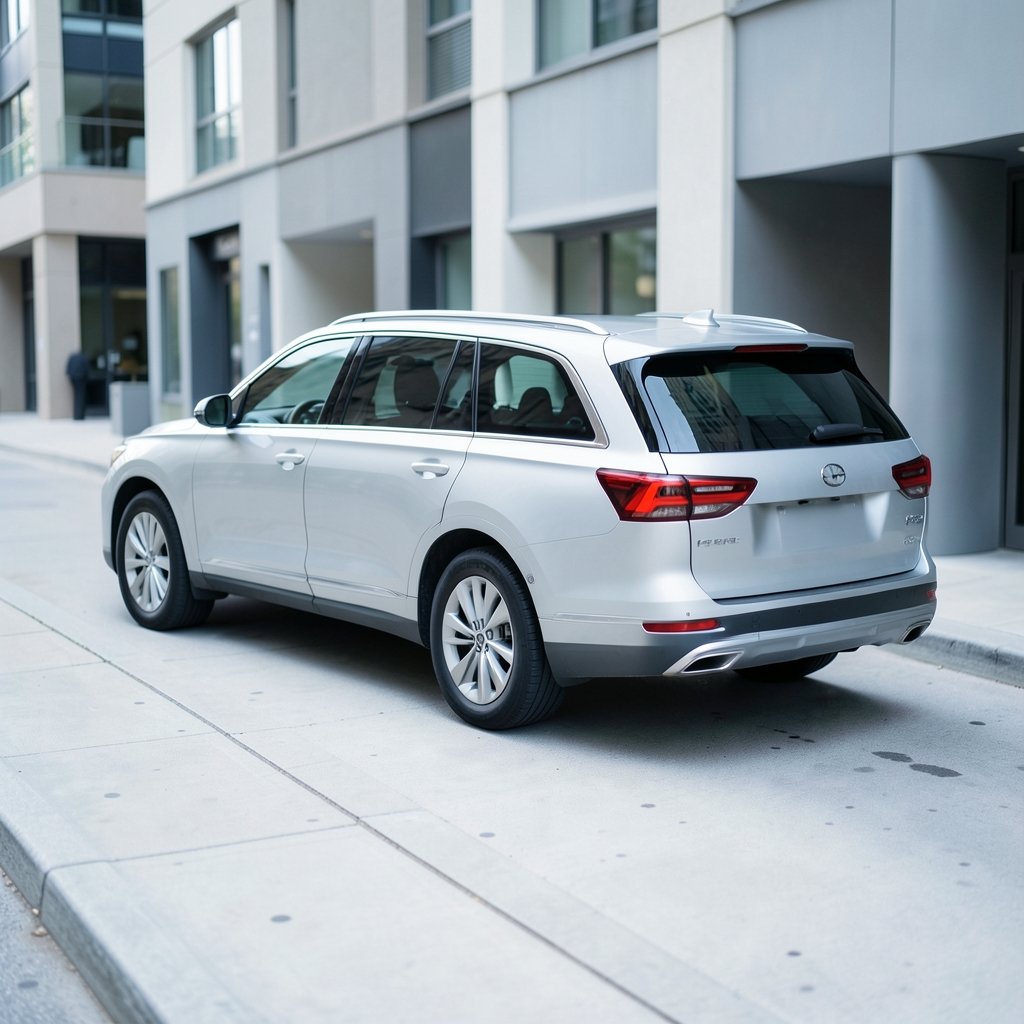
What do you do when the family outgrows the three-row SUV you swore would be big enough? That question is exactly why the Grand Highlander exists. Toyota stretched its best-known family hauler, added real third-row space, and dropped it into one of the most crowded segments in America. Now shoppers are asking the obvious follow-up: what does the 2027 Toyota Grand Highlander bring to the table?
Here is the honest answer up front. As of this writing, Toyota has not published detailed 2027 model-year specifications, pricing, or a confirmed change list. Anyone who tells you otherwise with total certainty is guessing. But the Grand Highlander’s short history, its platform, and its competitive position tell us a lot about what to expect, what to check, and what to ignore.
The Grand Highlander Is Still a Young Nameplate
Toyota introduced the Grand Highlander for the 2024 model year. It debuted at the Chicago Auto Show in February 2023 and is built at Toyota’s Princeton, Indiana plant. That matters more than it sounds. Domestic assembly keeps the vehicle inside Toyota’s North American supply chain, which historically helps with parts availability and dealer allocation.
The SUV rides on the TNGA-K platform, the same architecture underneath the standard Highlander and the Lexus TX. Sharing a platform with a luxury sibling is usually good news for buyers. It tends to mean a stiff structure, decent ride isolation, and access to a broader parts bin.
Seating is one of the Grand Highlander’s calling cards. Depending on trim, it offers up to eight seats, with either a second-row bench or captain’s chairs. The third row is the whole point of the vehicle. Unlike the standard Highlander, where the way-back is best reserved for children and short trips, the Grand is sized for actual adults.
What the 2027 Model Year Likely Means

Here is where discipline matters. Model-year changes follow patterns, and those patterns suggest three broad possibilities for 2027.
The first is a carryover year with minor updates. This is the most common outcome for a vehicle four model years into its run. Expect the same body, the same powertrain lineup, and possibly a shuffling of trim content or paint colors.
The second is a mid-cycle refresh. Automakers often freshen a vehicle around the four-to-five-year mark with revised styling, updated infotainment hardware, and adjusted safety features. A 2027 refresh is plausible but not confirmed.
The third is a new trim or package. Toyota has a habit of adding special editions between major changes. The Nightshade Edition appeared for 2025, which shows the playbook. A 2027-specific appearance or tech package would fit that pattern.
None of these are promises. The practical takeaway is simpler: before you sign anything, ask the dealer for the official 2027 order guide and confirm the trim, features, and price in writing.
Powertrains: What the Lineup Has Offered
At launch, the Grand Highlander came with three powertrain choices. These figures describe the 2024 model year and may shift for 2027.
| Powertrain | Configuration | Approx. Output | Character |
|---|---|---|---|
| 2.4L turbo four | Gasoline | Around 265 hp | Straightforward, lower entry cost |
| 2.5L hybrid | Hybrid | Around 245 hp combined | Best fuel economy focus |
| Hybrid MAX | 2.4L turbo hybrid | Around 362 hp | Strongest acceleration, towing headroom |
The Hybrid MAX is the enthusiast pick. It pairs a turbo engine with electric assistance for brisk acceleration in a vehicle this size. The standard hybrid is the value choice for high-mileage families. The plain turbo four keeps the starting price down.
Two practical notes. First, hybrid availability varies by trim, so a base-price advertisement may not reflect the version most families actually want. Second, if you plan to tow, confirm the rating for the exact configuration rather than the model line as a whole. Ratings differ by powertrain and equipment.
Size, Space, and the Daily Reality of Ownership
Spec sheets flatter every three-row SUV. Real life is less generous. Here is what actually matters when you live with a vehicle this size.
Third-row access. Captain’s chairs make it dramatically easier for kids and adults to climb into the back. A bench is better for hauling seven or eight people at once. Decide which scenario happens more often in your household.
Cargo behind row three. With all seats up, most three-row SUVs have modest trunk space. The Grand Highlander is competitive here, but it will not swallow a full Costco run and six passengers simultaneously. Bring your stroller or cooler to the test drive. Dealers rarely object.
Garage fit. This is the mistake people make most often. The Grand Highlander is meaningfully larger than a standard Highlander. Measure your garage depth and width before you fall in love at the dealership.
Car seat logistics. Second-row LATCH anchors and rear door opening width determine how pleasant the preschool years will be. Test-install your own car seat during the test drive.
Safety and Technology
Toyota Safety Sense 3.0 was standard equipment at launch. That bundle typically includes adaptive cruise control, lane departure alerts with steering assist, automatic emergency braking with pedestrian detection, and automatic high beams. It is a genuinely useful suite rather than a marketing checkbox, though the specific feature list for 2027 needs confirmation.
On the tech side, expect a large central touchscreen, wireless smartphone integration, and a digital instrument cluster on most trims. Toyota’s newer infotainment software is a clear step up from the system it replaced, and it is one of the areas a refresh would most likely touch.
One caution: driver-assistance systems vary by trim and model year. Read the window sticker, not the brochure summary.
How It Stacks Up Against Rivals
The three-row mid-size segment is brutal, and that is good for buyers.
| Competitor | Typical Strength | Typical Trade-off |
|---|---|---|
| Honda Pilot | Roomy cabin, strong resale | Hybrid not offered |
| Kia Telluride | Feature value, design | Fuel economy trails hybrids |
| Hyundai Palisade | Comfort, warranty | Similar efficiency gap |
| Chevrolet Traverse | Cargo space | Less refined hybrid options |
| Mazda CX-90 | Driving feel, upscale cabin | Tighter third row |
| Toyota Grand Highlander | Hybrid choice, space, resale | Price climbs with trims |
The Grand Highlander’s edge is the combination of a genuine hybrid option and a usable third row. Its weakness is cost. A loaded Hybrid MAX can climb into territory where shoppers start cross-shopping luxury badges.
If you are weighing running costs alongside sticker price, it helps to look at how savings rates and financing math work in the current market. This breakdown of best AI high-yield savings accounts 2027: daily rates is a useful primer on parking a down payment while you shop.
Pricing: What We Know and What We Do Not
The 2024 Grand Highlander started at roughly $43,000 to $44,000 excluding destination charges. That is the only pricing anchor with any grounding. A 2027 figure would be speculation, and inflated speculation helps nobody.
Three factors will shape the real 2027 number. Trim mix is the biggest, since the gap between a base gas model and a loaded Hybrid MAX is enormous. Destination fees have been rising across the industry. And incentive programs, which fluctuate monthly, can swing the effective price by thousands.
The practical move: get an out-the-door quote in writing, itemized, before discussing monthly payments. Dealers are far more flexible on a full price sheet than on a payment figure.
Common Mistakes Buyers Make
A few traps show up again and again with vehicles like this.
Buying the base trim for the advertised price. Base models are often scarce on lots. The version you can actually drive home usually costs more.
Skipping the third-row test. Sitting in the way-back for thirty seconds is not a test. Sit there for five minutes with the second row set where your family would set it.
Ignoring insurance and tire costs. Three-row SUVs chew through tires faster than sedans, and larger wheels cost more to replace. Get an insurance quote before you commit.
Assuming all hybrids drive the same. The standard hybrid and the Hybrid MAX feel like different vehicles. Drive both if you can.
Forgetting to check recall status. Before buying any vehicle, run the VIN through the National Highway Traffic Safety Administration’s recall lookup. It takes two minutes and it is free.
What to Verify Before You Buy
Treat this as a checklist rather than a formality.
- Request the official 2027 order guide from the dealer and confirm trim content.
- Confirm the powertrain and output for the exact trim you want.
- Get the out-the-door price in writing, itemized.
- Check the VIN for open recalls through NHTSA.
- Confirm fuel economy figures for the specific model year and drivetrain.
- Verify the towing rating if you plan to haul a trailer.
- Ask about delivery timing and whether the vehicle is already allocated.
If you are also shopping for the digital side of family life, from tools that help you compare specs to assistants that summarize research, it is worth knowing which ones are genuinely reliable. This look at the 10 best AI chatbots: GPT-5 and Claude under the hood in 2027 covers how the current generation actually performs. And if you run a small business on the side, these 15 best AI tools for e-commerce stores in 2027 can save real hours.
The Ownership Picture Beyond Year One
Toyota’s resale reputation is not marketing fluff. It is one of the few brands where a three-year-old SUV routinely holds value well enough to matter in a lease-versus-buy calculation. That strength cuts both ways: it makes leasing cheaper relative to rivals, but it also means used examples are not dramatically discounted.
Maintenance is the quieter advantage. Toyota’s service intervals are straightforward, the dealer network is enormous, and independent shops know the platform. For a family vehicle that will see 12,000 miles a year, predictable upkeep beats flashy features.
One honest caveat: the Grand Highlander is not a sports car and does not pretend to be. If steering feel and cornering composure top your list, the Mazda CX-90 will likely satisfy you more. If you want maximum passenger space with hybrid efficiency, the Grand Highlander is the stronger argument.
Conclusion
The 2027 Toyota Grand Highlander is very likely a refined, family-first three-row SUV built on a proven platform, offered with a genuinely appealing hybrid lineup, and priced somewhere north of where it started in 2024. What it is not, at least not yet, is a vehicle with a published 2027 specification sheet.
That gap should shape how you shop. Do not buy based on a blog post, a forum rumor, or a salesperson’s confident recollection. Buy based on the order guide, the itemized quote, the recall check, and your own test drive with your own car seats and your own garage measurements.
The Grand Highlander earned its reputation quickly because it solved a real problem: three rows that adults can actually use, without stepping up to a full-size truck-based SUV. If Toyota keeps that formula intact for 2027, the vehicle will remain one of the smartest picks in its class. If it adds a refresh on top, even better. Either way, the buyer who verifies before signing wins.
FAQ
When does the 2027 Toyota Grand Highlander go on sale?
Toyota has not published a confirmed 2027 release date. The Grand Highlander launched for the 2024 model year, and Toyota typically announces new model-year details closer to production. Ask your dealer for the official order guide and allocation timeline rather than relying on forum estimates.
How much will the 2027 Grand Highlander cost?
Pricing for the 2027 model year is not confirmed. The 2024 model started at roughly $43,000 to $44,000 excluding destination. Expect the final figure to depend heavily on trim, since the spread between a base gas model and a Hybrid MAX is large.
Does the Grand Highlander have a hybrid?
Yes. At launch, Toyota offered a 2.5L hybrid producing around 245 horsepower combined, plus a Hybrid MAX 2.4L turbo hybrid rated around 362 horsepower. Hybrid availability varies by trim, so confirm the exact configuration before you commit.
How many seats does the Grand Highlander have?
Up to eight, depending on trim. Second-row captain’s chairs reduce that to seven but make third-row access much easier. Families with frequent adult passengers in the back generally prefer the captain’s chairs.
Is the Grand Highlander bigger than the standard Highlander?
Yes, meaningfully so. The Grand Highlander is a separate model built on the TNGA-K platform, shared with the standard Highlander and the Lexus TX. Its main advantage is a third row sized for adults and more cargo room behind it. Measure your garage before buying.
What vehicles compete with the Grand Highlander?
The main rivals are the Honda Pilot, Kia Telluride, Hyundai Palisade, Chevrolet Traverse, and Mazda CX-90. The Grand Highlander’s strongest differentiators are its hybrid powertrain options, usable third row, and Toyota’s resale values. Its main weakness is price as you move up the trim ladder.



