
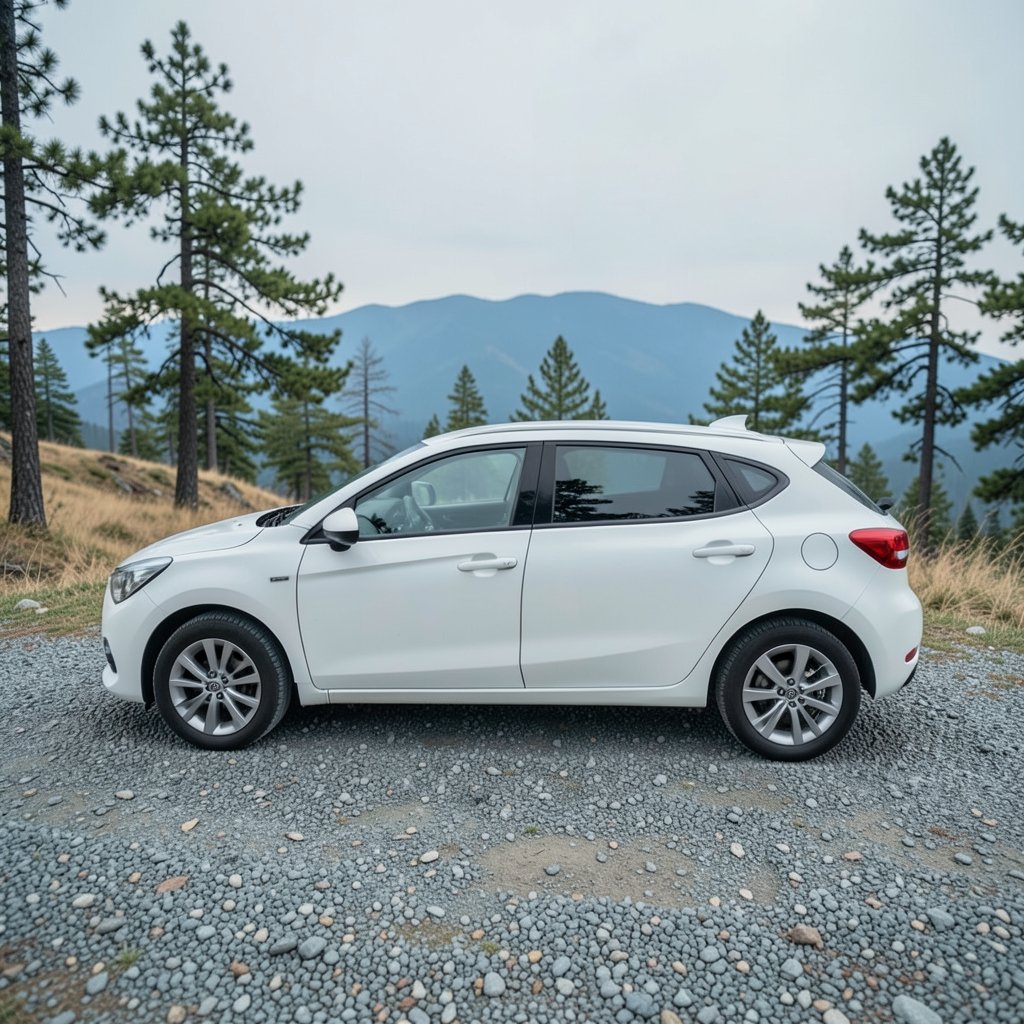
What will actually be sitting on a Honda dealer’s lot when the 2027 model year rolls around? That question has been bouncing around owner forums, family group chats, and showroom conversations for months. The honest answer is that nobody outside Honda has the full picture yet, and anyone claiming otherwise is filling gaps with wishful thinking. Still, there is plenty of grounded reasoning to work with, and it beats refreshing rumor pages every morning.
This piece walks through what the HR-V is today, where the nameplate is likely headed, and how a sensible shopper should plan for a vehicle that hasn’t been officially detailed. No invented specs, no fake press releases, no “leaked” numbers pulled from thin air. Just the practical picture.
Where the HR-V Stands Right Now
The Honda HR-V is a subcompact crossover, and it is one of the more confusing nameplates in the business. In North America, the HR-V is a distinct, larger vehicle built for that market. In much of the rest of the world, the same badge sits on a smaller model derived from Honda’s global small-car platform, sold in some regions as the Vezel. Same name, different bones, different dimensions.
That matters because any conversation about “the 2027 HR-V” has to start with a question: which market? A buyer in Ohio and a buyer in Manila are not talking about the same vehicle, and their expectations for 2027 should not be identical either. (Best ai translation tools 2027 deepl vs chatgpt vs google)
The current generation arrived in the early 2020s, with the North American version landing for the 2023 model year. That timing is useful context. Compact crossovers typically run six to seven years per generation, with a mid-cycle refresh somewhere in the middle. A 2027 model year would sit right in that refresh window in some markets and comfortably before a full redesign in others.
The Electrification Question Nobody Can Dodge

Honda has been public about pushing its lineup toward electrification through the late 2020s. That is a broad, well-documented direction, not a specific promise about any single trim or model year. What it means for the HR-V specifically is genuinely unresolved.
Here is the realistic range of outcomes:
- A hybrid HR-V becomes standard or widely available, mirroring what Honda has already done with the Civic and Accord.
- The HR-V stays gas-only in some markets while hybrid variants appear in others.
- A plug-in or fully electric small crossover arrives under a different name, leaving the HR-V as the entry gasoline option.
Anyone who tells you which of these is confirmed for 2027 is guessing. The sensible move is to treat hybrid availability as likely and full electrification as unconfirmed.
Why the Rumor Cycle Is So Noisy
Car rumor culture is a machine. A blurry spy shot becomes a “leak.” A patent drawing becomes a “confirmed design.” A dealer comment becomes a “company statement.” By the time it reaches a buyer’s feed, a guess has hardened into something that looks like news.
The practical defense is simple. Ask one question of any 2027 HR-V claim: what is the primary source? If the answer is a forum post, an aggregator, or a video with a red arrow in the thumbnail, treat it as entertainment. If it traces back to an official manufacturer announcement for your specific market, it is worth acting on. Most of what circulates fails that test, and knowing that saves a lot of wasted attention.
For readers who enjoy comparing how AI tools summarize and judge this kind of speculative coverage, a look at how models like DeepSeek, ChatGPT, and Gemini rate output quality is a useful reality check on how confidently wrong machines can be.
What a 2027 Buyer Should Actually Do
The temptation with an unreleased model year is to wait indefinitely. That is usually a mistake, because “waiting for the 2027” can quietly become “waiting forever” as each new rumor resets the clock.
A better approach is to separate the decision from the rumor cycle.
Set a decision date, not a model year
Pick a real month when you will buy something. If the 2027 HR-V is announced and available by then, great. If not, buy the best 2026 or current-year option and stop paying attention to leaks. Cars depreciate whether or not you were patient.
Know your must-haves before the reveal
Write down four or five non-negotiables: seating capacity, cargo space, fuel type, all-wheel drive, budget ceiling. When the 2027 details land, you can check the list in ten minutes instead of getting swept up in launch excitement. Buyers who skip this step tend to overpay for features they never use.
Watch the outgoing model’s pricing
When a refresh is coming, dealers get motivated to move current inventory. That is often the best value in the entire cycle. A well-equipped outgoing HR-V at a discount can beat a freshly announced 2027 at full sticker, especially in the first months of a launch when negotiation room is thin.
Verify market-specific details early
Because the HR-V differs by region, confirm which version your market gets before you fall in love with a spec sheet from another country. This single step prevents the most common disappointment in subcompact crossover shopping.
How the HR-V Compares in Its Class
The subcompact crossover segment is crowded, and the HR-V’s strengths and weaknesses are well established by now. Here is a plain comparison of where it typically lands against the competition.
| Factor | HR-V’s Typical Position | What It Means for Buyers |
|---|---|---|
| Interior space | Strong for the class | Good rear legroom and cargo flexibility |
| Fuel economy | Competitive, not class-leading | Hybrid availability would change this |
| Ride comfort | Comfortable, tuned for daily driving | Better on rough roads than sporty rivals |
| Infotainment | Functional, occasionally dated | Check the current interface before buying |
| Reliability reputation | Generally solid | Long-term ownership cost tends to be reasonable |
| Price positioning | Mid-pack to slightly premium | Negotiation matters more than sticker |
The takeaway is not that the HR-V wins or loses. It is that the vehicle’s character is predictable, which is exactly what you want when the next model year is still a mystery. If the 2027 version keeps the same priorities, buyers know roughly what they are getting.
Practical Mistakes People Make With Unreleased Models
A few patterns show up again and again, and they are worth naming directly.
Putting down a deposit on a car with no confirmed specs. Deposits on unreleased vehicles can be refundable or not, and terms vary wildly. Read the paperwork and confirm in writing what happens if the final product differs from expectations.
Assuming a refresh means a redesign. A mid-cycle update usually means styling tweaks, updated infotainment, and maybe a powertrain change. It rarely means a new platform. Buyers expecting a revolution are often disappointed by an evolution.
Ignoring insurance and running costs. A new model year can shift insurance groupings and repair costs. Get quotes before committing, not after.
Letting a single review decide everything. One reviewer’s complaint about a touchscreen becomes a dealbreaker for thousands of buyers who never touched the car. Sit in one. Drive one. The physical experience settles arguments that spec sheets cannot.
Where AI Tools Fit Into Car Research
Plenty of buyers now start their research by asking a chatbot. That is fine as a starting point and dangerous as an endpoint. Chatbots are confident, fluent, and sometimes simply wrong about unreleased products, because they are pattern-matching on old data and speculation rather than reading a manufacturer’s announcement.
The better use of these tools is comparison and organization: build a shortlist, draft questions for the dealer, summarize your own notes. For anyone weighing which assistant handles that best, there is a detailed breakdown of the best AI chatbots and how GPT-5 and Claude compare under the hood that covers the tradeoffs honestly. The same caution applies to shopping-adjacent tools; even a solid list of AI tools for e-commerce stores shows how quickly “helpful” becomes “salesy” when a model is optimizing for a transaction rather than your needs.
And there is a flip side worth remembering: some questions are better answered by a human. A candid look at when not to use an AI chatbot makes the case that high-stakes, nuanced decisions deserve a person, and choosing a family vehicle is closer to that category than most people admit.
What Would Genuinely Change the Picture
If Honda confirms a hybrid HR-V for 2027 with competitive pricing, that is a meaningful shift for the segment and worth waiting for. If the company confirms a full redesign with a new platform, same story. If the 2027 model year turns out to be a light trim reshuffle, the calculus barely moves and current inventory becomes the smarter buy. (10 best ai chatbots e commerce 2027 that rescue abandoned)
The signal to watch is official communication tied to your market, not the volume of online chatter. Volume and accuracy have almost no relationship in car rumors.
Conclusion
The 2027 Honda HR-V is a real model year on a real product cycle, but the specifics remain officially unconfirmed. That is not a reason to panic or to wait forever. It is a reason to plan well: set a decision date, define your must-haves, verify market details, and treat every unverified claim with the skepticism it deserves. The HR-V has built its reputation on being sensible and livable rather than flashy, and the smartest shopping strategy for its next model year is exactly the same. Do the boring homework, and the launch-day noise stops mattering.
What is the 2027 Honda HR-V?
It is the next model year of Honda’s subcompact crossover, expected to arrive on the normal product cycle. Official details on trims, powertrains, and pricing have not been broadly confirmed, so buyers should treat specific claims as unverified until Honda announces them for their market.
Is the 2027 HR-V a hybrid?
That is unconfirmed. Honda has been moving its lineup toward electrification, which makes a hybrid variant plausible, but no specific 2027 HR-V powertrain has been officially detailed. Buyers should wait for a manufacturer announcement rather than acting on rumor.
Is the HR-V the same car in every country?
No. The HR-V badge sits on different vehicles in different regions. North America gets a larger, distinct model, while many other markets use a smaller global platform, sold in some places as the Vezel. Always confirm which version your market receives.
Should I wait for the 2027 HR-V or buy now?
It depends on your timeline. If you need a car within a few months, buying a well-priced current model is usually smarter than waiting on unconfirmed details. If you can wait and a hybrid or redesign would genuinely change your decision, set a firm date and reassess then.
How reliable is information about unreleased cars online?
Mostly unreliable. Spy shots, patent drawings, and dealer comments get recycled into “confirmed” claims within days. The only dependable source is an official manufacturer announcement for your specific market. Everything else is speculation dressed up as news.
What should I check before putting a deposit on one?
Confirm in writing whether the deposit is refundable, what happens if final specs differ from what you were told, and what the delivery timeline looks like. Also get insurance quotes and confirm the trim and powertrain you are actually reserving, since launch trims are often limited.
The practical upshot is simple: the 2027 HR-V will almost certainly be a good, sensible subcompact crossover, and the buyers who end up happiest are the ones who research calmly, confirm details with a dealer or Honda’s own site, and refuse to let speculation make their decision for them. Watch for the official announcement, keep your must-have list handy, and let the facts — not the thumbnails — drive the purchase.



