
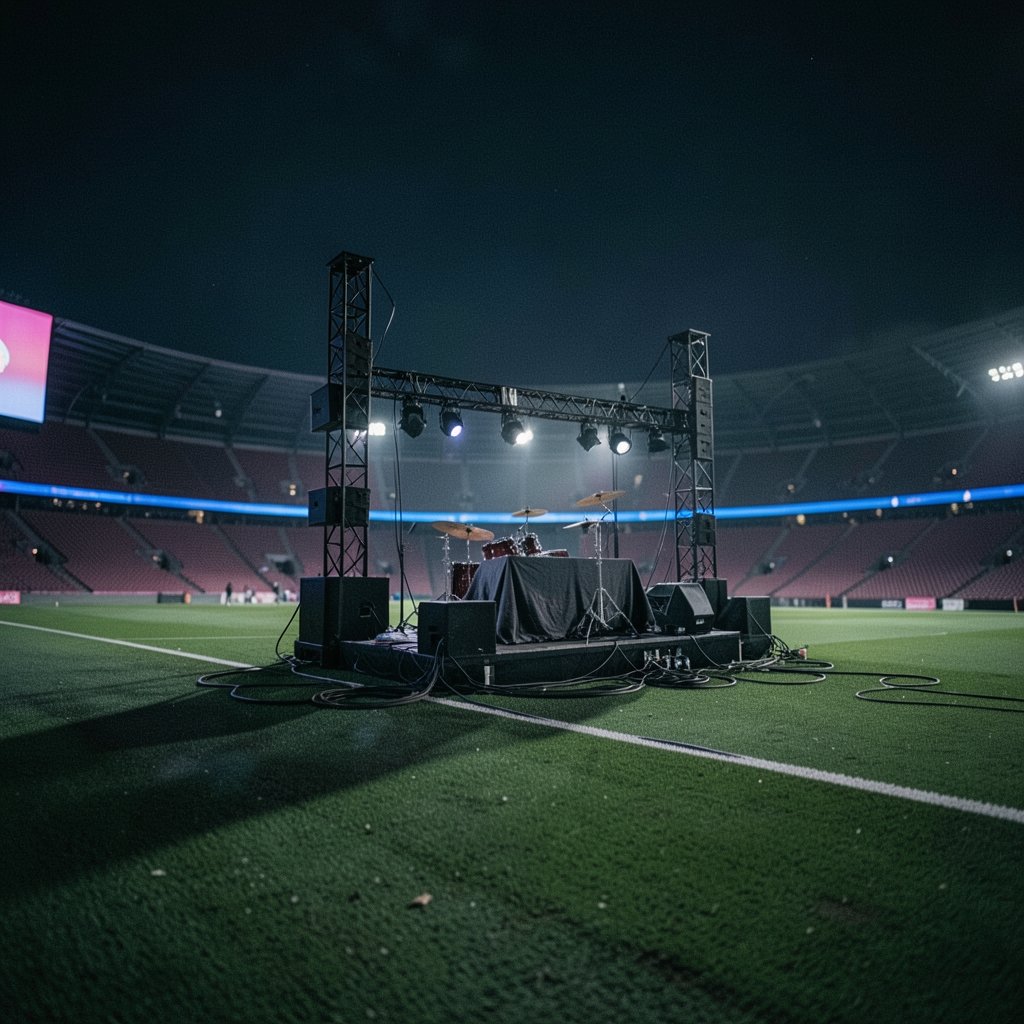
Who’s performing at the Super Bowl 2027 halftime show? As of right now, nobody has been officially announced. That is not a dodge or a tease. It is simply where things stand. The NFL, Apple Music, and Roc Nation have not named an artist for Super Bowl LXI, and until they do, every name floating around online is speculation dressed up as news.
That does not mean there is nothing to say. There is actually a lot worth knowing: when the announcement is likely to land, how the selection process works, why certain names keep surfacing, and how to tell a real report from a rumor mill invention. If you have been refreshing search results hoping for a confirmed headliner, this is the honest picture, plus the practical context that helps you read the next headline correctly.
The Short Answer: No Performer Has Been Announced Yet
Super Bowl LXI is scheduled for February 14, 2027, at SoFi Stadium in Inglewood, California. The venue and date are set. The halftime headliner is not.
This is normal. Halftime performers are typically revealed in the fall before the game, often somewhere between September and November. The 2026 show at Levi’s Stadium was announced as Bad Bunny in September 2025, which fits that pattern almost exactly. If the same rhythm holds, a 2027 announcement would most plausibly arrive in late 2026.
So if you are reading this well before that window and see a headline claiming the performer is “confirmed,” treat it with suspicion. The only sources that count are official ones: the NFL’s own announcements, Apple Music as the presenting sponsor, and Roc Nation, which has helped shape the show’s talent direction. Until one of them says a name, the answer is genuinely “not yet.”
Why the Announcement Takes So Long
A halftime show is not booked like a concert. It is a roughly 12-minute live television event with a global audience, a strict broadcast clock, and a production timeline measured in months. The league and its partners have reasons to hold the news:
- Negotiation runway. Deals involve the artist’s team, management, label, and production partners. These take time to finalize.
- Marketing timing. An announcement is itself a news event. Dropping it too early wastes the buzz; dropping it too late leaves no room to build anticipation.
- Tour and release alignment. Artists often coordinate a halftime slot with an album cycle or tour. The timing of the reveal can depend on those plans.
- Production lead time. Staging, choreography, guest artists, and broadcast logistics all need locking down before anything goes public.
The practical takeaway: silence from the league is not a sign that something is wrong. It is the standard operating procedure.
How the Halftime Performer Gets Chosen
There is no open application and no fan vote that decides the headliner. The selection is a closed process shaped by the league and its entertainment partners, with Roc Nation playing a prominent advisory role in recent years. Several factors tend to matter:
| Factor | Why It Matters |
|---|---|
| Cross-generational appeal | The broadcast audience spans multiple age groups and tastes |
| Live performance track record | The show is live, high-pressure, and unforgiving |
| Catalog depth | Twelve minutes needs recognizable hits, not deep cuts |
| Cultural moment | Artists riding a major release or tour often fit the timing |
| Production feasibility | Staging a spectacle inside a stadium on a tight clock is a real constraint |
| Guest-artist potential | Surprise collaborations are a staple of the format |
Notice what is not on that list: online petitions. Fan campaigns generate headlines, but they do not drive the decision. If you see a viral push for a particular artist, enjoy the enthusiasm, but do not mistake it for a booking.
The Names You’ll See (and Why They’re Guesses)
Search around long enough and you will find listicles naming this pop star or that legacy rock act. These pieces usually share one thing: they are built on vibes, streaming data, and the writer’s personal wish list. That is fine as entertainment. It is not reporting.
A few patterns explain why certain names keep appearing:
- The “due for it” theory. Fans assume an artist who has never played the show is overdue. The league does not think in those terms.
- The tour-gap theory. If an artist has an open window in February 2027, speculation follows. Open calendars are common and prove nothing.
- The hometown theory. Because the game is in the Los Angeles area, local artists get mentioned constantly. Geography is a nice story, not a selection criterion.
- The rumor-recycling loop. One outlet floats a name, others cite the first outlet, and soon it looks like a consensus. It is not.
The honest rule: if a name is not tied to an official announcement, it belongs in the “maybe” pile, no matter how confidently it is written.
How to Spot a Fake or Premature “Confirmation”
Rumor season produces a predictable crop of misleading headlines. Here is a quick filter that saves a lot of wasted clicks.
Red flags to watch for
- No named source. “Reports say” with no attribution is a tell.
- Hedging buried in the text. A headline screams “confirmed” while paragraph six admits talks are “early.”
- Aggregator sites citing each other. Circular sourcing creates the illusion of multiple confirmations.
- Old articles resurfacing. A piece about a previous year’s show can get reshared and mistaken for current news. Check the date.
- AI-generated filler. Some pages are churned out to capture search traffic with no real information. They often repeat the same vague phrasing.
What a real announcement looks like
- It comes from the league or its official entertainment partners.
- Major entertainment outlets report it with named confirmation.
- The artist’s own channels acknowledge it.
- Details like guest performers and production elements follow in the weeks after.
If a claim clears those bars, it is probably real. If it clears none of them, keep scrolling.
The Broader Trend Shaping the 2027 Show
One thing worth understanding about the modern halftime show: it has become a platform for global, cross-language artists rather than a strictly English-language pop showcase. The 2026 booking of Bad Bunny is the clearest recent signal of that direction. The show’s organizers have been leaning into artists with massive international reach, and that shift makes guessing the next headliner harder than it used to be.
For readers who track how big live events and digital platforms intersect, the same forces show up elsewhere. The way a halftime show builds anticipation through timed announcements mirrors how product launches and online experiences are staged. If that intersection interests you, a look at how a super app bundles services under one roof offers a useful parallel for how platforms try to own a moment. And because the game itself is a scheduling puzzle for viewers in different regions, the kickoff times and time zones explained here are worth bookmarking before February.
The broader point: the halftime show is a marketing machine as much as a concert. Understanding that helps you read the news cycle without getting whiplash.
What Actually Happens Between Now and the Announcement
If you want to follow this story without drowning in noise, here is a practical sequence.
- Watch the fall window. Late 2026 is the realistic announcement period based on recent years.
- Follow official channels first. League announcements and the presenting sponsor’s channels are the source of record.
- Expect guest-artist rumors to follow. Once a headliner is named, speculation about surprise guests ramps up immediately.
- Ignore “leaked setlist” claims. Setlists are closely guarded and rarely leak in any reliable form.
- Treat betting odds as entertainment. Odds markets reflect public chatter, not insider knowledge.
That last point deserves emphasis. Prediction markets and betting sites sometimes post “odds” on the halftime performer. Those numbers move with public betting, not with confirmed information. They are a mirror of gossip, not a window into the league’s plans.
Common Mistakes People Make With This Topic
A few habits trip up even careful readers.
Assuming the venue hints at the artist. A Los Angeles-area game does not mean a Los Angeles act. The league has booked artists from everywhere for games in every market.
Confusing “in talks” with “booked.” Early negotiations are routine and often collapse. A report of talks is not a report of a deal.
Trusting a single viral post. Screenshots circulate without context. Verify against a primary source before believing or sharing.
Forgetting the announcement timeline. People search in spring and expect an answer. The answer usually does not exist yet, and that is not a failure of reporting.
Overlooking the production side. The halftime show is a logistical feat. Sometimes the most interesting story is how the spectacle gets built, rather than who headlines it. The same “does the tool actually deliver” question applies to consumer tech, which is why roundups such as this test of AI form and survey builders focus on real-world performance instead of marketing claims. That mindset also helps when reading halftime rumors: ask what the evidence actually supports.
Conclusion: Patience Beats Speculation
So who is performing at the Super Bowl 2027 halftime show? Right now, the truthful answer is that no artist has been announced. Super Bowl LXI lands on February 14, 2027, at SoFi Stadium, and the headliner will almost certainly be revealed in the fall of 2026, following the pattern of recent years.
Everything else you read between now and then is guesswork, some of it informed, much of it not. The smart approach is simple: follow the official announcements, enjoy the speculation for what it is, and do not let a confident headline convince you that a rumor is a fact. When the real name drops, you will know it, because it will come from the people who actually make the call. Until then, the most accurate answer is also the most honest one: not yet.
FAQ
Has the Super Bowl 2027 halftime performer been announced?
No. As of the latest available information, no artist has been officially named for the Super Bowl LXI halftime show. Announcements typically come in the fall before the game, so late 2026 is the realistic window to watch.
When will the Super Bowl 2027 halftime show be announced?
Based on recent years, the announcement is most likely to arrive between September and November 2026. The 2026 show was announced in September 2025, which fits that pattern. The league has not committed publicly to a specific date.
Where is Super Bowl LXI being played?
Super Bowl LXI is scheduled for February 14, 2027, at SoFi Stadium in Inglewood, California. The date and venue are set even though the halftime performer is not.
Do fan petitions or online campaigns influence the halftime pick?
They generate attention but do not drive the decision. The headliner is chosen through a closed process involving the league and its entertainment partners, with Roc Nation playing a prominent advisory role in recent years. Fan enthusiasm is noticed, but it is not a selection mechanism.
Why do so many different artists get rumored every year?
Because speculation is cheap and clicks are valuable. Outlets float names based on tour gaps, streaming data, and hometown connections, then other sites cite each other until a guess starts to look like a consensus. Without an official announcement, every name is a maybe.
How can I tell if a halftime report is trustworthy?
Check the source. A real report traces back to the league, its official entertainment partners, or a major outlet with named confirmation, and the artist’s own channels usually acknowledge it. Headlines with no named source, buried hedging, or circular citations are red flags.



