An AI text response has a small direct cooling-water estimate, but the number changes when electricity generation and other boundaries are counted. That is why how much water AI uses per prompt matters to people who use these tools each day. A quick answer can feel tiny, while data center demand adds up across many requests and facilities.
This post gives you a clear estimate, explains what it counts, and shows why one text interaction differs from water demand concentrated at data centers. WUE means annual site water use divided by annual IT equipment energy, usually expressed in liters per kilowatt-hour. A useful comparison always names the task and the water boundary behind its figure.
Key Takeaways
- A median Gemini text prompt used 0.26 milliliters of direct cooling water in May 2025.
- Water figures change when they include electricity generation or equipment manufacturing.
- Longer requests and different models can need different amounts of energy.
- Company water totals include many operations, not just AI prompts.
- Local water supplies and cooling choices shape a data center’s impact.
How Much Water Does AI Use per Prompt?
A median Gemini text prompt has a direct cooling-water estimate of 0.26 mL under Google’s broader production measurement. That equals about five drops of water, with an energy estimate of 0.24 watt-hours.
Google’s Gemini inference measurement includes data-center overhead, idle capacity, CPU, and RAM. Its narrower active TPU and GPU method gives 0.12 mL of water and 0.10 watt-hours of energy.
The 0.26 mL figure is a median estimate for one type of text task, not every request. Google also reported a fleet-wide average data-center PUE of 1.09, a measure comparing total facility energy with IT energy.
Use 0.26 mL as a measured fleet estimate for a median text prompt, not a fixed charge for every request.
Gemini and ChatGPT both use water through the infrastructure that runs them. Their published estimates use different methods, so you cannot compare the figures as if they measured the same system.
A short text exchange differs from a long reasoning task, image request, or video generation job. Those tasks can call for more compute and more energy. For options suited to visual work, see this guide to AI image generator tools.
Treat the figure as a measured fleet estimate for one kind of text task, not a fixed water charge for every prompt.
Why Do AI Water Estimates Differ?
A water estimate can grow several times over simply because its accounting boundary includes more than the data center. The key distinction is whether a figure counts withdrawal or consumption.
Withdrawal means water taken from a source; consumption means water not returned to the immediate water environment. Water that evaporates during cooling is consumed, while some discharged water may return after treatment.
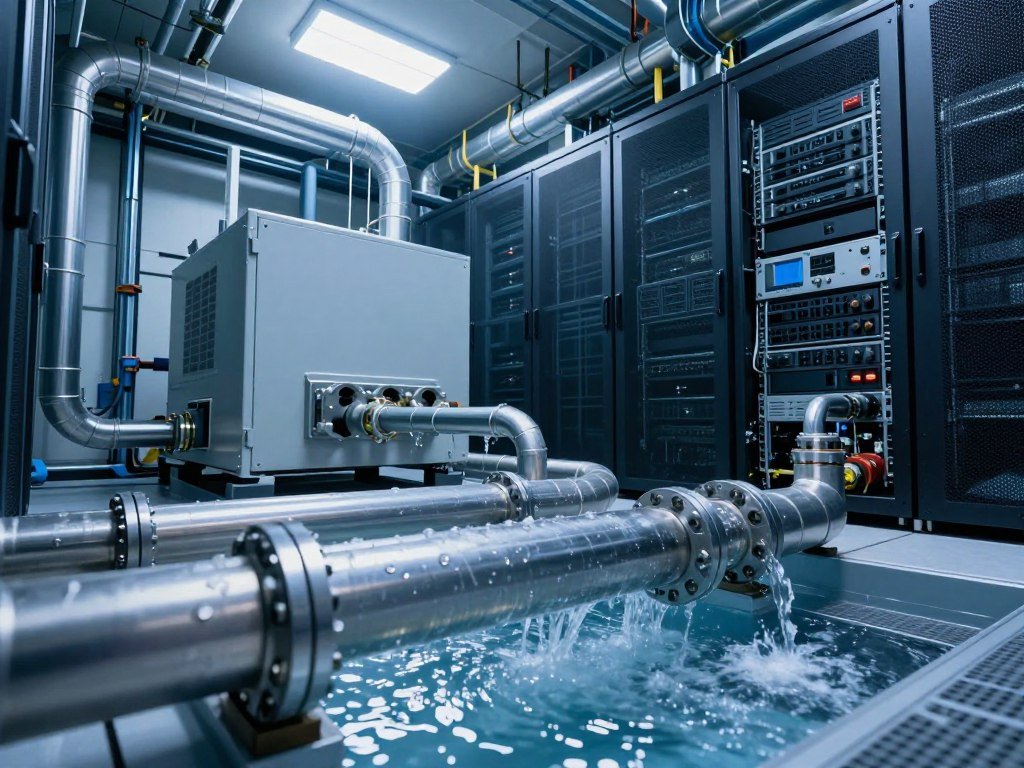
Three boundaries help explain why estimates differ:
- Direct water: cooling towers may evaporate water to carry heat away from a data center.
- Indirect water: a power plant may use water while generating electricity for the servers.
- Embodied water: factories use water to make chips, servers, and other equipment.
A 2023 UC Riverside study estimated that a chat session with 10 to 50 replies could use about 500 milliliters when it counted on-site cooling and electricity-generation water. That figure is not a competing measure of Google’s direct-cooling estimate.
For example, two estimates may describe the same general kind of service but count different parts of its water footprint. One can count only cooling at the facility. Another can add water used to make electricity, which changes the result.
Check whether a figure means withdrawal or consumption before comparing it with another number.
How Do Model and Prompt Length Change Energy Use?
In one 2025 benchmark, DeepSeek-R1’s long-query estimate was 33.63 Wh, while LLaMA-3.2-1B’s was 0.34 Wh. More compute generally means more energy, and the water tied to that electricity depends on cooling and the power supply.
Energy figures help explain possible water effects, but they are not water measurements. The same amount of electricity can have different water impacts in different places.
Short queries use less compute than long ones
The benchmark’s short queries used about 100 input tokens and 300 output tokens. Medium queries used about 1,000 input and 1,000 output tokens.
Long queries used about 10,000 input tokens and 1,500 output tokens. These profiles show why a brief question and a long request can create different workloads.
The same prompt length can produce different model results
DeepSeek-R1 used 23.82 Wh for a short query, 29.00 Wh for a medium query, and 33.63 Wh for a long query. GPT-4o used 0.42, 1.21, and 1.79 Wh across those lengths.
LLaMA-3.2-1B used 0.07, 0.22, and 0.34 Wh. Claude 3.7 Sonnet used 0.84, 2.78, and 5.52 Wh.
| Model | Short query (Wh) | Medium query (Wh) | Long query (Wh) |
|---|---|---|---|
| DeepSeek-R1 | 23.82 | 29.00 | 33.63 |
| GPT-4o | 0.42 | 1.21 | 1.79 |
| LLaMA-3.2-1B | 0.07 | 0.22 | 0.34 |
| Claude 3.7 Sonnet | 0.84 | 2.78 | 5.52 |
Read benchmark numbers with their token counts
Gemini 2.5 used 0.24 Wh for a short query in the same benchmark. Results vary because models handle requests differently, even when the token counts match.
The figures measure estimated energy, not water per prompt. They also do not establish a universal ranking, since tests, hardware, and workloads can differ.
Compare models only when the prompt length, output, and test method are comparable.
What Uses Water Beyond the Prompt?
Most AI energy use is estimated to happen during inference, the repeated work of serving deployed models. Inference means running a trained model to answer requests, so one small task can become substantial demand when repeated many times.
A lower energy cost per request does not ensure lower total demand if use grows faster. Global data centers used an estimated 448 terawatt-hours of electricity in 2025, with demand projected to reach 945 terawatt-hours by 2030.
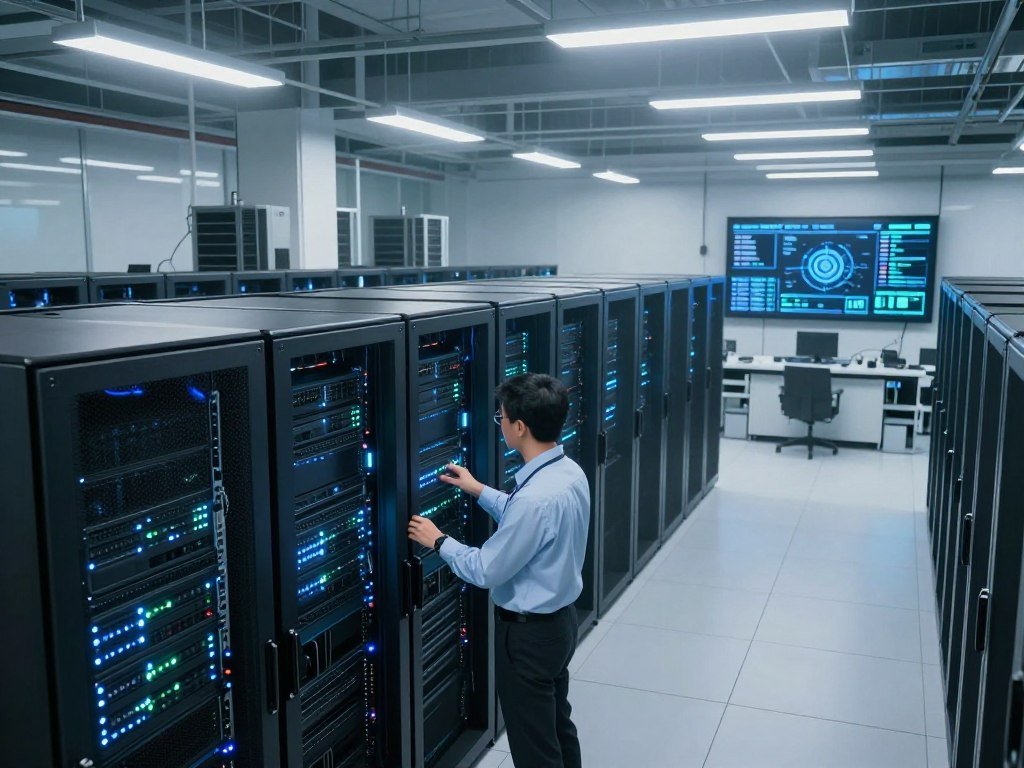
Google reported that the median Gemini text prompt’s energy use fell 33 times over a recent 12-month period. Its total carbon footprint for that prompt fell 44 times.
Those gains matter, but the total footprint also depends on how often people use AI and what they ask it to do. Model choice, retries, and media requests can change the workload. Creators making video can compare tools in this free AI video generator guide.
Three practical choices can limit avoidable demand:
- Choose a model suited to the task instead of defaulting to the largest one.
- Avoid asking for long outputs when a short answer will work.
- Use lower-compute formats when they meet the need.
For images, a simpler request may be enough; image tools and workflows differ in output and use. See this comparison of free AI image generators.
A lower footprint per request matters most when growing use does not erase the gain.
How Does Data Center Cooling Use Water?
Nearly all the electricity used by IT equipment becomes heat, and the facility must move that heat outdoors. Cooling choices determine how much water a data center uses directly.
WUE is a site metric, not a complete water-risk score. A 2025 industry benchmark put typical data-center WUE at about 1.9 liters per kilowatt-hour.
Evaporative cooling trades water for heat removal
Cooling towers move heat from warm water into the air. Some water evaporates in the process, which helps cool the system but counts as water consumption.
Data centers typically evaporate about 80% of the water they draw. The remainder is discharged for wastewater treatment.
Dry cooling avoids routine evaporation
Dry cooling uses air and heat exchangers to release heat without routine evaporation. Fans move outside air across equipment that transfers heat from the cooling loop.
This approach can reduce direct water use, but its performance depends on outdoor conditions. Hot weather can make heat removal harder and increase power needs.
Hybrid systems use water only when needed
Hybrid systems combine dry cooling with water-assisted cooling during hotter periods. Adiabatic systems briefly wet incoming air, helping it cool before it reaches a heat exchanger.
A closed liquid loop can carry heat away from servers efficiently. The final outdoor heat-rejection system may still rely on evaporation, so liquid-cooled servers do not always mean water-free cooling.
AWS says its data centers use air cooling without water in most places and through most of the year. Some sites use direct evaporative cooling during hot periods.
Check three local details when judging a facility:
- Local climate and the length of hot periods.
- Peak water demand during the hottest days.
- The source of make-up water used to replace losses.
Ask what rejects the heat outside the server loop, since that is where routine evaporation may still occur.
How Large Is AI’s Water Footprint at Scale?
Google’s 2025 water use was 10.9 billion gallons across its operations, not a published Gemini daily total. The number covers company operations, not only AI services.
Company-wide water use and per-prompt water use describe different boundaries. Google’s total rose 34% from 2024, while Microsoft’s fiscal 2025 total rose 22%.
U.S. data centers used about 17 billion gallons of water directly in 2023. Direct use was projected to double or quadruple by 2028.
| Entity | Period | Water use | Change or outlook |
|---|---|---|---|
| 2025 | 10.9 billion gallons | Up 34% from 2024 | |
| Microsoft | Fiscal 2025 | About 2.2 billion gallons | Up 22% |
| U.S. data centers | 2023 | About 17 billion gallons direct | Could double or quadruple by 2028 |
Google’s company-wide water use is not a Gemini-per-day figure. A single company total includes many buildings, activities, and water needs beyond AI prompts.
Local water pressure depends on where a facility sits and what supplies that area can draw on. A large global total does not show whether a specific community faces stress.
Keep company-wide water use separate from the much smaller boundary of a per-prompt estimate.
How Much Water Goes Into Training AI?
Training uses water before a user sends a prompt, while inference repeats as the deployed model answers requests. Training is the process of building a model from data before it serves people.
A 2023 estimate put GPT-3’s direct training evaporation at about 700,000 liters of clean freshwater. That estimate covered Microsoft’s U.S. data centers, not a full life-cycle footprint.
The water figure describes direct evaporation, not every part of the model’s supply chain. It does not describe every AI model or a current training run.
Training electricity estimates were 1.3 gigawatt-hours for GPT-3 and 50-70 gigawatt-hours for GPT-4. Water tied to training depends on the training location, energy use, cooling system, and electricity mix.
Those factors can change the water impact even when two models need similar amounts of electricity. The electricity mix matters because power plants differ in how they use water.
Keep a training estimate separate from water attributed to an individual response.
Can Data Center Water Be Reused?
Data centers can use reclaimed or non-potable supplies for some cooling needs instead of relying only on drinking water. Reuse can lower demand on potable supplies, but it does not automatically end water consumption.
A reuse plan must account for the source, treatment, and final discharge. Local infrastructure affects whether recycled water can reach a site in the needed amount.
Non-potable water can replace some drinking water
Non-potable water is not treated to drinking-water standards. It can still serve uses such as cooling when its quality suits the equipment and local rules.
Google reported that 22% of its water withdrawals in 2023 came from non-potable sources. That figure describes withdrawals, not the share of total consumption.
Reuse systems can reduce fresh-water demand
Facilities can treat and reuse water on site, which may reduce the need for new drinking water. Microsoft’s reuse facilities in Quincy, Washington, reduced its potable-water use by 97%.
AWS expanded recycled-water use from 24 to more than 120 U.S. data-center locations. The expansion was expected to preserve over 530 million gallons of drinking water each year.
AWS aims to be water positive by 2030 and reported reaching 53% of that goal at the end of 2024. That goal does not mean each site avoids using water.
Recycled water depends on local infrastructure
A city needs treatment systems and pipes to deliver recycled water to a data center. The site also needs water quality that fits its cooling and equipment needs.
Review three checks before calling a reuse plan sound:
- Source reliability during dry periods and peak demand.
- Water quality after treatment and before site use.
- Discharge arrangements for water leaving the facility.
Recycled water can cool equipment, but water that has passed through a cooling process is not automatically safe to drink. A reuse plan should identify both the water source and the destination of water leaving the site.
What Does This Mean for Your Daily AI Use?
You can estimate personal prompt water use by multiplying a per-prompt figure by the number of requests you actually send. For a yearly estimate, multiply the daily result by 365.
Any personal total depends on the prompt count and the chosen water boundary. A short text request and a long or media-heavy task may not have the same footprint.
OpenAI reported about 2.5 billion ChatGPT prompts per day in July 2025. An average ChatGPT query was reported as using 0.32 milliliters of water.
Multiplying those figures gives an estimated 800,000 liters per day, or about 290 million liters per year. This is an estimate from a reported prompt count and average query figure, not a meter reading.
To estimate your own use, multiply your daily prompts by the relevant per-prompt estimate. Then multiply that daily result by 365 for a year.
A Gemini yearly figure also needs a known prompt count and a chosen per-prompt boundary. Without both, a yearly total would rely on assumptions about your use.
Treat any daily or annual total as an estimate unless its prompt count and accounting boundary are stated.
How Should You Compare Claims About AI Water?
A 0.26 mL direct-cooling estimate and a 7-48 mL combined estimate are not measurements of the same workload or boundary. Start with the task and what each number includes.
A fair comparison needs the same model, workload, location, period, and water boundary. Otherwise, a larger number may reflect broader accounting rather than a less efficient model.
Compare the task and workload
Check the model and the work it performed. A short text response is different from a long answer or a 400-token response.
Input and output length matter, as do the facility location and measurement period. A model’s reported water result can shift when these details change.
Compare what the water figure counts
Direct cooling water covers water used at the data center. Electricity-generation water adds water used by power plants, while a full life-cycle boundary can include equipment production.
| Estimate | Workload | Water figure | Boundary |
|---|---|---|---|
| Gemini median text prompt | Median text prompt | 0.26 mL | Direct cooling |
| Modeled GPT-3 response | One response | 7-48 mL | Cooling and electricity generation |
| Mistral Le Chat response | 400-token response | 45 mL | Full life cycle |
The modeled GPT-3 chat session of 10 to 50 replies could use about 500 milliliters on a combined boundary. Mistral Le Chat’s 45 mL figure describes a different task and a broader life-cycle method.
No Claude per-prompt water estimate had been published as of October 2026, so a credible Claude daily total cannot be calculated from a per-prompt value.
Before repeating a headline figure, check the model, task, location, and water boundary it represents.
What Can Reduce AI’s Water Impact?
Reducing AI’s water impact takes choices about demand as well as cooling and data-center location. Fit-for-purpose models and shorter outputs can limit avoidable compute.
Operators and governments need to plan for local water supplies and electricity together. Electricity generation can add water impacts beyond a facility’s direct cooling use.
A 2026 estimate linked data-center electricity demand to a projected water footprint of 9.3 trillion liters by 2030. It also projected a land footprint of 14,500 square kilometers.
Those projections show why prompt choices alone cannot address infrastructure impacts. A site’s local water stress and power supply shape how demand affects nearby communities.
Four practical steps can help reduce avoidable impact:
- Use the lightest model that meets the task.
- Limit needless output or media generation.
- Disclose direct and indirect water separately.
- Assess data-center siting against local water stress.
Image and video generation can add work beyond a text exchange. Choose those formats when the result is useful, rather than generating repeated versions without a clear need.
Ask for separate water and energy figures when evaluating an AI service or a proposed data-center project.
Conclusion
A per-prompt water estimate is most useful when its model, workload, and accounting boundary are clear. A small direct-cooling number can be accurate within that boundary without showing the full environmental footprint.
Check the task and boundary before comparing figures. Your next step is simple: when you next see a water claim, check whether it counts cooling alone or also electricity generation.
FAQ
How much water does it take to generate a 1 AI prompt?
A median Gemini text prompt used 0.26 milliliters of direct cooling water in May 2025. That estimate describes a median text request, not every AI task. Google’s narrower method, which counted active TPU and GPU use, gave 0.12 milliliters. Longer reasoning, image, or video tasks can use different amounts of energy and water.
Can water from data centers be recycled?
Yes, data centers can use reclaimed or non-potable water for some cooling needs. Local treatment systems and pipes must deliver a reliable supply that meets the facility’s needs. Water quality also matters, since cooling water is not automatically suitable for drinking. Operators must plan how they treat and discharge water after use.
What will AI do to water supply?
AI can add pressure near data centers, especially where local water supplies are already tight. Cooling choices and electricity generation affect the amount and timing of demand. Data-center electricity demand has been linked to a projected water footprint of 9.3 trillion liters by 2030. That global figure does not show how pressure will fall across individual communities.
Is water drinkable after AI uses it?
Water used by a data center is not automatically safe to drink afterward. Some cooling water evaporates and is consumed, while some wastewater leaves the site for treatment. Whether discharged water can be used again depends on its quality and treatment. Drinking-water standards are separate from the quality needed for cooling equipment.
How damaging is AI to the environment?
AI’s environmental impact includes water, electricity, carbon emissions, land, and materials used for equipment. The scale changes with the model, task, facility location, cooling design, and power supply. A prompt-level estimate captures only part of that footprint. Data centers and power generation can add impacts that a small direct-cooling number does not show.
How bad is ChatGPT really for the environment?
A reported average ChatGPT query used 0.32 milliliters of water, a bounded per-query estimate rather than a full footprint. Applying it to about 2.5 billion reported daily prompts gives an estimated 800,000 liters per day. That total is arithmetic, not a water-meter reading. It also does not by itself count all indirect water used to generate electricity.