

Quick Answer: Is outsourcing AR VR development worth it for a small business?
It depends. For most small businesses, outsourcing is worth it when the project needs scarce skills like Unity or Unreal development, 3D art, and spatial design, and when a fixed-scope pilot can be delivered faster than hiring allows. Building an in-house team rarely pays off unless XR is central to the business model and there is steady work to keep specialists busy.
Alternatives include browser-based WebXR builds, which can cut cost and distribution friction, and buying an off-the-shelf platform instead of custom code. Before signing, compare scope, IP ownership, source-code escrow, maintenance fees, device testing coverage, data-protection terms, and total cost of ownership.
Why AR and VR Suddenly Feel Relevant to Small Companies
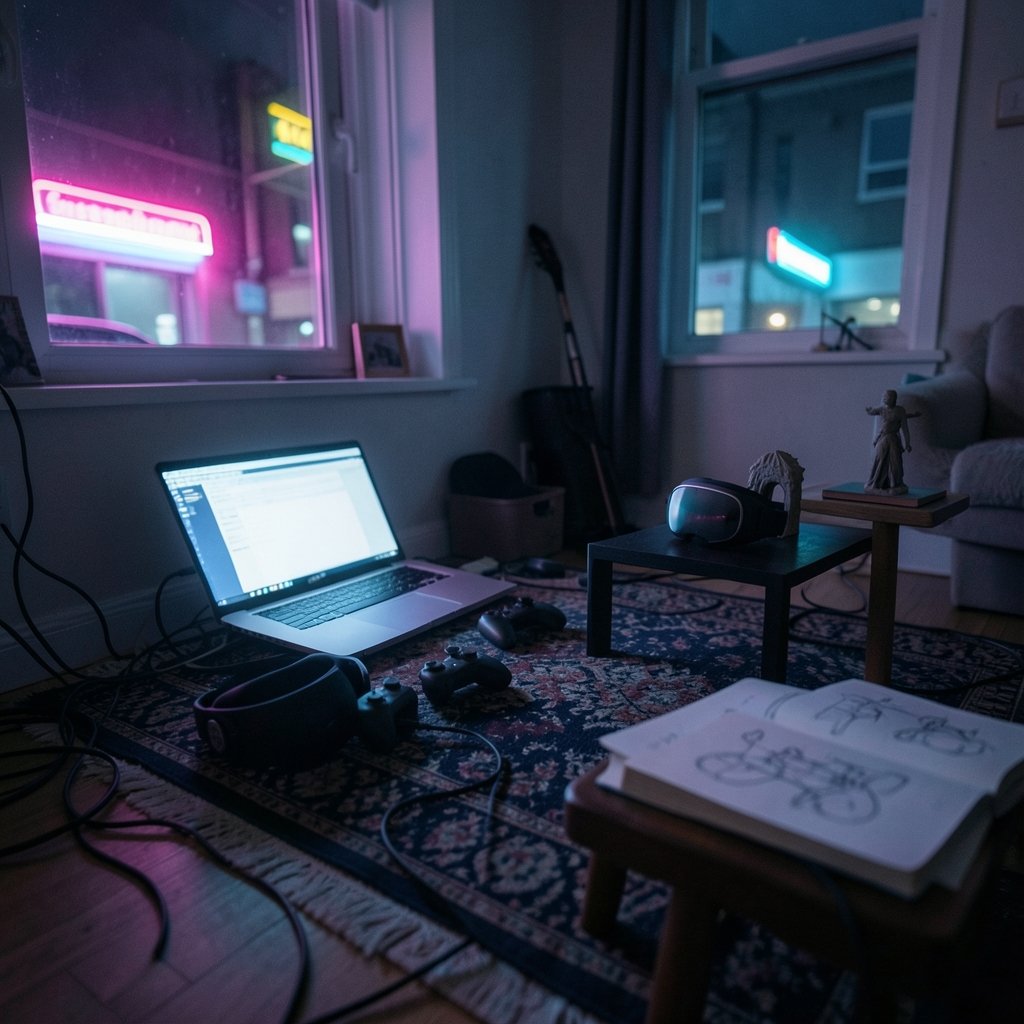
Can a five-person company really afford to build something for a headset? That question used to answer itself: no. Then Apple released Vision Pro on February 2, 2024, and Meta’s Quest 3 arrived in October 2023, and the idea of spatial computing stopped sounding like science fiction and started sounding like a line item.
The catch is that the skills needed to build for these devices are rare and expensive. A small business needs someone fluent in Unity or Unreal, someone who can model and texture in 3D, someone who understands spatial UX, and someone who can squeeze performance out of mobile chipsets. That is four hats, and most small teams own none of them.
So the outsourcing question is really a resource question. It is not “should we do AR/VR?” It is “how do we get work done that we cannot staff?” This article walks through when outsourcing pays, when it quietly drains a budget, and what to put in a contract before anyone writes a line of code.
The Real Case for Outsourcing XR Work
Access to skills you cannot hire
XR talent sits in a thin market. Studios that build immersive experiences cluster in a handful of cities and time zones, and they hire in project cycles rather than permanent headcount. For a small business, renting that capability for eight or twelve weeks is far cheaper than a year of salary, benefits, and onboarding for a specialist who might not have enough work to stay busy.
Speed to a working prototype
A good studio can put a demo in a headset in weeks, not quarters. That matters because the biggest risk in AR/VR is not code quality, it is building the wrong thing beautifully. A fast, disposable prototype tells you whether customers actually care before you commit serious money.
Standards make outsourced code more portable
Two standards quietly protect buyers here. OpenXR, the Khronos Group’s cross-vendor API standard ratified in 2019, lets code target multiple headsets with less device-specific rework. WebXR, the W3C standard for running AR and VR in browsers, can lower both development and distribution cost because users do not need to install an app.
That portability cuts both ways. It means a studio’s work is easier to hand over, and it means you are less locked in. If you are weighing platform decisions alongside other infrastructure choices, the same discipline that helps you pick best small business accounting software without regret applies here: choose for the next two years, not the next ten.
Where Outsourcing Goes Wrong
The demo trap
Agencies are very good at building demos. Demos win pitches. Production software is different: it needs error handling, content pipelines, analytics, privacy controls, and a way to update content without calling the studio every time. Plenty of small businesses have paid for a beautiful prototype and then discovered that turning it into a maintained product costs more than the original build.
Scope creep on 3D content
Custom 3D models are priced per asset, and asset counts explode quietly. A product configurator that starts with twelve models becomes forty after the sales team gets involved. Write asset counts into the contract, with a per-asset rate for anything beyond them.
Device fragmentation
A build that runs well on one headset may stutter on another. Testing across devices, plus the phones and tablets that many AR experiences target, is real work. If the quote does not mention a device matrix, ask for one.
Data protection blind spots
XR apps often collect gaze, motion, and biometric-adjacent data. Under the EU’s GDPR (Regulation 2016/679, applicable from May 25, 2018), some of that can count as special-category data requiring explicit handling. If your users are in Europe, data-processing terms belong in the outsourcing agreement, not in a later email thread.
Build In-House, Outsource, or Buy Off the Shelf?
| Option | Best for | Main strength | Main risk |
|---|---|---|---|
| Full in-house team | XR is core to the business and work is continuous | Full control, fast iteration | Hiring cost and idle capacity |
| Outsourced custom build | Fixed-scope pilots and one-off experiences | Skills on demand, faster start | Knowledge leaves with the vendor |
| Hybrid (vendor builds, you maintain) | Companies with some technical staff | Lower long-term cost | Handover quality varies |
| Off-the-shelf platform | Standard use cases like virtual tours or training | Low cost, fast launch | Limited customization |
The hybrid model is underrated. A studio builds version one and documents it properly; your own developer takes over maintenance and small changes. It costs a bit more upfront and saves a lot later.
What Outsourcing Actually Costs
Build cost is only the visible part. Total cost of ownership includes device procurement, content updates, QA across devices, app store compliance, hosting, and support. Hosting deserves scrutiny: cloud services have a habit of surprising people, which is why it is worth reading up on how Amazon S3 really costs a small project or business before you assume a monthly bill will stay flat.
The same pattern shows up in infrastructure. Teams that assume container orchestration is free often learn otherwise, and a careful look at what Kubernetes really costs a small project or business in 2025 makes the point clearly. XR projects rarely need that machinery, but the lesson transfers: price the whole system, not the headline.
A practical budgeting rule is to reserve 20 to 30 percent of the initial build cost for year-one maintenance and content updates. If that number frightens you, the project is probably too big for the current budget.
A Practical Playbook for a First XR Project
- Define one measurable outcome. “Reduce onboarding time for new warehouse staff by 30 percent” beats “explore immersive technology.”
- Pick a single target device. Quest 3 is a common first choice for cost reasons; WebXR on phones is even cheaper if it fits the use case.
- Write a one-page scope listing features, asset counts, devices, and what is explicitly out of scope.
- Request three quotes from studios with shipped work in your sector, and ask to speak to two past clients.
- Fund a paid discovery phase before the full build. It is the cheapest way to find out the idea is wrong.
- Insist on a documented handover with source code, build instructions, and a content update guide.
- Review results against the original metric at 90 days, then decide whether to continue.
If you are still at the stage of deciding whether the business itself can absorb a new venture, the thinking in this start small business low investment practical playbook maps well onto XR pilots: small, bounded, and reversible.
Contract Terms That Protect a Small Buyer
Most outsourcing pain is contractual, not technical. These clauses are worth insisting on.
IP assignment. The contract should state plainly that all custom code, models, and assets transfer to you on final payment. Some studios retain rights to reusable frameworks, which is fair, but the boundary must be written down.
Source-code escrow. If the studio closes or the relationship ends, you need a path to the code. Escrow arrangements, or simply a contractual delivery of the repository at milestones, solve this.
Milestone-based payment. Pay for delivered work, not for time. A common split is a deposit, a prototype milestone, a production milestone, and a final acceptance payment.
Maintenance and warranty. Define a warranty window for bug fixes and a separate maintenance rate for ongoing support.
Data processing terms. If personal or biometric data is involved, specify what is collected, where it is stored, how long it is kept, and who is responsible.
Acceptance criteria. Write down what “done” means in testable terms. “Runs at 72 frames per second on the target device with no crashes during a ten-minute session” is testable. “Polished experience” is not.
When Outsourcing Is the Wrong Call
Outsourcing stops making sense in a few clear situations. If the XR work is a one-time marketing stunt with no follow-up, a cheaper 360-degree video or a simple phone-based AR filter may do the job at a fraction of the cost. If the business cannot name who will maintain the app after launch, the project will decay. And if the only reason for the project is that a competitor announced something, that is a strategy problem, not a development problem.
There is also a category of project that looks like AR/VR but is really a conversation interface. Before commissioning a headset app, check whether a chat tool solves the actual problem. A comparison like Tidio vs Chatfuel vs ManyChat for small business chat is a useful reality check, and if conversational AI is the direction, this look at best AI chatbots for small business in 2027 shows how much capability now sits in off-the-shelf tools.
How to Judge Whether It Paid Off
Set the success metric before the project starts, and make it a business metric rather than a technology one. Training completion rates, sales conversion on a configurator, site visit duration, error rates on a maintenance task: these are measurable and comparable to a baseline.
Then track three numbers for a year: cost per user session, maintenance spend as a share of build cost, and the metric you set at the start. If cost per session is falling and the business metric moved, outsourcing earned its keep. If the app sits unused while the invoice for updates arrives, you have your answer.
Conclusion
Outsourcing AR and VR development is worth it for most small businesses, but only under narrow conditions: a defined problem, a single target device, a fixed scope, a paid discovery phase, and a contract that hands over the code. It is a poor fit when XR is a novelty, when nobody owns maintenance, or when the budget only covers the build and not the year after.
The technology has matured enough that standards like OpenXR and WebXR reduce lock-in, and headsets are cheap enough to test ideas without a big bet. That makes the decision less about whether the technology works and more about whether the business is ready to run it. Treat the first project as a paid experiment with a clear finish line, and outsourcing becomes a sensible, low-risk way to find out what spatial computing can do for a company that could never hire for it.
FAQ
How much should a small business budget for a first AR or VR project?
A realistic starting range for a focused pilot is the cost of a few months of one specialist’s salary, covering discovery, a prototype, and a limited production build. Add 20 to 30 percent for year-one maintenance, device purchases, and store compliance. Anything quoted far below that usually means the scope has been quietly reduced to a demo.
Can a small business build AR or VR without any in-house developers?
Yes, but someone internal must own the project. That person does not need to write code, but they need to manage scope, review builds on the actual device, and hold the vendor accountable to acceptance criteria. Projects fail most often when a business outsources the work and the responsibility at the same time.
Is WebXR cheaper than building a native headset app?
Usually, yes. WebXR runs in a browser, so there is no app store submission, no install step, and less device-specific work. The trade-off is performance and access to some device features. For product visualization, simple training, and marketing experiences, browser-based builds are often the smarter first move.
What happens to the app if the development studio goes out of business?
That depends entirely on the contract. With source-code escrow or milestone repository delivery, another developer can pick up the work. Without it, you may own the idea but not the implementation. Ask for the code handover terms in writing before signing, not after launch.
Do AR and VR apps create privacy or data protection obligations?
Frequently, yes. XR apps can collect gaze direction, hand movement, location, and voice data. Under the GDPR and similar laws, some of that may be sensitive. The outsourcing agreement should specify what is collected, where it is stored, how long it is retained, and which party is responsible for responding to user requests.
How long does a typical outsourced XR project take?
A focused pilot usually takes six to twelve weeks from kickoff to a testable build. A production release with content pipelines, analytics, and multi-device testing typically runs three to six months. Timelines stretch when content volume grows, so lock asset counts early and treat every addition as a change request with a price.



