
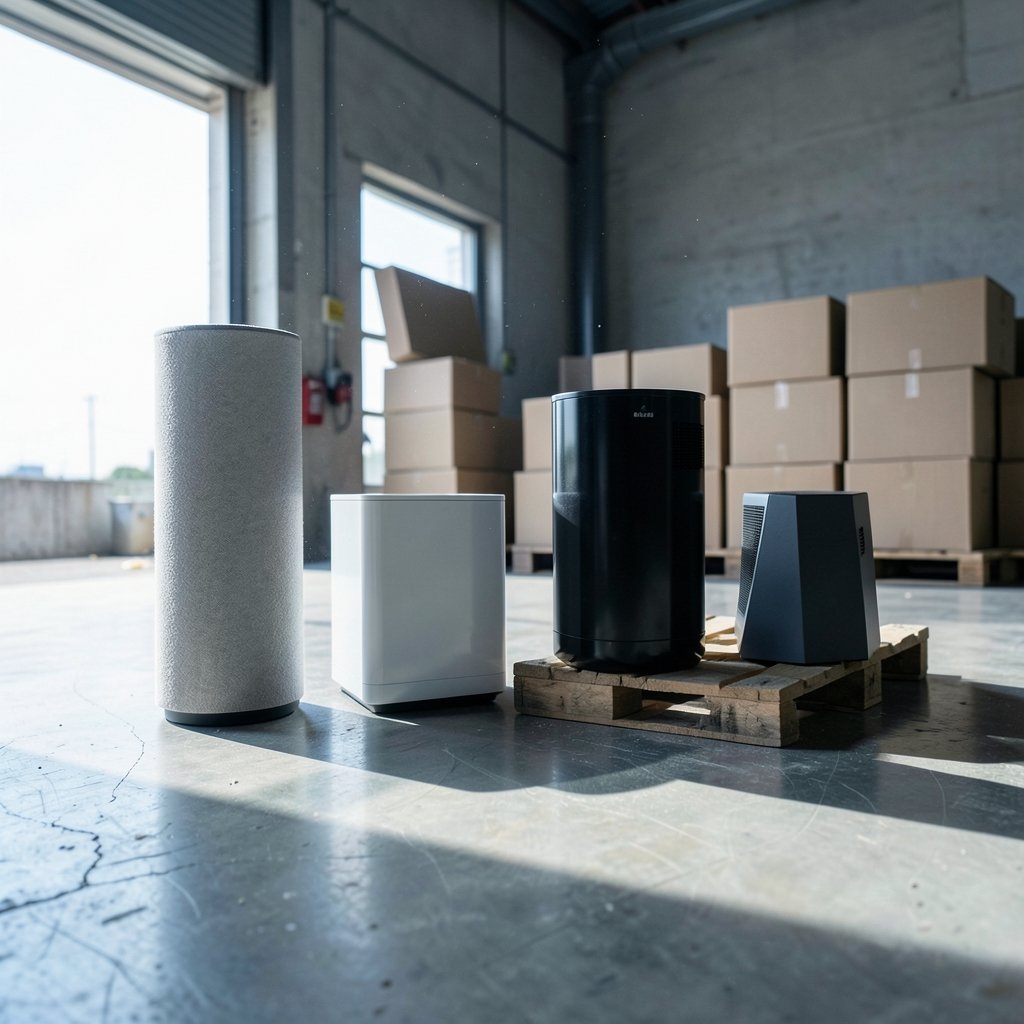
Which air purifier is the most recommended one? That sounds like a simple question with a simple answer. It isn’t. Ask five different reviewers, and you’ll get five different winners. Ask a friend with allergies, and you’ll get a sixth. The honest answer is that no single machine wears the crown, because “most recommended” depends on the room, the pollutant, the noise you can tolerate, and the money you’re willing to spend on filters for years.
That doesn’t leave you empty-handed. It leaves you with something more useful: a way to read recommendations critically and figure out which one applies to your situation. This guide breaks down what the credible voices actually agree on, where they disagree, and the practical details that decide whether a purifier helps or just hums in the corner.
Why every “best air purifier” list disagrees
Recommendation lists conflict for reasons that have nothing to do with conspiracy. Each outlet tests differently. Some measure particle removal in a sealed chamber. Others run units in real rooms with doors opening and closing. Some weigh purchase price heavily; others factor in five years of filter costs. A machine that wins on raw cleaning power can lose on noise, and a quiet unit can lose on speed.
There’s also the room-size problem. A purifier that’s perfect for a 150-square-foot bedroom is underpowered for an open-plan living room. Reviewers often test in one room size and generalize. When a list crowns a “best overall” model, read the fine print: best for whom, in what room, at what budget?
The practical takeaway is to stop hunting for the single most recommended purifier and start hunting for the most recommended purifier for your specific room and problem. That reframing solves most of the confusion.
The one number that actually matters: CADR
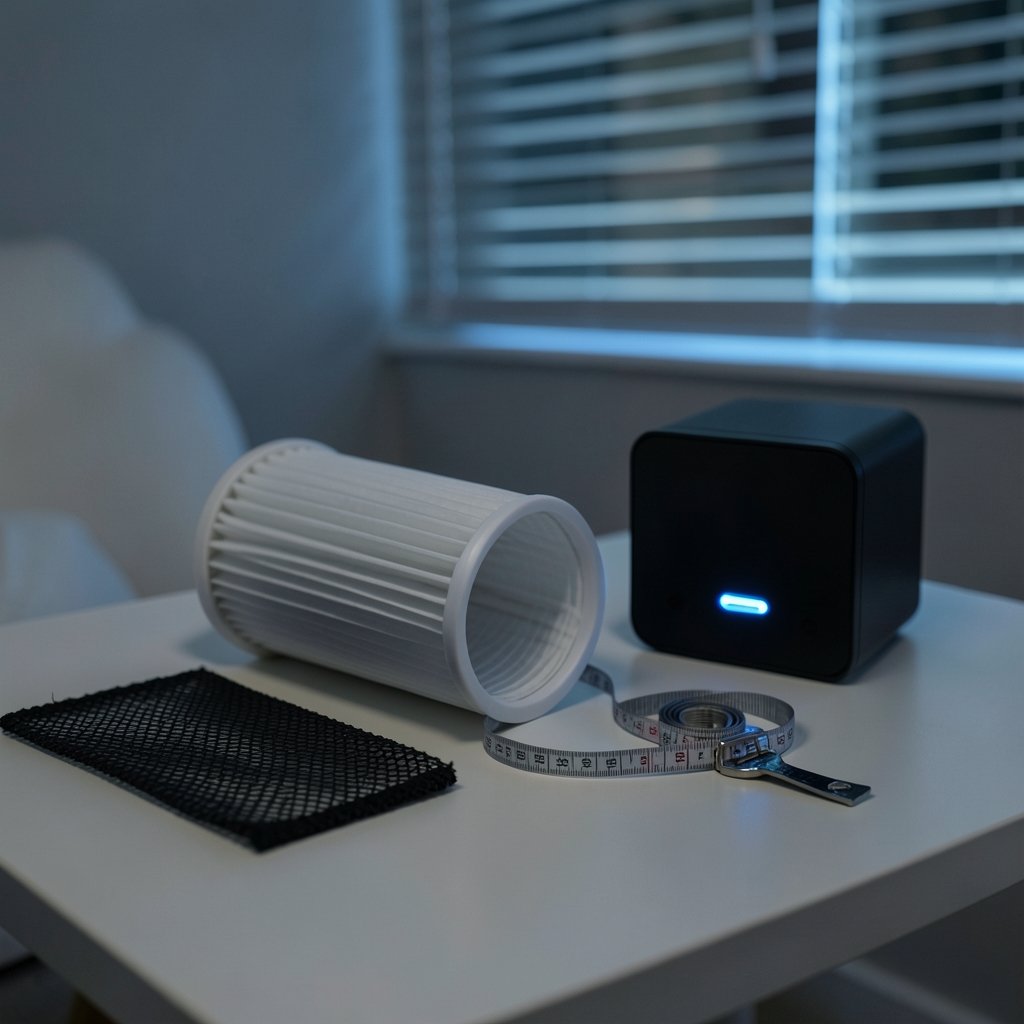
If you learn nothing else, learn CADR, which stands for Clean Air Delivery Rate. It’s measured in cubic feet per minute and reported separately for smoke, dust, and pollen. The metric was developed by the Association of Home Appliance Manufacturers, and certified units are tested under that program.
CADR is the closest thing the industry has to an apples-to-apples number. It tells you how much clean air the machine pushes out, combining how much air it moves with how well the filter captures particles. Two purifiers can have identical HEPA filters and wildly different CADR because one has a weak fan.
There’s a widely cited rule of thumb: for a room with an 8-foot ceiling, the CADR for smoke should be at least two-thirds of the room’s area in square feet. A 150-square-foot bedroom, then, wants a smoke CADR around 100 or higher. A 300-square-foot living room wants roughly 200. Treat this as a floor, not a ceiling. Going bigger gives you headroom to run the unit on a lower, quieter speed and still clean the air.
One caution: manufacturers sometimes advertise a “room size” rating that assumes ideal conditions and maximum fan speed. Maximum fan speed is usually the loudest setting, which is the one you’ll never use at night. Check the CADR number itself rather than the marketing room size.
HEPA, carbon, and the filter claims to ignore
HEPA is a defined standard, not a vibe. Under the U.S. Department of Energy definition, a true HEPA filter captures 99.97% of particles at 0.3 micrometers, the size that’s hardest to catch. That definition traces back to a military standard from the 1950s.
Here’s where shoppers get burned: labels that say “HEPA-type,” “HEPA-like,” or “HEPA-style” are not held to that standard. They may perform well, but the label promises nothing specific. If particle removal is your goal, look for a genuine HEPA filter, ideally from a brand that publishes its CADR.
Particles aren’t the whole story, though. Gases and odors, from cooking fumes to wildfire smoke’s smell, need activated carbon. A thin carbon sheet does little. A substantial carbon bed costs more and adds weight, but it’s the difference between a purifier that handles odors and one that just moves them around. If cooking smells are your main complaint, a unit built for that job matters more than raw CADR, and the same logic applies to basement mustiness.
Matching the purifier to the actual problem
Different rooms and pollutants call for different priorities. A few scenarios come up again and again, and each has a slightly different answer.
Wildfire smoke season
When smoke rolls in, particle removal is the priority. You want high smoke CADR, a true HEPA filter, and a unit you can run continuously for days. Sealing the room and running the purifier on a high setting during the worst hours, then dropping to a lower speed overnight, is the standard playbook. If you’re choosing a model specifically for this, it’s worth reading up on how to pick an air purifier for wildfire smoke that actually cleans, because some units marketed for smoke are weak on the one number that counts.
Dusty workshops and garages
Fine dust from sanding or cutting is a particle problem, but volume matters. Workshop spaces are often larger and dirtier than living rooms, so CADR needs to be generous and filters will clog fast. A unit that clears a bedroom in an hour may be overwhelmed by a garage. Pre-filters become your best friend here, because they catch the big stuff before it reaches the HEPA layer.
Bedrooms and sleep
In a bedroom, noise decides everything. A purifier with great CADR that sounds like a small aircraft will get switched off by week two, and a switched-off purifier cleans nothing. Look for measured decibel ratings on low speed, and check whether the display dims or turns off. For a deeper look at matching a unit to a small room, there’s a solid breakdown of how to choose an air purifier for small bedrooms that actually works, including the trade-offs between size, noise, and cost.
Pets, birds, and households with animals
Pet dander is a particle, so HEPA does the heavy lifting, but hair and fur clog filters quickly. Bird owners face a wrinkle: birds have sensitive respiratory systems, and some purifiers emit trace ozone or fumes that can harm them. This isn’t a hypothetical. Certain air purifiers that work well for people can harm pet birds, so the choice needs care. The general rule is to avoid ozone-generating technologies entirely and to ventilate while a new unit off-gasses.
Odors, cooking, and basements
Cooking produces both particles and gases, and a carbon filter is the only part that touches the gases. A purifier with a token carbon sheet won’t cut it. The same is true in damp basements, where musty odors linger. If smell is the main issue, prioritize carbon mass over HEPA hype, and consider whether ventilation or a dehumidifier would solve more of the problem than any purifier can.
Ozone generators: the recommendation you should ignore
Some devices advertise “ionization,” “plasma,” or “activated oxygen” as cleaning technology. These can produce ozone, a lung irritant. California’s air regulator limits ozone emissions from certified air cleaners sold in the state, a rule that dates to the late 2000s, and some devices were exempted as medical devices. The practical advice for shoppers is simple: skip ozone generators. A HEPA and carbon purifier does the job without adding a pollutant to your air.
This matters more than most buying guides admit. A purifier is something you run for hours a day, often in the room where you sleep. Adding a known irritant to that equation defeats the purpose.
Noise, energy, and the cost nobody mentions
Two specs get ignored in showroom comparisons and dominate real life: decibels and watts. A purifier running 24 hours a day uses electricity continuously, and a noisy one gets banished to the closet. Look for measured dB figures rather than words like “whisper quiet,” and check wattage if you plan to run it constantly. Timing matters too. Running a purifier for long stretches is often more effective than short bursts on maximum, and there’s a useful guide to long-run air purifier hours and timing that really works if you want to plan a schedule.
Then there’s filter replacement cost. This is the quiet budget killer. A cheap purifier with expensive, hard-to-find filters can cost more over five years than a pricier unit with affordable ones. Before buying, find the filter price and replacement interval, then do the math: filter cost times replacements per year, times five. Consumer outlets factor this into their long-term picks, and you should too.
A few practical habits save real money. Vacuum the pre-filter monthly. Note the replacement date on the calendar. Don’t wash a HEPA filter unless the manufacturer says it’s washable, because water damages the media. And if a new unit smells like plastic for the first few days, that’s usually normal off-gassing, but it’s worth knowing how to handle a new air purifier that smells like plastic so you don’t mistake it for a defect.
How to read a recommendation list without being fooled
When a list names a winner, run it through a short checklist before you trust it for your home.
| What to check | Why it matters |
|---|---|
| Published CADR for smoke, dust, pollen | The only comparable performance number |
| True HEPA vs. “HEPA-type” | The label determines whether the claim means anything |
| Carbon filter mass | Decides whether gases and odors get handled |
| Measured dB on low speed | Predicts whether you’ll actually leave it on |
| Filter price and interval | The real long-term cost |
| Ozone-free operation | Avoids adding an irritant to your air |
| Tested room size and method | Explains why lists disagree |
If a recommendation passes those checks and matches your room size, it’s a reasonable pick regardless of which outlet made it. If it fails one, keep looking. The label “most recommended” is a starting point for research, not a finish line.
Common mistakes that waste money
A few errors show up so often they’re worth naming directly.
Buying by room-size sticker instead of CADR. The sticker is marketing; the number is physics.
Sizing to the exact room and running on maximum forever. Buy a bit more capacity than you need so the unit can run quietly and still clean.
Ignoring the filter supply. A discontinued filter model turns a working purifier into a paperweight.
Placing the unit against a wall or in a corner. Air needs to circulate. A few feet of clearance on all sides helps more than most people expect.
Expecting a purifier to fix a ventilation problem. If a room has no fresh air and a persistent odor source, a purifier is a bandage. Fix the source first.
Conclusion
The most recommended air purifier isn’t a single model. It’s the one that matches your room’s size, your main pollutant, your noise tolerance, and your filter budget. Get the CADR right, insist on true HEPA and real carbon where odors matter, skip ozone generators, and do the five-year filter math before you buy. Do that, and you’ll end up with a machine that earns its place in the room, not one that wins a list and loses your bedroom.
What CADR number do I need for my room?
For an 8-foot ceiling, aim for a smoke CADR of at least two-thirds of the room’s area in square feet. A 150-square-foot room wants about 100; a 300-square-foot room wants about 200. Treat it as a minimum and size up for quieter operation.
Is a “HEPA-type” filter as good as true HEPA?
Not by definition. True HEPA must capture 99.97% of particles at 0.3 micrometers under the Department of Energy standard. “HEPA-type” and similar labels carry no such requirement, so check for a genuine HEPA filter and a published CADR.
Do air purifiers really help with wildfire smoke?
They can, if the unit has high smoke CADR and a true HEPA filter, and if you run it continuously with windows closed during the worst hours. Particle removal is the priority for smoke.
Are ionizers and ozone generators safe?
Ozone is a lung irritant, and some electronic purifiers produce it. California limits ozone emissions from certified air cleaners, and the simplest safe choice is to skip ozone-generating devices and use HEPA plus carbon instead.
How often do I need to replace the filter?
It depends on the model and how dirty your air is. Check the manufacturer’s interval, but expect more frequent changes in dusty workshops or homes with pets. Vacuuming the pre-filter monthly extends the main filter’s life.
Why do recommendation lists pick different winners?
Because they test differently, weigh price and noise differently, and test in different room sizes. A pick is only meaningful relative to a room and a budget, so compare the CADR, noise, and filter costs against your own situation.



