

What if the scratch on the side of a $1,400 refrigerator could save you $500, and the scratch is on the side nobody sees? That is the basic promise of an open box appliance store, and it is the reason shoppers search for Appliances 4 Less in South Orlando. The idea is simple: a returned, discontinued, or display-model appliance gets sold at a discount instead of being scrapped. The reality is messier. Condition varies, paperwork varies, and the word “open box” is a sales term, not a legal guarantee. This guide walks through how the category works, what to ask before you pay, where people get burned, and how to decide whether a discount is genuinely worth the drive.
What an open box appliance actually is
Open box is a retail label, not a regulated standard. In U.S. retail it generally describes an item that was returned, displayed on a showroom floor, or pulled from inventory and resold at a discount. That single definition covers a huge range of situations:
| Label you may see | What it often means | Typical risk |
|---|---|---|
| Open box, like new | Returned quickly, all parts present | Low, but confirm accessories |
| Open box, scratch and dent | Cosmetic damage, unit works | Medium, inspect the damage |
| Floor model | Displayed and powered on for months | Medium to high, check hours of use |
| Factory refurbished | Repaired and tested by the maker or a service center | Varies by refurbisher |
| As-is | No returns, no promises | Highest, price should reflect it |
A store can call almost anything “open box.” What matters is the specific unit’s history and the paper that comes with it. A discount of 30 percent on a unit with a bent door hinge is not the same deal as 30 percent off a unit that was unboxed, plugged in once, and returned. Two identical-looking listings can carry completely different risk.
Discount appliance shopping in South Orlando
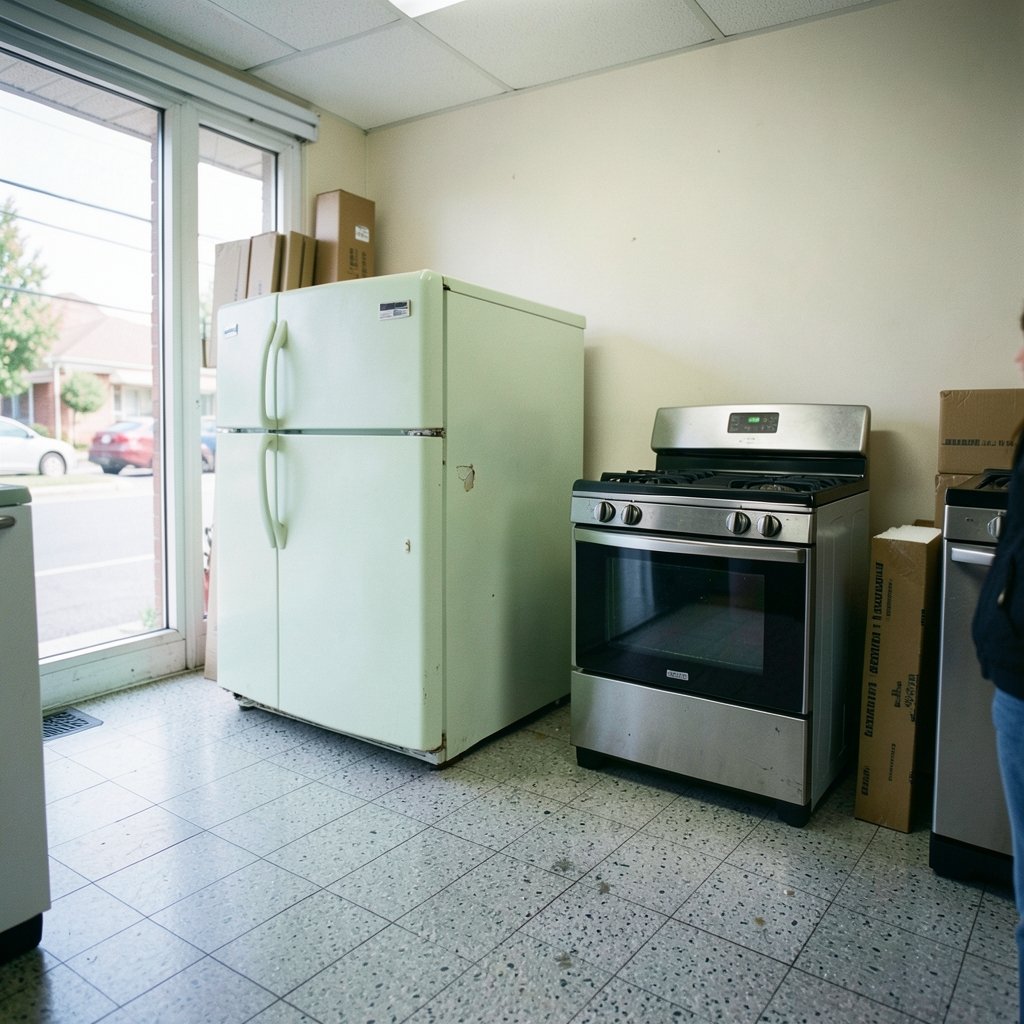
South Orlando is a corridor of big-box stores, outlet centers, and independent dealers competing for the same households. That competition is good for buyers, but it also means the phrase “discount appliance store” gets used loosely. Some operations are genuine dealers moving returns and discontinued models. Others are resellers working out of warehouses with minimal service infrastructure. A few are simply marketing websites that route you to a third-party seller.
The practical takeaway: treat any specific store name as unverified until you check it yourself. There is no reliable public record confirming the address, hours, inventory, warranty terms, or current operating status of a business trading as Appliances 4 Less in South Orlando. That does not mean it is not real. It means the burden of verification sits with you, and it is a short burden to carry. A phone call, a drive past the location, and a look at the business’s registration take less than an hour and can save you a four-figure mistake.
This pattern shows up far beyond appliances. Shoppers hunting a bargain on a perfume mystery box or a discount fragrance bundle face the same question: is the seller moving genuine overstock, or just repackaging uncertainty? The mechanics of the discount are usually more interesting than the discount itself.
How to verify a store before you drive over
Do the boring work first. It is the single highest-return step in the whole process.
- Call and ask three questions. Do you have the model in stock right now? Is it new, open box, or refurbished? What is your return window in writing? Vague answers on any of the three are a signal.
- Check the business registration. Florida’s Department of Business and Professional Regulation lets you search whether a business holds a required license. A legitimate operation should not flinch at this.
- Search complaint history. The Better Business Bureau is a private nonprofit, not a regulator, so treat its ratings as one data point, not a verdict. Read the actual complaint text rather than the letter grade.
- Confirm the address on a map. Look for a real showroom or warehouse, not a mailbox suite.
- Ask whether the store is an authorized dealer for the brands it sells. This matters enormously for warranty coverage, and it is the question most shoppers forget.
If a store cannot tell you whether it is authorized, assume it is not, and price the risk accordingly.
The warranty question nobody asks until it is too late
Here is where open box buying gets genuinely complicated. Manufacturer warranties may or may not transfer to open box buyers, and that depends entirely on the manufacturer’s written warranty terms, not on what the salesperson says at the counter. Some brands honor coverage on units sold by authorized dealers regardless of box condition. Others void coverage the moment an item leaves the authorized channel. A few require proof of purchase from an approved retailer.
The practical move is to read the specific warranty document for the specific model before paying. Most manufacturers publish these as PDFs. Search the model number plus “warranty” and read the section on transferability and authorized sellers. If the store offers its own warranty instead, get the terms in writing and check who actually services the claims. A store warranty is only as good as the store’s continued existence.
Florida law adds a layer here. The Florida Deceptive and Unfair Trade Practices Act (FDUTPA, Fla. Stat. ch. 501, Part II) prohibits deceptive practices in trade, and Florida statutes also address disclosure duties around rebuilt or used goods in some contexts. Whether either applies to a specific transaction depends on facts nobody can assess from a search result. What you can do is insist that the condition of the unit be written on the receipt. If it is described as new, the receipt should say new. If it is open box, the receipt should say open box. Paper beats promises.
What actually works in practice
Experienced bargain hunters tend to follow a fairly consistent playbook, and it is less about finding the store and more about controlling the transaction.
Inspect in person, powered on. Ask to see the unit plugged in and running. For a refrigerator, confirm it reaches temperature. For a washer, run a cycle. For a range, light every burner. Cosmetic flaws are negotiable; functional flaws are a different category entirely.
Photograph everything before you leave. The serial number, the model plate, the damage, the receipt. If a dispute arises later, photos settle it fast.
Confirm what is in the box. Open box units frequently arrive missing pieces: ice maker lines, drain hoses, mounting brackets, manuals, and occasionally the power cord. Missing accessories can eat the entire discount. Ask for a parts list and check it against the manufacturer’s included-items list.
Price the delivery and installation separately. A $400 discount evaporates if delivery and hookup cost $250 and the store will not budge. Get the all-in number before you commit.
Check the return window in writing. Many open box sales are final or carry a short window, often measured in days. Know the number before you pay, and know whether returns require the original packaging.
Measure the space first. This sounds trivial and it is the most common expensive mistake in appliance buying. Door swing, depth with the handle, and clearance for the refrigerator to actually fit through the doorway. A great deal on a unit that will not fit is not a deal.
Where the real savings come from
Discount appliance pricing usually traces back to one of four sources, and knowing which one you are looking at tells you how much risk you are absorbing.
| Source of discount | Typical saving | What you give up |
|---|---|---|
| Cosmetic damage (scratch and dent) | 15 to 40 percent | Appearance only, if function is sound |
| Customer return | 10 to 30 percent | Full manufacturer warranty, sometimes |
| Discontinued model | 20 to 50 percent | Parts availability long term |
| Floor model | 20 to 45 percent | Unknown hours of use, cosmetic wear |
The discontinued-model discount is often the safest of the four. The unit is new, unopened, and fully warrantied, but the manufacturer has moved on to a newer line. The tradeoff is future parts availability, which matters more for complex appliances than most people expect. A discontinued model with a five-year-old design can be a bargain or a parts scavenger hunt, depending on the brand.
Customer returns are the murkiest category. The unit may be perfect. It may also have been returned because of an intermittent fault the first owner could not articulate. This is why the powered-on inspection matters so much.
The bigger picture on discount pricing
Appliance discounts do not exist in a vacuum. Retail pricing is shaped by platform fees, regional rules, and licensing decisions that consumers rarely see. The same forces that push up fees in digital marketplaces, examined in coverage of the Apple scotus 27 percent app store fee 2026 dispute and the Apple eu app store fees for game developers in 2026, eventually show up in what independent retailers can afford to charge. Regional regulation matters too: licensing rules can reshape entire markets overnight, as the Starlink south africa licensing 30 percent rule in 2026 illustrates. Closer to home, cross-border comparisons of how Mexico and South Africa compare as regional giants show how differently consumer markets can be structured.
None of this changes your refrigerator purchase directly. It does explain why “discount” is a moving target and why a price that looks unbeatable in one month may look ordinary three months later. Patience is a legitimate strategy.
Common mistakes that cost real money
The failures cluster around a handful of patterns.
- Buying without seeing it powered on. The single most expensive shortcut.
- Trusting a verbal warranty. If it is not on paper, it does not exist.
- Ignoring the delivery math. The all-in price is the only price that counts.
- Skipping the model number check. Search the exact model for known failure patterns and recall notices before you buy.
- Assuming “open box” means “basically new.” Sometimes it does. Sometimes it means “returned twice.”
- Forgetting the old unit. Removal and disposal of the appliance you are replacing often costs extra and is rarely included by default.
There is a broader lesson in all of this, one that applies whether you are buying a range or figuring out what a cheese wheel really means when a store offers to cut one for you: the deal is in the details, and the details are always disclosed somewhere. Your job is to find them before you pay.
Conclusion
A discount appliance store in South Orlando can be a genuinely good way to save several hundred dollars on a machine you will use every day for a decade. It can also be a fast route to a broken washer with no recourse. The difference is almost never luck. It is verification, inspection, and paperwork.
Treat the store name as a starting point, not an assurance. Call ahead, confirm the condition and the return window in writing, ask whether the seller is an authorized dealer, read the actual manufacturer warranty document, and inspect the unit powered on before money changes hands. If a seller resists any of those steps, that resistance is your answer.
The best open box purchase is the one where you understood exactly what you were buying, what you were giving up, and what would happen if it failed. Get those three things straight, and the discount becomes what it was supposed to be: money in your pocket rather than risk on your shoulders.
FAQ
Is Appliances 4 Less in South Orlando a legitimate store?
There is no reliable public record confirming the address, hours, inventory, warranty terms, or current operating status of a business trading under that name in South Orlando. That does not mean it is not real; it means you should verify directly before driving over. Call the store, confirm the physical address on a map, check business registration with Florida’s Department of Business and Professional Regulation, and read any complaint history rather than relying on a letter grade.
What does open box mean on an appliance?
Open box is a retail term, not a legal standard. It generally describes an item that was returned, displayed, or pulled from inventory and resold at a discount. Condition, included accessories, and warranty coverage vary by seller and are set by the seller’s own policy. Always confirm the specific unit’s history and get the condition written on the receipt.
Does the manufacturer warranty transfer to an open box appliance?
It depends entirely on the manufacturer’s written warranty terms. Some brands honor coverage on units sold by authorized dealers regardless of box condition, while others void coverage outside authorized channels. Read the specific warranty document for the specific model before paying, and ask the store directly whether it is an authorized dealer for that brand.
How much should I expect to save on a discount appliance?
Savings typically range from 10 to 50 percent depending on the source. Cosmetic damage usually saves 15 to 40 percent, customer returns 10 to 30 percent, discontinued models 20 to 50 percent, and floor models 20 to 45 percent. Always calculate the all-in price including delivery, installation, and old-unit removal before deciding whether the discount is real.
What should I check before buying an open box appliance?
Ask to see it powered on and running. Confirm every accessory is present against the manufacturer’s included-items list. Photograph the serial number, model plate, damage, and receipt. Get the return window and warranty terms in writing. Measure your space, including door swing and doorway clearance, before you commit.
What can I do if a discount appliance store misleads me?
Florida’s Deceptive and Unfair Trade Practices Act prohibits deceptive practices in trade, and the Florida Attorney General’s consumer protection office accepts complaints. Start by documenting everything in writing, including photos and the receipt showing the unit’s stated condition, then contact the store in writing before escalating. Whether the law applies to a specific transaction depends on facts that need individual assessment.



