
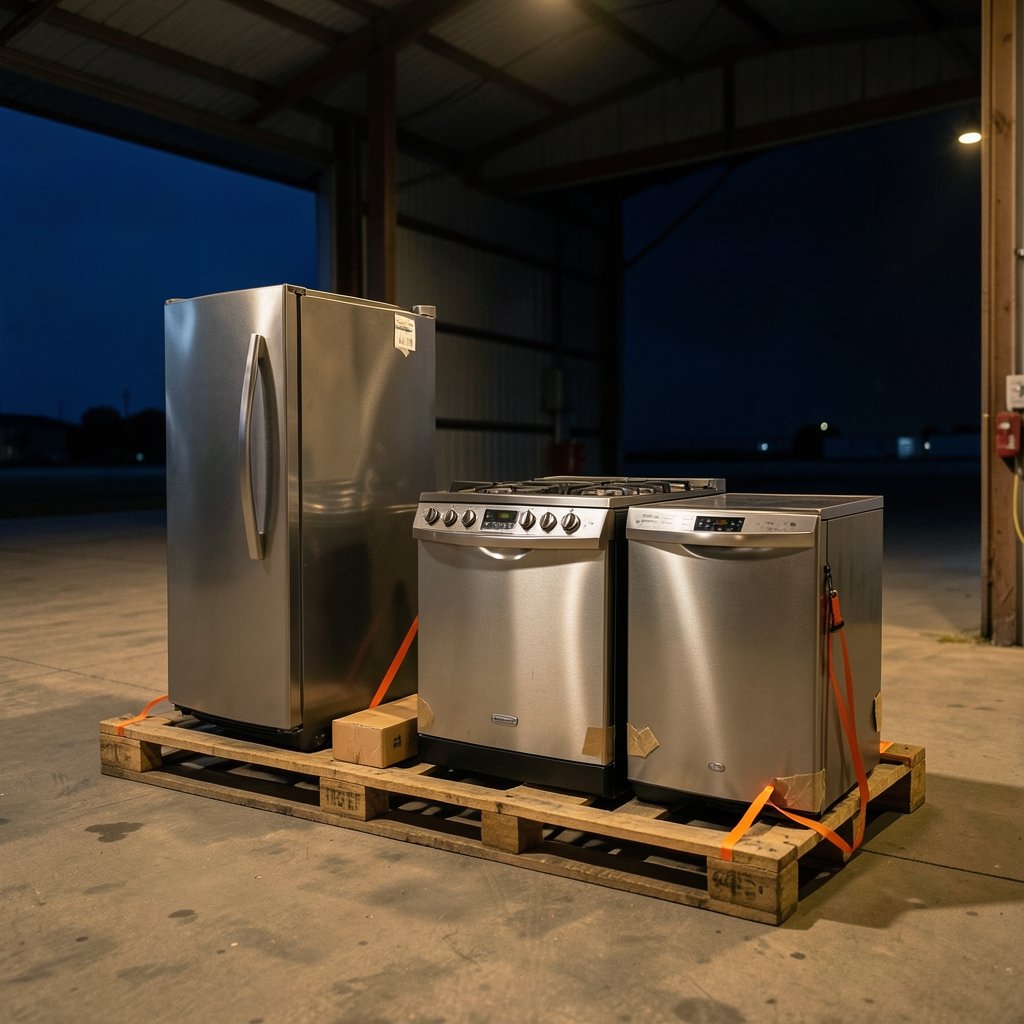
What exactly is an appliance set, and why does the answer change depending on who is selling it? Walk into one store and the term means a matched bundle of refrigerator, range, dishwasher, and microwave in the same finish. Open a building code document and it means the group of appliances counted when calculating a home’s energy load. Ask a contractor and it may include the range hood, garbage disposal, and built-in coffee maker. That ambiguity is not a small detail. It shapes what you pay, what you get, and how much protection you have when something breaks.
This guide treats appliance set as a practical retail and household concept: a group of major appliances bought, delivered, and installed together, usually sharing a finish and brand family. It also covers the policy side, because efficiency rules and labels apply per appliance, not per bundle. That distinction trips up more buyers than almost anything else.
What Counts as an Appliance Set?
Most retailers use appliance set or kitchen suite to describe four to five core pieces: a refrigerator, a range or cooktop-and-oven pair, a dishwasher, and an over-the-range microwave or hood. Some bundles add a washer and dryer, which technically belong to a laundry set but get marketed alongside kitchen packages. Small appliances like stand mixers or toasters rarely belong to a true set, even when a promotion lumps them in. (Set up api security testing that actually catches real flaws)
Manufacturers tend to prefer the word suite. It signals design coordination: matching handles, consistent finish, shared display styling. The word set is looser. It can mean anything from two pieces to a full kitchen, and it carries no formal definition from any standards body. Buyers should treat the term as marketing language and define the scope themselves before comparing prices.
A useful working definition: an appliance set is a purchase of three or more major appliances, bought together, intended for one room or one home, with coordinated styling and a shared delivery window.
Why Bundles Appeal to Buyers and Retailers

The appeal is obvious. Buying four appliances at once saves time, often comes with a package discount, and produces a kitchen that looks intentional rather than assembled piecemeal. Delivery crews arrive once instead of four times. Installation gets scheduled in a single visit.
Retailers benefit too. Bundles raise the average transaction size and reduce the risk that a shopper buys the refrigerator elsewhere. That is worth remembering when a salesperson pushes a package: the discount is real, but it exists because the bundle serves the store’s economics as much as yours.
There is a practical trap here. Package pricing can hide weaker components. A set built around a deep discount on the refrigerator may pair it with a dishwasher that has a poor repair record. The way to catch this is to price each appliance individually and compare, then check the bundle total. If the savings are thin, buy the pieces you actually want.
Measure First: The Step Almost Everyone Skips
The single most common mistake in appliance buying is ordering before measuring. Cabinet openings, door clearances, and hallway widths decide what fits, and a set that fails on any one of them becomes a return.
Measure the width, height, and depth of every opening. Then measure the path from the front door to the kitchen, including stairwells and tight corners. Add clearance for doors that swing open and for refrigerator hinges that need space to clear a wall. Counter-depth refrigerators look built-in but still need ventilation gaps.
Also confirm the hookups. Gas ranges need a gas line and often a shutoff valve in reachable condition. Dishwashers need a water supply and drain nearby. Electric ranges need the correct circuit, and older homes sometimes have a three-prong outlet where a four-prong plug is required. These are the details that turn a one-day installation into a two-week delay.
Efficiency Labels Apply Per Appliance, Not Per Set
Here is where the policy side matters. Energy Star is a labeling program run by the US Environmental Protection Agency and Department of Energy, launched in 1992, that certifies products meeting efficiency criteria. Certification is granted per model. A set advertised as efficient may contain one certified appliance and three that are not. Check each model number.
US federal minimum efficiency standards work the same way. They are set by the Department of Energy under the Energy Policy and Conservation Act of 1975, and they apply to each appliance type separately. A bundle is not regulated as a unit. In Europe, the EU energy label rates appliances on an A to G scale, rescaled from the older A+++ scheme beginning in 2021 for several product groups, with rescaling dates differing by category. A set spanning categories can carry labels from two different schemes.
In the US, many new appliances must display an EnergyGuide label showing estimated annual energy use or cost. That label is the cleanest way to compare two models inside a candidate set, because it uses a consistent test method.
| Label or rule | Scope | Applies to a set as a whole? |
|---|---|---|
| Energy Star | Per certified model | No |
| US federal minimum standards | Per appliance type | No |
| EU energy label (A to G) | Per appliance, by category | No |
| FTC EnergyGuide | Per covered appliance | No |
The practical takeaway: build a comparison table of model numbers and their labels before agreeing to any package.
Matching Finish Without Overpaying
Finish coordination is the main reason people buy sets. Stainless steel remains the default, but fingerprints, magnet compatibility, and panel variation between brands cause real frustration. Two manufacturers’ stainless finishes rarely match exactly, and a refrigerator and range from different brands can sit side by side looking slightly off.
Three approaches work in practice. First, buy the same brand family across the set when finish matching matters most. Second, choose a finish that hides variation, such as black stainless or a matte finish. Third, accept deliberate contrast: a panel-ready refrigerator paired with a stainless range reads as a design choice rather than a mismatch.
Avoid paying a premium for a finish you cannot see. Sides and backs of appliances are often unfinished steel, and that matters if any unit sits at the end of a run.
Delivery, Installation, and the Costs Bundles Leave Out
In US retail, delivery and installation are usually priced separately from the appliance set, and that line item can be substantial. Haul-away of old units is often a separate fee. Hookups for gas, water, and electrical work may require permits or licensed installers depending on local code, and those rules vary by jurisdiction.
Ask three questions before signing: Who disconnects the old appliance? Who installs the new one, and are they licensed for gas or electrical work? Who takes the packaging and the old unit away? Get the answers in writing on the order.
If the set includes a gas range, confirm the installer is qualified for gas connections. A delivery crew that only drops boxes is not the same as an installation team. This is also where planning pays off beyond the kitchen: the same discipline that keeps a home network orderly applies to appliance scheduling. Teams that document dependencies and sequence work carefully, as described in this guide to setting up security orchestration that cuts response time, tend to catch installation conflicts before they become expensive.
Warranty Terms Differ Inside the Same Bundle
Warranty coverage is where bundles quietly disappoint. Coverage periods commonly differ by component within a single purchase. A refrigerator’s sealed refrigeration system may carry a longer parts warranty than its cosmetic finish, and a range’s electronic control board may have different terms than its cooktop surface. Bundle summaries rarely capture this.
Read each product’s warranty document, not the package flyer. Note three things: the length of the general warranty, the length of any extended coverage on specific systems, and whether coverage depends on professional installation. Some manufacturers void or limit coverage when installation is not performed by an approved installer, which makes the cheapest delivery option a false economy.
Keep receipts, model numbers, and installation records together. Warranty claims go faster when a buyer can produce the purchase date and the installer’s details in one file.
Rebates and Incentives Rarely Cover the Whole Set
Utility and government rebate programs for efficient appliances are typically written per appliance and per program. A set may qualify for a rebate on the dishwasher but not the range, or on the washer but not the dryer. Program terms change annually, so verify current conditions before assuming a package qualifies.
The same logic applies to tax incentives. Eligibility usually hinges on specific model certification rather than on the purchase being a set. Buyers who assume a bundle is uniformly eligible end up disappointed at claim time.
A simple habit fixes this: list each model number, check it against the current program list, and total the realistic rebate before comparing bundle prices. Two sets with a $300 price gap can flip ranking once incentives are counted.
Where Appliance Sets Fit Into a Broader Home Setup
An appliance set is one system among several in a home, and the same planning principles apply across all of them. Buyers who document what they own, how it connects, and who services it make better decisions later. That habit shows up in unexpected places, from choosing a video conferencing stack, as covered in this practical guide to setting up zoom alternatives, to hardening a home network, which this walkthrough on setting up network segmentation offers a step-by-step plan for.
Security thinking transfers directly. A refrigerator, oven, and dishwasher with network features are endpoints. Treating them as such, with attention to passwords and update policies, matters more than most buyers expect. The same is true of account hygiene, and passwordless authentication is worth understanding as these devices multiply.
There are also resilience questions. If a flood or power event takes out a kitchen, recovery depends on what was documented and backed up. The principles in this guide to backup immutability that actually stops ransomware apply to household records as much as to business data. None of this is a reason to avoid smart appliances. It is a reason to buy them deliberately.
A Practical Buying Sequence That Works
The order of operations matters more than the brand you pick. Follow this sequence and most avoidable problems disappear.
- Measure every opening, doorway, and hallway turn. Write the numbers down.
- Confirm hookup types and capacities for gas, water, and electrical.
- Choose the appliances you actually want, model by model, checking repair records and label data.
- Price each model individually, then compare against bundle pricing.
- Read each product’s warranty document and note installation conditions.
- Check current rebate and incentive lists against your model numbers.
- Get delivery, installation, and haul-away terms in writing with fees itemized.
- Schedule installation after any flooring or cabinet work is finished.
Steps three and four are where most savings appear. Steps five and seven are where most surprises appear.
Conclusion
An appliance set is a convenient purchase, not a protected category. The label on the showroom package describes styling and price, not certification, warranty, or efficiency. Buyers who measure carefully, verify each model’s labels, read each warranty, and itemize delivery and installation costs consistently come out ahead of those who accept the bundle as offered.
The term itself will keep shifting between retail marketing and building policy. What does not shift is the underlying rule: every appliance in the set stands on its own, and the buyer who treats it that way gets the kitchen they planned rather than the one the promotion happened to assemble.
Frequently Asked Questions
What is an appliance set?
An appliance set is a group of major appliances bought together, typically a refrigerator, range, dishwasher, and microwave or hood, often in a matching finish. The term has no formal definition from a standards body, so scope varies by retailer. Manufacturers more often call these bundles kitchen suites.
Is an appliance set more efficient than buying separately?
Not automatically. Energy Star certification, US federal minimum standards, the EU energy label, and FTC EnergyGuide labels all apply per appliance model, not per bundle. A set can mix highly efficient and average units. Check each model number and its label before assuming a package performs well.
Does buying a set save money?
Often, but not always. Package discounts are real, yet they can mask a weak component or a thin overall saving. Price each appliance individually first, then compare the bundle total. Add delivery, installation, haul-away, and any realistic rebates before deciding which option wins.
Do all appliances in a set carry the same warranty?
No. Coverage periods commonly differ by component, and sealed-system coverage often outlasts cosmetic coverage. Some manufacturers also limit coverage when installation is not done by an approved installer. Read each product’s warranty document rather than a bundle summary.
Can I claim rebates on a whole appliance set?
Usually only on qualifying individual appliances. Utility and government programs are written per appliance and per program, and terms change annually. List your model numbers, check them against current program rules, and total the realistic rebate before comparing prices.
What should I check before delivery day?
Confirm every opening measurement, doorway and hallway clearance, and hookup type for gas, water, and electrical. Verify who disconnects the old unit, who installs the new one, whether a permit or licensed installer is required locally, and who hauls everything away. Get all fees itemized in writing.



