
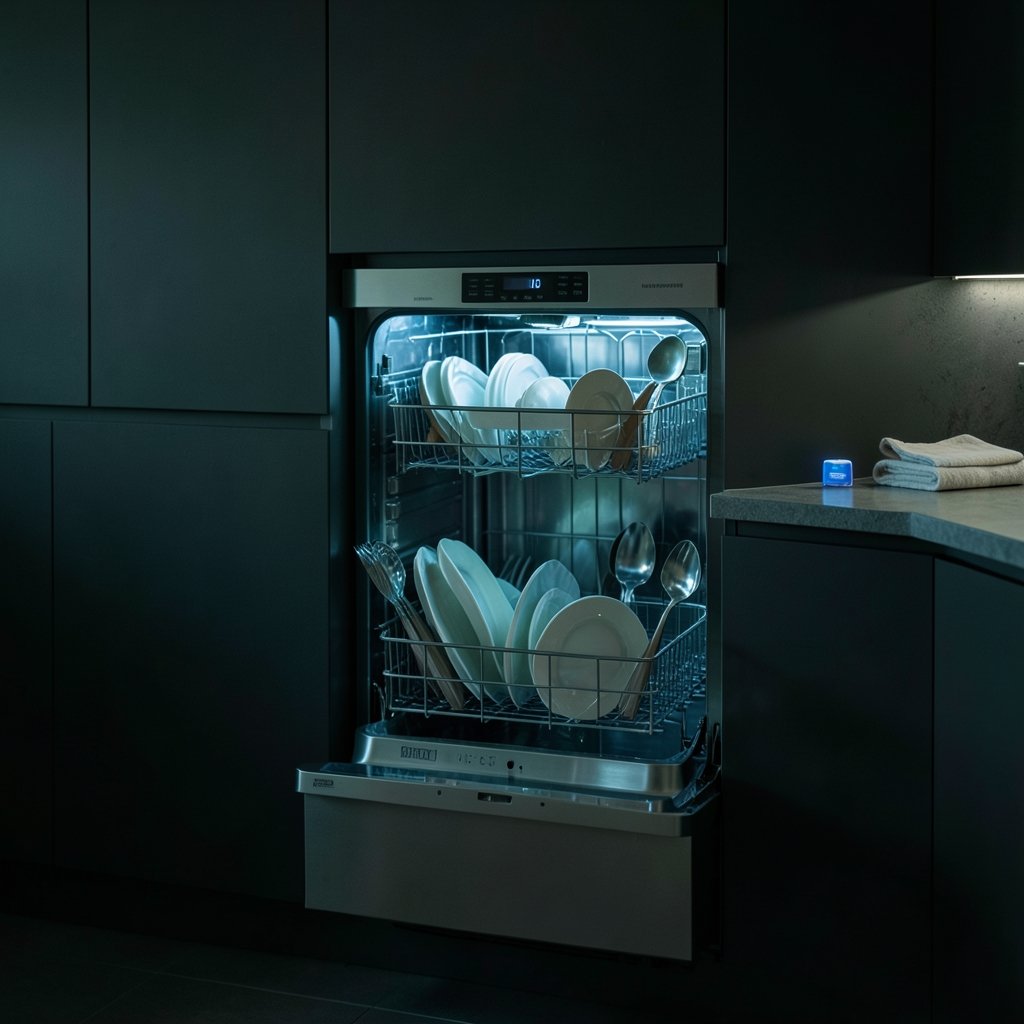
What if the smartest dishwasher purchase has almost nothing to do with the price tag on the showroom floor? That sounds like a sales pitch, but it is closer to arithmetic. Two machines can sit side by side, one at $549 and one at $899, and the cheaper one can end up costing more over eight years. The difference hides in energy use, water use, repair history, and whether the thing actually fits the hole in the counter.
This guide skips the “top ten” list format, because rankings go stale the moment a sale ends. Instead, it explains how value in a dishwasher really works, which numbers on the label matter, and where shoppers routinely lose money without noticing.
Why the Sticker Price Is Only Half the Story
A dishwasher is one of the few appliances that runs almost every day for a decade. That frequency is what makes value math so unusual. A refrigerator cycles on and off; a dishwasher in a busy household might complete 250 to 300 cycles a year, each one drawing electricity to heat water and running a pump for an hour or more.
Federal rules require dishwashers sold in the United States to meet maximum energy-use standards, and the ENERGY STAR program certifies models that go beyond the minimum. The practical takeaway is not the acronym itself but the yellow EnergyGuide label, which the Federal Trade Commission requires on the appliance. That label shows estimated annual energy use in kWh and estimated yearly operating cost. Reading it takes fifteen seconds and often separates two machines that look identical.
The gap between a thirsty older design and an efficient new one can be meaningful, but the gap between two new machines is usually smaller than shoppers expect. Where the real money hides is in the second and third costs: water, detergent, and repairs.
The water story, briefly
Modern dishwashers use roughly 3 to 5 gallons per normal cycle, a range that has fallen sharply over the past few decades. Older machines used far more. This matters because water is billed twice in most places, once when it arrives and once when it leaves as sewage.
It also explains a counterintuitive fact that surprises people: running a full dishwasher load generally uses less water and energy than hand-washing the same dishes under a running tap. The dishwasher wins because it recirculates a small amount of hot water rather than pouring fresh hot water down the drain continuously. So the value question is rarely “dishwasher or hand-washing.” It is “which dishwasher, used how.”
The Five Numbers That Decide Real Value
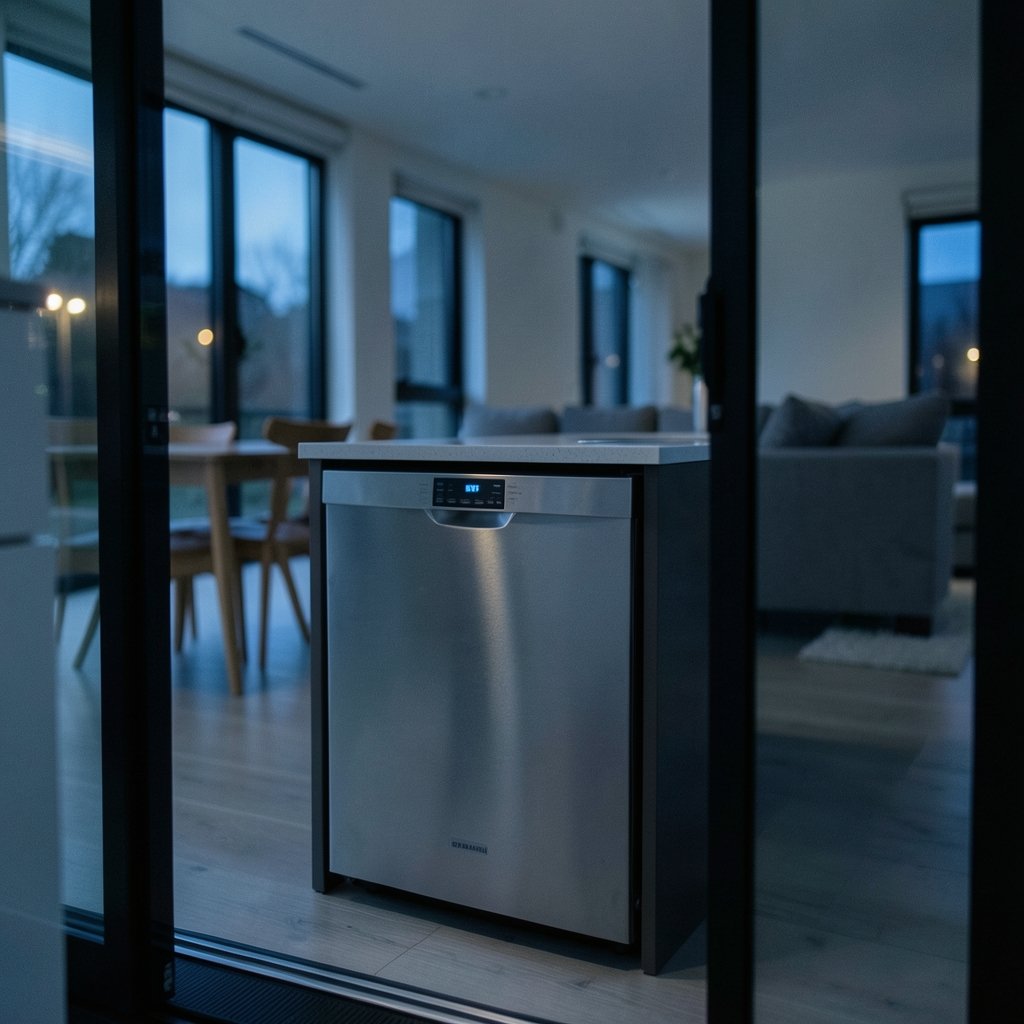
Most buying guides rank features by glamour. Racks that adjust are nice. A third rack for silverware is nice. But the numbers below are what separate a good purchase from an expensive mistake.
| Number | Where to Find It | Why It Matters |
|---|---|---|
| Annual energy use (kWh/year) | Yellow EnergyGuide label | Predicts electricity cost over the machine’s life |
| Water per cycle (gallons) | Manufacturer spec sheet | Drives water and sewer bills |
| Noise rating (dB) | Spec sheet or showroom demo | Affects whether you can run it during dinner |
| Cycle time (minutes) | Spec sheet | Longer cycles usually save energy but cost convenience |
| Warranty length (years) | Manual or product page | Signals how long the maker expects parts to last |
Here is how to read the noise number, since decibels confuse almost everyone. Under 45 dB is very quiet, quiet enough to run in an open-plan kitchen while people talk. Between 45 and 50 dB is quiet but audible. Above 50 dB becomes noticeable, and in a small apartment it can dominate the room. These bands are industry convention rather than a formal standard, but they hold up in practice.
Cycle time deserves a mention because it is the sneaky trade-off. Eco cycles often run two to three hours and use less energy, while a one-hour cycle heats water faster and draws more power. Neither is wrong. A household that runs the machine after dinner and empties it in the morning should default to the long cycle. A household hosting a dinner party at nine o’clock needs the fast one.
Fit and Installation: Where Budgets Quietly Break
Ask anyone who has returned a dishwasher and they will tell you the same thing: the machine was fine, the hole was not.
Standard U.S. dishwashers are 24 inches wide, with compact models at 18 inches. Cabinet cutouts vary by a fraction of an inch, and older kitchens are rarely square. A dishwasher that is a quarter inch too tall for the counter overhang becomes a frustrating afternoon. Measuring the opening’s height, width, and depth before shopping, plus checking that the door can open without hitting a drawer pull, prevents the most common and most avoidable return.
Two more practical points from real installations:
- Check the electrical and plumbing setup first. Most dishwashers need a dedicated circuit and a nearby hot water connection. A kitchen without them turns a simple swap into a project with a contractor’s invoice attached.
- Budget for the extras. Delivery, haul-away of the old unit, a new supply line, and a mounting bracket can add real money. A $600 machine can become an $800 purchase before it ever washes a plate.
The same discipline applies to other big-ticket purchases. Students setting up a first apartment often discover that the sticker price was never the whole number, a lesson covered well in this guide to college money management realistic plan students who want. Appliances follow the same logic as textbooks and rent: total cost, not headline cost.
Reliability Beats Features Every Time
A dishwasher with twelve cycles and a phone app is worthless if the control board fails in year three. Total cost of ownership is the phrase that captures this, and it weighs repair rates and service networks as heavily as purchase price.
Consumer advocacy organizations publish repair-rate surveys that rank brands by how often their machines need fixing. Those surveys are worth seeking out because they measure something no showroom can show you. A brand with a strong service network in your area is also worth more than a slightly cheaper brand with no authorized technician within an hour’s drive.
What actually works in practice, based on how these machines fail:
- Simple controls outlast complicated ones. Touch panels and Wi-Fi modules are common failure points. Mechanical buttons and dials are boring and durable.
- Stainless steel tubs generally outlast plastic tubs, especially in areas with hard water.
- A filter that is easy to remove gets cleaned. Self-cleaning filters sound convenient but can trap debris and smell. A removable filter that takes ten seconds to rinse is a genuine long-term asset.
- Hard water shortens appliance life. If the tap leaves white deposits, a rinse aid and periodic cleaning matter more than any feature on the spec sheet.
There is also a quiet money angle here that connects to how people think about spending. The psychology of small, repeated costs shows up everywhere, from appliances to aesthetics, which is part of why trends like old money nails quiet luxury manicure that refuses shout get so much attention. The pattern is the same: the visible price is loud, and the ongoing cost is the part nobody discusses.
When to Buy, and How Much to Spend
Timing is not a myth. Dishwasher prices move with retail sales cycles, and major U.S. holidays are when the deepest discounts tend to appear. Any “best for the money” claim is time-sensitive, so a shopper should check prices on the day of purchase rather than trusting a ranking written months earlier.
A rough spending framework helps more than a specific model recommendation:
- Set a ceiling that includes installation. Decide the all-in number before browsing, then subtract delivery and hookup costs.
- Filter by dB rating first if the kitchen is open. Noise is the feature people regret most and can least easily change later.
- Compare EnergyGuide labels between finalists. If two machines are within a few dollars a year of each other, choose on noise, racks, and warranty instead.
- Check the warranty on parts versus labor. A long parts warranty with a short labor warranty can still be expensive.
- Read the manual online before buying. It reveals cycle times, filter design, and installation requirements that marketing pages omit.
For anyone comparing costs across categories, the vocabulary itself can be a trap. Words like “cheap,” “affordable,” and “value” get used interchangeably when they mean different things, a distinction explored in this piece on money synonym which word use when it fits. A dishwasher that is cheap to buy and expensive to own is not good value, and the label on the box will never tell you which one you are holding.
The Habits That Protect the Investment
The machine’s lifespan depends heavily on how it is used, and these habits cost nothing:
- Scrape, do not rinse. Modern dishwashers and detergents handle food residue. Heavy pre-rinsing wastes hot water and defeats the efficiency advantage.
- Run full loads. Half loads use nearly the same water and energy as full ones.
- Clean the filter monthly. Most odors and poor cleaning traces back to a clogged filter.
- Use the right detergent for the water. Pods work well in most homes, but hard water may need a rinse aid boost.
- Check the spray arms occasionally. A blocked jet means uneven cleaning and a mystery that takes months to solve.
None of these require spending money. All of them extend the years before a replacement is needed, which is the single biggest lever on long-term value.
Conclusion
The best dishwasher for the money is not a model number. It is a method: read the EnergyGuide label, weigh decibels against your kitchen layout, measure the cabinet opening twice, and check repair history before falling for a feature list. A mid-priced machine with a stainless tub, simple controls, a removable filter, and a strong local service network will usually beat a discounted flagship with a touchscreen and a two-year labor warranty.
Value in appliances is cumulative. It shows up in the electricity bill, the water bill, the repair invoice you never receive, and the year you realize the machine is eleven years old and still quiet. Shoppers who do the arithmetic before the sale tend to be the ones who stop thinking about their dishwasher entirely, which is exactly the point.
FAQ
What is the most important number on a dishwasher’s EnergyGuide label?
The estimated annual energy use in kWh and the estimated yearly operating cost. Those two figures translate directly into money, while marketing terms like “eco” do not. Compare labels between finalists rather than against an absolute threshold.
Is a quieter dishwasher worth paying more for?
In an open-plan kitchen or a small apartment, yes. Noise is the feature owners most often wish they had prioritized, and it cannot be upgraded later. Under 45 dB is very quiet, 45 to 50 dB is quiet, and above 50 dB becomes noticeable during conversation.
How much water does a modern dishwasher use per cycle?
Roughly 3 to 5 gallons on a normal cycle, depending on the model and setting. That range is far below older machines and generally below hand-washing the same load under a running tap, which is why a full dishwasher load is usually the more efficient choice.
Should I buy a dishwasher with a plastic or stainless steel tub?
Stainless steel generally lasts longer, holds heat better, and resists staining, particularly with hard water. Plastic tubs cost less upfront. For a machine expected to run for a decade, the stainless tub is usually the better long-term purchase.
When is the best time of year to buy a dishwasher?
Prices move with retail sales cycles, and major U.S. holidays tend to bring the deepest discounts. Because pricing is time-sensitive, check current prices on the day you buy rather than relying on a ranking published months earlier.
How long should a dishwasher last?
Most households expect somewhere around a decade of service, though usage frequency, water hardness, and maintenance all shift that figure. Cleaning the filter monthly, running full loads, and avoiding heavy pre-rinsing are the habits that most reliably extend lifespan.



