
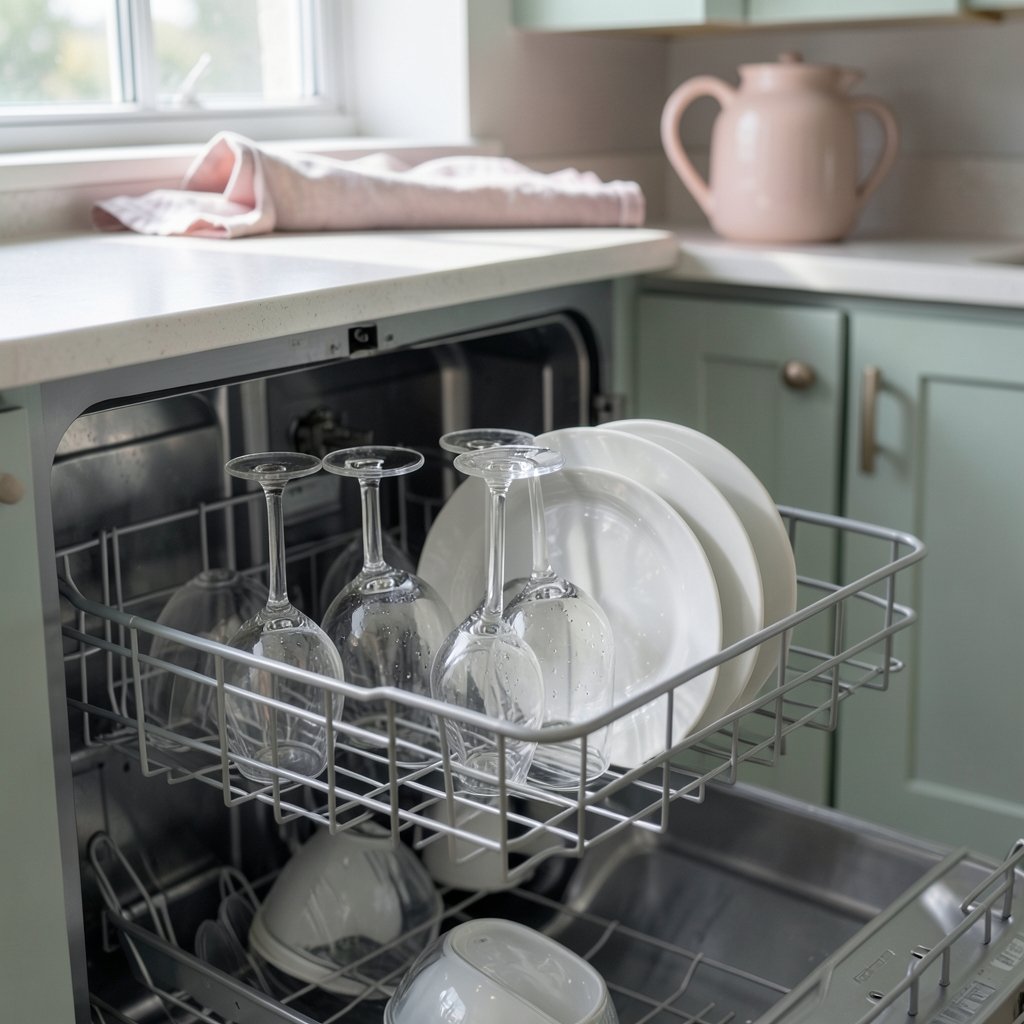
What if the dishwasher that tops one “best of” list would rank near the bottom on another? That happens constantly, because “best ranked” is not one ranking. A machine that wins on energy use can lose on cleaning power. The quietest model in a test lab may be slowest in a real kitchen. Anyone shopping for a dishwasher has probably noticed that every publication crowns a different champion, and each one sounds equally certain.
This guide unpacks what those rankings really measure, where the numbers come from, and how to read a spec sheet without getting fooled. It also covers the practical stuff reviews skip: loading habits, cycle choices, and the mistakes that make a good dishwasher look bad.
Why “Best Ranked Dishwasher” Has No Single Answer
Rankings are built from scores, and scores are built from weights. One tester may give cleaning performance 40 percent of the total score and noise 10 percent. Another may weigh energy and water use far more heavily. Change the weights, and the leaderboard reshuffles.
There is also the market problem. A model sold in Germany under one name may be a different machine from the one sold in Ohio under a similar name. Test procedures differ between regions, so a European “A” energy rating tells you almost nothing about how a US model performs on the federal test. Cross-market comparisons are unreliable, full stop.
Then there is timing. Reviewers retest and update their lists, sometimes twice a year. A ranking published eighteen months ago may include models that are no longer sold. Any “best” claim needs a date stamp and a note about which test cycle was used. Without those two details, a ranking is just an opinion with a table around it.
The Five Metrics That Decide Who Wins
Every credible ranking leans on the same small set of measurements. Understanding them is the fastest way to decode any list.
| Metric | What it measures | Why it splits rankings |
|---|---|---|
| Cleaning performance | Soil removal on standardized loads | Hard to test fairly; soils and loads vary by lab |
| Energy use | kWh per cycle, usually on an eco or normal cycle | Eco cycles are slow; fast cycles use more energy |
| Water use | Litres or gallons per cycle | Wide model-to-model spread, especially in eco mode |
| Noise | Sound level in dB(A) | Quiet models often trade speed or drying power |
| Cycle time | Minutes per full cycle | Efficient cycles frequently run two to four hours |
A dishwasher can lead on any one of these and trail on the rest. That is why a list that ranks by “overall score” is really ranking by the tester’s priorities, not yours.
Cleaning performance is harder to measure than it looks
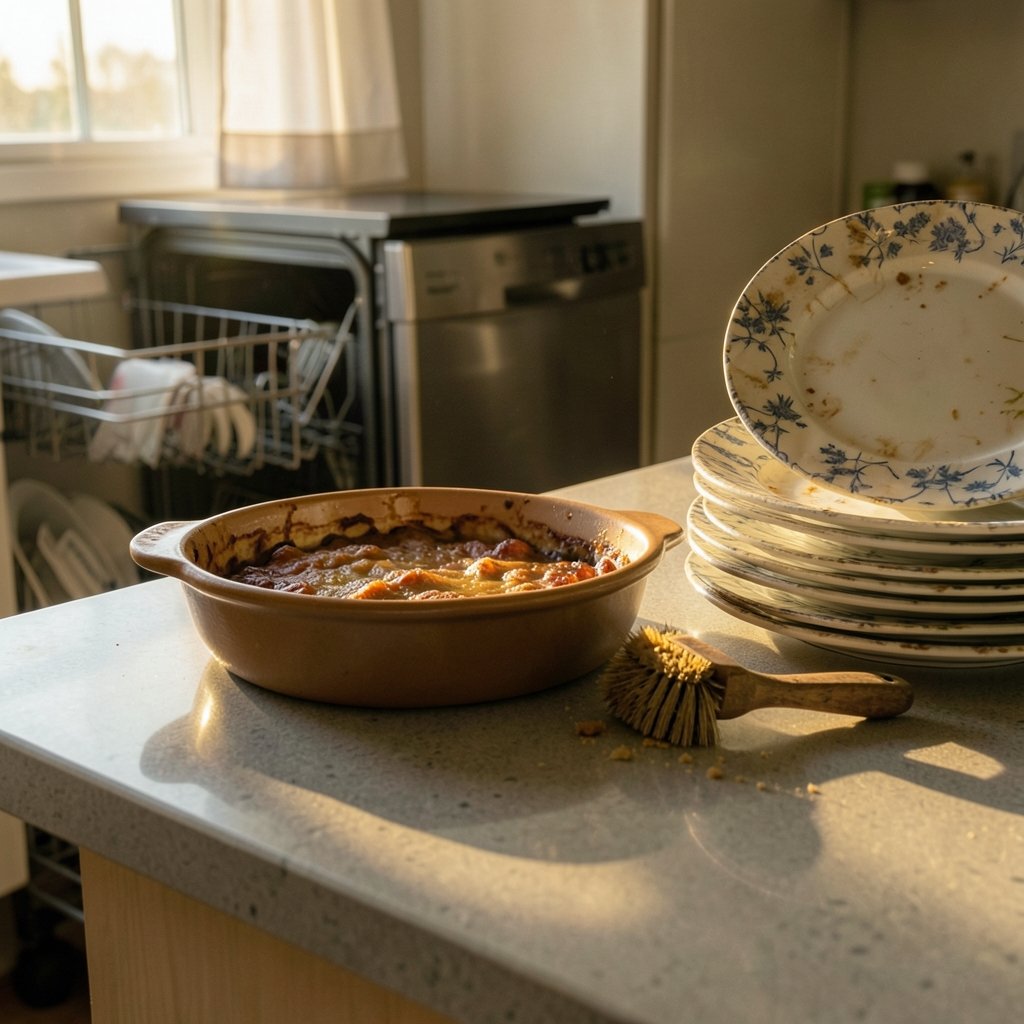
Labs apply standardized soils, typically a mix of baked-on starches, fats, and protein, to standardized dishes, then run a fixed cycle and score residue. The trouble is that real kitchens are messier and more random. A machine that aces a lab load can still struggle with a casserole dish left overnight. Treat cleaning scores as a useful signal, not a guarantee.
Energy and water figures come from regulated tests
In the European Union, dishwasher energy labels were rescaled in March 2021 under Regulation (EU) 2019/2017. The old A+++ to D scale was replaced by a simpler A to G scale, and the label now reports a measured eco programme. That rescale is why a machine that proudly claimed A+++ a few years ago might now show a C or D. Nothing about the dishwasher changed. The yardstick did.
In the United States, the yellow EnergyGuide label reflects testing under 10 CFR Part 430, Subpart B, Appendix C, the federal energy-conservation test procedure. Separately, the ENERGY STAR program certifies models that beat a defined efficiency threshold. The current dishwasher specification (Version 6.0) took effect back in 2013, and whether a newer version has been adopted is worth checking before relying on the badge alone.
The practical takeaway: EU and US figures are not directly comparable. Each is informative inside its own market and misleading outside it.
Noise ratings deserve a reality check
Noise is quoted in dB(A), and the rough convention is that anything under about 45 dB(A) counts as quiet for an open-plan kitchen. That is a convention, not a standard threshold. Decibels are logarithmic, so a 3 dB difference is an audible change in perceived loudness, not a rounding error. A model rated at 42 dB(A) is quieter than one at 45 dB(A), even though the numbers look close.
How to Read a Ranking Without Getting Fooled
Most shoppers skim the top three names and stop. A few minutes of closer reading saves a lot of regret.
- Find the test cycle. If the energy figure came from an eco cycle that runs three and a half hours, that is the trade-off you are buying.
- Check the date. Rankings older than a year may list discontinued models.
- Look at the weighting. A list that scores noise heavily will favor different machines than one focused on cleaning.
- Match capacity units. Place settings are the standard capacity unit, but test procedures differ between markets, so a 14-place-setting EU model and a 14-place-setting US model are not necessarily equal.
- Ignore the badge, read the number. A certification tells you a threshold was met. The actual kWh and litre figures tell you how far past it the model went.
Common mistakes shoppers make
The biggest one is buying on noise alone. A very quiet dishwasher often runs longer cycles and may dry less aggressively. If speed matters more than silence in a busy household, that trade can feel like a downgrade.
The second mistake is assuming a higher price means better cleaning. Price tracks build quality, brand, and features like third racks and adjustable tines far more reliably than it tracks wash performance.
The third is misreading capacity. Place settings are counted using a standardized load of plates, glasses, and cutlery. Real families load bowls, mugs, and odd-shaped items that eat space fast. A 13-place-setting machine packed with real-world dishes can feel tighter than the number suggests.
What Actually Works in a Real Kitchen
Spec sheets measure the machine. They do not measure how you use it. These habits matter as much as any ranking.
Scrape, don’t rinse. Modern detergents need food residue to work against, and most machines handle light scraping fine. Heavy rinsing wastes water and can leave the detergent under-activated. Scrape off solids, skip the pre-wash ritual.
Load for water flow, not for neatness. Spray arms need a clear path. Bowls facing up collect dirty water. Plates jammed against each other block spray. A slightly messy but open load usually beats a geometrically perfect packed one.
Use the right cycle for the job. Eco cycles are efficient because they are slow and use lower temperatures over longer periods. They are genuinely good for everyday loads. The heavy cycle exists for baked-on mess, not for routine dishes.
Keep the filter clean. Most modern dishwashers have a manual filter that needs rinsing every few weeks. A clogged filter is behind a large share of “my dishwasher stopped cleaning properly” complaints, and it is a two-minute fix.
Check the rinse aid. Rinse aid does most of the drying work in machines without a heated dry element. Skipping it is the single most common reason glasses come out spotted.
If laundry and household maintenance are part of your routine, the same principle applies elsewhere: small habits beat big interventions. The logic behind how to wash a hat without wrecking the brim or shape is not so different from loading a dishwasher well. Care in the details protects the item.
Matching the Ranking to Your Actual Priorities
The honest answer to “which dishwasher ranks best” is another question: best at what, for whom?
| If your priority is… | Weight this metric most | Accept this trade-off |
|---|---|---|
| Open-plan kitchen, TV nearby | Noise under ~45 dB(A) | Longer cycles, sometimes weaker drying |
| Lower utility bills | Energy and water per cycle | Eco cycles run two to four hours |
| Big family, daily heavy loads | Capacity in place settings | Larger footprint, more water per cycle |
| Fast turnaround between meals | Short cycle time | Higher energy use per wash |
| Long-term reliability | Build quality and warranty | Price premium, fewer flashy features |
A household of two running one light load a day has different needs than a family of five running two heavy ones. The ranking that fits is the one weighted toward your bottleneck. If speed is your bottleneck, a slow eco champion is the wrong machine no matter how high it placed.
The same logic shows up in career and money decisions, where the “best” option depends entirely on the metric being optimized. A ranking of the trades that make the most money, ranked by pay, only helps if you weight earnings above schedule, physical demands, and training time. Rankings are tools, not verdicts. (10 best ai video generators 2027 text video ranked)
Where Rankings Get Their Data, and Where They Don’t
Consumer testing organizations publish model-level rankings built on controlled lab runs. Their tables are typically behind a paywall, which means most shoppers see the headline verdict without the underlying scores. That is not a scandal, but it does mean you are trusting the tester’s methodology sight unseen.
Manufacturer spec sheets have the opposite problem. They are free and detailed, but they report the numbers the brand chose to highlight, usually from the most favorable test cycle. Neither source is dishonest. Both are incomplete.
The fix is triangulation. Read one independent ranking for relative performance, read the spec sheet for absolute numbers, and read owner reviews for the failure modes that show up after a year. When those three sources agree, you have a genuinely safe pick. When they conflict, the conflict itself is information.
The Bottom Line on Rankings
A best-ranked dishwasher is the one that wins on the metric you care about most, tested under conditions close to your own kitchen, on a date recent enough to matter. Everything else is marketing with a score attached.
The practical playbook is short. Decide your real bottleneck first, whether that is noise, speed, capacity, or running cost. Then read rankings through that lens, checking the test cycle and the publication date every time. Trust absolute numbers over badges and star ratings. And remember that a well-loaded, well-maintained mid-tier machine will outperform a neglected premium one in daily use.
That last point deserves emphasis. No ranking captures how a dishwasher performs after two years of unrinsed filters and overloaded racks. The machine is half the equation. The household is the other half.
FAQ
What does “best ranked dishwasher” actually mean?
It means a dishwasher placed at the top of a specific test or review ranking, and that ranking reflects whatever metrics the tester chose to weight. Cleaning performance, energy use, water consumption, noise, and cycle time can each produce a different winner. There is no universal best model, only a best fit for a particular household’s priorities.
Are EU and US dishwasher energy ratings comparable?
No. The European Union rescaled its dishwasher labels in March 2021 under Regulation (EU) 2019/2017, moving from an A+++ to D scale to a simpler A to G scale with a measured eco programme. The United States uses a separate federal test procedure under 10 CFR Part 430 and a yellow EnergyGuide label, plus optional ENERGY STAR certification. The test cycles and scoring differ, so figures from the two markets cannot be compared directly.
Is a quieter dishwasher always the better buy?
Not necessarily. Noise is usually quoted in dB(A), and under roughly 45 dB(A) is generally considered quiet for an open-plan kitchen, though that is a convention rather than a formal standard. Very quiet models often run longer cycles or dry less aggressively, because much of the noise comes from fans and pumps doing useful work. If speed matters more than silence in your home, a slightly louder machine may suit you better.
How much water does a dishwasher use per cycle?
It varies widely by model and cycle. Eco cycles commonly use somewhere in the range of 9 to 12 litres in Europe, while US models are often quoted in gallons per cycle. Because test procedures differ between markets, any single figure should be treated as model-specific rather than a general rule. Comparing two models on the same test cycle is the only fair comparison.
Why do dishwasher rankings change so often?
Two reasons. First, reviewers retest and update their lists as new models launch and old ones are discontinued. Second, manufacturers revise internal components without changing the model name, so a machine bought this year may not match last year’s test unit. A ranking without a date stamp and a stated test cycle is difficult to evaluate, which is why those details matter more than the position on the list.
What matters more than the ranking when buying a dishwasher?
Fit and habits. A machine that fits your kitchen, your typical load size, and your daily schedule will outperform a higher-ranked model that does not. Beyond that, basic maintenance does more for performance than any spec upgrade: rinsing the filter every few weeks, using rinse aid, loading so spray arms can reach everything, and choosing the eco cycle for everyday loads rather than the heavy one.
Conclusion
The search for the best ranked dishwasher ends not with a single model name but with a clearer question: best at what? Once you know whether noise, speed, capacity, or running cost is your real constraint, rankings stop being confusing and start being useful. Read them with the test cycle in hand, check the date, and trust the absolute numbers over the badges. Then load the thing properly, clean the filter, and let a good machine do its job.



