
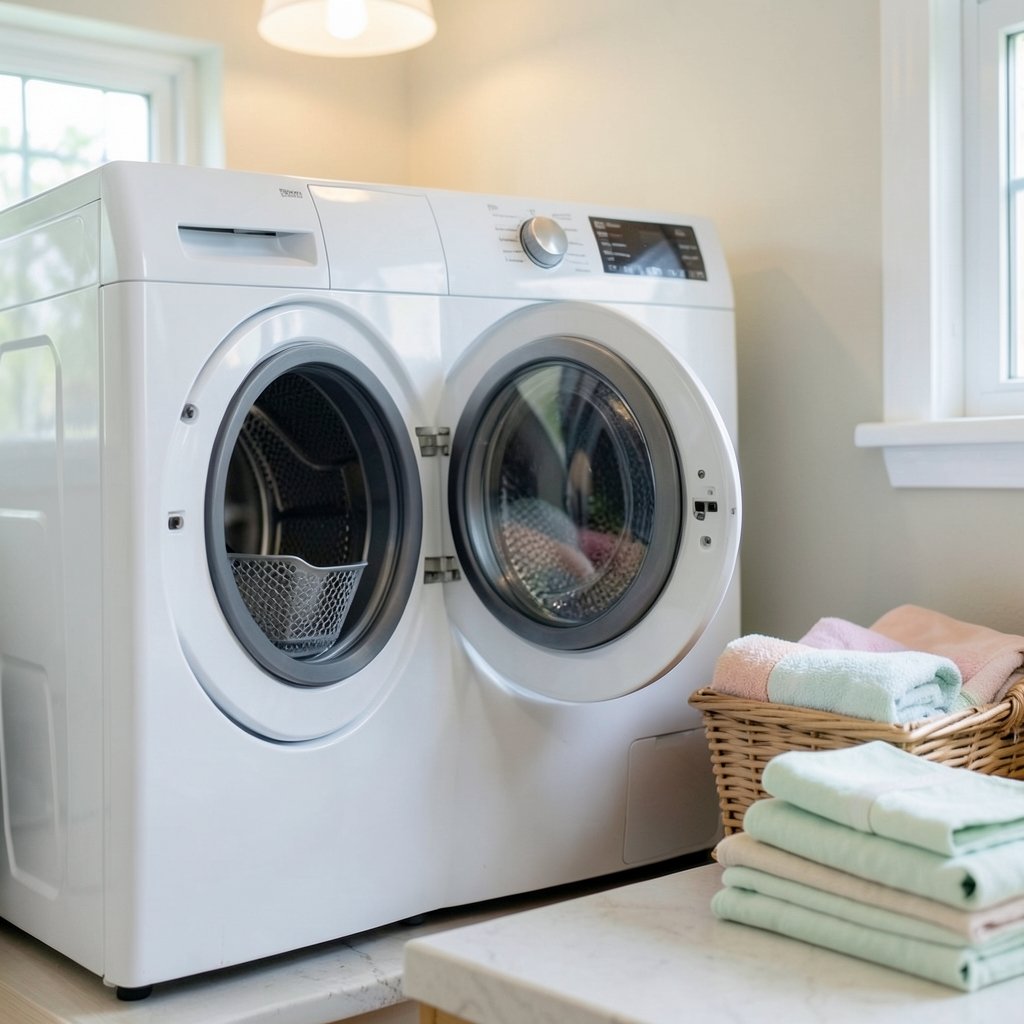
What if the best laundry dryer for your home is not the one with the flashiest features, but the one that matches how you actually do laundry? That question matters more than most shopping guides admit. A dryer that saves energy but takes three hours per load can frustrate a busy family. A fast, powerful machine that needs a long metal vent run may not fit a small apartment at all. The right answer depends on your space, your budget, your utility setup, and how much you care about running costs.
This guide breaks down the real differences between dryer types, explains the efficiency ratings shoppers see in stores, and shows where most buying mistakes happen. It also covers installation and safety details that decide whether a good machine performs well or wastes money for years.
Start With the Type, Not the Brand
Most buying advice jumps straight to brand names. That is backwards. The dryer type determines your installation needs, cycle times, energy use, and even which room the machine can live in. There are two broad families in the North American market: vented dryers and ventless dryers.
Vented dryers push hot, moist air out through a duct. They are the classic choice in US homes, available in electric and gas versions, and generally the cheapest to buy. Ventless dryers condense moisture into a tank or drain instead of exhausting it outdoors. They come in two main forms: condenser dryers, which use a heat exchanger, and heat-pump dryers, which reuse heat and are the most energy-efficient type available.
| Type | How it works | Strengths | Trade-offs |
|---|---|---|---|
| Vented electric | Heated air pushed through duct | Low purchase price, fast cycles, simple design | Needs outdoor venting, higher energy use |
| Vented gas | Gas burner heats air, vented outside | Fast, often cheaper per load than electric | Needs a gas line and venting, professional install |
| Condenser (ventless) | Moisture condensed, water collected | No duct needed, flexible placement | Slower cycles, needs water tank emptied or drain line |
| Heat pump (ventless) | Reuses heat via a pump system | Lowest energy use, gentle drying | Highest purchase price, longest cycles, sensitive to room conditions |
In Europe, vented dryers have largely disappeared from stores because of efficiency rules. Since 1 March 2021, tumble dryers sold in the EU carry a rescaled A–G energy label that shows energy use per 100 cycles and a noise rating, replacing the old A+++ scale. Most of the most efficient models on that label are heat-pump machines. US shoppers instead see the Combined Energy Factor (CEF), measured in pounds of clothes dried per kilowatt-hour under a federal test procedure. Higher CEF means better efficiency. The two rating systems are not comparable, so do not try to convert one into the other.
How Much Does Efficiency Really Save?
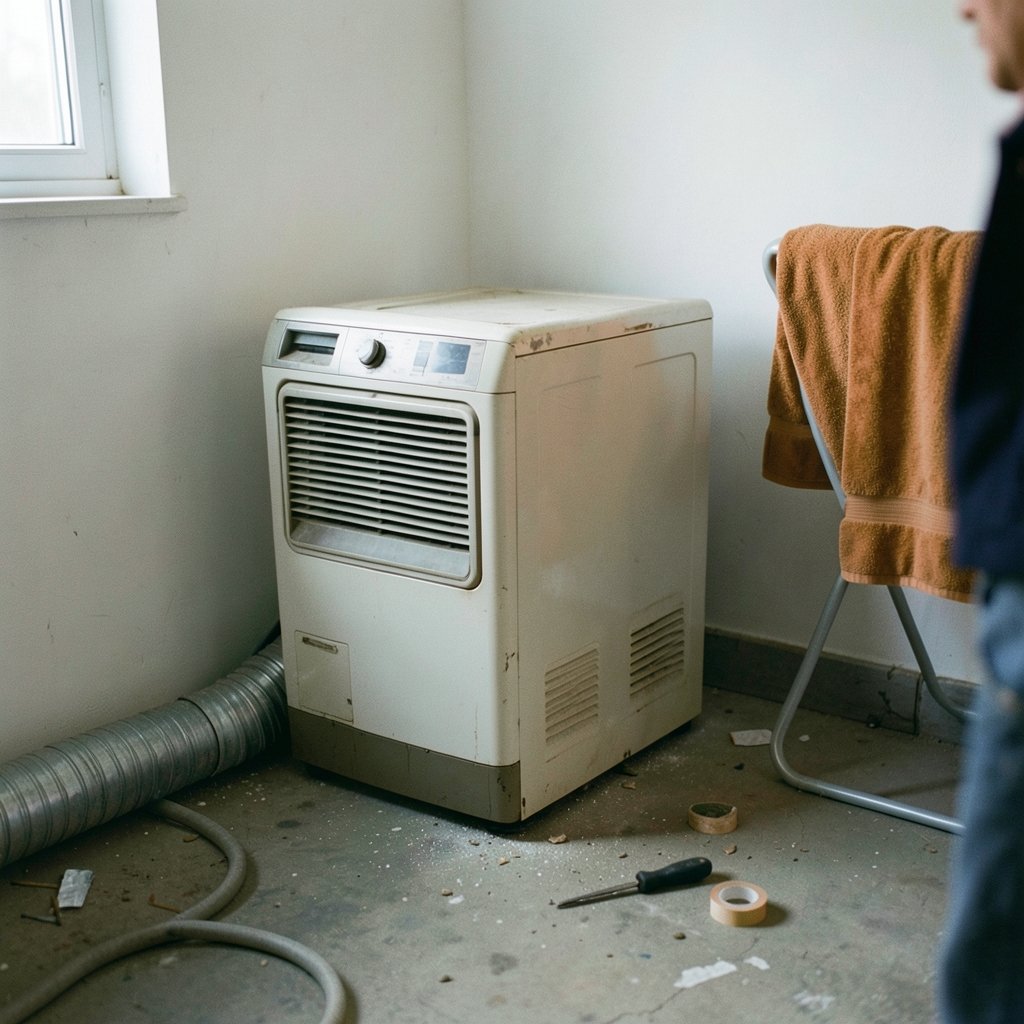
Heat-pump dryers win on paper, and the gap is real. They typically use a fraction of the energy of a conventional vented electric dryer per load. But the savings come with conditions. Heat-pump performance depends heavily on the room’s temperature and humidity, so a cold garage or a damp basement undercuts the advantage. Cycle times also run longer, often well past two hours for a full load.
For a household doing many loads per week, the energy savings can add up over the machine’s life. For someone doing two loads a week in a mild climate, a mid-priced vented electric dryer may cost less overall even with higher energy bills. Gas dryers complicate the math further: they often cost less per load to run than electric vented models, but they need a gas line and proper venting, and installation must be done by a qualified professional.
Practical tip: check whether your home already has a 240-volt outlet or a gas hookup before settling on a model online. Retrofitting a circuit or running a gas line can add hundreds to the real cost. Also measure the doorway and the laundry alcove as well as the machine’s width. Depth matters more than people expect, especially with ventless models that need clearance behind them.
Sizing and Capacity: Cubic Feet Versus Kilograms
US dryers are sized in cubic feet, typically 6 to 9 cu ft. EU machines are rated in kilograms of cotton, usually 7 to 9 kg. These numbers are not directly comparable, and marketing language blurs the difference further. A large drum helps bulky items like comforters dry evenly, but an oversized dryer used for small loads wastes energy and space.
A rough guide that works in practice:
- One or two people: 6 to 7 cu ft is usually plenty.
- Three or four people: 7 to 8 cu ft handles family loads without constant reloading.
- Large households or frequent bedding washing: 8 to 9 cu ft reduces the number of cycles.
Match the dryer’s capacity to the washer. A dryer noticeably smaller than the washer means splitting loads, which adds time and energy. If you are shopping for a matched pair, it helps to compare washer-dryer combinations before committing. A guide to the washing machine with dryer best brand options can clarify which pairings actually make sense for your space.
Features That Earn Their Price
Dryer marketing is crowded with extras. Some genuinely improve results, and some just add cost. Here is how to sort them.
Moisture sensors are the single most valuable feature. They end the cycle when clothes are actually dry instead of running a fixed timer, which saves energy and reduces overdrying. Almost every mid-range and premium dryer has them now, so treat their absence as a red flag.
Steam refresh cycles reduce wrinkles and odors on lightly worn clothes. They help people who dry-clean less and refresh more, but they are not required.
Sanitize cycles use higher heat to reduce bacteria, which matters for households with allergies or illness. Check that the cycle is certified if that claim drives your purchase.
Reversible doors and stacked configurations are small details with big daily impact in tight laundry closets. So is a lint filter that is easy to reach and clean.
Smart app controls are convenient but rarely change drying performance. Do not pay a premium for connectivity alone.
One underrated consideration: heat-pump dryers often have two lint filters, and both need cleaning after every load or efficiency drops fast. If nobody in the household will commit to that habit, a simpler vented machine may serve better.
Installation and Safety: Where Good Dryers Go Bad
A dryer is only as good as its installation. Lint buildup is a leading cause of home clothes-dryer fires, and blocked or crushed ducting raises both fire risk and energy use. Rigid or semi-rigid metal duct is the standard; plastic foil duct should be avoided. Short, straight runs with few elbows perform best, and the duct should be cleaned regularly.
Learning how to clean dryer vent step by step guide that prevents fires properly is one of the highest-value maintenance skills a homeowner can pick up. It takes minutes and directly reduces risk.
Ventless dryers skip the duct but introduce their own routines. Condenser and heat-pump models collect water in a tank that must be emptied, or they can drain continuously if plumbed. Their heat exchangers need periodic cleaning, and the room needs some ventilation so moisture and heat do not build up. In small apartments, that means leaving a door open or running a fan.
Common installation mistakes that show up again and again:
- Crushing the duct behind the machine. Pushing the dryer too close to the wall bends semi-rigid duct and chokes airflow.
- Using too long a duct run. Every extra foot and elbow cuts performance.
- Skipping the level check. An unlevel dryer vibrates, makes noise, and wears out faster.
- Ignoring the vent material. Foil or plastic flex duct is a known hazard.
- Forgetting the outdoor flapper. A stuck or lint-clogged exterior vent cap blocks exhaust.
Matching the Dryer to Special Loads
Some households have drying needs that push them toward specific machines. Delicates and wool benefit from low-heat and sensor-driven cycles, which heat-pump dryers handle gently because they dry at lower temperatures. Bulky bedding needs drum volume and a good moisture sensor more than raw heat. Workwear and towels tolerate higher heat and dry fast in vented machines.
There is also a crossover crowd: people who dry 3D printer filament in the same utility space as laundry. Those are different machines with different jobs, and mixing up the equipment wastes money. A comparison of filament dryer vs dry box drying vs storing 3d printer setups explains why a laundry dryer is the wrong tool for filament, even though both involve heat and moisture.
What Actually Works in Practice
Ask anyone who has owned several dryers and a pattern emerges. The machines people love are rarely the ones with the most features. They are the ones that dry a full load in a predictable time, have filters that are easy to clean, and fit the space without fuss.
A few field-tested habits make any dryer perform better:
- Clean the lint filter every load. This is not optional maintenance; it is the difference between a safe dryer and a risky one.
- Shake out clothes before loading. Tangled items dry unevenly and trigger longer sensor cycles.
- Do not overload. Air needs to move. A stuffed drum means damp patches and repeat cycles.
- Run consecutive loads back to back. The machine is already warm, which shortens the next cycle.
- Check the exterior vent twice a year. A quick look from outside catches blockages early.
Buyers also consistently underestimate noise. Heat-pump and condenser dryers tend to run quieter than vented models, which matters if the laundry is near a bedroom or living area. If quiet operation is high on your list, listen to a demo unit or read owner reports rather than trusting the spec sheet.
How to Choose in Five Steps
A simple decision sequence cuts through most of the confusion:
- Check your hookups. Gas line, 240-volt outlet, or neither? This narrows the field immediately.
- Decide vented or ventless. No outdoor vent access means condenser or heat pump.
- Set a budget that includes installation. Duct work, a new circuit, or a gas line changes the total.
- Prioritize moisture sensing and easy maintenance. These drive daily satisfaction more than any app.
- Match capacity to your household and washer. Oversized wastes space; undersized wastes time.
Conclusion
The best laundry dryer is not a single model or brand. It is the machine that fits your hookups, your room, your load volume, and your willingness to maintain it. Heat-pump dryers lead on efficiency and gentleness but demand patience and careful room conditions. Vented electric and gas dryers remain fast, affordable, and simple, provided the ductwork is short, metal, and clean. Condenser models bridge the gap for homes without venting.
Get the fundamentals right, meaning the type, the installation, and the maintenance routine, and almost any well-chosen dryer will serve for a decade or more. Skip those fundamentals, and even a premium machine will underperform. Start with your space and habits, and the right model becomes obvious.
Frequently Asked Questions
Are heat-pump dryers worth the extra cost?
They are worth it for households that do many loads per week and can keep the machine in a temperature-controlled room. The energy savings are real, and the lower drying temperatures are gentler on fabrics. For light users or cold utility spaces, a vented or condenser dryer often delivers better value.
How often should a dryer vent be cleaned?
Clean the lint filter after every load and inspect the full duct run at least once a year, more often in heavy-use homes. If loads start taking longer or the machine feels hot to the touch, check the vent immediately rather than waiting for the annual pass.
Is a gas dryer better than an electric one?
Gas dryers often cost less per load to run and heat up quickly, but they require a gas line and professional installation. Electric dryers are simpler to install where a 240-volt circuit exists. The better choice depends on which hookup your home already has.
Why do ventless dryers take so long?
Condenser and heat-pump dryers dry at lower temperatures and recirculate air rather than exhausting it, so cycles run longer. That gentler process protects fabrics and saves energy, but it means planning ahead rather than rushing a load before work.
What size dryer does a family of four need?
A drum of about 7 to 8 cubic feet usually handles a family of four comfortably, especially if it matches the washer’s capacity. Larger drums help with bedding and bulky items, while smaller drums are fine for couples or singles.
Can a dryer catch fire if it is well maintained?
The risk drops sharply with regular lint removal and a clean, metal duct, but it never reaches zero. Lint accumulation remains a leading cause of dryer fires, so treat filter cleaning and annual vent checks as required safety tasks, not optional chores.



