Which dishwasher brand will still be running quietly ten years from now, and which one will leave you mopping up a flooded kitchen at 11 p.m.? That question sits behind nearly every dishwasher purchase, and the honest answer is more complicated than any single “best brand” list suggests. Reliability rankings come from very different sources, they measure different things, and they often disagree with each other. Understanding where those numbers come from matters as much as the numbers themselves.
Why There Is No Single “Most Reliable” Answer
Shoppers often expect a clean, definitive winner. What they find instead is a patchwork of ratings that point in slightly different directions. That is not because the data is bad. It is because “reliable” means different things to different people.
Consumer Reports builds brand-level reliability ratings from member surveys about problems with appliances they actually own. Which? does something similar for the UK market. Retailers like Yale Appliance publish annual reports based on their own service-call records. J.D. Power measures satisfaction, which is a related but separate concept. Each method captures a slice of reality, and each has blind spots.
There is also a market problem. The brands sold in the US and the brands sold in the UK are not the same lineup, and the survey populations differ. A brand that tops a UK reliability chart may barely register in a US dataset. So any claim that one brand is “the most reliable” needs three qualifiers attached: which source, which year, and which market.
What the Main Reliability Sources Measure
Before trusting any ranking, it helps to know what each source is actually counting. The table below breaks down the major players.
| Source | What It Measures | Method | Key Limitation |
|---|---|---|---|
| Consumer Reports | Brand reliability and performance | Member surveys plus lab testing | Rankings are largely paywalled |
| Which? | UK brand reliability | Member surveys plus lab testing | UK-only brand lineup |
| Retailer service reports | Repair frequency by brand | Service-call records from one retailer | Reflects a single customer base |
| J.D. Power | Customer satisfaction | Survey of recent buyers | Satisfaction is not failure rate |
| Energy Star | Energy and water efficiency | Certification against EPA/DOE criteria | Says nothing about durability |
That last row trips up a lot of buyers. Energy Star is a government program that certifies efficiency, not longevity. A dishwasher can carry the label and still break down in year three. Efficiency and reliability are separate questions, and conflating them leads to bad decisions.
The Brands That Keep Coming Up

Across trade commentary and repair-industry discussion, two European names appear again and again at the top of reliability conversations: Bosch and Miele. Repair technicians have historically spoken well of both, and trade surveys have often ranked them highly. This is a pattern rather than a single citable dataset, and it shifts from year to year, but it is persistent enough to be worth noting.
At the other end, some mass-market lines from large US appliance groups have drawn more repair complaints over the years. Again, this is a general pattern from trade commentary, not a hard statistic, and individual models vary enormously within any brand family.
Here is the practical takeaway: brand-level ratings are a starting point, not a verdict. A well-regarded brand can produce a lemon model, and a mid-tier brand can produce a workhorse. Model-level research matters as much as brand reputation. (Spider man brand new day showtimes find book seats)
Why Brand Rankings Disagree With Each Other
It can be genuinely confusing when one source praises a brand and another criticizes it. The disagreement usually comes down to methodology.
Survey-based scores ask owners whether they have had problems. That captures the lived experience of people who bought the appliance, but it depends on memory, sample size, and who bothers to respond. Service-call data counts actual repairs, which is closer to hard evidence, but it only covers customers of one retailer in one region. Satisfaction studies capture how people feel about their purchase, which can be influenced by price, features, and expectations rather than pure durability.
None of these is wrong. They are answering different questions. A smart shopper reads several and looks for the pattern that survives across all of them.
Practical Tips That Actually Improve Reliability
Buying the right brand is only half the job. How a dishwasher is installed, used, and maintained has a huge effect on how long it lasts. These habits make a real difference.
- Check the installation as well as the machine. A unit that is not level, a kinked water line, or a drain hose without a proper high loop causes problems that look like brand failures but are installation faults.
- Use the correct detergent and rinse aid. Cheap detergent that leaves residue can clog filters and spray arms over time. Rinse aid helps drying and reduces mineral buildup.
- Clean the filter monthly. Food debris and grease accumulate quickly. A clogged filter forces the pump to work harder and is one of the most common causes of premature failure.
- Run a hot cycle regularly. Occasional hot washes help clear grease from internal parts. Running only eco cycles at low temperatures can let residue build up.
- Do not overload the unit or block the spray arms. Dishes that block rotation lead to poor cleaning, which leads to rewashing, which adds wear.
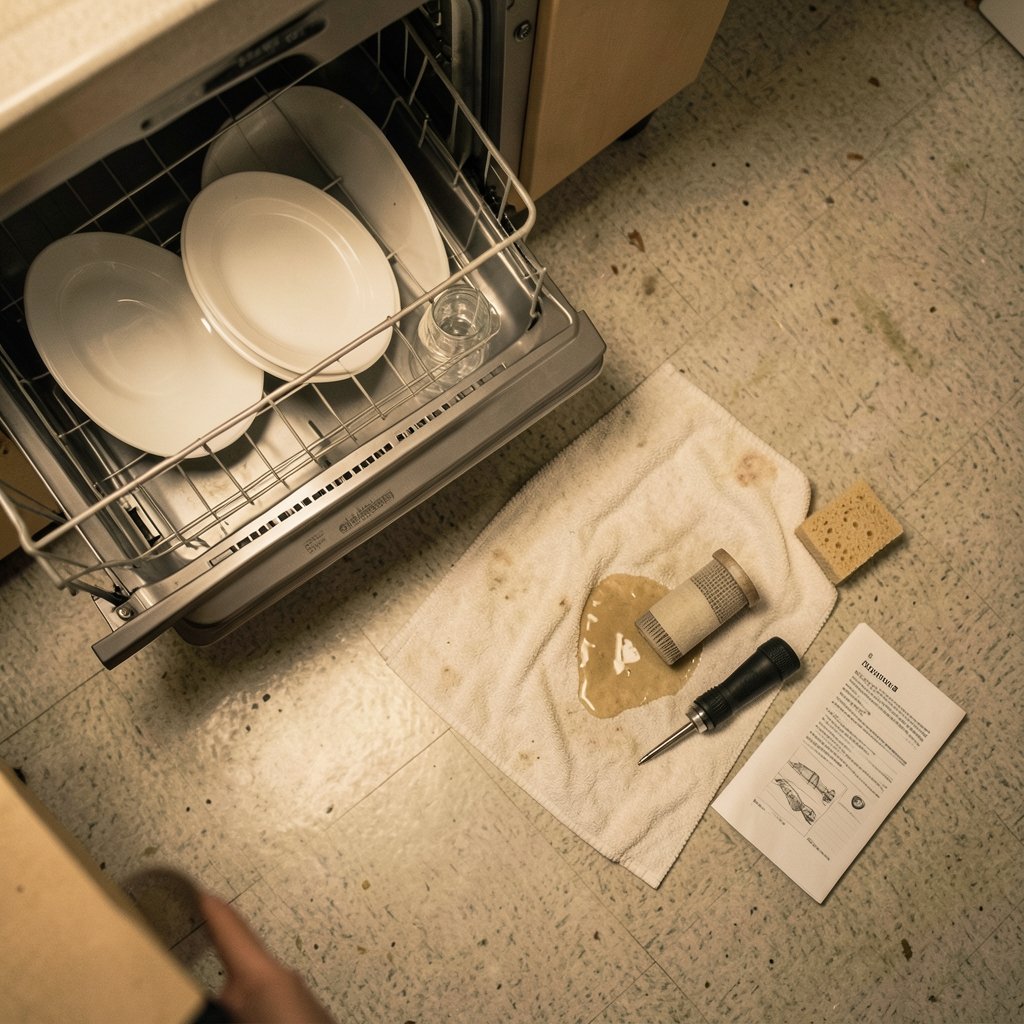
- Fix small leaks immediately. A slow drip under the unit is an early warning. Ignoring it turns a cheap fix into a floor replacement.
Common Mistakes Buyers Make
Some purchasing habits quietly undermine reliability before the machine is even delivered.
The biggest mistake is treating warranty length as a reliability score. Most dishwasher warranties run about a year for parts and labor, with longer coverage on certain components like racks or the tub. A longer warranty signals manufacturer confidence, but it is not a measured failure rate. It tells you how much risk the company is willing to absorb, not how often the machine breaks.
Another common error is buying on efficiency alone. Energy Star certification is genuinely useful for utility bills, but it should never be the deciding factor in a durability decision. Efficiency and reliability are independent traits.
Shoppers also tend to overweight a single review or a single bad experience. One loud complaint online does not define a brand, and one glowing review does not either. Look for patterns across many owners and multiple sources.
Finally, many buyers skip the model-level research. They pick a brand they trust and grab whatever model is on sale. Within a single brand, build quality can vary significantly between entry-level and premium lines.
How to Compare Two Brands Before You Buy
When two brands look equally good on paper, a structured comparison cuts through the noise. Work through these questions in order.
First, check whether the brand appears in more than one independent reliability dataset, and note the year of each. A brand that ranks well across multiple sources and multiple years is a stronger signal than one that tops a single list once.
Second, look at the specific model rather than the badge. Search for repair histories and owner discussions about that exact model number.
Third, weigh the availability of parts and service in your area. A reliable machine with no local technician is a frustrating machine. Ask who services the brand near you before you commit.
Fourth, compare the actual failure modes owners report. Some brands fail at the pump, others at the control board, others at the door latch. Knowing the typical weak point helps you judge whether a repair will be cheap or painful.
If you want a broader sense of how brands build trust over decades, the story of how Ball watches built a railroad brand that still glows today shows how reputation compounds when a company sticks to one standard. Appliance brands work the same way: consistency over time is the real signal.
What Efficiency Ratings Do and Don’t Tell You
Energy Star has certified dishwashers since 1992, and the program sets clear criteria for energy and water use. That is valuable information. Lower water and electricity consumption adds up over a decade of daily use.
But the label says nothing about how long the machine will last. A dishwasher can be both highly efficient and prone to failure. Buyers who assume the certification implies quality are reading more into it than it delivers. Treat efficiency as one column in your comparison table, not the whole table.
The same logic applies to feature lists. More cycles, more sensors, and more electronics mean more parts that can fail. Sometimes a simpler machine is the more reliable one.
Reading Reviews Without Getting Fooled
Online reviews are useful, but only if you read them strategically. Filter for owners who have had the machine for a year or more, since early reviews mostly reflect the honeymoon period. Look for repeated complaints about the same component rather than one-off rants. And pay attention to how the manufacturer responds to warranty claims, because that tells you how a failure will actually be handled.
It also helps to understand how different kinds of content shape your expectations. A breakdown of how a beauty brand’s Meta ads strategy for 2025-2026 drives engagement makes the same point in a different industry: what you see online is curated, and the loudest voices are not always the most representative. The same skepticism that helps you evaluate marketing claims helps you evaluate appliance reviews.
Where Brand Reputation Really Comes From
Durability reputations are built slowly and lost quickly. A brand earns trust by shipping machines that survive a decade of daily use, and it loses that trust the moment a generation of models starts failing at the pump or the control board.
That is why older trade commentary still carries weight. Technicians who have repaired thousands of units develop an intuition for which brands come back to the shop and which ones quietly keep running. Their perspective is not a formal dataset, but it is grounded in repeated observation.
It is also why a single strong year does not settle the question. One good product cycle is a data point. A decade of consistent performance is a reputation.
Conclusion
So which dishwasher brand is the most reliable? The truthful answer is that no single source can crown a winner, and anyone who claims otherwise is overselling their evidence. The strongest signal comes from looking at several independent sources together, checking the year and market behind each one, and then narrowing down to the specific model you plan to buy.
Bosch and Miele come up repeatedly in reliability discussions, and that pattern is worth taking seriously. But the pattern matters more than any single ranking, and the model matters more than the badge. Combine that research with a careful installation, monthly filter cleaning, and prompt attention to small leaks, and you will get far more years out of your dishwasher than the brand name alone could promise. Reliability is partly what you buy and partly what you do with it.
FAQ
What is the most reliable dishwasher brand overall?
There is no consensus winner, because reliability rankings come from different sources that use different methods and often disagree. Bosch and Miele appear frequently at the top of repair-industry commentary and trade discussion, but shoppers should check the current edition of multiple independent sources rather than trusting a single list.
Is Consumer Reports the best source for dishwasher reliability?
It is one of the most cited independent sources in the US, using member surveys plus lab testing. However, its brand reliability rankings are largely behind a paywall, so readers may not be able to verify specific scores directly. It is best used alongside other sources rather than on its own.
Does a longer warranty mean a dishwasher is more reliable?
No. Most dishwasher warranties run about a year for parts and labor, with longer coverage on some components. A longer warranty signals manufacturer confidence, but it is not a measured failure rate and should not be treated as a reliability score.
Does Energy Star certification mean a dishwasher will last longer?
No. Energy Star certifies energy and water efficiency against EPA and DOE criteria. It says nothing about durability. A dishwasher can be Energy Star certified and still be unreliable, so efficiency and reliability should be evaluated as separate questions.
Why do US and UK reliability rankings differ?
The brands sold in each market are not the same, and the survey populations and methods differ. Which? covers the UK market while Consumer Reports covers the US. A brand that ranks highly in one country may not even be widely sold in the other, so any “most reliable” claim should name its market.
How can I make my dishwasher last longer regardless of brand?
Clean the filter monthly, use quality detergent and rinse aid, run a hot cycle occasionally, avoid blocking the spray arms, and fix small leaks immediately. Proper installation with a level unit and a correctly looped drain hose also prevents many failures that get blamed on the brand.