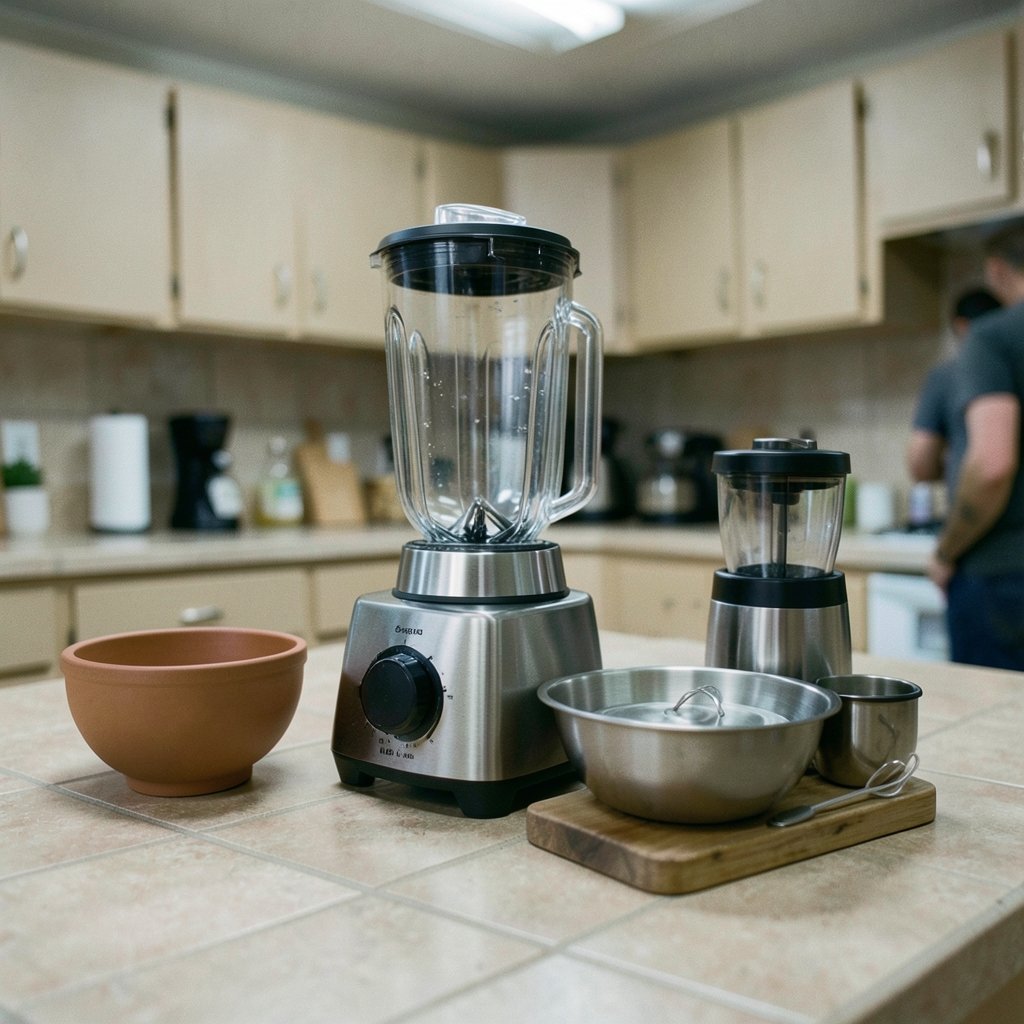
What if the real problem with your kitchen isn’t a lack of appliances, but too many of them? A blender, a chopper, a dough hook, a grinder, each with its own motor and its own patch of counter. The combo machine promises to end that pile-up. The catch is that most combos are a good blender with a mediocre processor bolted on, or the reverse.
This shortlist covers seven named systems that get the balance right, plus the numbers that actually predict whether a shared base will handle both jobs. Every model below comes from published comparison testing, and the specs are quoted as the sources state them, not rounded or guessed.
The Shortlist at a Glance
| Model | Type | Stated power | Blender capacity | Processor bowl | Best for |
|---|---|---|---|---|---|
| Ninja CrushBoss | All-in-one system | Not stated in source | Full-size pitcher plus tumbler | Full bowl with 13 cm feed chute | Replacing several appliances at once |
| nutribullet Triple Prep System NBKS50100 | 3-in-1 system | 1500W | 64 oz (1.9 L) | Included bowl | Smoothie drinkers who also cook |
| Oster 6878000N01 | Blender with chopper attachment | Not stated in listing | 6-cup glass jar | 3-cup chopper | Budget buyers who want glass |
| Oster TB401 | Blender with processor tools | Not stated | Not stated | Chopping blade, dough blade, slicing/shredding disc | Simple dough and slicing jobs |
| Linea Tegno PRO-FP8001 | 5-in-1 stainless machine | Not stated | 2.7 L | 2.3 L | European buyers on a tight budget |
| Goelunmy 3-in-1 | Entry-level combo | 700W | Large pitcher | 50-ounce chopper | First combo, smallest spend |
| 1300W all-in-one (2 L bowl class) | Multi-attachment system | 1300W | 1.5 L glass | 2 L | Dough, ice, and family batches |
Two things jump out. First, wattage is not the whole story. Second, bowl size is where combos quietly fall short. The numbers below explain why.
How These Combos Actually Differ
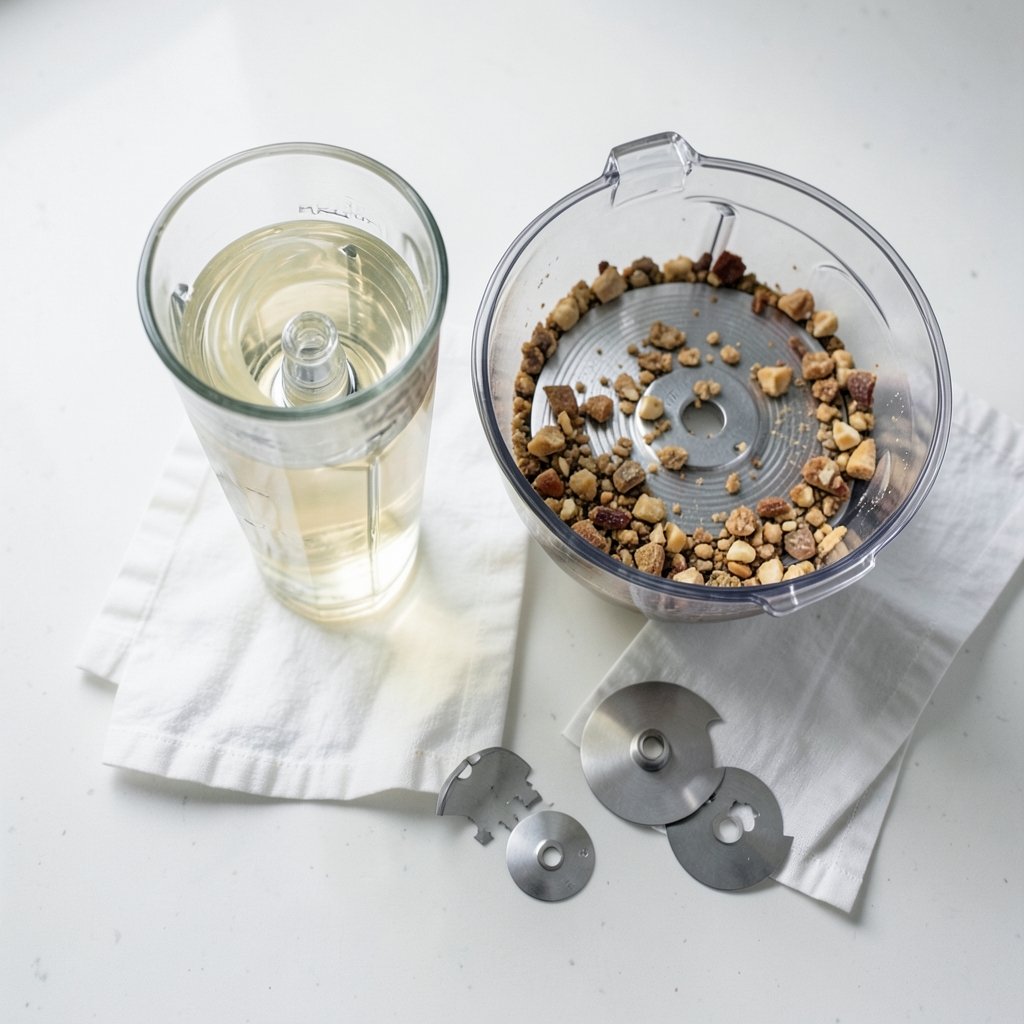
A blender jar is tall and narrow, with the blade at the bottom. Its shape creates a vortex that pulls food back down into the blade, but that circulation only works when there is enough liquid to carry the solids. Strip the liquid away and the load rides up the walls while the motor spins freely, cutting nothing.
A food processor works the opposite way: a wide, shallow bowl and a flat cutting disc, built for torque rather than speed. A shared base has to serve both geometries, and how well it does depends on four figures: motor wattage, jar volume, bowl capacity, and usable attachments. Combination systems typically run 1,000 to 1,500W with 64 to 72 oz jars. Their processor bowls usually hold 8 to 12 cups, noticeably smaller than a dedicated 14-cup processor. That gap matters for dough and batch chopping, where the bowl fills long before the motor is challenged. (Super bowl 2027 logo fans actually know about lxi)
1. Ninja CrushBoss: Best for Replacing a Whole Cupboard
Who it suits: anyone who has wasted money and storage space on separate food prep appliances and wants one base to do the lot.
The CrushBoss arrives with a full-size blending pitcher with a large handle and a secure flip-top lid, a tumbler cup with its own blade assembly shaped to work with the cup, and a smartly designed straw with a rubbery section at the bottom so it can be pushed down when you close the lid. The food processor bowl is the standout: its lid has a large 13 cm feed chute, and the double pushers mean there is also a smaller chute if you leave one in place.
What it does well: the processor lid clicks seamlessly into place and the bowl clicks intuitively onto the motor base, which sounds minor until you have wrestled with a stubborn lid mid-recipe. You get a choice between a four-blade stacked chopping blade or a plastic equivalent for dough, plus a multiblade disc housing interchangeable grating and slicing discs, including one grating, one slicing, and one crinkle-cut disc.
The limitation: this is a system, not a specialist. If your main job is kneading large batches of bread dough, a dedicated machine with a bigger bowl will still beat it. The accessory count also means storage for the discs and cups.
Price: not stated in the source. Check the official product page before buying.
2. nutribullet Triple Prep System NBKS50100: Best for Smoothie Households
Who it suits: people who blend daily but also want real chopping and dough capability.
This 1500W machine blends full-size, blends single-serve, or food processes, all on the same base. Its party trick is vessel recognition: the base detects which attachment is mounted and illuminates only the relevant program buttons, so you are not guessing which mode goes with which jar. The 64-ounce pitcher has a vented snap-on lid that allows safe blending of hot soups, plus an easy-pour spout that minimizes drips. The single-serve cups (32 oz and 24 oz) use the extractor blade design nutribullet is known for, which produces smooth, consistent results with fibrous greens.
The limitation: the food processor is versatile but has a relatively small feed tube, so large whole vegetables like bell peppers or big tomatoes need pre-cutting. The touch controls take a learning curve, the base will not operate unless the vessel is properly aligned and locked, and the motor is loud. Suction-cup feet anchor it firmly, which is good for stability but makes it a fixture rather than something you tuck away.
Price: not stated in the source.
3. Oster 6878000N01: Best Budget Glass Option
Who it suits: buyers who want a glass jar, a chopper, and a long warranty without paying system prices.
The 6-cup glass jar is dishwasher safe, and the 3-cup chopper with an S-blade covers small processing jobs like nuts, herbs, and breadcrumbs. Sixteen speeds give fine control, and Oster backs the drive with a 10-year Duralast All-Metal Drive limited warranty. A 2-ounce filler cap in the lid has measuring marks, so you can add lime juice or oil while the blender runs, which is a genuinely useful detail on a budget machine.
The limitation: wattage is not stated in the listing, and a 3-cup chopper is small. It handles garnishes and pastes, not dough or family-sized slaw. The listing also names a one-year limited warranty and a three-year satisfaction guarantee alongside the drive warranty, so read the terms carefully.
Price: not stated in the source.
4. Oster TB401: Best for Simple Dough and Slicing
Who it suits: cooks who want a blender that can also knock out pizza dough and sliced vegetables.
The processor tools are the story here: a chopping blade, a dough blade, and a slicing/shredding disc. That combination covers the three jobs people most often buy a separate processor for, and the dough blade is the differentiator at this level.
The limitation: it is a blender-first design with processor tools rather than a true wide-bowl processor. Expect smaller batches and less headroom for stiff doughs. Capacity figures are not stated in the source, so measure your typical batch against the bowl before committing.
Price: not stated in the source.
5. Linea Tegno PRO-FP8001: Best Value in Europe
Who it suits: European shoppers who want maximum functions per euro.
This 5-in-1 stainless machine combines a blender, chopper, vegetable slicer, citrus press, and mixer in one unit, aimed at vegetables, fruit, nuts, soups, and dough. The bowl holds 2.3 L and the blender holds 2.7 L, and it is built for squeezing oranges as well as making smoothies and shakes. In a comparison of 28 kitchen appliances priced from €40 to €590, it scored 10/10 at €75, making it the top pick in that guide and the highest scorer in the sub-€100 segment.
The limitation: a five-function machine at this price makes compromises somewhere, usually in motor refinement and blade longevity. Treat the citrus press and slicer as conveniences rather than replacements for dedicated tools. Also confirm voltage and plug type for your country.
Price: €75 at the time of that comparison.
6. Goelunmy 3-in-1: Best Entry-Level Combo
Who it suits: tight budgets that still want both blending and processing in one box.
The 700W copper motor spins at 24,000 rpm and drives a big blender, a spice grinder, and a 50-ounce chopper. For the money, that is a lot of function, and the spice grinder is a nice extra that most budget combos skip.
The limitation: 700W is half the power of the top systems here, so ice and fibrous greens will need more time and more liquid. The chopper is a chopper, not a processor with slicing discs.
Price: not stated in the source.
7. The 1300W All-in-One Class: Best for Dough and Ice
Who it suits: family cooks who want one 1300W base with a 1.5 L glass pitcher and a 2 L processor bowl.
This specification keeps appearing across 2027 roundups because it hits a sweet spot: enough power for ice crushing and dough making, a glass pitcher that resists scratches and odors, and a 2 L bowl that is among the largest in its class. Typical accessory sets cover blending, processing, grinding, and on-the-go needs, with safety features like lid-lock and motor protection, and dishwasher-safe parts for cleanup. (10 best ai chatbots gpt 5 claude under hood 2027)
The limitation: watch the footprint. One system in this class measures 22.24 inches deep, which will not fit a shallow counter, and newer entrants may have no verified customer reviews yet to confirm long-term durability. Brands in this bracket vary widely, so check who actually makes the unit before buying.
Price: varies by brand; not stated consistently in the sources.
How to Choose Without Regret
Start with the job you do most, not the job you imagine doing.
- Measure your counter depth first. A deep-footprint system that lives in a cupboard gets used less. One source flags a 22.24-inch depth as a dealbreaker for small kitchens.
- Check bowl size against your real batches. Combo bowls run 8 to 12 cups versus 14 cups on a dedicated processor. If you knead two-loaf batches, that gap will bite.
- Match wattage to ingredients. Under 1,000W is fine for smoothies and sauces. Ice and stiff dough want 1,300W or more.
- Count usable attachments, not listed ones. Two well-designed blades beat six that jam. A dough blade and a slicing disc earn their space; a third grating disc often does not.
- Inspect the feed chute. A narrow chute means pre-cutting every pepper. The 13 cm chute on the Ninja CrushBoss is the benchmark in this list.
- Read the warranty terms line by line. Long drive warranties and short overall warranties often appear on the same listing.
The most common mistake is buying for the processor and discovering the blender jar is too tall for the cupboard under the stairs. The second most common is assuming a shared base means shared performance. It does not. If you are still weighing up which machine fits your routine, it helps to compare how other product categories handle the same trade-off between one device and many, whether that is a single tool that replaces a stack of separate apps or a service that consolidates several subscriptions. The logic is identical: versatility always costs something in specialization.
It also pays to plan around your calendar. Batch cooking tends to spike around holidays and long weekends, so check the year’s holiday dates and long weekends before you commit to a machine sized for occasional big jobs. And if your kitchen upgrade is part of a wider 2027 plan, the same patience applies to any big purchase: wait for verified specs, not launch hype. (Toyota tacoma 2027 buyers can realistically expect)
Conclusion
The best blender food processor combo for 2027 depends less on wattage bragging rights and more on which geometry your cooking leans toward. If you blend more than you process, the nutribullet Triple Prep System’s vessel recognition and vented hot-soup lid make daily use effortless. If you want to clear out a cupboard of separate appliances, the Ninja CrushBoss and its 13 cm feed chute is the most complete package here. Budget buyers get a genuinely good glass option in the Oster 6878000N01, European shoppers get remarkable value from the Linea Tegno PRO-FP8001 at €75, and anyone kneading dough should hold out for a 1,300W base with a 2 L bowl.
Buy for the bowl size you will actually fill, confirm the footprint fits your counter, and treat accessory counts with suspicion. Do that, and one machine really can replace three.
Frequently Asked Questions
Is a blender food processor combo as good as two separate machines?
For most home cooks, yes, with one caveat. A combo typically pairs a 1,000 to 1,500W motor with a 64 to 72 oz jar and an 8 to 12 cup bowl, which covers smoothies, sauces, chopping, slicing, and light dough. The caveat is batch size: a dedicated 14-cup processor still wins for large dough batches because the combo bowl fills first.
How many watts do I need for crushing ice and making dough?
Look for 1,300W or more if ice and dough are regular jobs. A 700W entry-level combo like the Goelunmy will blend fruit and make sauces happily but needs more time and liquid for ice. The nutribullet Triple Prep System’s 1500W motor is specified for ice crushing and dough making.
Why does my blender stop circulating when I remove the liquid?
That is physics, not a fault. A blender jar is tall and narrow, and its shape creates a vortex that pulls food back into the blade, but only when enough liquid carries the solids. Remove the liquid and the load rides up the walls while an air pocket forms around the blade. Add liquid gradually instead of dumping everything in at once.
What is the most useful attachment on these combos?
A dough blade and a slicing/shredding disc earn their keep most often. The Oster TB401 includes a chopping blade, dough blade, and slicing/shredding disc, which covers the three jobs people most often buy a separate processor for. Extra grating discs are nice but rarely used weekly.
How big a food processor bowl do I need in a combo?
Match the bowl to your real batches. Combo bowls usually hold 8 to 12 cups, while dedicated processors reach 14 cups. A 2 L bowl, as found on several 1300W systems and the Linea Tegno PRO-FP8001’s 2.3 L bowl, suits most families. If you regularly process two kilograms of vegetables at once, size up.
Do these combo machines fit under standard kitchen counters?
Check the depth and height before buying, not after. One all-in-one system in this class measures 22.24 inches deep, which will not fit small counters, and another source notes a 16-inch assembled height on a compact model. Measure your counter depth, your cupboard clearance, and your tallest shelf first.