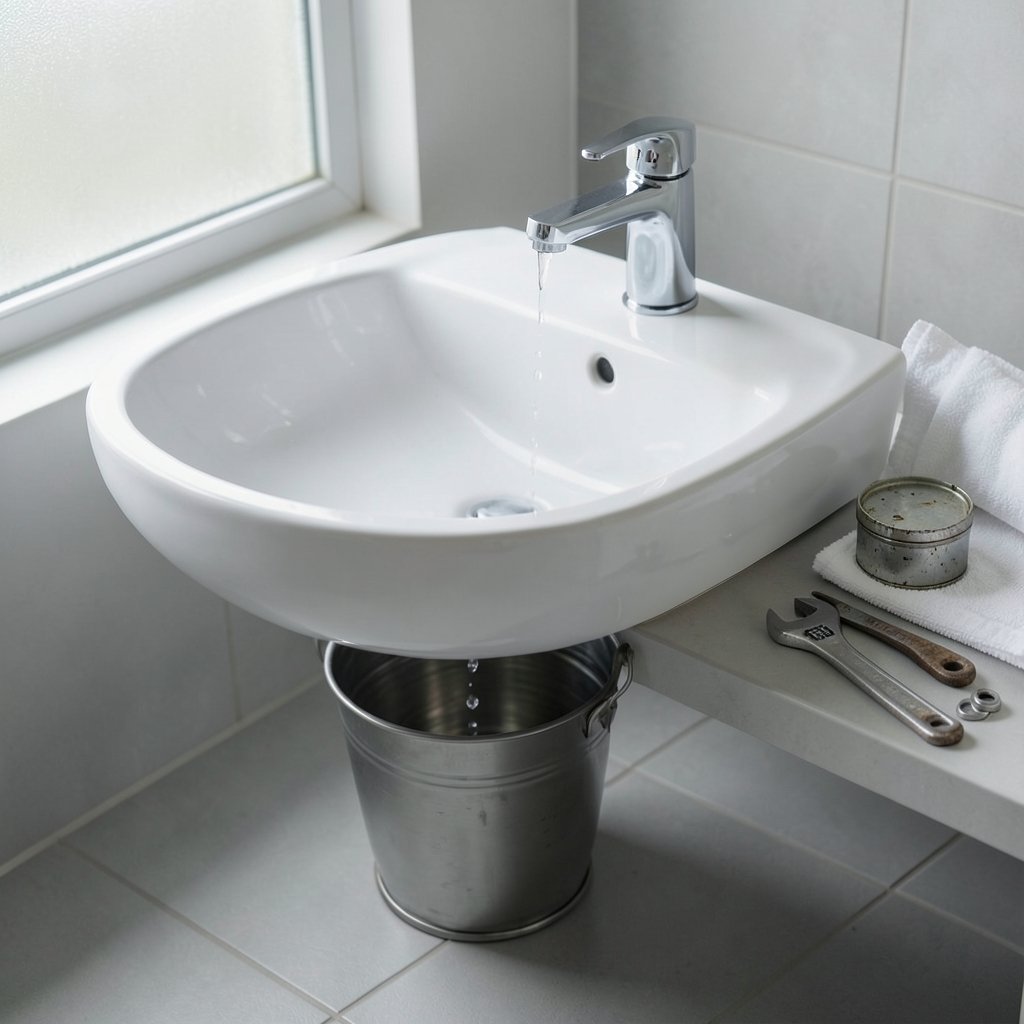
A tap starts dripping at 9pm. The toilet won’t stop running. Water is pooling around the shower floor trap. What happens next usually decides whether you spend $40 or $400. Most people call the first plumber who answers, accept a price quoted over the phone, and only later wonder whether they were charged fairly. The good news is that plumbing repair follows patterns, and once you know those patterns, you can predict the bill before anyone touches a wrench.
Why Plumbing Repair Is Cheaper Than You Think in Singapore
Here is the fact that surprises most homeowners: many plumbing jobs are small, fast, and priced accordingly. Town council term contractors publish their rates openly. One town council’s handyman schedule lists labour for clearing a choke in a floor trap, wash basin or sink at $40, labour for clearing a WC choke at $40, and repairing an overflowing plastic WC cistern or leaking water pipe (including renewing a washer) at $50. Replacing the internal fittings of a WC flushing cistern costs $70, and supplying and fixing a 13mm brass water tap costs $60.
Those published prices matter for two reasons. First, they show the real labour involved in common repairs is modest. Second, they give you a benchmark. If someone quotes you $250 to fix a dripping cistern that a term contractor handles for $70, you now have a legitimate question to ask.
HDB residents in estates covered by a town council’s term contractor scheme can contact those contractors directly for minor repair works. The catch is that the scheme covers specific items, not everything, and it isn’t available everywhere. Still, checking your own town council’s list before you call a private plumber is one of the simplest money-saving moves available.
The One-Hour Rule That Changes How You Book
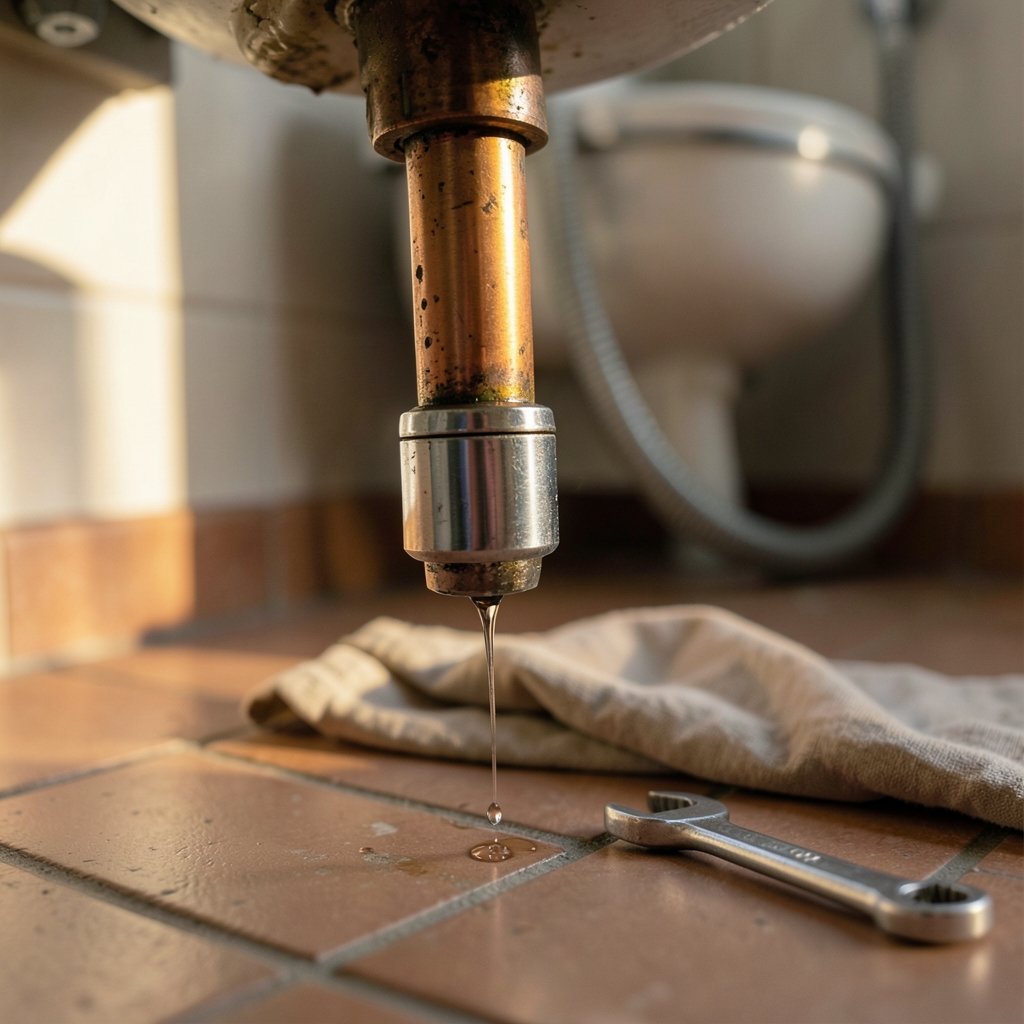
Hourly booking is quietly reshaping plumbing repair economics. When a plumber bills by the hour rather than by task, several small jobs can share a single visit. A running toilet, a choked drain, a bidet spray and a leaking pipe joint can all be handled in one appointment instead of four.
This matters because the biggest cost in any small repair is often the trip, not the work. Think about what you actually need before booking:
- Write down every plumbing annoyance in the house, including non-emergency issues
- Group them into one visit if the provider bills hourly
- Take photos of each issue so the plumber arrives prepared
- Ask whether materials are included or billed separately
A provider that charges by the hour typically covers labour and transport in the base fee, with materials quoted separately. That structure rewards you for bundling. A provider that charges per task will price each item individually, which can be better for a single big job and worse for five small ones.
What Common Repairs Actually Involve
Tap and mixer replacement
Tap replacement is one of the most common jobs in any flat. The work itself is straightforward: shut off the isolation valve, disconnect the supply, remove the old tap, clean the seating, fit the new unit, and test for leaks. The variables are access and corrosion. An old tap seized onto a corroded pipe can turn a twenty-minute job into an hour.
Toilet repairs
Toilet work splits into two categories. Flush system repairs involve the cistern internals: the fill valve, flush valve, washers and seals. Toilet bowl installation is a bigger job, and many providers only handle floor-mounted bowls with a visible flush system, with the bowl itself supplied by the customer. If your toilet is a concealed or back-to-wall model, say so upfront. It changes the quote.
Choked drains and floor traps
A choked drain is rarely a plumbing failure. It’s usually hair, soap residue, grease or food debris. Clearing a floor trap choke or a kitchen sink choke is routine work with the right tools. The mistake people make is reaching for caustic chemical drain cleaner first. It can damage older pipes and rarely clears a solid blockage. A physical rod or auger does the job better.
Concealed pipe leaks
This is where costs climb. A leak hidden behind a wall, floor finish or built-in cabinet has to be located before it can be fixed. Good practice is targeted detection and minimal hacking rather than opening up an entire wall. Ask any plumber how they plan to find the leak before they start demolishing anything. If the answer is vague, get a second opinion.
Water heater and pipe replacement
Water heater installation and full pipe replacement are larger projects. Old, corroded pipes restrict flow and cause repeat leaks, and replacing worn sections is often cheaper over five years than patching the same joint three times.
How to Vet a Plumber Before You Let Them In
Plumbing repair attracts both skilled tradespeople and opportunists, because most customers can’t tell the difference between a necessary repair and an invented one. A few habits close that gap. (Garage door repair near me find trustworthy pro fast)
Send photos first. Several plumbing services now ask customers to send pictures of the job and reply with a price before visiting. This removes the biggest lever for surprise charges, which is arriving on site and renegotiating.
Ask for the scope in writing. Labour and transport should be one line. Materials should be another. Anything vague, like “miscellaneous parts,” deserves a question.
Check who is actually coming. Larger platforms assign vetted partners. Smaller operators may send whoever is free. Neither is automatically better, but you should know which you’re getting.
Confirm what’s excluded. Many providers state plainly that they don’t repair appliances. If your “plumbing problem” is actually a washing machine inlet valve or a fridge water line, you may need a different trade entirely. The same logic applies elsewhere in the home: a dead circuit board isn’t a plumbing job, and knowing when a motherboard repair is worth attempting versus replacing the device saves the same kind of money.
Watch the clock. If a job is billed hourly, agree on an expected duration before work starts. A tap swap should not take three hours.
Where Plumbing Repair Fits in a Wider Repair Budget
Plumbing rarely fails alone. Homes age in clusters, and the same month that a pipe joint gives out is often the month the dishwasher starts pooling water. Knowing when to repair and when to replace is the single most useful budgeting skill a homeowner can build.
| Situation | Repair usually wins | Replace usually wins |
|---|---|---|
| Tap dripping from worn washer | Yes, cheap and fast | No |
| Cistern internals failing | Yes, fittings are inexpensive | Only if the bowl is cracked |
| Single pipe joint leaking | Yes, targeted fix | No |
| Repeated leaks along a corroded line | No, it will recur | Yes, replace the section |
| Appliance not draining | Depends on age and part cost | Often, if the part is expensive |
The pattern is consistent: repair wins when the failure is isolated and the part is cheap. Replacement wins when the failure is systemic or the part costs a large fraction of a new unit. That same test applies to a dishwasher that won’t drain, a laptop with a failing hinge, or a bike with a worn drivetrain. Spending on the right tool for a job you’ll repeat also pays off, which is why serious cyclists weigh up whether expensive bike repair tool kits are worth it before buying, and why a homeowner should keep a basic wrench, washer set and plunger on hand. (Laptop repair fix it price it avoid getting ripped off)
The Mistakes That Cost the Most
A few errors show up again and again, and each one adds to the bill.
Shutting off nothing. The first move for any leak is to close the isolation valve or main stopcock. People panic, call a plumber, and let water run for twenty minutes while waiting. Know where your stopcock is before you need it.
Describing the problem badly. “The toilet is broken” tells a plumber nothing. “The cistern keeps filling and I can hear water running constantly” tells them it’s almost certainly the fill valve, and they’ll arrive with the part.
Accepting a phone quote as final. A price given without seeing the job is an estimate, not a commitment. Confirm whether it’s a call-out fee, an hourly rate, or a fixed price for the task.
Ignoring the small stuff. A slow drip under the sink wastes water and quietly rots the cabinet base. Fixing it at $50 beats replacing a cabinet at several hundred.
Not asking about the warranty. A repair that fails in a month should be covered. Ask what happens if the same fault returns.
Forgetting the digital side of the household. While you’re organising repairs, it’s worth fixing the small frustrations too. A two-factor authentication code that keeps getting rejected is usually a clock drift issue, and there’s a straightforward TOTP clock drift fix that repairs it in minutes without any specialist help.
When to Call a Professional and When to DIY
Some jobs are genuinely DIY-friendly: swapping a shower head, replacing a tap washer, plunging a sink, clearing hair from a floor trap. Others are not. Anything involving concealed pipes, gas lines, main stopcocks, or work that requires hacking into a wall should go to a licensed professional, both for safety and for your insurance position.
The dividing line is usually access. If the faulty part is visible and reachable, DIY is reasonable. If you’d need to open a surface to reach it, call someone. The same principle applies to electronics: replacing a laptop keyboard is a home job, while diagnosing a dead board is not, and it’s worth knowing when a motherboard repair makes sense versus when a replacement is the smarter spend.
For larger household decisions, the same cost-benefit logic keeps appearing. Whether it’s a fridge in a camper that won’t cool, where an RV refrigerator repair can fail and replacement costs more than expected, or a garage door that won’t track straight, the question is always whether the fix restores the unit reliably or just postpones the next failure. (Totp clock drift fix your 2fa codes fail repair it)
Conclusion
Plumbing repair is less mysterious than it looks. Published term contractor rates give you a benchmark. Hourly booking lets you bundle small jobs into one visit. Photos sent in advance remove the room for surprise pricing. And a simple repair-versus-replace test tells you when to stop patching. The homeowners who spend least aren’t the ones who never call a plumber. They’re the ones who know where the stopcock is, describe the fault precisely, and ask what’s included before anyone picks up a wrench. Do those three things and the bill will rarely surprise you.
How much does a typical plumbing repair cost?
For common jobs, published term contractor rates give a useful guide. Clearing a choke in a floor trap, wash basin or sink is listed at $40 in labour, clearing a WC choke at $40, and repairing a leaking water pipe including a new washer at $50. Replacing all internal cistern fittings is $70, and supplying and fixing a 13mm brass tap is $60. Private plumbers may charge more, so use these as a floor, not a ceiling.
Is it cheaper to book a plumber by the hour or by the task?
It depends on how many jobs you have. Hourly booking lets several small repairs share one visit, so a running toilet, a choked drain and a leaking joint can be handled together. Per-task pricing is often clearer for a single large job. List everything you need before booking and choose accordingly.
Can I use my town council’s contractor for plumbing repairs?
In some HDB estates, yes. Certain town councils publish term contractor lists covering minor sanitary and plumbing works, with contact details and fixed prices for specific items. Availability and scope vary by estate, so check your own town council’s published list before assuming you qualify.
What should I do first when a pipe starts leaking?
Shut off the isolation valve serving that fixture, or the main stopcock if you can’t find it. Stopping the water flow limits damage to flooring and cabinets while you arrange a repair. Knowing the location of your stopcock in advance is the single most useful piece of plumbing knowledge a homeowner can have.
Why does my toilet keep running after flushing?
A constantly running cistern almost always points to a worn fill valve, flush valve seal or washer. It’s a small, inexpensive repair, and describing the symptom precisely when you book helps the plumber arrive with the right part. Left alone, a running toilet wastes water continuously and can stain the bowl.
Should I try chemical drain cleaner before calling a plumber?
Usually not. Most household chokes are caused by hair, soap residue, grease or food debris, and a physical rod or auger clears them more reliably. Caustic cleaners can damage older pipes and often fail against solid blockages, leaving you with a chemical mess and the same choke.