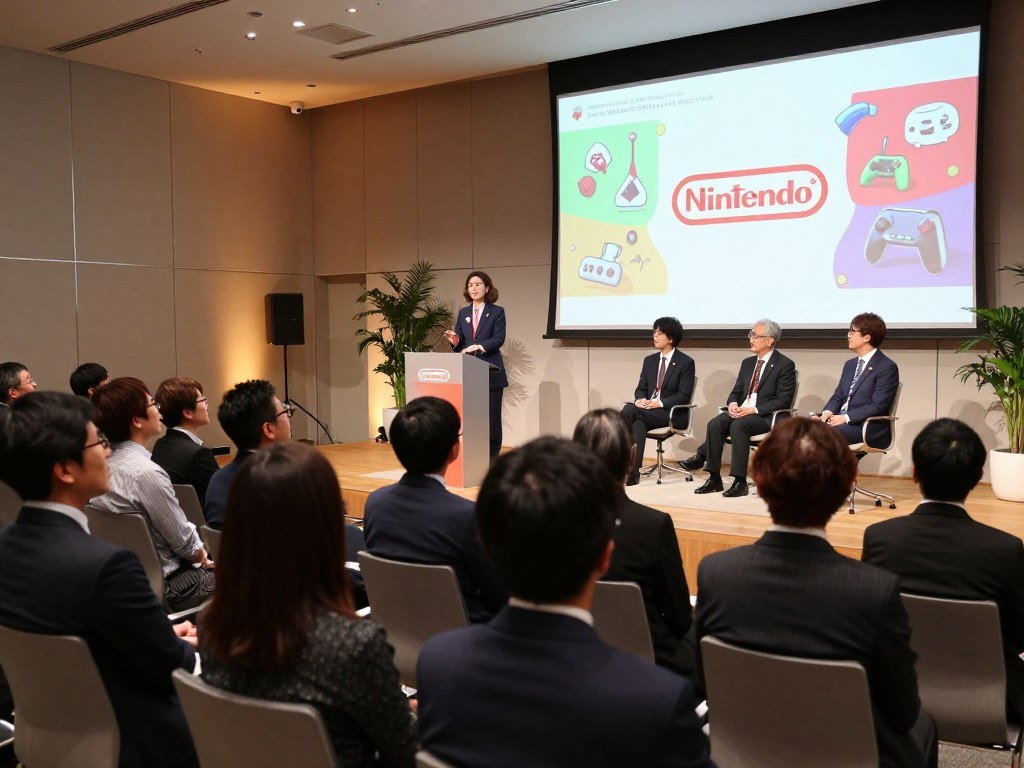
Shigeru Miyamoto addressed generative AI at a press conference held after his selection for Japan’s Order of Culture was announced. The conference took place October 22, 2026, at Nintendo’s Kyoto headquarters. The award is scheduled for November 3.
Established in 1937, the Order of Culture is one of Japan’s highest honors. Miyamoto is the first person from the video game industry selected to receive it. His games include Mario, Zelda, Donkey Kong, and Star Fox.
The recognition brought fresh news attention to the designer’s views on technology. He offered an optimistic outlook on generative AI while keeping people central to creative work. Japan Order Culture news also places his career in a wider national story.
His comments concern the creative process, not a newly announced Nintendo AI product.
Key Takeaways
- Miyamoto spoke at Nintendo’s Kyoto headquarters.
- The Order of Culture was established in 1937.
- His honor marks a first for the video game industry.
- He described generative AI with optimism.
- His remarks were about creative work.
Miyamoto Generative AI Positive Outlook Nintendo 2026: What He Said About Human Creativity
Miyamoto sees generative AI as a way to reduce some execution work, not as a substitute for the human choices that give a design its purpose. Human choices remain central to his view, even as technology changes the work creators do.
He said, “Even if AI were to eventually handle everything, there will always be a role left for us to play.” That comment describes his outlook, not a promise about what any system will do. It also leaves room for new tools to change how game development gets done.
How AI could separate creative direction from routine work
Miyamoto separates setting a broad structure from carrying out routine tasks. A creator may decide how a scene should feel, then spend time filling gaps or refining small details. Generative AI could help with some of that execution work.
He said easier production work could give creators more time to consider what matters in a project. That shift could help a developer think through a level’s pace or a character’s role. Those choices shape the experience before the final details are polished.
The work may still need human review, since a tool’s output does not set a game’s goals. For a look at image-making tools and their limits, see these AI image generator tools. The same rule applies to any creative aid: output needs a clear purpose.
Finishing every detail does not, by itself, prove that a design works.
Why individual intention matters in lasting design
Design intention is the purposeful choices that shape why a design looks and works as it does. Miyamoto argued that technical polish alone cannot give a design lasting value. A person’s reason for each choice matters.
He recalled a time when designers learned lettering to make posters. Typewriters later gave way to word processors, changing how people prepared text. Miyamoto sees that shift as a reminder that new tools can change skills without removing the need for judgment.
He also warned that copying pasting can leave work without a clear point of view. A skilled sense of layout may stand out when technology handles more routine steps. Recent 2026 image generator comparisons show how visual tools can need human edits and review.
Creators can enjoy the labor of finishing a piece and mistake that satisfaction for proof of quality. Yet time spent refining a design does not tell people whether its choices make sense. Judge a finished design by the intention behind its choices, not by the amount of labor it took to complete.
How widely are game professionals using generative AI?
Use was reported by 36% of game industry professionals surveyed, while the share varied substantially by workplace type. Reported use means people said they used the tools as part of their jobs. It does not show how often they used them.
The 2026 GDC survey found use among 30% of respondents at game studios, compared with 58% at publishing companies, support teams, and marketing or public-relations firms. The GDC 2026 State of the Game Industry report gives the survey’s wider context. Its results reflect respondents, not every worker in the business.
Which jobs and tasks report the most use
Research or brainstorming was the most common task named, at 81%. Code assistance came next at 47%, followed by prototyping at 35%. Those figures describe reported task use across the survey.
The gap between studios and other organizations is notable. Publishing, support, and marketing or public-relations teams reported higher use than studio respondents. A game industry job can involve planning, promotion, or support, not just making a game.
| Survey measure | 2026 result | Comparison or condition |
|---|---|---|
| Workplace use overall | 36% | Game industry professionals surveyed |
| Use by organization type | 30%; 58% | Game studios; publishing, support, marketing or PR |
| Reported task uses | 81%; 47%; 35% | Research or brainstorming; code help; prototyping |
| Negative industry impact | 52% | 30% in 2025; 18% in 2024 |
| Positive industry impact | 7% | 13% in 2025 |
How professionals view AI’s industry impact
More respondents reported a negative impact in 2026 than in 2025 or 2024. Positive views were less common in 2026 than in 2025. The survey records these shifts, but the figures do not explain why attitudes changed.
Reported use and reported industry impact are separate measures. A person can use a tool for a task and still view its broader effect on the video game industry negatively. The survey does not say whether a particular use helped a game’s development.
Other workplace research has examined how AI can shift work toward directing and checking output. An Anthropic workplace study offers related context about changing tasks, not a verdict on game teams. Treat the sentiment figures as respondents’ reported views, not as a direct measure of game quality or a proven cause of industry change.
What do Miyamoto’s comments establish about Nintendo’s AI policy?
Miyamoto’s comments offer a view of creativity, not a new Nintendo policy on AI. His remarks did not name a product, deployment plan, or timetable. One prominent creative leader’s comments cannot stand for company-wide practice.
He said AI might make routine production work easier, while people keep a role in creation. That is his view of technology, not a formal Nintendo stance. It also says nothing specific about Nintendo’s developer relations.

A single public remark cannot map every team’s daily practice.
- Established: Miyamoto’s personal view of creative work.
- Established: His argument for AI help with routine tasks and human intention.
- Not established: Company policy, specific deployment, or a timeline.
For a broader look at assistant features, a 2026 chatbot comparison covers common task support. Treat any claim about Nintendo’s actual AI plans as unconfirmed unless the company explicitly announces those plans.
Conclusion
Miyamoto’s outlook is optimistic about assistance from AI, while keeping creative intention central. Automation may change how people make games, but a tool cannot decide what a design should mean. That remains a human choice.
For readers following gaming technology, the practical signal is the gap between a leader’s view and a company’s stated plans. A comment can explain one person’s approach without setting rules for developers or a product team.
Watch for an explicit Nintendo statement before drawing conclusions about how its games will use generative AI.
FAQ
Does 36% mean that 36% of all game industry workers use generative AI?
No. The 36% figure is the share of game industry professionals who responded to the 2026 survey, not a count of every worker. The survey is not a census of all game studios, publishers, or support firms. Its result describes the people who answered, so it should not be applied to every person working in games.
Does the GDC survey explain why negative views of AI rose?
No. The survey records respondents’ views and how those reported figures changed over time, but it does not establish a cause. Many events or concerns could shape opinions, and the numbers alone cannot show which ones mattered. A rise in negative responses is a finding, not an explanation for the change.
Does the 81% research and brainstorming figure mean AI output appeared in released games?
No. The 81% figure describes respondents who reported using generative AI for research or brainstorming. It does not show whether generated material appeared in a finished game. A person might use a tool to explore an idea, then discard its output or rewrite the work before release.
What would confirm that Nintendo has adopted generative AI in a specific game?
An explicit Nintendo announcement identifying that use would confirm it. A clear statement could name the game and explain how the technology fits into its development or release. A general comment about creativity, tools, or future possibilities does not confirm that a specific game uses generative AI.
Did Miyamoto set a timeline for AI taking over production tasks?
No. Miyamoto’s comment was conditional and gave no date or schedule for AI handling production work. He spoke about a possible future in which tools take on more tasks, while people still have a role. That view should not be read as a forecast with a deadline.
Does the survey measure whether generative AI improves game quality?
No. The survey reports workplace use and professionals’ views about AI’s impact on the industry. It does not test game quality or compare games made with and without generative AI. Those measures can describe how workers feel and what tasks they report, but they do not rate a finished game.