

What if one book could tell you which technologies will reshape your company before your competitors even notice them? That’s the promise behind The Year in Tech, 2027: The Insights You Need from Harvard Business Review, a paperback and audiobook collection that pulls a year of HBR’s thinking on AI agents, real-time satellite data, GLP-1 medications, and humanoid robots into one place. (Chatbase review 2027 can you really build custom gpt bot 10)
The short verdict: this is a solid buy for managers and executives who want a single, curated briefing on fast-moving tech, and a weaker buy for hands-on engineers who want code, specs, or deep technical detail. It is a business book about technology, not a technology manual. If you want to understand what these shifts mean for your organization and how to compete, it earns its shelf space. If you want to build something next week, it won’t get you there.
What this book actually is
The title sounds like a news roundup, and that’s roughly the right frame. The book is a curated annual anthology from Harvard Business Review, and its publisher describes it as a year of HBR’s essential thinking on tech, all in one place. The topics named in the publisher’s description are specific and telling: AI agents, real-time satellite data, GLP-1 medications, and humanoid robots. The stated goal is to explain what the latest and most important tech innovations mean for an organization and how to use them to compete and win. (Ai contract review tools really cost 2027)
That framing matters. This is not a book about how transformers work or how to fine-tune a model. It’s a book about what happens to a business when these tools arrive: at the hybrid office, on factory floors, and in the C-suite. The publisher’s own summary uses exactly those three settings, which tells you the intended reader is someone making decisions about people, capital, and strategy rather than someone writing production code.
The format is worth noting too. It’s available as a paperback and as an unabridged audiobook, narrated by Paul Boehmer, whose background includes Broadway and regional theater plus a long list of audiobook credits. The audiobook runs through standard retail channels, and the paperback has appeared across multiple regional Amazon storefronts and book metadata databases.
Pros: what the book gets right
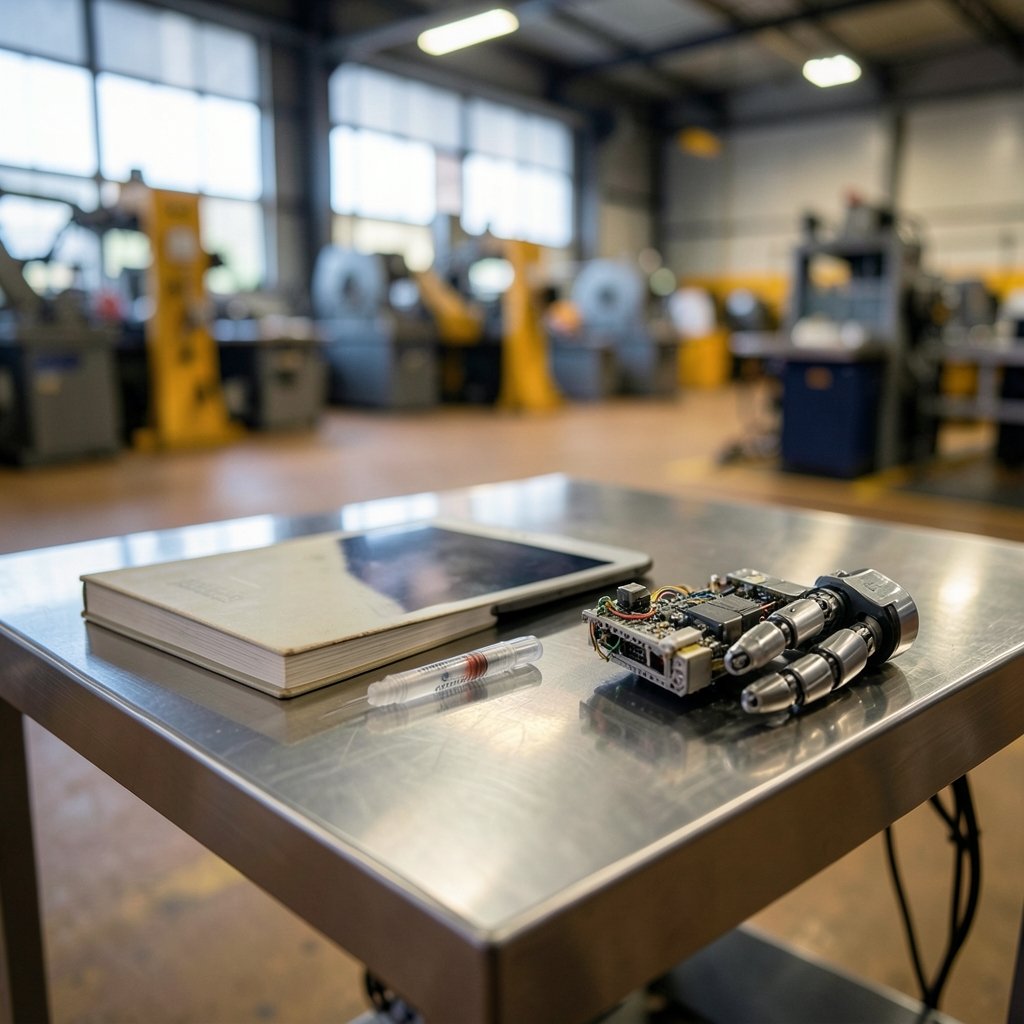
It covers the right topics. The four headline subjects are not random. AI agents represent the shift from chatbots that answer to software that acts. Real-time satellite data speaks to a boom in Earth observation and the analytics layered on top of it. GLP-1 medications are a health story with enormous commercial spillover into food, retail, insurance, and workplace benefits. Humanoid robots are the physical-world counterpart to software automation. A reader who understands all four has a genuinely useful map of where money and attention are moving.
It’s curated, not aggregated. HBR’s format leans on research, interviews, and analysis rather than press releases. For a busy executive, that filtering is the product. You are paying for someone else’s editorial judgment about which twenty or so ideas deserve your attention.
It’s practical by design. The publisher promises foundational introductions plus practical case studies. That combination is what most business readers actually need: enough background to hold a conversation, plus examples of organizations that already moved.
It’s an efficient format. One paperback or one audiobook replaces a stack of articles and a dozen newsletters. For a leadership team that wants a shared vocabulary, that’s real value.
Cons: where it falls short
It will age quickly. Any annual tech review has a short shelf life. The topics named in the publisher’s description are moving fast, and a book that explains them is a snapshot, not a live feed. Readers who want current pricing, current model capabilities, or current regulatory detail should check official sources rather than trusting a printed page.
It is not a technical reference. If you want architecture diagrams, benchmarks, or implementation guidance, look elsewhere. The same gap applies to adjacent practical questions. A team trying to decide whether to license a chatbot builder or build one in-house will get more from a focused breakdown of the build versus buy AI three-year cost and output quality question than from a strategy anthology.
The “20 stories” promise is loose. The book is a collection of HBR’s thinking, not a ranked countdown. Readers who buy it expecting a definitive list of twenty numbered events may feel the framing oversells the structure.
Cost adds up if you buy both formats. Many readers will want the paperback for reference and the audiobook for commutes. That’s two purchases for one book.
Pricing and availability
The publisher has not published a single global price, and prices vary by region and format. Across retail listings, the paperback and audiobook appear at different prices in different markets, and one regional listing showed a price in Brazilian reais. Rather than quote a number that may already be wrong, check the official retailer page for your region before buying.
| Format | What you get | Best for |
|---|---|---|
| Paperback | Physical reference you can mark up and share | Managers who annotate and revisit |
| Audiobook (unabridged) | Narrated by Paul Boehmer | Commuters and multitaskers |
| Regional editions | Same content, local pricing | Buyers outside the US |
One practical tip: if your team is buying multiple copies, check whether your regional storefront offers bulk or corporate pricing. Business imprints often do, and it’s rarely advertised on the product page.
The wider 2027 tech conversation
A year-in-review book doesn’t exist in a vacuum, and the surrounding conversation is worth understanding because it shapes how you should read the HBR volume.
The most striking thread is how fast government got involved in AI. In a podcast interview, an OpenAI whistleblower described the situation bluntly: things are “kind of on track for AI-2027,” with some differences from early expectations. The biggest one, in that person’s view, was that government “has actually gotten involved faster than we expected and has been more aggressive than we expected,” citing export controls and pressure tactics as examples. Whether or not you share that alarm, the observation is useful: the policy environment is now a first-order variable for any tech plan, not an afterthought.
There’s also a cultural split worth naming. Reporting has highlighted that wealthy investors are worried about an AI apocalypse while experts argue the harm is already here, in the form of job displacement and everyday disruption. That gap between existential anxiety at the top and concrete damage on the ground is exactly the kind of tension a good annual review should help you navigate. The HBR book’s C-suite framing sits closer to the boardroom worry than the shop-floor reality, which is a limitation to keep in mind.
And the physical world is catching up to the software story. Reporting on Meta’s planned VR glasses, set for a spring 2027 release at roughly 100 grams and described as five times lighter than the company’s earlier headset, shows how quickly consumer hardware is converging with the AI stack. A book that covers humanoid robots but not wearable computing is making an editorial bet, not giving you the whole picture.
Who should buy it
Buy it if you’re a manager, director, or executive who needs to speak credibly about AI agents, satellite data, GLP-1s, and robotics in planning meetings. Buy it if your organization runs on shared reading and you want one book that gets a leadership team onto the same page. Buy it if you prefer curated analysis to endless feeds.
Skip it if you’re an engineer who needs implementation detail, a founder who needs current pricing and benchmarks, or a reader who wants a literal ranked list of twenty events. Skip it if you already read HBR’s tech coverage closely; much of the value is in the curation, and you may have seen the pieces.
Read it alongside something more operational. If your next decision involves contracts, a review of what AI contract review tools really cost in practice will serve you better than a strategy chapter. If it involves consumer finance partnerships, a hard look at whether Revolut’s super app model is worth the risk is more useful. And if it involves tooling budgets, an honest accounting of what free tools actually cost you will save more money than any annual anthology.
There’s a broader lesson in that pairing. Annual reviews are best used as orientation, not instruction. They tell you which doors are opening. They don’t tell you what’s behind them or what it costs to walk through.
How to get the most out of it
- Read the AI agents chapter first, then write down one process in your organization that an agent could plausibly own within a year.
- Read the GLP-1 section with your benefits and food-service teams in mind as well as your health team. The commercial spillover is the point.
- Treat the humanoid robotics material as a supply-chain question, not a science-fiction one. Ask which of your physical workflows are repetitive enough to matter.
- Skim the satellite data chapter for analytics use cases, then hand it to whoever owns your geospatial or logistics data.
- Before you act on any number in the book, verify it against a current official source. Printed figures go stale.
A common mistake readers make with books like this is treating them as a checklist to implement wholesale. The better approach is to extract two or three questions per chapter and take those into your next planning cycle. Another mistake is buying it for the whole team without a discussion plan; a shared book with no shared conversation is just an expense.
If your planning horizon stretches past the book’s coverage, it’s also worth grounding yourself in what the next year actually holds. A clear-eyed look at 2027 for anyone planning ahead is a useful companion, and so is understanding adjacent cultural and consumer signals, like what the Chinese zodiac’s 2027 fire goat year actually means for marketing calendars in Asian markets.
Conclusion
The Year in Tech, 2027 is a well-curated, sensibly scoped business briefing that earns a place on a manager’s desk and a weaker place on an engineer’s. It gets the topics right, it filters intelligently, and it’s available in formats that fit real working lives. It will age fast, it isn’t technical, and its “20 stories” framing is looser than the title suggests. Buy it to orient a team, not to answer a build decision. Read it with a pen, verify every figure, and pair it with operational sources before you spend a dollar on implementation.
Frequently asked questions
What is The Year in Tech, 2027 about?
It’s a curated annual collection of Harvard Business Review’s thinking on fast-moving technologies, including AI agents, real-time satellite data, GLP-1 medications, and humanoid robots. The publisher frames it as a way to understand what these innovations mean for an organization and how to compete.
Who is the author?
It’s an HBR anthology rather than a single-author book, drawing on the magazine’s research, interviews, and analysis. The unabridged audiobook is narrated by Paul Boehmer.
Is it available as an audiobook?
Yes. An unabridged audiobook edition exists, narrated by Paul Boehmer, and it’s listed through standard audiobook retail channels alongside the paperback.
How much does it cost?
Prices vary by region and format, and no single global price is published. One regional listing showed a price in Brazilian reais. Check your local retailer’s official page for the current figure before buying.
Is it useful for engineers and developers?
Less so. The book is aimed at managers and executives and emphasizes strategy and case studies over implementation detail. Developers wanting technical depth should pair it with hands-on documentation.
Will the content still be accurate next year?
Treat it as a snapshot. The technologies it covers are moving quickly, and specific figures, capabilities, and regulations will change. Verify any number against a current official source before acting on it.



