
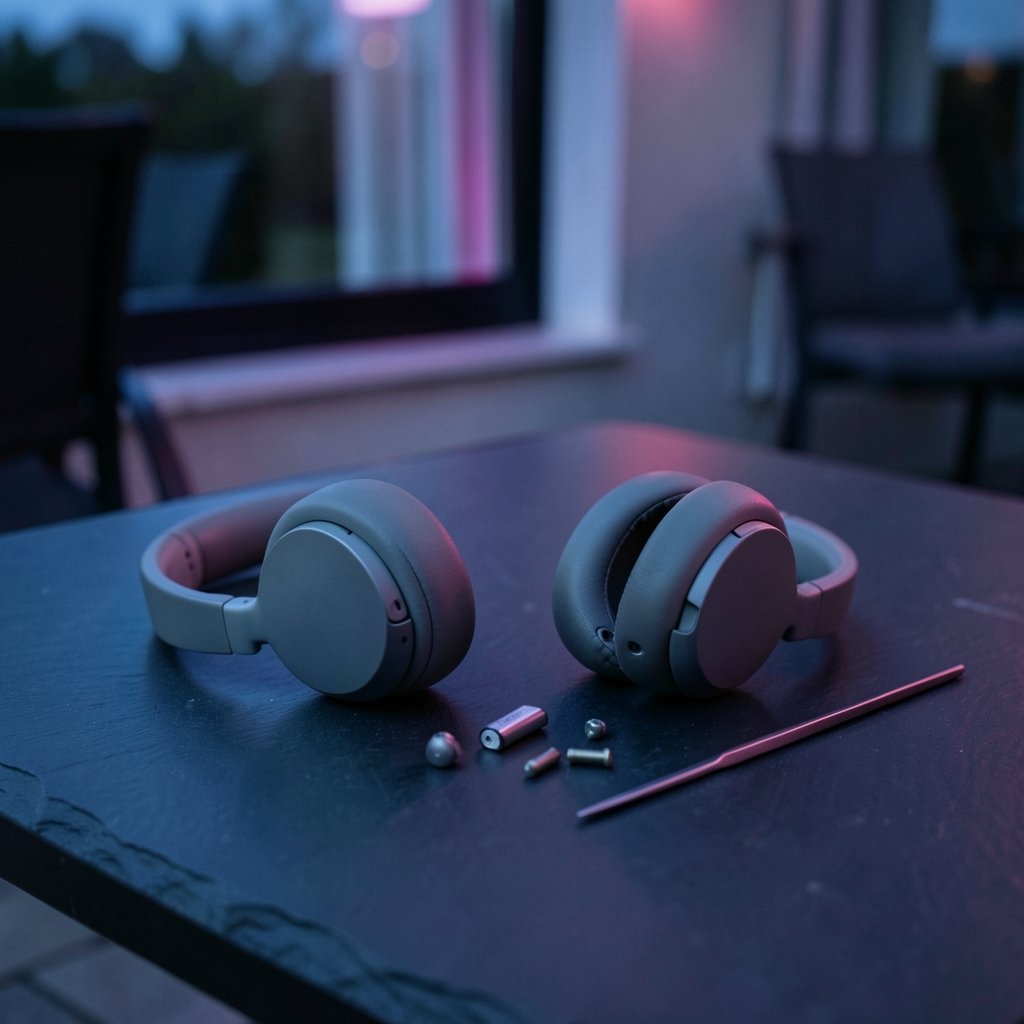
What good is a pair of $400 headphones if the battery dies in three years and the whole thing becomes e-waste? That question used to have an uncomfortable answer: nothing. You bought new ones. But something has shifted, and it shifted faster than most people expected.
A European Union rule taking effect in February 2027 requires many portable devices sold in the bloc, headphones included, to ship with batteries that users can swap themselves using ordinary tools. Manufacturers saw the writing on the wall and started designing around it early. The result is a small but genuinely interesting group of headphones you can keep alive for a decade instead of a warranty period. This guide walks through which models matter, what “replaceable” really means in practice, and the mistakes buyers make when they assume every detachable battery is created equal.
Why Replaceable Batteries Suddenly Matter
Battery degradation is the quiet killer of wireless audio. A headphone’s drivers can survive fifteen years. The lithium cell inside almost never does. Charge cycles pile up, capacity fades, and eventually you are charging nightly for a two-hour commute.
The regulatory backdrop is what changed the market. From February 2027, newly shipped technical devices in the EU need a battery that users can replace by hand, with commercially available tools. Exceptions exist when a manufacturer supplies a special tool free of charge. That single rule flipped the economics: designing for repairability became cheaper than redesigning for compliance later. (Best tablet work 2027 7 picks that can actually replace)
Swedish reviewers at Ljud & Bild put the buying advice bluntly in their 2026–2027 headphone guide: ask whether the battery can be swapped and whether the manufacturer sells spare parts, because that answer “decides whether you buy for three years or for ten.” That is the whole game in one sentence.
The Standouts: Headphones You Can Actually Open Up

Fairphone Fairbuds XL (Gen 2): The Repairability Champion
If repairability were a sport, this would be the podium. Repair specialists iFixit awarded the Fairbuds XL Gen 2 a perfect 10/10 repairability score, the first wireless headphone to hit that mark. The battery, headband, drivers, and earpads all come apart without professional tools, and Fairphone sells individual spare parts alongside published repair guides.
The original Fairbuds XL and the XL 2025 refresh were already among the only over-ear headphones with user-swappable cells in independent testing databases. Gen 2 simply pushed the concept to its logical endpoint. If longevity is your top priority and you accept that you are buying a tool rather than a fashion statement, this is the reference design.
Sennheiser Momentum 5 Wireless: Flagship Sound, Swappable Cell
This is the pair that made the mainstream sit up. Sennheiser’s Momentum 5, at $399.95, pairs a replaceable battery with adaptive noise cancellation, a 42 mm driver, and wired listening through a 3.5 mm jack. The driver is carried over from the Momentum 4, built in Tullamore, Ireland, and tuned this time with inspiration from the HD 600 family for a wider stage and cleaner mids.
The noise cancellation got the bigger upgrade. Sennheiser doubled the microphone count to four per earcup, eight total, and claims up to three times better reduction of voices and mid frequencies than the Momentum 4, which is exactly the open-office and train-crowd scenario buyers care about. Battery life is rated up to 57 hours with ANC on, and early reports suggest real-world use exceeds that figure. The replaceable battery sits alongside all of it rather than replacing features, which is how it should be.
JBL Quantum 950 Wireless: Built for Gamers Who Keep Their Gear
Gaming headsets have long been a graveyard of glued-in cells and RGB excess. JBL went the other direction. The Quantum 950 Wireless combines high-end audio with a replaceable battery and, notably, many other replaceable parts. Coverage of the launch framed it as proof that removable batteries are possible in premium headphones and arguably should be mandatory, arriving well ahead of the 2027 deadline.
For anyone who has watched a $250 headset become a paperweight because a two-dollar cell wore out, that design choice is worth more than any spatial-audio bullet point.
Fender MIX: Modularity as a Design Philosophy
Fender’s first headphone is a statement piece. The MIX uses a removable, user-replaceable battery plus broad modular design choices instead of soldered components. Battery life runs up to 100 hours, or 52 with ANC on, and the package includes a USB-C wireless transmitter for low-latency listening. The 40 mm transducers handle the audio side.
The honest caveat from reviewers: modularity alone does not make a great headphone. The MIX earns attention because it treats repairability as a feature rather than an apology, but you should still judge the sound first and the cleverness second.
Beyerdynamic Aventho 200 and Hama Spirit Calypso X: The Practical Middle
Beyerdynamic’s Aventho 200 has had a replaceable battery in independent testing databases for a while, though the swap is not as easy as Fairphone makes it. That distinction matters. “Replaceable” spans a spectrum from four screws and a five-minute job to a fiddly procedure that voids your patience.
At the budget end, Hama’s Spirit Calypso X arrived as one of the first over-ear models with a swappable battery, priced under 140 zł, with up to 60 hours of playback, multipoint Bluetooth, and voice assistant support. It launched well before the EU rules bite, which tells you the cheap end of the market can do this too when it wants to.
Bang & Olufsen Beoplay Eleven: The Earbud Exception
Earbuds are the hardest case because everything is crammed into a tiny shell. B&O nonetheless aligned the Beoplay Eleven with the EU’s future requirements by making the battery replaceable, pairing it with active noise cancellation and the company’s usual design-forward approach. If you prefer buds to over-ears, this is the proof of concept that the category can move.
The Comparison Table
| Model | Form factor | Battery claim | Replaceable battery | Notable strength |
|---|---|---|---|---|
| Fairphone Fairbuds XL Gen 2 | Over-ear | Not specified in sources | Yes, plus drivers, headband, earpads | 10/10 iFixit repairability score |
| Sennheiser Momentum 5 | Over-ear | Up to 57 h with ANC | Yes | 8-mic ANC, 42 mm driver, 3.5 mm wired |
| JBL Quantum 950 Wireless | Over-ear gaming | Not specified in sources | Yes, plus many other parts | Premium gaming audio with serviceable internals |
| Fender MIX | Over-ear | 100 h, 52 h with ANC | Yes | Modular design, USB-C transmitter included |
| Beyerdynamic Aventho 200 | Over-ear | Not specified in sources | Yes, but harder swap | Established brand, replaceable cell |
| Hama Spirit Calypso X | Over-ear | Up to 60 h | Yes | Budget price, multipoint Bluetooth |
| B&O Beoplay Eleven | Earbuds | Not specified in sources | Yes | ANC in a repairable bud design |
What “Replaceable” Really Means: Five Traps to Avoid
The word on the box and the experience in your hands are two different things. Here is what actually separates a ten-year headphone from a three-year one.
- Check that spare parts are sold to the public. A replaceable battery is worthless if the manufacturer will not sell you a replacement in 2030. Fairphone publishes guides and sells parts individually. That is the standard to hold others to.
- Ask what tool the swap needs. The EU allows exceptions when a special tool ships free with the device. For you, the question is simpler: can you do it with what is already in your kitchen drawer?
- Do not confuse a serviceable battery with a good headphone. Sound quality, comfort, and ANC still decide whether you want to keep it. A repairable headphone you dislike is still a headphone you dislike.
- Ignore the battery-life arms race. Several models now clear 50 hours with noise cancellation on. Anything past a work week is luxury. Weigh comfort and grams instead, because you feel those after an hour, not after a week.
- Listen before you pay for materials. Leather, steel, and aluminum feel lovely. They do not produce better bass. Test the audio first and judge the finish second.
That last point is where most buyers go wrong. They read a spec sheet full of premium materials, assume the sound follows, and end up with a heavy headphone that sounds fine. The repairability story is genuinely important, but it should be the tiebreaker, not the headline.
The Wider Picture: Repairability Is Spreading
Headphones are not the only category moving this way. The same EU rules push laptops, game controllers, and phones toward user-swappable cells, and the ripple effects are already visible elsewhere in consumer tech. If you are weighing a phone purchase on the same logic, the same trade-offs apply: a device you can service outlives one you cannot. The pattern shows up across the broader conversation about how cheap gadgets hide their real cost, where the sticker price and the true cost of ownership diverge sharply once a sealed battery ages out.
There is a parallel in the energy world too. Home batteries and solar setups now get judged on real return on investment over a decade, not on day-one specs, and the math looks very different once you account for how long the hardware actually serves you. Headphones are a smaller purchase with the same underlying question: what does this thing cost per year of use?
Even battery chemistry is part of the story. Newer silicon-carbon cells promise more capacity in less space, and the phones and EVs that use them are being watched closely for how capacity holds up over hundreds of cycles. A swappable battery sidesteps that entire worry. When the cell fades, you replace the cell, not the product.
How to Choose in One Sitting
Start with the battery, always. If it cannot be replaced, its decline sets the headphone’s useful life, full stop. Then work outward: does the manufacturer sell parts, is the swap tool-free or near it, and does the sound justify the price before you factor in longevity?
For most people, the shortlist comes down to three shapes of buyer. The longevity maximalist should look at the Fairbuds XL Gen 2, where every wear item is serviceable. The sound-first buyer who still wants a decade of life should look at the Momentum 5, which pairs flagship features with a swappable cell. The budget-conscious buyer should look at the Hama Spirit Calypso X, which proves the concept does not require a premium price. Gamers get the JBL Quantum 950 Wireless, and earbud loyalists get the Beoplay Eleven.
One more practical note: buy the spare battery when you buy the headphones, if the maker sells one. Spare-part lines get discontinued long before the headphones wear out, and a battery on your shelf in 2029 is worth more than a promise on a support page.
Conclusion
The 2027 deadline did not create a new category so much as force an old one into the open. Replaceable batteries were always technically possible in premium headphones; they simply were not profitable while buyers replaced whole products instead of cells. Now the Fairbuds XL Gen 2 scores a perfect 10/10 from iFixit, the Momentum 5 puts a swappable battery in a $399.95 flagship, and a sub-140 zł Hama does it too. The choice is no longer whether you can buy headphones that outlast their battery. It is whether you bother to check before handing over your money.
Frequently Asked Questions
Do all headphones sold in the EU need replaceable batteries from 2027?
No. The requirement applies to newly shipped devices from February 2027, and the EU allows exceptions when a manufacturer supplies a special tool free of charge. The precise final wording of the rules was still not fully settled in reporting, so check the official regulation text before relying on it for a specific model.
Which headphones have the best repairability score?
The Fairphone Fairbuds XL Gen 2 holds a perfect 10/10 from iFixit, the first wireless headphone to reach that score. It allows replacement of the battery, headband, drivers, and earpads without professional tools, and the maker sells individual spare parts with published repair guides.
Is the Sennheiser Momentum 5 battery really user-replaceable?
Yes. Sennheiser sells a replaceable battery for the Momentum 5 alongside its adaptive noise cancellation, 42 mm driver, and 3.5 mm wired listening. It is rated for up to 57 hours with ANC on, and early reports suggest real-world use can exceed that figure.
Are replaceable-battery headphones more expensive?
Not necessarily. The Hama Spirit Calypso X offers a swappable battery, up to 60 hours of playback, and multipoint Bluetooth for under 140 zł. At the premium end, the Momentum 5 sits at $399.95, which is normal flagship pricing rather than a repairability premium.
Can I replace the battery in wireless earbuds?
In some cases, yes. The Bang & Olufsen Beoplay Eleven were designed with a replaceable battery in line with the EU’s future requirements, making them one of the few earbud options in this category. Most earbuds still use glued or soldered cells, so verify before buying.
What should I check before buying a repairable headphone?
Confirm three things: that the manufacturer sells replacement batteries to the public, what tool the swap requires, and whether the sound and comfort justify the price on their own. A repairable headphone you do not enjoy wearing is still a bad purchase.



