The best smartwatches for hiking in 2027 are the ones that keep working when the trail gets steep, the weather turns and the phone stays in your pack. A good hiking watch should track your route accurately, show maps or a breadcrumb trail, and still have battery left when you reach the car park.
The short answer is that most hikers should buy a rugged GPS watch with multi-band positioning, offline maps and at least a full weekend of battery in GPS mode. If you hike mostly on marked day trails, a tough mainstream smartwatch is enough; if you walk remote routes, buy a dedicated outdoor watch and learn its navigation before you need it.
Key takeaways
- Multi-band GPS matters on real trails: it holds a fix under tree cover and in valleys where single-band watches wander.
- Offline maps or a breadcrumb trail are essential once you leave marked paths.
- Judge battery in GPS hours, not smartwatch days: a watch rated for 30 GPS hours beats one rated for two weeks of light use.
- Screen readability in sunlight beats screen beauty; a transflective or bright AMOLED display both work, for different reasons.
- Test the watch on a familiar route first, so you trust it before you rely on it somewhere remote.
What a hiking watch has to do
A hiking watch has four jobs, and only one of them is telling the time. First, it must record where you went. GPS accuracy decides whether your recorded route matches the path or wanders across a hillside, and that matters when you retrace your steps. Multi-band GPS, which listens to more than one satellite frequency, is the single biggest accuracy upgrade of recent years, and it is now common on mid-range outdoor watches.
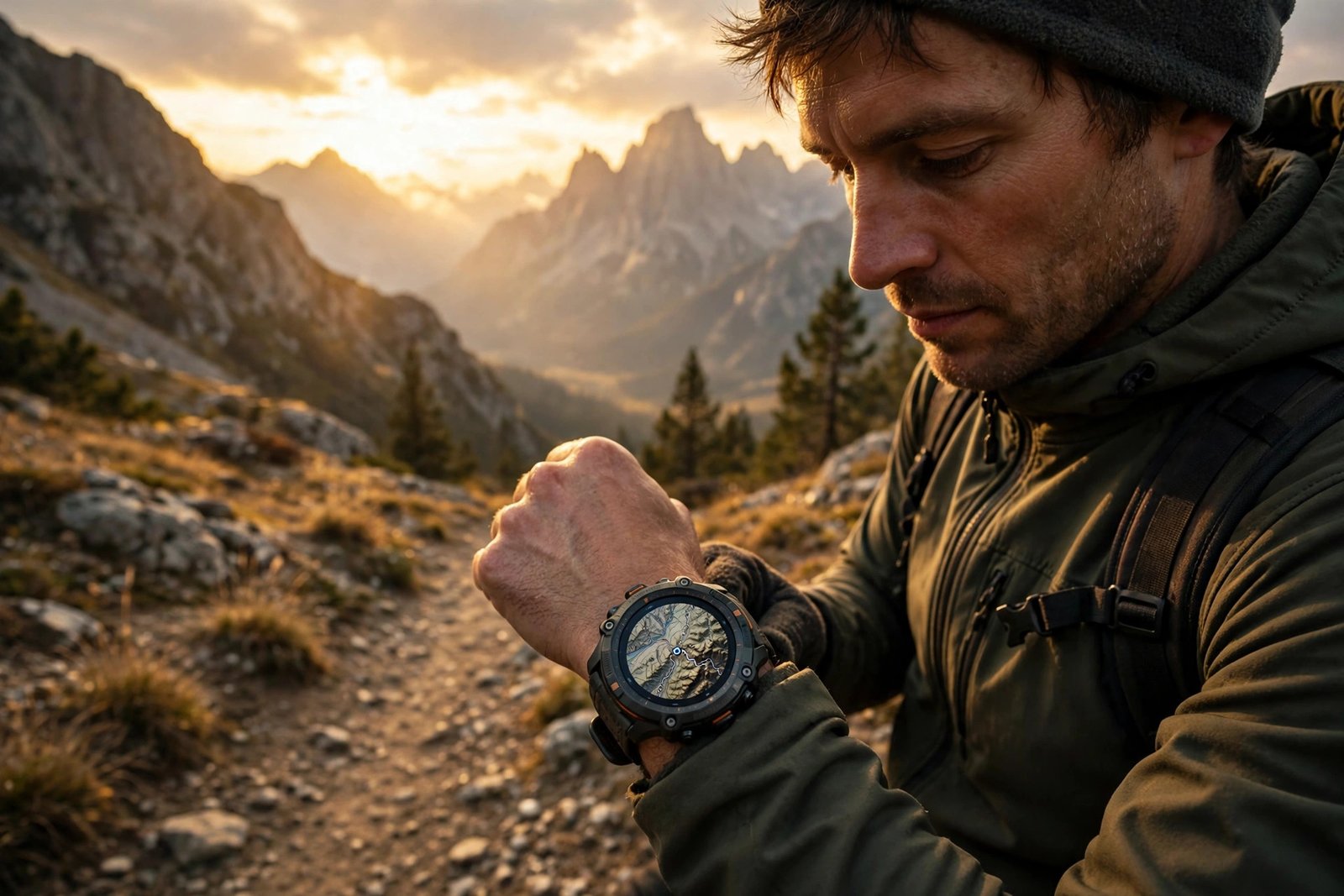
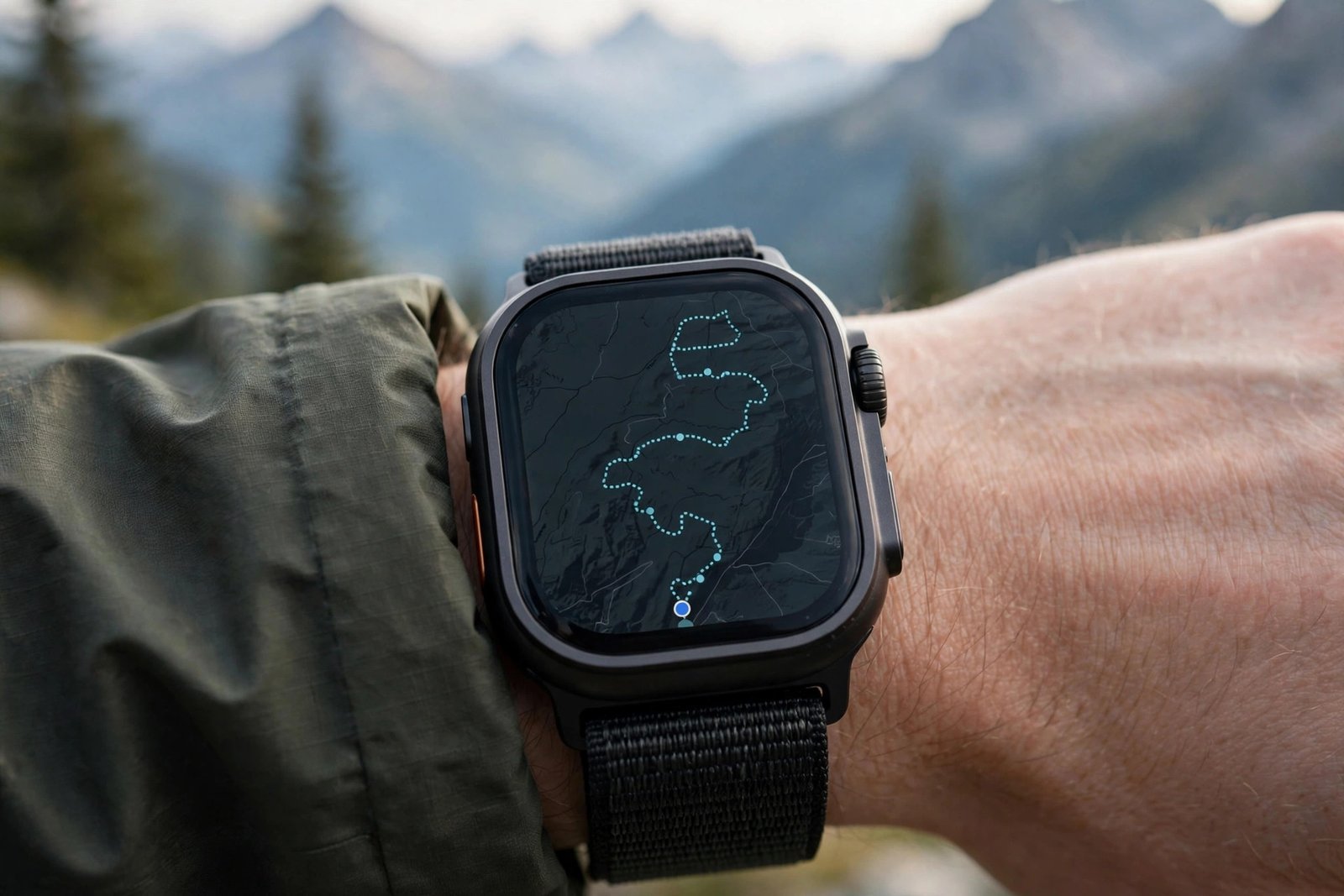
Second, it must help you navigate. The best watches store topographic maps you can follow without a phone signal. Cheaper models show a breadcrumb line of where you have been, which is enough to walk back the way you came. Either beats a phone: a watch stays on your wrist, works with gloves, and sips battery where a phone drains it.
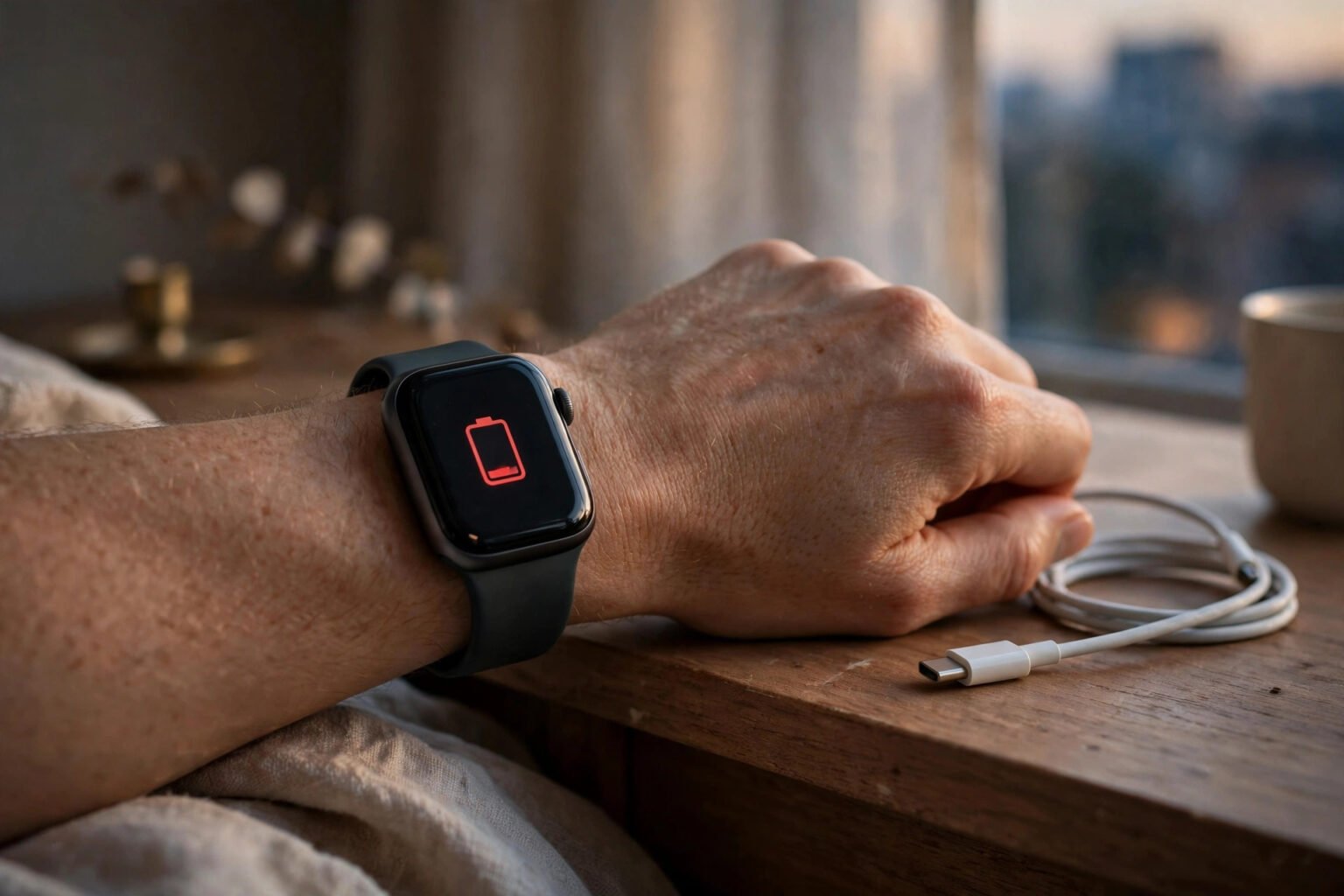
Third, it must last. Manufacturers quote battery in two ways: smartwatch mode, which can run for weeks, and GPS mode, which is what you actually use on a hike. A watch that manages 30 to 40 hours of GPS tracking covers a long weekend; one that manages 10 hours may not survive a single long day with navigation running.
Fourth, it must survive. Look for a water resistance rating of 10 ATM, a sapphire or hardened display, and a case built to a military durability standard. A hiking watch will be knocked against rock, soaked in rain and worn under a rucksack strap, so a delicate fashion watch is the wrong tool.
The best smartwatches for hiking compared
| Watch | GPS | Offline maps | GPS battery (approx.) | Water rating |
|---|---|---|---|---|
| Garmin Fenix 8 | Multi-band | Yes, full topographic maps | Around 30–40 hours | 10 ATM |
| Garmin Epix Pro Gen 2 | Multi-band | Yes, full topographic maps | Around 30–40 hours | 10 ATM |
| Apple Watch Ultra 3 | Dual-frequency | Yes, via Apple Maps and apps | Around 12–17 hours | 10 ATM |
| Suunto Vertical | Multi-band | Yes, offline maps | Around 60 hours | 10 ATM |
| Coros Vertix 2S | Multi-band | Yes, offline maps | Around 40 hours | 10 ATM |
Caption: The leading hiking watches compared on GPS, maps, GPS-mode battery and water resistance. Battery figures are manufacturer-stated and vary with settings.
The best smartwatches for hiking in 2027
Garmin Fenix 8
Best for: serious hikers who want the most complete outdoor watch.
The Fenix 8 is the benchmark hiking watch. It combines multi-band GPS, full topographic maps with route planning, a built-in torch, and a battery that covers a long weekend of GPS use. Its training features, from acclimation to climb planning, are genuinely useful on mountain routes, and the button controls work with gloves in rain.
It is heavy, expensive and more watch than a casual walker needs. Check the current price before buying, as the range spans several models and sizes. But if you hike often, in all weathers, and want one watch that handles navigation, safety and fitness, the Fenix 8 is the one to beat.
Garmin Epix Pro Gen 2
Best for: hikers who want the Fenix experience with a brighter screen.
The Epix Pro is essentially a Fenix with a vivid AMOLED display, which makes maps easier to read at a glance, especially in poor light. It has the same multi-band GPS, the same offline maps and the same long GPS battery, plus a torch and the same rugged 10 ATM build.
The AMOLED screen costs a little battery against the Fenix’s solar option, and it is less readable in the brightest direct sun without raising brightness.
Apple Watch Ultra 3
Best for: iPhone owners who hike marked trails and want a smartwatch first.
The Ultra 3 is the best hiking watch for people who live in Apple’s world. Its dual-frequency GPS is accurate, its display is the brightest here, and it offers offline maps, a compass with backtrack, and an emergency siren. As a daily smartwatch it is far ahead of the dedicated outdoor watches, with calls, messages and apps on your wrist.
Its limits show on multi-day routes: GPS battery is roughly half that of the Garmin and Suunto options, so long days need a power bank or low-power settings. It is also a touchscreen-first watch, which is less handy with gloves. For day hikes and weekend walks, it is excellent; for remote multi-day routes, buy a Garmin or Suunto.
Suunto Vertical
Best for: multi-day hikers who put battery life first.
The Vertical’s headline is its GPS battery: around 60 hours, and solar charging stretches it further on sunny routes. It pairs that with multi-band GPS, free offline maps, a clear display and a tough titanium build, at a price below the Fenix range.
Its app and smart features are simpler than Garmin’s, and route planning takes a little more effort. But for a hiker who measures a watch in days on the trail rather than apps on the wrist, the Vertical is the most practical choice here.
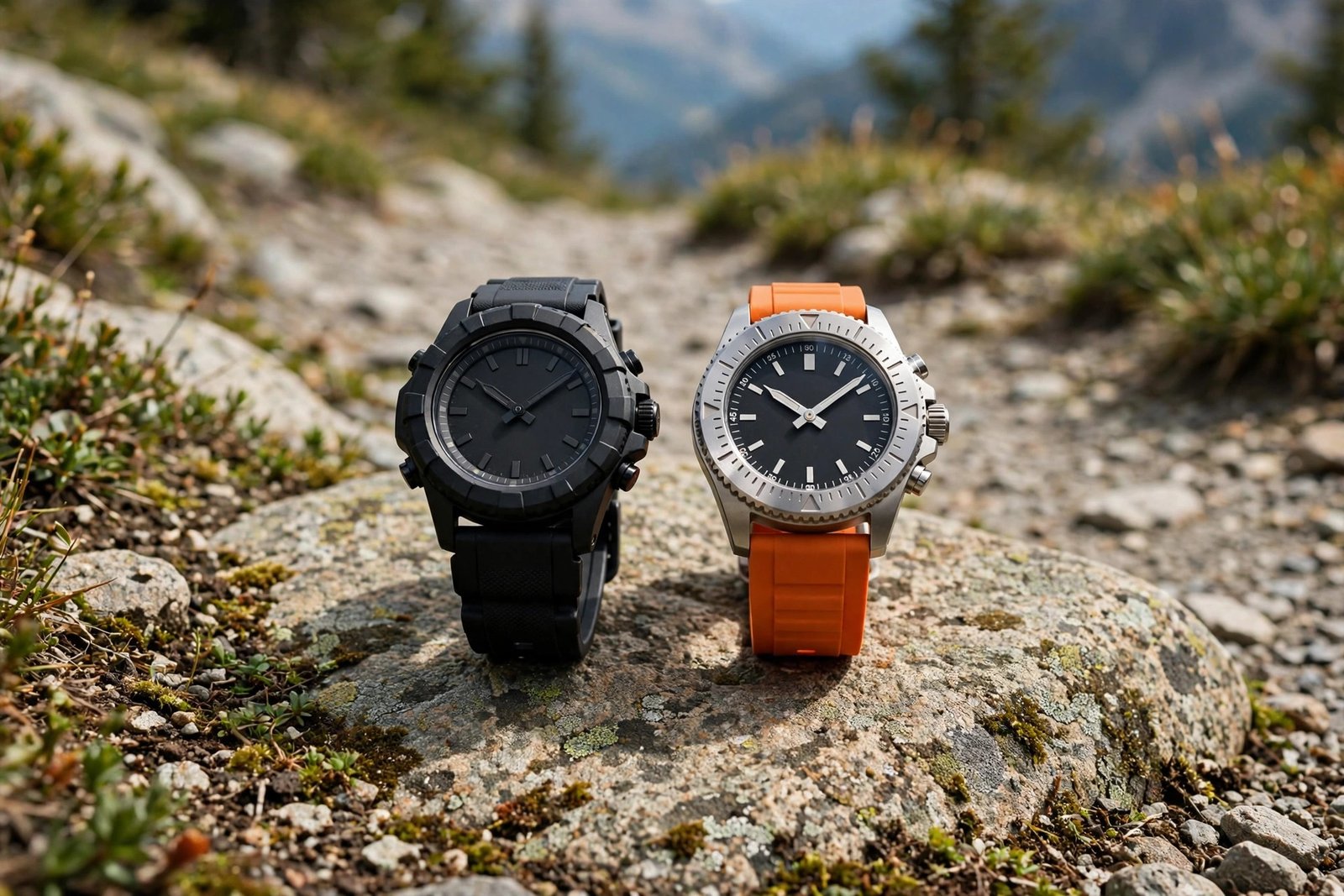
Coros Vertix 2S
Best for: long-distance hikers and runners who want maximum battery for the money.
Coros has quietly become the battery-life brand, and the Vertix 2S delivers around 40 hours of GPS tracking with multi-band accuracy and offline maps, in a light titanium case. It is comfortable for all-day wear, its app is straightforward, and it costs less than the Fenix 8.
It lacks the Fenix’s torch and its maps are simpler, and Coros’ smartwatch features are basic. As a pure trail tool, though, it is outstanding value, and long-distance walkers will appreciate the weight saving as much as the battery.
A hiker’s decision framework
Answer these five questions honestly and the shortlist shrinks fast.
- Where do you hike? Marked day trails suit the Apple Watch Ultra 3; remote, unmarked routes demand a Garmin, Suunto or Coros with offline maps.
- How long are your days? Add up your longest day in GPS hours, then double it for safety. If the answer is over 15 hours, rule out the Ultra 3.
- Do you need maps or breadcrumbs? Breadcrumbs get you home; maps help you choose a route. If you explore new ground, buy maps.
- Gloves or touchscreen? Button controls win in rain, cold and gloves. If you hike in winter, prioritise buttons.
- Will you wear it daily? If yes, screen quality and smart features matter. If it is a trail-only watch, battery and toughness matter more.
Getting the most from your hiking watch
Before your first serious walk, do three things. First, download the maps for your area over Wi-Fi and test them on a familiar route, so you know how to zoom, follow a route and find your way back. Second, set up the safety features: emergency contacts, incident detection where offered, and the backtrack or breadcrumb function, so they are ready before you need them.
Third, learn the battery settings. Most outdoor watches offer GPS modes that trade a little accuracy for much longer life, and turning off the always-on display, wrist gestures and phone notifications during a hike adds hours. Carry a small power bank on long days: topping up a watch at lunch is easier than rationing battery on the final climb.
Pair the watch with the right data. Our guide to how to extend smartwatch battery life covers the settings that add the most hours, and if you swim as cross-training, the best smartwatches for swimming explains water ratings in plain terms. A watch is only as useful as the habits around it: charge it the night before, update its maps before a trip, and always carry a paper map and compass as a backup on remote routes.
Frequently asked questions
Do I need a hiking watch if I have a phone?
Not always. A phone with a mapping app handles easy day walks well. A watch wins on battery life, glove use, rain, and keeping your route recording while the phone stays packed away. For remote or multi-day routes, a watch is the safer choice.
What is multi-band GPS and does it matter?
Multi-band GPS listens to more than one satellite frequency, which improves accuracy under tree cover, in valleys and near cliffs. On open ground the difference is small; on wooded or mountain trails it is noticeable, and it is worth paying for if you hike such routes.
How long should a hiking watch battery last?
For day hikes, 12 hours of GPS tracking is a minimum. For weekends, aim for 30 hours or more. Remember that maps, bright screens and cold weather all reduce real battery life below the manufacturer’s figure.
Are hiking watches waterproof?
The watches here are rated to 10 ATM, which covers rain, river crossings and swimming. That does not mean they are dive watches, and buttons pressed underwater can compromise seals over time. Rinse with fresh water after a swim.
Can a hiking watch replace a map and compass?
No. A watch is a navigation aid, not a replacement for map skills. Batteries fail, screens crack and GPS can lose signal in deep valleys. Carry a paper map and compass on remote routes and know how to use them.
Do I need a subscription for maps?
Garmin, Suunto and Coros include their maps without a subscription. Apple Maps offline works without one, though some third-party mapping apps charge. Check before you buy, and check the current price of any app you plan to rely on.
The bottom line
The best smartwatch for hiking in 2027 for most serious hikers is the Garmin Fenix 8, with the Epix Pro Gen 2 close behind for those who prefer a brighter screen. The Suunto Vertical is the best pick for multi-day battery life, the Coros Vertix 2S is the best value for long-distance walkers, and the Apple Watch Ultra 3 is the best choice for iPhone owners on marked trails. Whichever you buy, learn its navigation on a familiar route first, and never let a watch replace a map, a charged phone and good judgement.
If you want to keep your watch running offline on the trail, our guide to what local AI is and how to run AI offline on your computer explains the offline-first thinking that also applies to navigation. Then pick your watch, download your maps, and walk a route you know before you trust it somewhere you do not.