The best bone conduction headphones 2027 has to offer let you listen to music while still hearing the world around you. Instead of sitting inside or over your ears, they rest on your cheekbones and send sound through the bone to your inner ear, leaving your ear canals open. Today’s models are good enough for serious running, cycling and even swimming.
In short, the Shokz OpenRun Pro 2 is the best bone conduction headphone for most people in 2027. Budget runners should look at the original OpenRun, swimmers at the OpenSwim, and cyclists at the Suunto Wing.
Key takeaways
- Bone conduction leaves your ears open, so you can hear traffic and announcements while you listen.
- Sound has improved greatly, but bone conduction still cannot match good in-ear headphones for bass and detail.
- The Shokz OpenRun Pro 2 is the best all-round choice for most runners and cyclists in 2027.
- Swimmers need onboard storage and a waterproof rating, because Bluetooth does not travel through water.
- Fit matters more than specifications: the band should sit firmly on your cheekbones without bouncing.
- Bone conduction is not the same as open-ear air conduction.
How bone conduction works
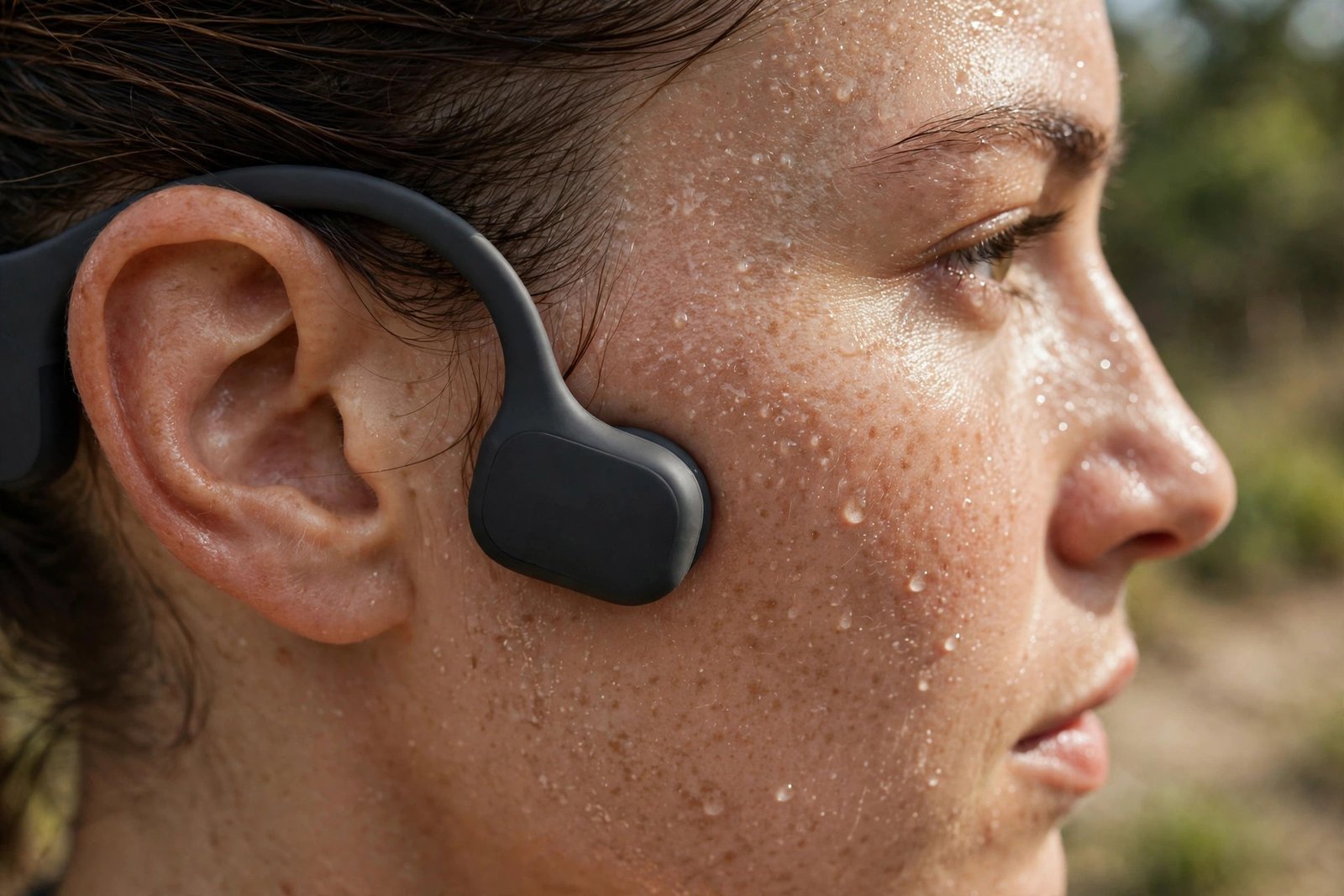
Bone conduction headphones use small transducers that sit on the cheekbones, just in front of the ears. They vibrate gently, and those vibrations travel through the skull to the cochlea, the hearing organ in the inner ear. Your eardrums are not involved, so your ear canals stay open.
That open design is the whole point: a runner can hear a car approaching from behind, and a cyclist can hear a vehicle overtaking.
The trade-off is physics. Because sound reaches you through vibration rather than through the air in your ear canal, bass is weaker and fine detail is harder to reproduce. Dual drivers have improved this greatly, but do not expect sealed-earbud sound: you trade some quality for awareness.
Bone conduction vs open-ear earbuds
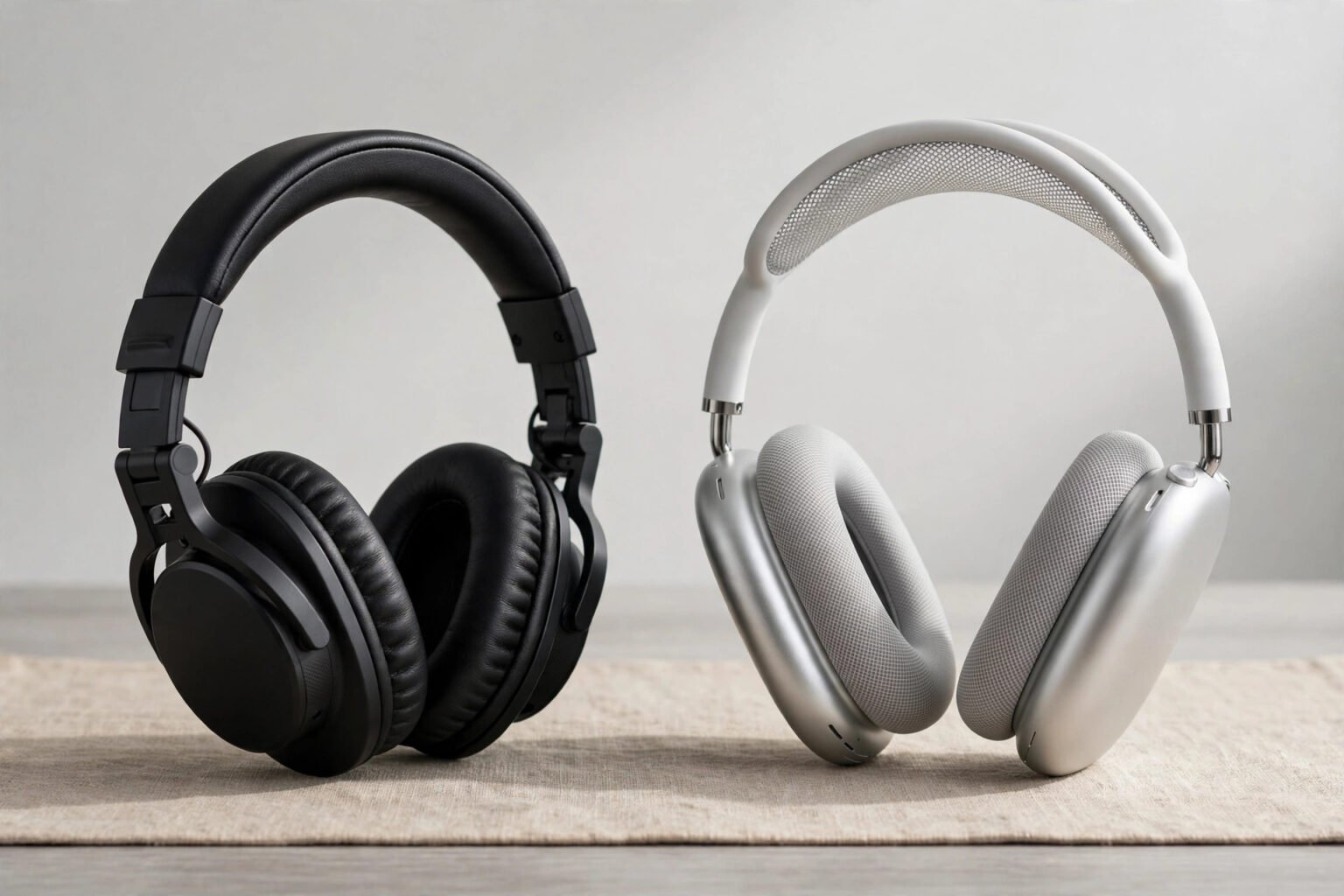
Bone conduction is often confused with open-ear earbuds, but the two differ. Open-ear earbuds sit outside the ear canal and direct sound through the air, and they usually sound better, with more bass and clearer treble. Our guide to the best open-ear earbuds compares the two designs.
Bone conduction has two advantages: nothing sits near the ear canal, and swimming models can be fully waterproof with onboard storage, while most open-ear earbuds cannot go underwater. If you swim, bone conduction is the only practical choice.
Beware cheap imitations: some products sold as bone conduction headphones are just small speakers near the ear.
What to look for in bone conduction headphones
Fit and stability
Transducers should sit flat on your cheekbones and the band should not bounce when you run. Most models come in standard and mini sizes. Try them on a run before committing.
Sound quality
Expect clear voices, moderate bass and reasonable detail; dual drivers make music fuller. Bass drops away at high volume and sound can leak. If sound quality is your top priority indoors, sealed earbuds serve you better.
Battery life and water resistance
Look for at least eight hours of battery life; the best models offer around twelve. Magnetic charging is common on waterproof models. Rain runners should look for IP55 or better; swimmers need a fully waterproof IP68 model with onboard storage, since Bluetooth does not travel through water.
Controls and calls
Physical buttons beat touch controls with sweaty or gloved hands. Check you can change volume and skip tracks without looking, and that the microphone is clear enough for calls.
The best bone conduction headphones of 2027
Shokz OpenRun Pro 2 — the best bone conduction headphones overall
Best for: most runners and cyclists who want the best balance of sound, comfort and battery life.
The OpenRun Pro 2 is Shokz’s flagship running model and our leading pick. It pairs bone conduction with a dedicated bass driver, giving music more weight than earlier Shokz models, and voices sound clear and natural. Battery life is up to around 12 hours, with a quick charge adding useful playback. The frame is light, the fit stable, and the IP55 rating covers rain and sweat.
Its physical buttons are easy to find mid-run, and multipoint pairing covers phone and watch. The limitation is shared by every bone conduction model: bass and detail fall short of sealed earbuds, and sound leaks at high volume. For road running and cycling, that is a fair trade. Check current price, as Shokz models are often discounted.
Shokz OpenRun — the best budget bone conduction headphones
Best for: runners who want proven bone conduction sound at the lowest sensible price.
The original OpenRun remains a strong buy in 2027, now that its price has fallen since the Pro 2 arrived. It offers the same open-ear awareness and secure fit, with up to around 8 hours of battery life and an IP67 rating for rain, sweat and brief immersion. It is lighter than the Pro 2, and many runners prefer its simpler feel.
Sound is thinner than the Pro 2, with less bass, and it uses an older charging connector rather than USB-C. If you are new to bone conduction, this is the cheapest sensible way to try it. Runners comparing it with conventional earbuds should read our guide to the best earbuds for running.
Shokz OpenSwim — the best bone conduction headphones for swimming
Best for: swimmers who want music and podcasts in the pool or open water.
The OpenSwim is the only model here built for swimming. It is waterproof to IP68, stores music on the headphones, and holds up to around 8 hours of playback. Onboard storage matters because Bluetooth does not travel through water, so a poolside phone cannot stream to it. You load audio files before you swim, and it plays them with no connection.
The fit is snug through turns and push-offs, and the sound underwater is surprisingly clear. It has no Bluetooth streaming, so it cannot take calls or play from a streaming app, and transferring files takes a little setup. For lap swimmers who find pool sessions monotonous, it changes the experience. Check the manufacturer’s guidance on depth and rinsing.
Suunto Wing — the best bone conduction headphones for cyclists
Best for: cyclists and road runners who want maximum awareness and a headlamp for low light.
The Suunto Wing is built with road safety in mind. It offers bone conduction sound, up to around 10 hours of battery life, and a bright LED light on the back of the band for low-light visibility — something no other model here offers. It is rated IP67, so rain and sweat are no concern.
Sound is good rather than outstanding, sitting behind the OpenRun Pro 2 on bass and warmth. Its strongest case is for cyclists, who benefit most from hearing traffic and being seen. If you ride on roads regularly, the Wing deserves a close look. Check current price, since Suunto models vary by retailer.
Creative Outlier Free Pro — the best value alternative
Best for: buyers who want bone conduction sound and waterproofing for less than the leading brands.
The Creative Outlier Free Pro is a genuine bone conduction model with an IPX5 rating, onboard storage and up to around 10 hours of battery life, at a price that undercuts the Shokz range. It suits runners and gym users who want the open-ear design without paying flagship money.
Its sound is serviceable rather than refined, with less bass and clarity than the OpenRun Pro 2, and its fit is slightly bulkier. Its rating covers sweat and rain rather than submersion, so it is not a swimming pick. Commuters may also want to compare it with conventional options in our best headphones for commuting guide.
Best bone conduction headphones 2027: comparison table
| Headphones | Best for | Battery | Water rating | Standout feature |
|---|---|---|---|---|
| Shokz OpenRun Pro 2 | Most runners and cyclists | Up to ~12 hours | IP55 | Dual drivers, best sound |
| Shokz OpenRun | Budget runners | Up to ~8 hours | IP67 | Lightest fit, lowest price |
| Shokz OpenSwim | Swimmers | Up to ~8 hours | IP68 | Onboard storage, fully waterproof |
| Suunto Wing | Cyclists, road safety | Up to ~10 hours | IP67 | Rear LED light for visibility |
| Creative Outlier Free Pro | Value buyers | Up to ~10 hours | IPX5 | Onboard storage, lower price |
Table: leading bone conduction headphones of 2027 compared on battery, water protection and standout feature.
Narrow the choice by activity: runners and cyclists start with the OpenRun Pro 2, swimmers with the OpenSwim, and budget buyers compare the OpenRun with the Creative model.
A practical checklist before you buy
- Match the model to your sport: running and cycling suit the OpenRun Pro 2 or the Wing; swimming needs the OpenSwim.
- Check the size: try standard and mini sizes if both are offered, and confirm the band does not bounce when you run.
- Test the sound honestly: play what you actually train to, and accept that bass will be lighter than sealed earbuds.
- Confirm the water rating: IP55 covers rain and sweat, IP67 brief immersion, and only IP68 models are built for swimming.
- Check charging and music loading: waterproof models use magnetic charging, and swimmers need onboard storage, not Bluetooth.
- Listen at a safe volume: open ears do not mean safe volume, so keep levels moderate.
If you are unsure, try a cheaper model first: you will know within a week whether the design suits you.
Frequently asked questions
Are bone conduction headphones safe?
They are safe when used sensibly, and can be safer than sealed earbuds outdoors because you can hear traffic and hazards. They can still cause hearing damage at high volume over long periods, so keep the volume moderate and take breaks.
Do bone conduction headphones sound good?
They sound good for voices, podcasts and rhythm, and the best models in 2027 are far better than early versions. They do not match sealed earbuds for bass or detail, so if sound quality is your top priority indoors, sealed earbuds are the better choice.
Can you swim with bone conduction headphones?
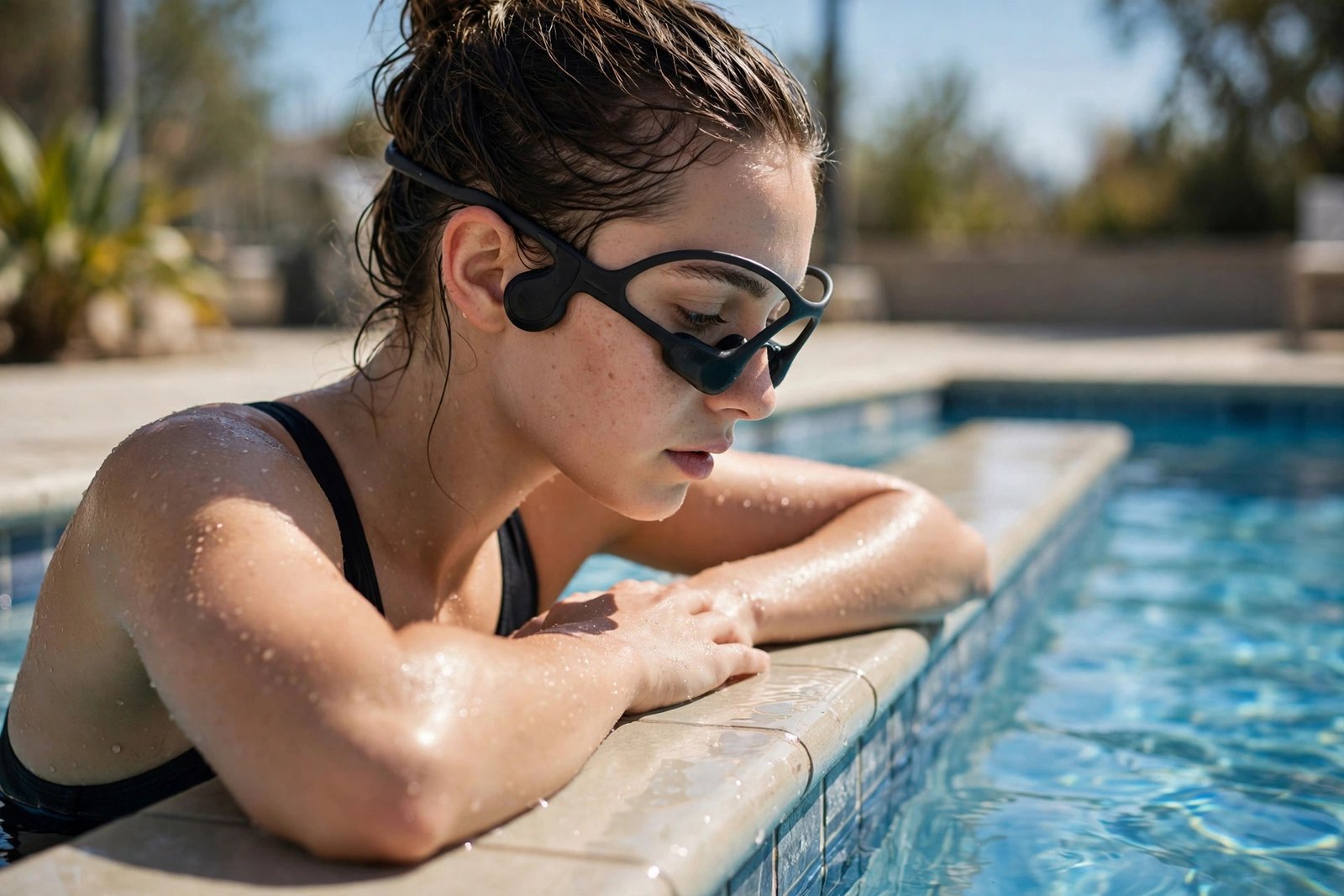
Yes, but only with a model built for swimming, such as the Shokz OpenSwim, which is waterproof to IP68 and stores music onboard. Bluetooth does not travel through water. Ordinary bone conduction headphones are not safe to submerge.
Can other people hear bone conduction headphones?
Yes, at high volume. Sound leaks from the transducers, and people nearby can hear it in a quiet room. Outdoors it is rarely noticeable, so keep the volume moderate.
Do bone conduction headphones work with glasses?
Yes, for most people: the band sits behind the head and the transducers rest on the cheekbones, so they rarely conflict with glasses.
Are bone conduction headphones better than open-ear earbuds?
Neither is better in every case. Bone conduction keeps the ear canal clear and works for swimming, while open-ear earbuds usually sound better. Swimmers should choose bone conduction; road runners should compare both.
The bottom line
The best bone conduction headphones in 2027 match where you train. For most runners and cyclists, the OpenRun Pro 2 is the right choice; budget buyers should take the original OpenRun, swimmers the OpenSwim, and road cyclists the Suunto Wing.
Start with your sport, then try the fit before you commit. Once you have run with open ears, sealed earbuds on a busy street feel like a step backwards.
Safety note: keep listening volume moderate, stay aware of traffic even with open ears, and never rely on headphones alone for road safety. Swimmers should follow the manufacturer’s depth and care guidance and never swim alone in open water.