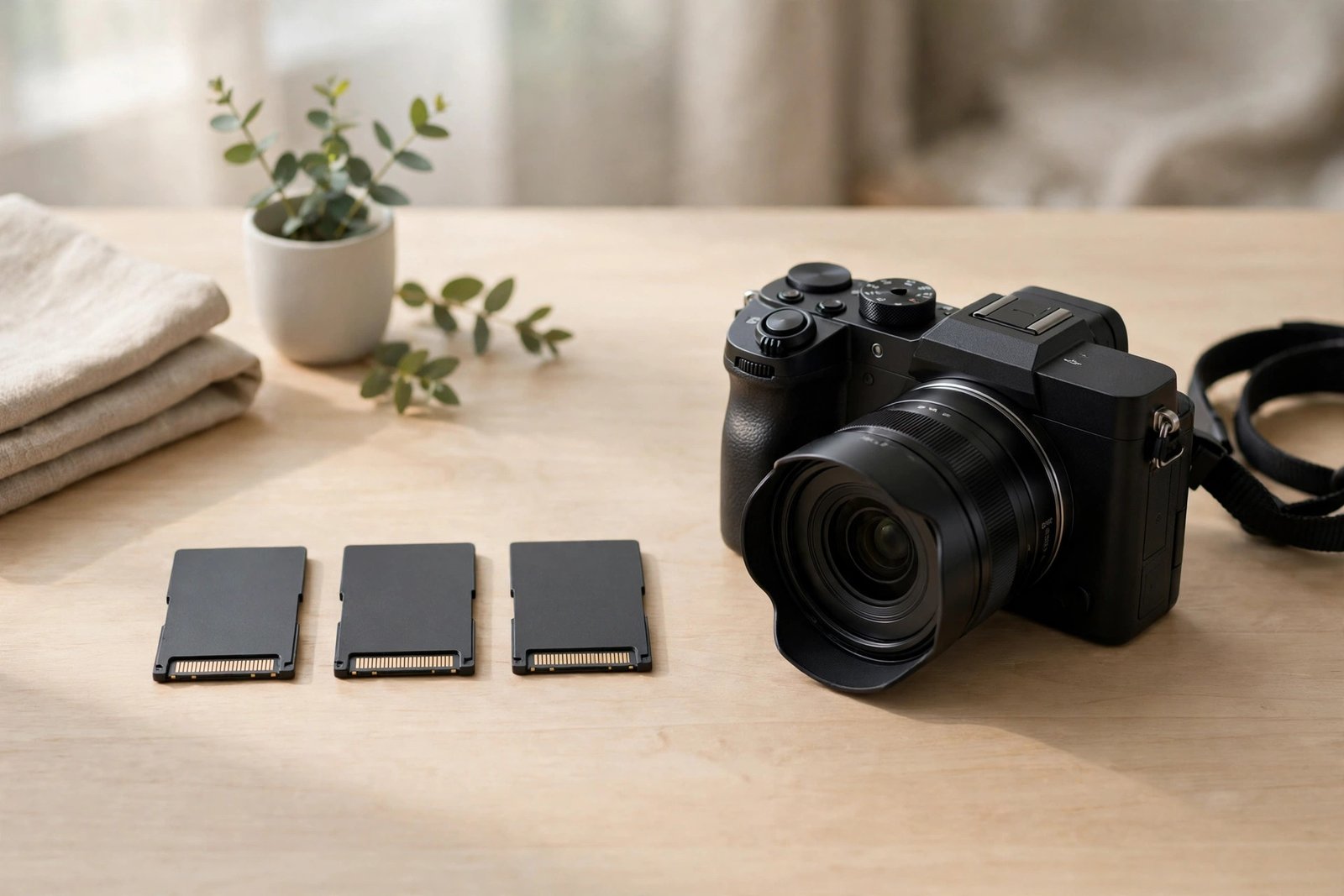
The best CFexpress cards for photographers in 2027 never make you wait — not during a 20-frame-per-second burst, and not while a full card copies to your computer. For most photographers, that means a CFexpress Type B card from ProGrade Digital, Delkin or Lexar, matched to the slot in your camera.
So which card should you buy? Canon and Nikon shooters should start with the ProGrade Digital Cobalt CFexpress Type B. Sony shooters need the smaller Type A format, where the Sony CEA-G TOUGH is the natural choice. The wrong card is not just slower — it may not fit at all — so check which type your camera takes first.
Key takeaways
- Type A and Type B cards are physically different and are not interchangeable — check your camera’s slot before you buy.
- For stills bursts, sustained write speed matters more than the headline read speed.
- For video, look for VPG certification: VPG200 guarantees 200 MB/s sustained writes and VPG400 guarantees 400 MB/s.
- CFexpress 4.0 cards are faster on paper, but most current cameras cannot use the extra speed.
- Buy from an authorised retailer — counterfeit and grey-market cards are a real problem in this category.
Type A vs Type B: the choice your camera makes for you
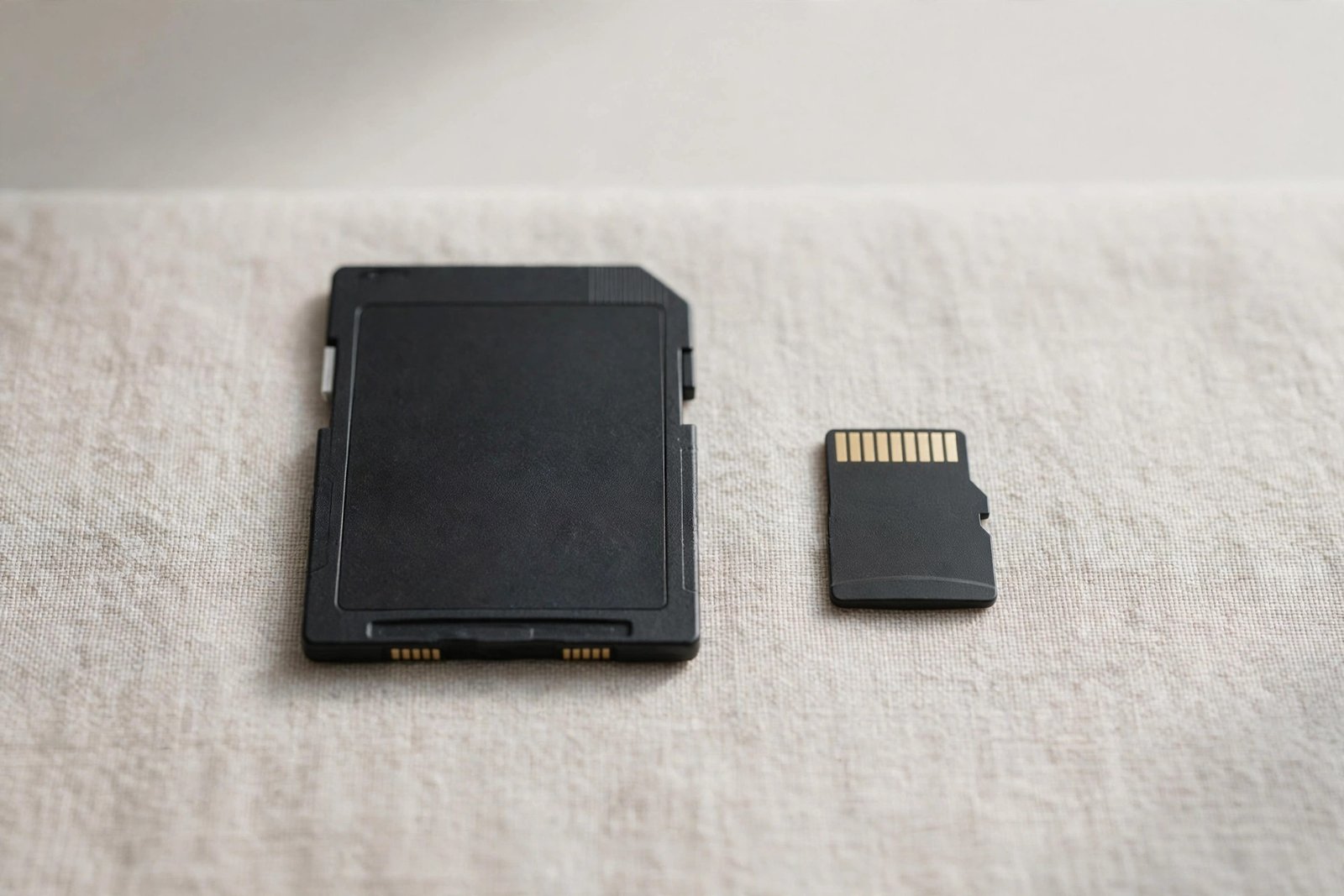
CFexpress comes in three sizes, but only two matter to photographers. Type A measures 20 x 28 x 2.8 mm, uses a single PCIe lane, and reaches a theoretical maximum of 1,000 MB/s under CFexpress 2.0. Type B measures 38.5 x 29.8 x 3.8 mm, uses two lanes, and reaches 2,000 MB/s.
The split is by brand. Sony’s Alpha cameras — the a7S III, a7 IV and a1, among others — use Type A slots. Canon’s EOS R5 and R5 Mark II, Nikon’s Z8 and Z9, and Fujifilm’s X-H2S and GFX 100 II use Type B. A Type A card will not fit a Type B slot, and vice versa, so there is no cross-shopping between the two formats.
The newer CFexpress 4.0 standard doubles those theoretical maximums, to 2 GB/s for Type A and 4 GB/s for Type B. Treat that with caution: in-camera speeds are usually limited by the camera, not the card, so a 4.0 card rarely shoots faster in a 2.0-era body. Where it pays off is offloading, cutting copy times through a USB4 reader.
What actually matters when you compare cards
Card packaging is full of big numbers, and most of them are not the number you need. Read speed — how fast data comes off the card — is printed largest because it is the biggest. It matters when you copy files, but it tells you almost nothing about how the card behaves while you are shooting.
Write speed is what counts in the camera, and even here the headline figure can mislead: many cards quote a peak write speed they can only hold for a few seconds. The figure that matters is the minimum sustained write speed — the speed the card can hold for the whole time you are recording. That is what stops a buffer from filling during a long burst, and what keeps 8K video recording without dropping frames.
That is where VPG certification helps. The Video Performance Guarantee, run by the CompactFlash Association, certifies that a card can sustain a minimum write speed: 200 MB/s for VPG200 and 400 MB/s for VPG400. A VPG400 card is a tested guarantee, not a marketing claim, and if you shoot high-bitrate video it is the simplest filter you can apply.
Capacity is the other decision. A 128GB card covers a day of stills for most photographers, but video fills cards fast, and 8K RAW faster still. Many professionals prefer two mid-size cards to one very large one, so a single failure cannot take everything.
Reliability only shows up when it fails. Every card on this list comes from an established brand with a warranty and, in some cases, a data-recovery service. Buy from an authorised retailer and keep the receipt — a cheaper card from an unknown seller is not a bargain if it is counterfeit.
The best CFexpress cards for photographers in 2027
1. ProGrade Digital Cobalt CFexpress Type B
Best for: professional Canon and Nikon shooters who need maximum sustained speed.
ProGrade’s flagship Type B card, rated at up to 1,700 MB/s read and 1,500 MB/s write, with a minimum sustained write speed of 1,400 MB/s. That sustained figure sets it apart: it holds its speed through long bursts and heavy video codecs. ProGrade offers a recovery service and a solid warranty. It costs more than the Gold line below, but for working professionals the difference is easy to justify. Check the current price, as it varies by capacity and retailer.
2. Delkin Devices BLACK CFexpress Type B 4.0
Best for: video shooters and anyone who wants VPG400 certification.
Delkin’s BLACK line is built around sustained performance, and the 4.0 version carries VPG400 certification, guaranteeing 400 MB/s sustained writes. In independent benchmarks its sustained write speed has tested at around 1,500 MB/s, roughly double some rival 4.0 cards. Delkin offers a 48-hour replacement service on BLACK cards, and if your work is mostly video, this is the card to beat.
3. Lexar Professional Diamond Series CFexpress Type B
Best for: high-bitrate 8K video and long bursts.
Lexar’s Diamond Series is VPG400 certified and rated at up to 1,900 MB/s read and 1,700 MB/s write, with a minimum sustained write speed of 1,600 MB/s — among the strongest of any Type B card. That makes it a natural choice for 8K RAW and long bursts of high-resolution stills. Lexar is widely available from authorised sellers. Check the current price, as it varies by capacity.
4. SanDisk Extreme Pro CFexpress Type B
Best for: photographers who want a trusted brand with wide availability.
The SanDisk Extreme Pro is rated at up to 1,900 MB/s read and 1,700 MB/s write, and it is one of the most widely stocked CFexpress cards in the world. That availability matters: if you need a spare card in a new city, a SanDisk is the card a camera shop is most likely to have. Sustained write performance is a step behind the VPG400 flagships, so heavy video shooters should look at the Delkin or Lexar above, but for stills and moderate video it is an excellent all-round card.
5. Sony CEA-G TOUGH CFexpress Type A
Best for: Sony Alpha shooters who need the Type A format.
Sony shooters have no choice of format — the a7S III, a7 IV and a1 take Type A — so the question is which Type A card to buy. The CEA-G TOUGH is the benchmark. The 80GB and 160GB versions are rated at 800 MB/s read and 700 MB/s write, and the newer 240GB and larger versions use CFexpress 4.0 for faster transfers. The card is built to resist bending, drops and dust, which suits a card swapped in the field. It is expensive per gigabyte, but it is the reliable Type A choice for a Sony body.
6. ProGrade Digital Gold CFexpress Type B
Best for: enthusiasts and second-body cards where value matters most.
The Gold line is ProGrade’s value range, rated at up to 1,700 MB/s read and 1,500 MB/s write, with a minimum sustained write speed of 400 MB/s. That is far below the Cobalt, so professionals shooting long video should spend more — but for stills and moderate 4K video it is more than enough, and for a second body or a first move to CFexpress it offers most of the real-world performance at a noticeably lower price.
Comparison table
| Card | Type | Max read / write | Sustained write | VPG rating |
|---|---|---|---|---|
| ProGrade Cobalt | Type B | 1,700 / 1,500 MB/s | 1,400 MB/s | VPG400 |
| Delkin BLACK 4.0 | Type B | Very high | Around 1,500 MB/s | VPG400 |
| Lexar Diamond | Type B | 1,900 / 1,700 MB/s | 1,600 MB/s | VPG400 |
| SanDisk Extreme Pro | Type B | 1,900 / 1,700 MB/s | Not VPG400 rated | — |
| Sony CEA-G TOUGH | Type A | 800 / 700 MB/s | Not published | VPG200 |
| ProGrade Gold | Type B | 1,700 / 1,500 MB/s | 400 MB/s | VPG200 |
Caption: The best CFexpress cards compared on format, speed and VPG certification. Sustained write speed matters most while shooting.
How to choose: a five-minute decision framework
Work through these questions before you spend anything — they will stop you buying a card that does not fit, or one far faster and more expensive than your camera can use.
- Which slot does your camera have? The camera decides, not you — Sony Alpha cameras use Type A, while Canon, Nikon and Fujifilm flagships use Type B.
- Do you shoot video, and at what bitrate? High-bitrate 4K and any 8K recording need a VPG400 card; stills-only photographers can save money with VPG200.
- How long are your bursts? Sports and wildlife shooters need a high sustained write speed; portrait and landscape shooters rarely fill a buffer and can prioritise capacity.
- How much capacity do you need? A day of stills fits on 128GB for most photographers; for video, especially 8K, choose 256GB or larger, and carry a spare.
- How fast is your reader? A fast card only copies fast through a fast reader — budget for a USB4 reader if you still use an old USB 3 one.
- Where are you buying it? Buy from an authorised retailer and keep the receipt — counterfeit cards are common, and a fake can lose your photographs.
If you are still unsure, our guide to the best camera tripods for travel covers the other half of a photographer’s kit, and the best laptops for photo editing will help you choose a machine that can handle the files these cards produce. For phone photographers, the best camera phones compares the handsets closing the gap on dedicated cameras.
Frequently asked questions
Can I use a CFexpress Type B card in a Type A slot?
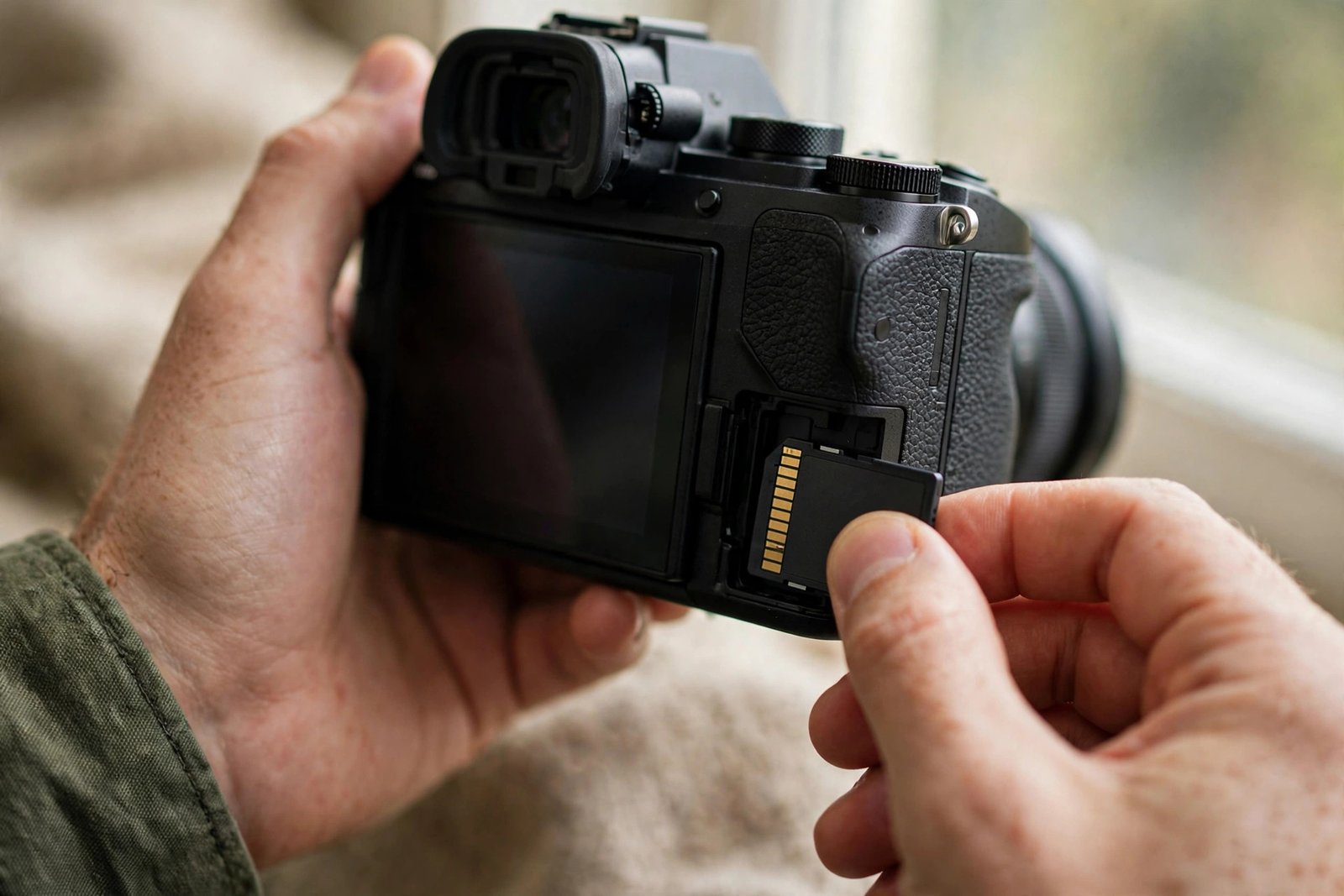
No. Type A and Type B cards are different physical sizes and are not interchangeable — check your camera’s manual before you buy.
What is the difference between CFexpress 2.0 and 4.0?
CFexpress 4.0 uses the faster PCIe Gen4 interface, doubling the theoretical maximum to 2 GB/s for Type A and 4 GB/s for Type B. Most current cameras cannot use the extra speed while shooting, but 4.0 cards copy files faster through a USB4 reader.
Do I need a VPG400 card for photography?
For stills alone, usually not — VPG200 is enough for most burst shooting. VPG400 matters for high-bitrate video, where a slower card can drop frames or stop recording.
How much capacity do I need?
For a day of stills, 128GB is enough for most photographers. For video, especially high-bitrate 4K or 8K, choose 256GB or larger, and carry a spare.
The bottom line
The best CFexpress card for photographers in 2027 matches your camera’s slot, sustains its write speed while you shoot, and comes from a brand you can trust with irreplaceable work. For most Canon and Nikon shooters that is the ProGrade Digital Cobalt, with the Delkin BLACK 4.0 the strongest choice for video. Sony shooters should buy the Sony CEA-G TOUGH in Type A, and anyone watching the budget should look at the ProGrade Gold.
Your next step is simple: confirm whether your camera takes Type A or Type B, decide whether your video work needs VPG400, and buy one card from an authorised retailer before your next shoot. Then format it in the camera — and stop thinking about storage until the buffer fills, which, with the right card, it will not.