
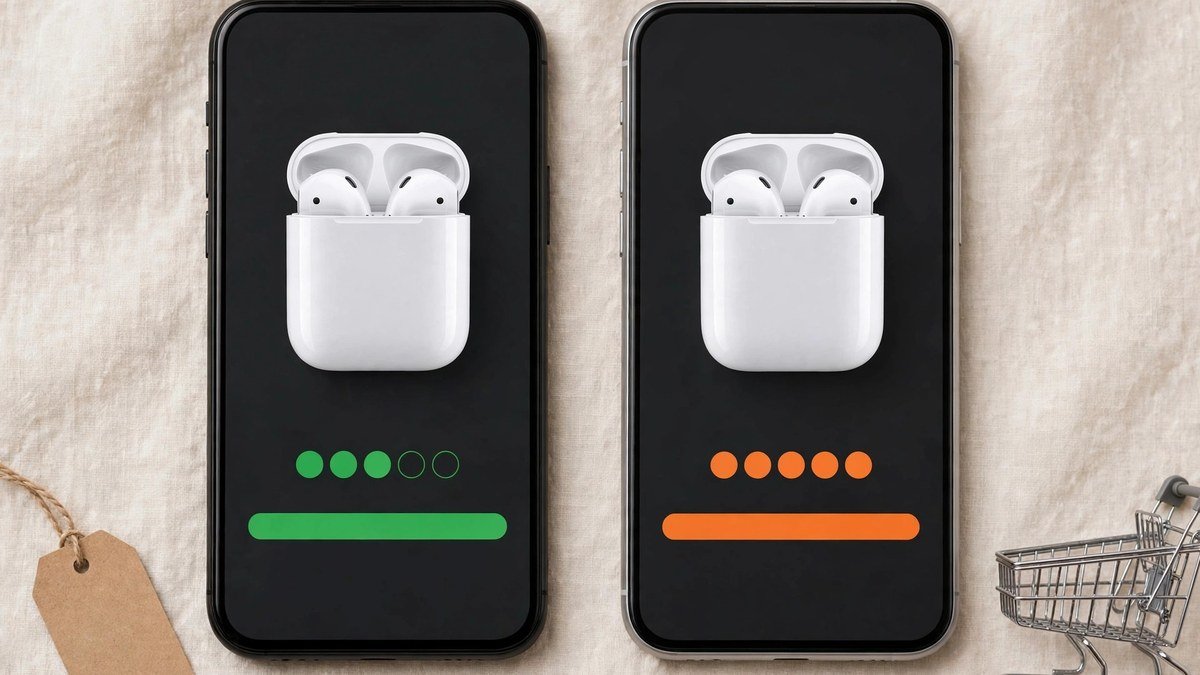
Two people can open the same shop, at the same time, and see two different prices for the same item. That is surveillance pricing: a business uses personal data to decide what price a specific customer sees, based on what the system predicts that customer is willing to pay. It has moved from academic papers into real shopping, and in October 2026 the US Federal Trade Commission ordered nine major companies to explain how they set their prices.
On 28 October 2026, the FTC ordered Delta, United, JetBlue, Uber, Lyft, DoorDash, Instacart, Target and Walmart to document whether their prices vary from person to person, and what inputs and tools they use. The companies have 45 days to respond. The inquiry does not ban the practice. It asks a simpler question first: are shoppers being charged different prices because of who they are, and do they know?
For shoppers, the practical question is how to tell. A price can differ because of supply and demand, because of location, or because of a test. It can also differ because of personal data. This guide explains how surveillance pricing works, how it differs from normal price changes, and how to check whether it is happening to you.
Key takeaways
- Surveillance pricing is when a business uses personal data to set an individual price, based on a prediction of what that customer will pay.
- On 28 October 2026, the FTC ordered nine major companies, including DoorDash, Walmart, Target, Uber, Lyft, Instacart and three airlines, to document how their prices vary and what data they use.
- New York has required a warning label on prices set by an algorithm using personal data since November 2025. Connecticut and Maryland began restricting the practice on 1 October 2026.
- DoorDash said on 16 November 2026 that it does not use surveillance pricing, that the same item at the same time costs the same for everyone, and that it supports a ban on the practice while keeping personalised discounts.
- The most useful check is a same-cart comparison: the same item, from the same seller, at the same time, on a second device or account, logged out.
What surveillance pricing is
Surveillance pricing, also called personalised pricing, is when a business uses personal data to decide what price a specific customer sees. The inputs can include where you are, what device you use, what you searched for and bought before, and what a system predicts you are willing to pay. Charging what the market will bear is nothing new. What is new is the amount of data available. Online stores, apps and loyalty programs now collect enough about each customer that a price can be set per person instead of per market.
It is different from dynamic pricing, where a price changes with supply and demand, and from zone pricing, where a price changes by area. In those cases, two people in the same place at the same time usually see the same price. With surveillance pricing, two people can see different prices at the same moment, because the price depends on data about them. A higher price because a profile suggests you will pay it is the core example.
The data can be detailed. According to the FTC’s January 2025 study of pricing intermediaries, the tools sold to retailers can use precise location, browsing history, previous purchases and searches, income and financial history, employment history, and web-browsing and social media history. The six companies in that study, Mastercard, Accenture, PROS, Bloomreach, Revionics and McKinsey, worked with at least 250 clients, including grocery stores and apparel retailers. The resulting profiles can be used to size consumers up for their susceptibility to pay more, without their knowledge, let alone their consent, according to the Center for Democracy and Technology.
Our report on best CRM software for small businesses covered how businesses keep customer data in one place. Surveillance pricing is what can happen when that data is used not only to serve a customer, but to price them.
What the FTC inquiry covers
The FTC’s inquiry, launched on 28 October 2026, seeks information from nine companies: Delta, United, JetBlue, Uber, Lyft, DoorDash, Instacart, Target and Walmart. The companies were given 45 days from the date they received the orders to provide information about their pricing. The FTC said consumers deserve to know whether companies use their web surfing habits or other personal data to set prices.
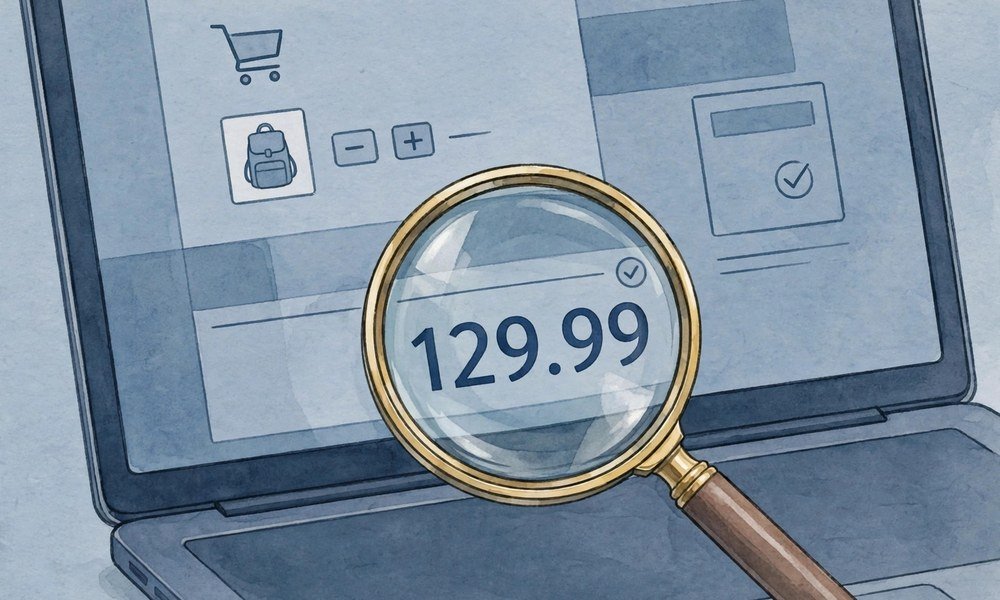
The inquiry extends beyond what shoppers pay. The FTC is also examining whether gig-economy platforms use workers’ personal information to determine compensation. That part of the inquiry is separate from the shopping question, but it uses the same idea: personal data can be used to set a price, or a wage, for an individual.
At the federal level, the FTC closed public comment on 25 September 2026 on a proposed policy that treats undisclosed personalised pricing as likely unfair or deceptive where shoppers expect a price not to vary. The FTC’s August 2026 proposal says businesses should disclose that a price is personalised, why, and what data was used. It is a proposal, not a final rule, and it does not ban the practice.
State rules are already in force in some places. In New York, a business that sets a price with an algorithm using personal data must show the line “THIS PRICE WAS SET BY AN ALGORITHM USING YOUR PERSONAL DATA”. The attorney general has enforced it since 10 November 2025. Since 1 October 2026, Connecticut bars retailers of goods and third-party food delivery services from surveillance pricing, online and in stores, and Maryland bars large grocery stores and food delivery services from using personal data to charge more for tax-exempt grocery food. Neither law reaches loyalty-program prices, or price changes driven by supply and demand rather than personal data.
What DoorDash said
DoorDash was one of the nine companies named in the FTC inquiry, and on 16 November 2026 it publicly addressed the concerns. The delivery company said surveillance pricing is a practice in which companies use personal information to determine what individual customers are willing to pay, and added, in its own words, that it does not do it.
DoorDash outlined several commitments. It said customers ordering the same item from the same store at the same time will see identical listed item prices. It denied charging customers differently based on their age, gender, race, religion or smartphone type, and said iPhone users are not charged more than Android users simply because of their devices. It also rejected the idea that frequent customers face higher prices because the platform knows their purchasing habits, and said it does not use real-time surge pricing to increase item prices or standard fees during periods of high demand.
The company also defended personalised discounts, which allow it to offer different promotions based on customers’ shopping habits, and said it is calling for legislation to ban surveillance pricing while preserving personalised coupons, discounts and loyalty programs. Its announcement does not establish whether the company has formally responded to the FTC.
DoorDash also addressed a patent application for technology designed to identify customers experiencing difficulties using its app. The application raised questions about whether information about customers’ emotional states could influence pricing. DoorDash said the technology was never implemented, that it withdrew the patent application, and that it denied using customers’ emotional states, stress levels or biometric information to determine prices.
For shoppers who order food and groceries online, our guide to best email marketing software is not directly about pricing, but it covers how businesses use customer data to send personalised offers, which is the other side of the same data.
The caveats that matter
The most important caveat is that a different price does not always mean surveillance pricing. Prices change for many reasons: supply and demand, a sale ending, a coupon, a loyalty discount, or a test where two groups see different prices. Connecticut expressly excludes supply-and-demand changes from its ban. Maryland’s ban reaches only prices based on personal data. A same-cart comparison helps, but it is not proof on its own.
| Detail | What is known |
|---|---|
| FTC inquiry | 28 October 2026, nine companies ordered to document pricing; 45 days to respond |
| Companies named | Delta, United, JetBlue, Uber, Lyft, DoorDash, Instacart, Target, Walmart |
| New York rule | Disclosure line required since November 2025 for prices set by an algorithm using personal data |
| Connecticut and Maryland | Restrictions began 1 October 2026, for retail, groceries and food delivery, with limits |
| FTC proposal | August 2026, disclose that a price is personalised, why, and what data was used; not a final rule |
| DoorDash response | 16 November 2026, denies surveillance pricing, supports a ban while keeping personalised discounts |
| What it is not | Not the same as dynamic pricing, zone pricing, or a loyalty discount |
| Best check | Same item, same seller, same time, second device or account, logged out |
Personalisation often appears as a discount instead of a markup. Everyone sees the same list price, but only some customers get the coupon. The result is the same: some people pay more. That makes the practice harder to spot, and harder to prove, than a straightforward price difference.
There is also a limit to what a shopper can do alone. A single comparison shows a difference. It does not show why the difference exists, or what data was used. That is why the FTC inquiry asks companies to document their inputs and tools, rather than relying on shoppers to prove the practice one cart at a time.
Checklist: checking a price before you pay
Use these checks before paying for an item that seems priced for you, not for everyone.
- Compare the same cart on a second device or account, logged out, at the same time.
- Check for a disclosure line, especially in New York, saying the price was set by an algorithm using personal data.
- Clear cookies or use a private window, then compare again, and note what changes.
- Check whether a loyalty discount, coupon or sale explains the difference.
- Take a screenshot with the time, item and price, if you plan to report it.
- Report a suspected undisclosed personalised price to the state attorney general where you live.
Frequently asked questions
What is surveillance pricing?
It is when a business uses personal data to decide what price a specific customer sees, based on a prediction of what that customer will pay. It is also called personalised pricing, and it is different from dynamic pricing, where a price changes with supply and demand.
Is surveillance pricing illegal?
It depends where you live. New York requires a disclosure. Connecticut and Maryland restrict it for some retail and grocery sales since 1 October 2026. At the federal level, the FTC has proposed treating undisclosed personalised pricing as likely unfair or deceptive, but that proposal is not a final rule and does not ban the practice.
Which companies did the FTC ask about pricing?
Delta, United, JetBlue, Uber, Lyft, DoorDash, Instacart, Target and Walmart. The FTC ordered them on 28 October 2026 to document whether their prices vary from person to person and what inputs and tools they use. They have 45 days to respond.
What did DoorDash say?
DoorDash said on 16 November 2026 that it does not use surveillance pricing, that the same item at the same time costs the same for everyone, and that it does not charge differently based on age, gender, race, religion or phone type. It supports a ban on surveillance pricing while keeping personalised discounts.
How can I check if a price is personalised?
Compare the same item, from the same seller, at the same time, on a second device or account, logged out. If the price differs and no sale, coupon or loyalty discount explains it, note the time and take a screenshot.
What should I do if I suspect it?
Keep the evidence: item, seller, time and price on both devices. In New York, the attorney general takes complaints about missing disclosures. In Connecticut and Maryland, the attorney general enforces the new restrictions. No law makes every online price the same for everyone, so a difference alone is not proof.
For businesses that want to use customer data responsibly, our report on Nvidia gaining nearly $1 trillion as Jensen Huang returns is not about pricing, but it shows how much of the tech industry now runs on data, and why shoppers are asking harder questions about how that data is used.
The bottom line
Surveillance pricing is no longer a theory. The FTC has ordered nine major companies to explain how they set prices, states have begun to restrict or require disclosure of the practice, and at least one major company has publicly denied doing it and called for a ban. What is still missing is a clear, national rule, and a way for a shopper to know, in the moment, whether the price on their screen was set for them.
Until that rule exists, the best defence is the simplest one: compare, screenshot, and ask. A price that changes when you log out, switch devices, or clear cookies is a signal worth checking, even if it is not proof on its own.
Note: Pricing rules vary by state and change over time. This article explains the practice and the rules reported as of November 2026. It is not legal advice.



