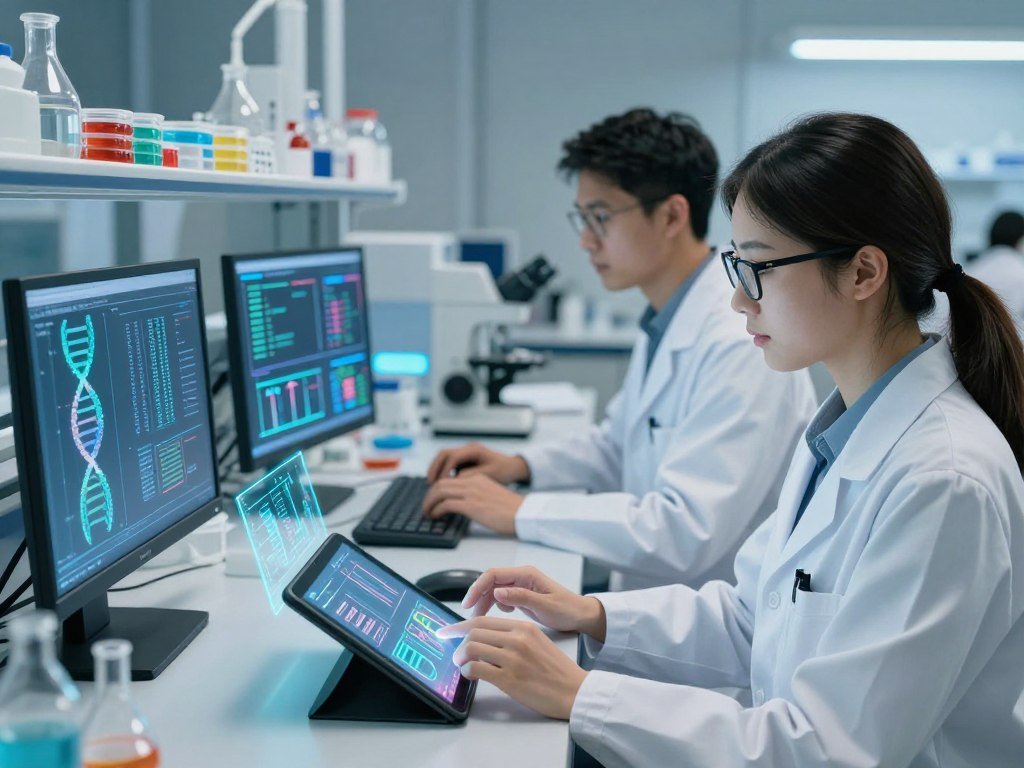
Biohub and its partners announced a $1.8 billion international effort on October 7, 2026, to build and open biological data for predictive AI. The expanded Virtual Biology Initiative brings more data, technology, and computing power to disease research. It is a coordinated research effort, not a new model or treatment.
Scientists need large, useful datasets to train models that can predict how cells respond. Those predictions could help researchers study questions that experiments alone struggle to answer. The near-term measure of progress is whether researchers can use the shared resources to ask questions that experiments alone make difficult to answer.
Key Takeaways
- The expanded effort aims to support predictive AI in biology.
- Partners combine new funding, federal resources, and technical support.
- Researchers plan to collect data across more cell types and conditions.
- Public access and useful shared standards will shape the effort’s value.
- First data is expected in about a year; accurate models may take five years.
Zuckerberg Chan CZI Biohub AI Biomedical Shift 2026: What Does the $1.8 Billion Effort Fund?
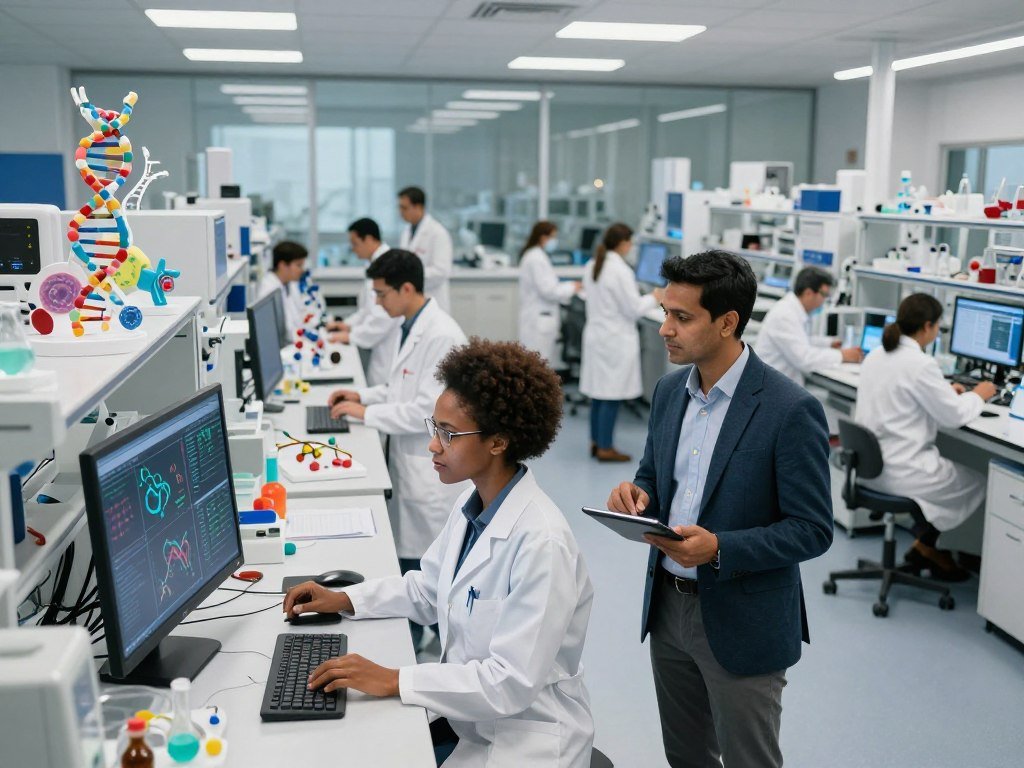
The $1.8 billion effort combines Biohub’s five-year commitment with federal resources and private-sector investment. Its funding supports new tools, research, and access to data gathered through earlier public work. The total reflects several kinds of support, not a single cash fund.
Biohub announced its Virtual Biology Initiative in April 2026. The effort aims to build the foundation for models that can predict cell behavior. The scale of AI investment offers broader context, though spending does not ensure scientific results. The October announcement describes the partners’ roles.
| Partner | Amount or commitment | Role |
|---|---|---|
| Biohub | $500 million over five years | $400 million for technology and infrastructure; $100 million for external research |
| DOE | More than $500 million over five years | Laboratory measurement, modeling, and computation |
| NIH | More than $500 million in prior federal investment | Coordinates datasets and infrastructure; this is prior investment, not new October cash |
| Google DeepMind, Isomorphic Labs, and Meta | $300 million collectively | Investment in the Virtual Biology Initiative |
The $1.8 billion label describes a coordinated effort, not one pot held by a single partner.
The National Institutes of Health (NIH) will coordinate datasets, repositories, and knowledge bases built through earlier federal spending. The Department of Energy (DOE) plans a separate five-year investment. Those resources can help researchers build on existing biology work.
Biohub’s commitment splits between technology and infrastructure, and support for outside researchers. Private firms are investing together in the biology initiative. Keep NIH’s prior dataset investment distinct from the new commitments when comparing the amounts.
What Data and Tools Could Make a Virtual Cell Predictive?
Predicting a cell’s response requires measurements that connect what happens inside it to the conditions around it. The Virtual Biology Initiative aims to measure responses to interventions across more cell types and conditions. That wider coverage could make models more useful, though it will not capture every cell or setting.
Spatial transcriptomics is a method for mapping molecular activity while preserving its location within intact tissue. Researchers can compare where activity occurs with what changed in the surrounding tissue. Better predictions depend on data that ties each intervention to a measured cell response.
Measuring cell responses across conditions
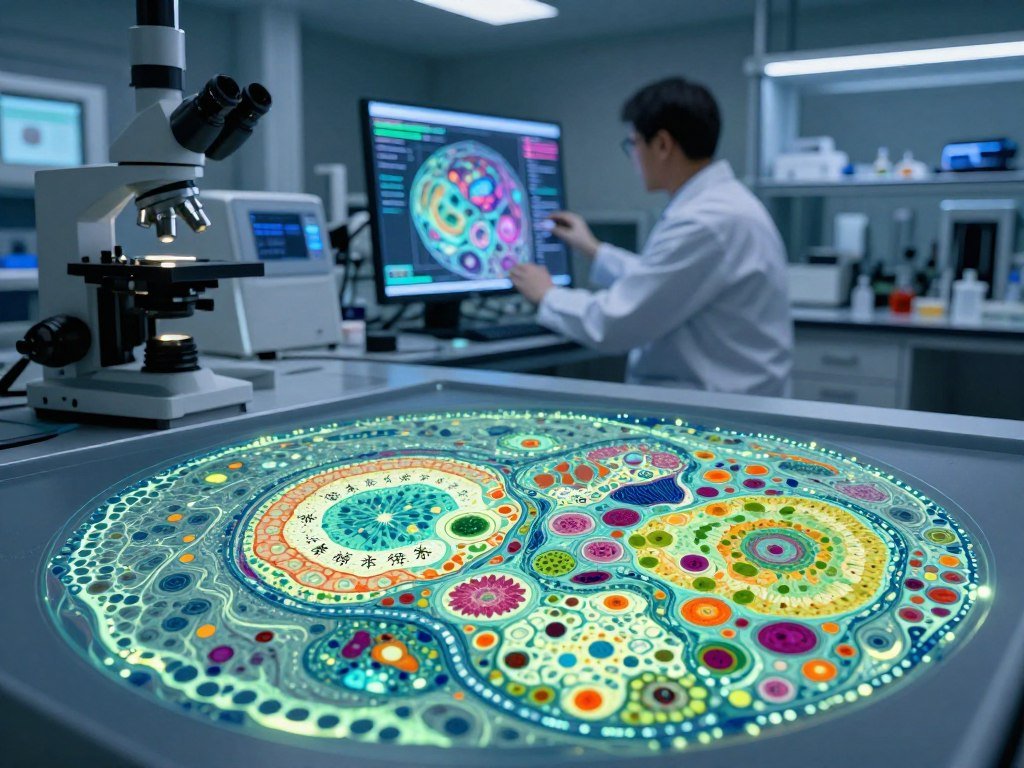
Researchers plan to test cells under varied conditions, then record how they react. Screens that expose cells to environmental changes can show which responses differ across cell types. This biological data gives scientists a way to study how an intervention affects cells, rather than relying on a single snapshot.
Four approaches can add different kinds of evidence:
- Spatial transcriptomics maps molecular activity in place.
- Environmental-response screens track changes after an exposure.
- Cryo-electron tomography reveals cellular structures in detail.
- Microscopy of living tissue follows cells in their setting.
Imaging and engineering biology at scale
Biohub’s $400 million technology commitment includes cryo-electron tomography and microscopy designed to study millions to billions of cells in living tissue. The initiative also plans tools to engineer biology at molecular, cellular, tissue, and whole-organism levels.
DOE brings measurement systems such as exascale computing, X-ray and neutron scattering, cryo-electron microscopy, and autonomous laboratories. These tools can help teams collect and study large volumes of data. Still, the goal is broader coverage and better measurement, not a record of every cell type or condition.
A useful dataset must preserve enough detail about both the intervention and the cell’s response to train a meaningful prediction.
How Will Researchers Find and Combine the Data?
Researchers need more than a large collection of files; they need consistent ways to identify and connect the data. The initiative plans an open resource with shared standards, common identifiers, and one access point. Those basic tools can make separate datasets easier to find and compare.
Common identifiers help researchers recognize when records refer to the same cell type, gene, or other feature. Shared standards can also make data easier for software to read. A common access layer helps people compare resources, but it does not make every dataset identical.
Shared standards and a single access point
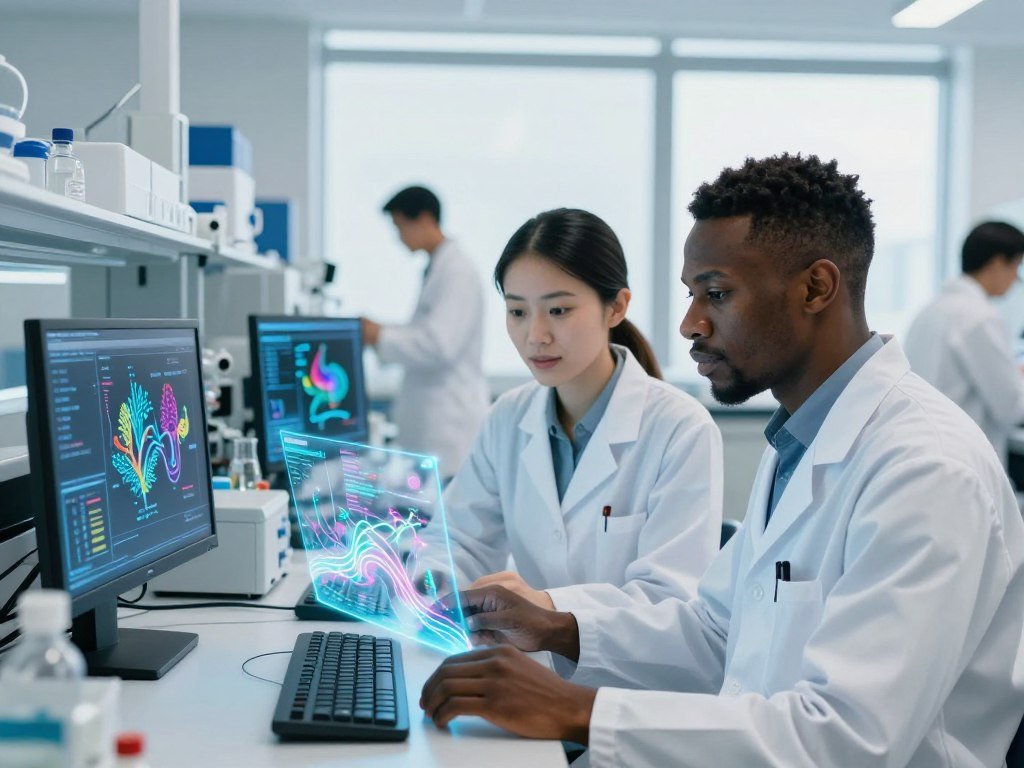
Researchers often need data from different projects to study a wider question. Shared labels and a single entry point can reduce the work of finding relevant files. The data itself may still differ in how teams collected it or what they measured.
That distinction matters when scientists compare results. A common system can help them see what each dataset contains, then judge whether the records fit their study. Access alone does not remove limits in the original research.
Research partners and existing infrastructure
Scientific partners include the Allen Institute, Broad Institute, Gladstone Institutes, Human Cell Atlas, Human Protein Atlas, and Wellcome Sanger Institute. NVIDIA has a separate technical role: it contributes accelerated-computing infrastructure, specialized software, and expertise.
Earlier Biohub projects and community resources provide useful precedents:
- Tabula Sapiens
- OpenCell
- Zebrahub
- CELLxGENE
- The CryoET Data Portal
These projects show how shared research resources can support work across teams. For anyone assessing an open resource, check whether its identifiers and standards make datasets comparable across projects.
What Is CZI Building Beyond the Virtual Biology Initiative?
CZI’s virtual-cell work is a related but distinct part of the wider biomedical AI landscape. Its broader science plan includes four challenges over 10 years. The connection is the science, but CZI’s work is not the same program as the $1.8 billion announcement.
CZI’s projects span prediction, imaging, inflammation, and immune research. The organization plans to develop models and tools while supporting research into how disease begins and changes.
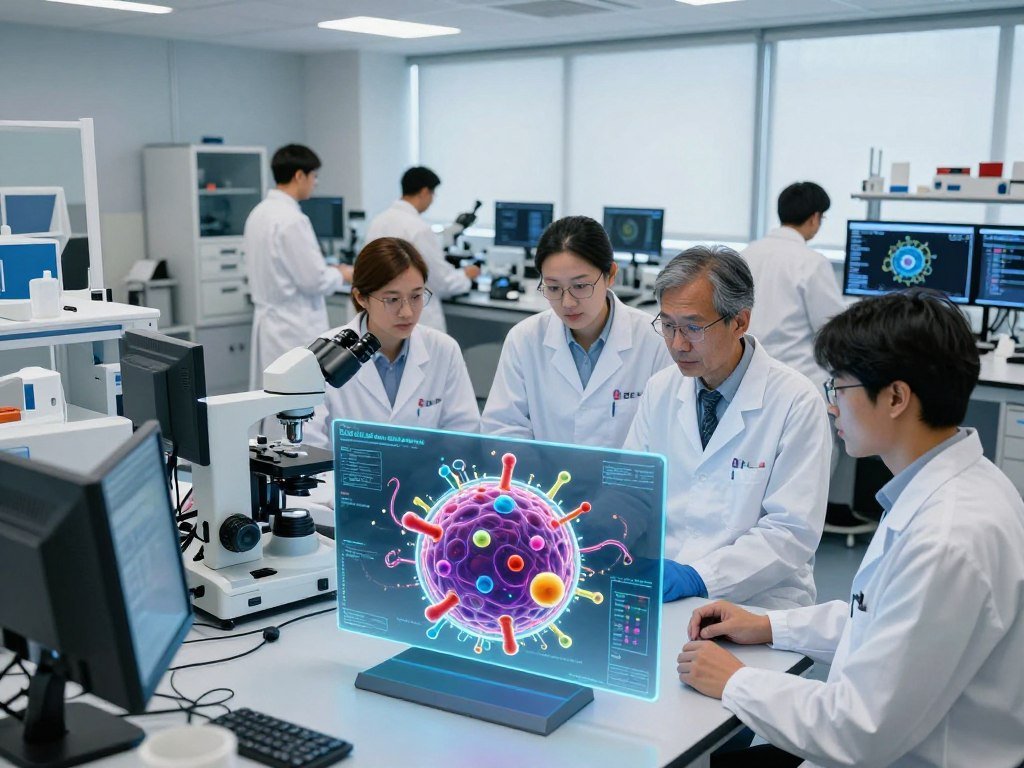
Four CZI science challenges
CZI has named four grand challenges for its 10-year effort:
- An AI-based virtual-cell model.
- New imaging technologies.
- Real-time measurement of inflammation in tissues.
- Immune-system approaches to early disease detection, prevention, and treatment.
The imaging challenge is a separate CZI effort. Its imaging announcement describes plans to study biology across scales, from proteins to whole organisms, and validate virtual-cell models.
Open virtual-cell models and tools
CZI plans to create large datasets and share models openly, with interfaces designed for biologists. Its platform includes rBio, GREmLN, TranscriptFormer, NVIDIA Clara Open Models, and CodonFM. Clara includes imaging models based on MONAI.
CZI and NVIDIA announced a collaboration in October 2025 to process petabytes of data spanning billions of cellular observations. Their virtual-cell collaboration aims to speed model development. The open-source cz-benchmarks Python package helps researchers assess biological AI models.
CZI’s nonprofit research-computing system was designed for high-resolution Human Protein Atlas images and single-cell data from CZ CELLxGENE and the 1,000 Genomes Project. This computing work supports model development, but model quality still depends on the data and tests behind each result.
Researchers evaluating a model should check both what biological data it uses and how its performance is assessed.
When Could Researchers See the First Data and Models?
The first dataset is expected in about a year, but an accurate predictive model is a longer-term five-year goal. Biohub says current cell datasets reach hundreds of millions of cells, while accurate prediction may require billions and eventually trillions. That jump in scale makes data collection a major practical challenge.
The five-year goal is to compress work that could take decades, not to promise a finished model on a fixed date. Partners hope to collect and prepare data faster by combining research capacity and computing resources.
Generating enough data is only part of the work. Scientists must also measure cell responses in ways that support reliable models. A dataset expected in about a year would be an early resource, not proof that predictive tools are ready.
Access can also vary by funding stream. Datasets generated with commercial funders may face embargo periods before public release. Government-funded work running in parallel has no such restrictions.
Those differences may shape when researchers can use specific open datasets. A first release could help teams test methods while larger collections continue to grow. Readers should treat those milestones as targets, not a guarantee that every dataset or model will be ready at the same time.
How Could These Efforts Connect to Disease Discovery and Patients?
The patient-facing promise is better ways to investigate disease biology, not an immediate guarantee of a treatment. Biohub is building AI models to predict human-cell behavior. That prediction work could help researchers test ideas about disease, but it does not establish that a model works in patients.
Biohub’s laser phase plate aims to reveal cellular molecular machinery at near-atomic detail. Its inflammation work seeks to measure human tissues in real time and support earlier interventions. Engineered cells and AI models also target early signs of cancer, Alzheimer’s, and Parkinson’s.
Early lab results are not proven treatments. Biohub’s ESM-based protein model was trained on billions of protein sequences. It predicts protein folding, interactions, and function, and can support protein design. Antibody candidates have shown promising early lab results, but that does not show they are safe or effective treatments.
Biohub and the Innovative Genomics Institute launched the Center for Pediatric CRISPR Cures. The work sits within a wider biomedical effort associated with Priscilla Chan and Mark Zuckerberg. Its patient programs also include Rare As One.
A clinical trial launch is a research milestone, not proof that a treatment works.
Since 2019, Rare As One has supported 94 patient-led organizations. Those groups have engaged more than 320,000 patients and community members, and more than 26,000 researchers. Over half have launched clinical trials; as of June 2026, the network had committed more than $150 million through four funding cycles.
Patient groups can strengthen research by helping scientists identify questions that matter to people living with rare diseases.
Conclusion
The defining change is a coordinated effort to make biological data more useful for predictive research. AI models need well-structured experimental evidence, not just more computing power. The scale and timing goals remain ambitious, especially as researchers move from hundreds of millions of measured cells toward billions.
To track meaningful progress, watch for public datasets with clear standards and models tested against measured cell responses.
FAQ
What does the Virtual Biology Initiative aim to predict?
The Virtual Biology Initiative aims to predict how cells respond to interventions across more cell types and conditions. Researchers plan to collect measurements that connect each intervention with a cell’s response. This could help scientists study biological changes that are hard to capture through experiments alone. The goal is broader predictive coverage, not one universal model ready for every cell or disease.
How much is Biohub committing to the Virtual Biology Initiative?
Biohub is committing $500 million over five years to the Virtual Biology Initiative. It plans to spend $400 million on technology and infrastructure, with $100 million for external research. The commitment is one part of a wider effort involving federal resources and private investment. Its split supports both the tools needed to collect data and research beyond Biohub’s own teams.
Is NIH contributing more than $500 million in new funding?
No. NIH is coordinating datasets, repositories, and knowledge bases developed through more than $500 million in prior federal investment. That amount describes existing resources behind the work, not new cash announced in October 2026. NIH’s role is to bring those resources into the coordinated effort, so researchers can build on earlier publicly funded work.
Will every dataset be public as soon as it is generated?
No. Datasets created with commercial funders may have embargo periods before public release. Government-funded work running in parallel has no such restrictions. As a result, researchers may gain access to some datasets before others, even as the wider effort makes data available for study. The timing depends on the funding stream tied to the dataset.
What is spatial transcriptomics used for?
Spatial transcriptomics maps molecular activity while preserving its location within intact tissue. That location matters because cells operate in a physical setting, not as isolated data points. Researchers can use the method to connect molecular signals with the parts of tissue where they appear. The resulting measurements can help describe cell activity alongside its surrounding conditions.
Which organizations are supporting the Virtual Biology Initiative?
Biohub, the Department of Energy, and NIH are key partners, alongside Google DeepMind, Isomorphic Labs, and Meta. Scientific partners include the Allen Institute, Broad Institute, Gladstone Institutes, Human Cell Atlas, Human Protein Atlas, and Wellcome Sanger Institute. NVIDIA contributes computing infrastructure, specialized software, and technical expertise. Each partner adds different resources, from research capacity to data coordination.
How does Rare As One involve patients in research?
Since 2019, Rare As One has supported 94 patient-led organizations. These groups help build research capacity and bring patients and community members into disease research. Together, they have engaged more than 320,000 patients and community members, along with over 26,000 researchers. More than half have launched clinical trials, a research step that does not prove a treatment is effective.