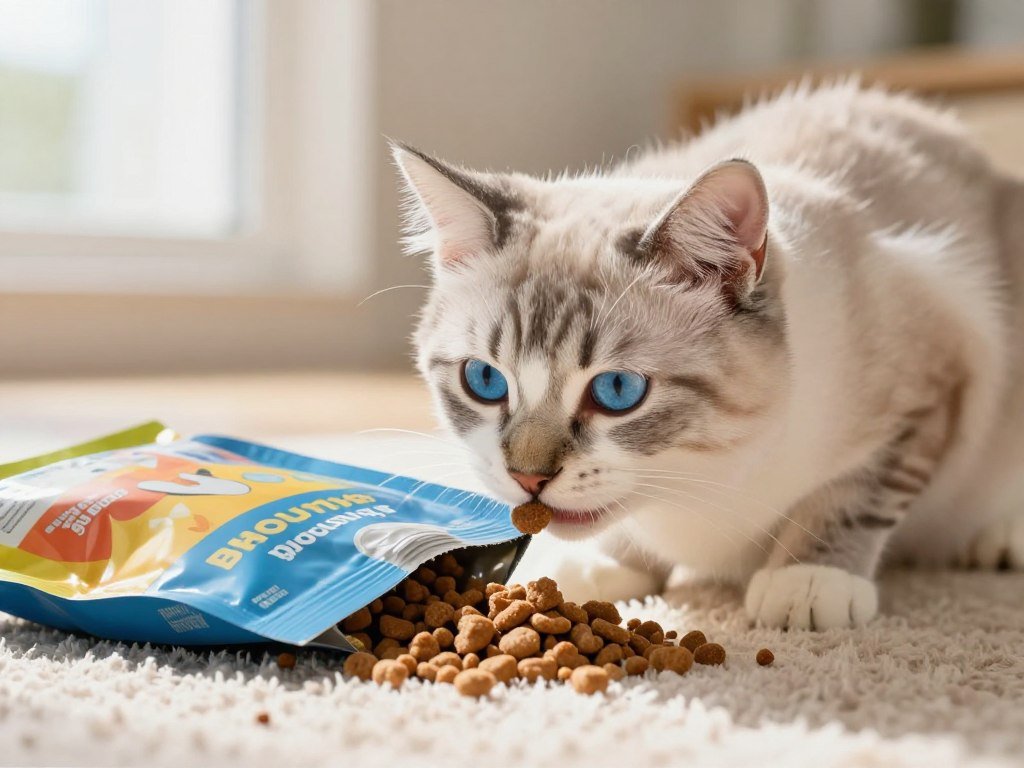
The best starting point is a complete and balanced food labeled for kitten growth or all life stages. That label helps you choose nutrition suited to your kitten’s development, health, and daily needs. The nutritional adequacy statement is the label declaration that identifies whether a food is nutritionally complete for a stated life stage.
Wet, dry, or mixed feeding can all work when the food is suitable and your kitten’s weight and condition stay on track. You do not need a complicated plan to begin. Start with the package, then adjust meals as your kitten grows and your veterinarian advises. A suitable life-stage label matters more than a food’s marketing claims. Keep the package handy so you can check its feeding directions and life-stage statement.
Key Takeaways
- Choose complete nutrition labeled for growth or all life stages.
- Wet, dry, and mixed meals can all be suitable.
- Use package directions as a starting point, not a fixed rule.
- Keep fresh water available every day.
- Ask your veterinarian about unclear labels or growth concerns.
What label proves kitten food is complete and balanced?
Check the nutritional adequacy statement before comparing package claims or ingredient-list buzzwords. That statement tells you whether a food suits growth or all life stages, the recognized labels that include kittens. Choose a complete food with an adequacy statement for growth or all life stages.
Complete means the cat food contains the nutrients required for its stated life stage. Balanced means those nutrients appear in the right ratios. The statement usually appears in small print on the back or side of the package, as explained in the AAFCO guide to reading labels.
The nutritional adequacy statement
Look for wording that identifies the food as complete and balanced for growth or all life stages. Other recognized stages include gestation/lactation and maintenance. A food labeled “for intermittent or supplemental feeding only” is generally a treat or supplement, not a complete diet.
Use this three-point check when you read the package:
- A nutritional adequacy statement for growth or all life stages.
- Feeding directions with an amount per animal weight and time period.
- A clear statement that the food is complete, not intermittent-feeding only.
The most nutritionally unsuitable choice is an intermittent-feeding food used as a kitten’s entire diet.
Complete and balanced foods must give feeding directions for the stated life stage. Those directions set a starting amount, but activity and body condition can call for changes. AAFCO’s feeding directions for complete food are guidelines, not a fixed prescription.
Nutrients that support growth
Growth food should provide protein, fat, calories, DHA, calcium, phosphorus, and taurine in suitable amounts. Protein supports growing muscles, while taurine supports normal heart and eye function. A complete diet does not need added supplements unless your veterinarian recommends them.
What vets recommend in kitten food
Vet-recommended kitten food is judged by nutritional adequacy and life stage, not package buzzwords alone. Ingredient names can help you understand a recipe, but they do not prove that a food meets a kitten’s needs. If the label’s life-stage statement is unclear, ask your veterinarian to review the package.
What should kittens eat at each age?
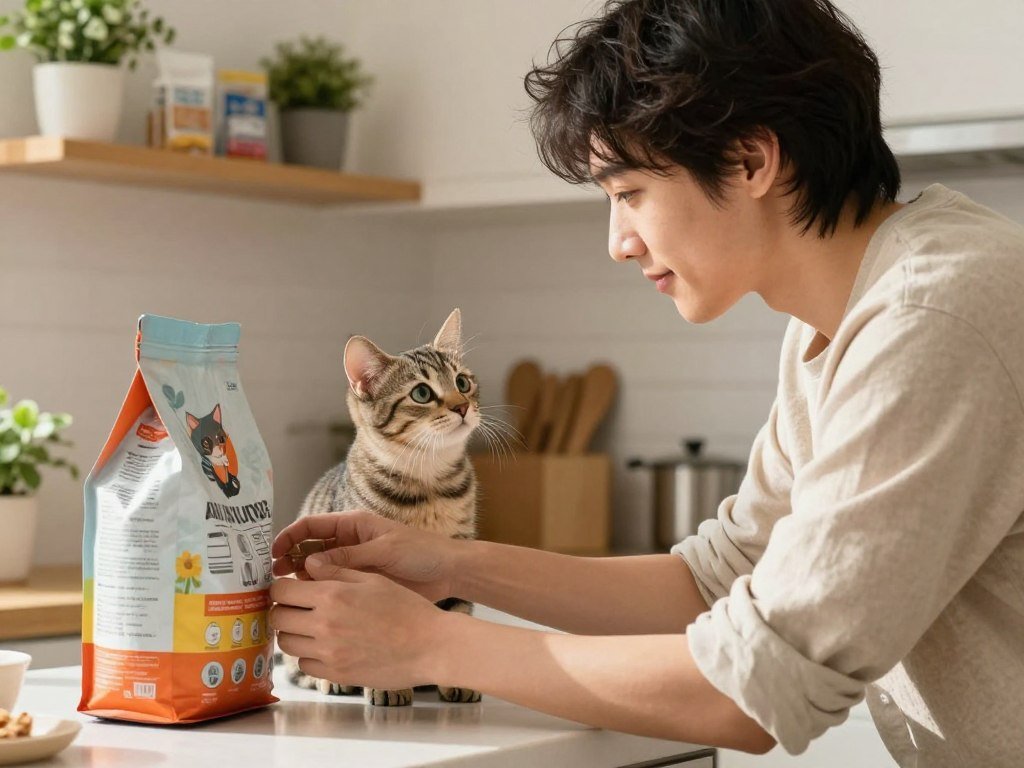
A newborn kitten should receive its mother’s milk whenever nursing is possible. Mother’s milk is the first choice; an orphaned or rejected kitten needs kitten-specific milk replacer, not cow’s milk. Very young kittens need nursing or a suitable milk replacer before solid food.
Weaning usually starts around 3-4 weeks, but each kitten’s pace can differ. A veterinary review on newborn kitten care and weaning describes nursing and the shift toward solid meals.
From nursing to weaning
Begin gradual weaning with kitten-food gruel mixed with warm water. Keep nursing or bottle-feeding in place as the kitten learns to lap and eat. The timeline below gives common feeding cues, not a reason to rush a kitten who is struggling.
| Age | Appropriate food | Feeding cue |
|---|---|---|
| 0-4 weeks | Mother’s milk, or kitten milk replacer if orphaned | Nurse or follow veterinary bottle-feeding guidance |
| 3-4 weeks | Kitten-food gruel mixed with warm water | Begin gradual weaning |
| 5-6 weeks | Canned kitten food without added water | Most kittens can manage it as baby teeth emerge |
| 8-10 weeks | Solid kitten food and fresh water | Most kittens are fully weaned |
After solid food begins
By 5-6 weeks, most kittens can eat canned food without added water. Most are fully weaned and eating solid food by 8-10 weeks. Offer growth food as the main diet after weaning.
Growth food generally remains suitable until about 12 months. A kitten’s size, health, and growth can affect the right time to switch to adult food. Contact a veterinarian promptly if a very young kitten is orphaned or struggling to feed.
Is wet or dry food better for kittens?
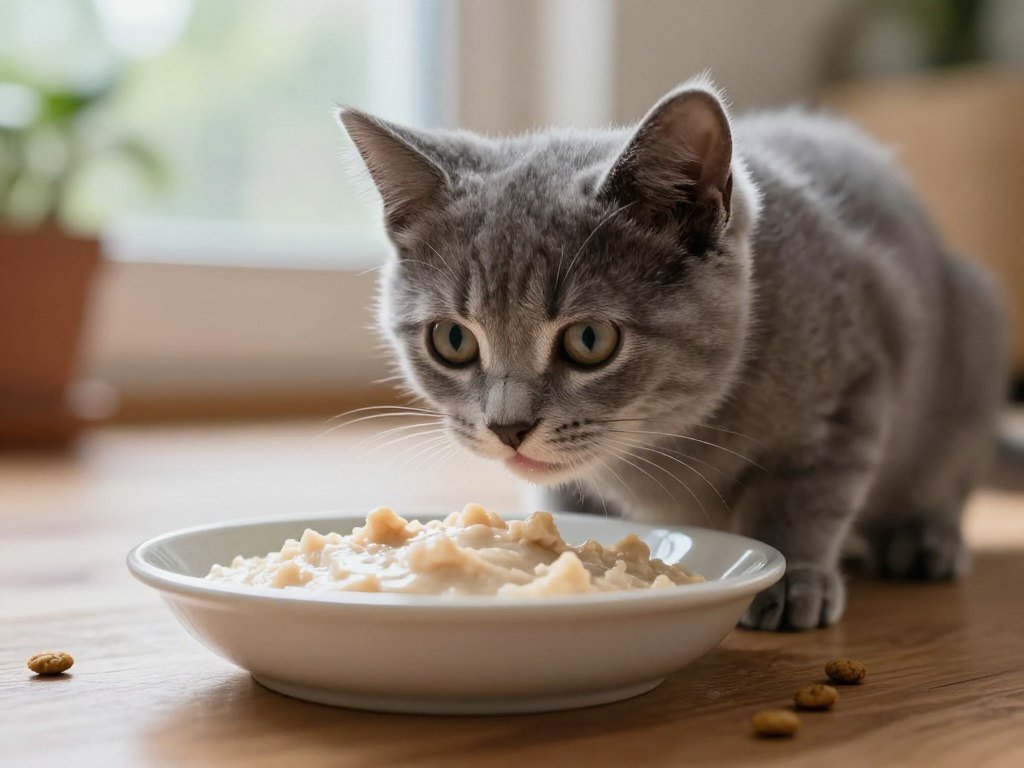
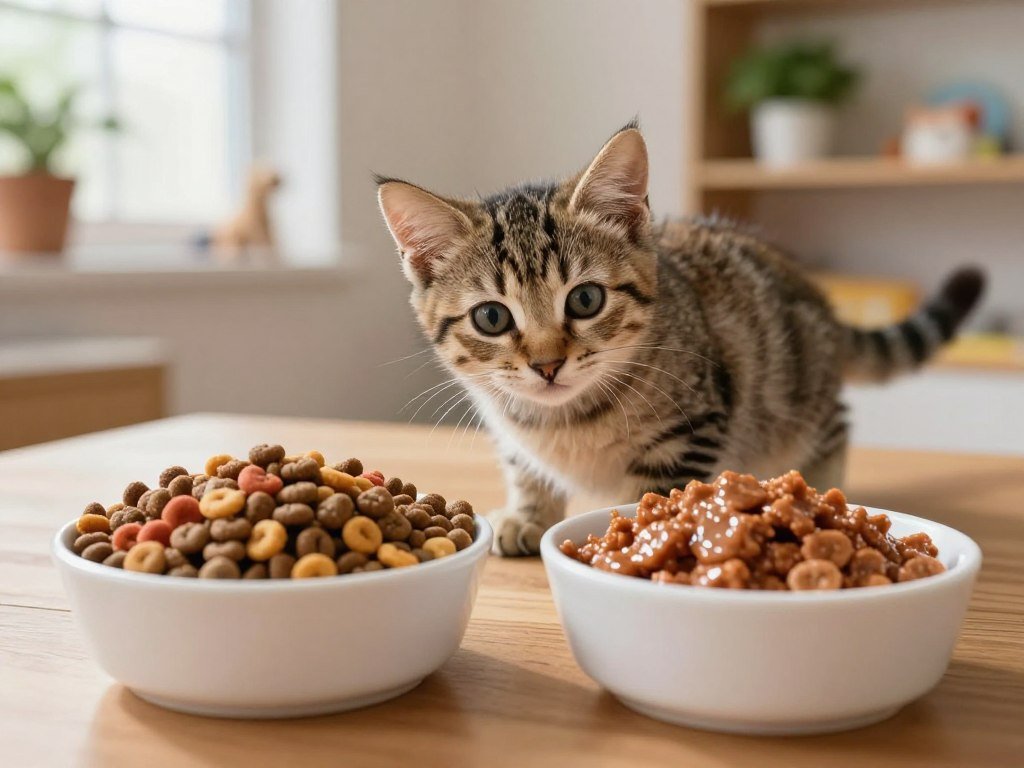
Both wet and dry food can suit a kitten if the package confirms complete nutrition for growth. The right format is one your kitten eats and you can serve in a steady routine. Either format can support healthy growth when it is complete and balanced.
Moisture affects how nutrient percentages look on a label. Dry matter means the nutrients left after removing the food’s water, so it helps you compare foods with different moisture levels. The FDA explains dry-matter comparisons for pet food and how complete-and-balanced claims relate to life stages.
When wet food fits
Wet food usually contains 60%-87% moisture and has a soft texture that can suit kittens learning to eat. Its moisture adds to daily water intake, though it does not replace a clean water bowl. Canned meals can also be easy to portion when you follow the package directions.
Moisture changes the meaning of protein percentages. For example, a wet food’s as-fed protein number includes its water, while a dry food’s number includes much less. Dry-matter figures give a fairer comparison of nutrient levels between the two formats.
When dry food fits
Dry food typically contains 3%-11% moisture. Kibble is convenient to store, simple to measure, and can fit households that serve meals on a schedule. Measure portions rather than pouring by eye, since calories can add up quickly in a small kitten.
Mixed feeding is a practical option if your kitten enjoys both textures, but you do not have to use both. Keep the combined amount within your kitten’s daily needs, rather than serving a full portion of each. Choose the format your kitten eats reliably and that you can measure consistently.
Best Kitten Food: Which options fit different needs?
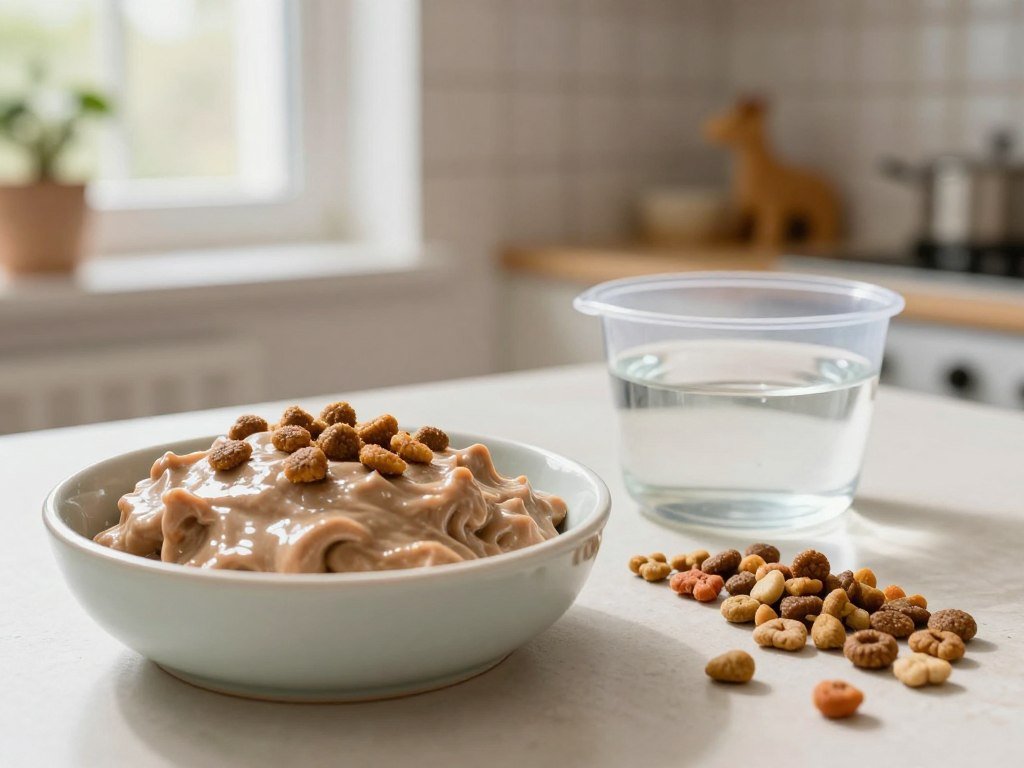
A useful shortlist starts with the format your kitten eats well, then narrows by life-stage label and feeding needs. Compare formulas rather than assuming every recipe from one brand has the same nutrition. The package for the exact product should confirm its life stage and feeding directions.
The options below offer different textures, recipes, and energy levels. Calories per kilogram help compare energy density, but they do not set a daily serving by themselves. Your kitten’s portion still follows the formula’s directions and individual needs.
Wet kitten food picks
Tiki Cat Baby is listed for all life stages and provides 1,175 kcal/kg. Its Chicken, Salmon, & Chicken Liver Recipe has shreds and mousse, with added DHA. Fancy Feast Kitten Tender Turkey Feast is listed for growth at 1,064 kcal/kg, with animal protein as its main ingredient.
Wellness CORE Tiny Tasters is listed for growth and provides 1,400 kcal/kg. Smalls Ground Other Bird Fresh Cat Food is suitable for all life stages, with turkey, turkey liver, and cod liver oil. These details describe the stated recipes, not every food made by those brands.
Dry kitten food picks
FirstMate Chicken Meal with Blueberries Formula is a dry option with a single animal-protein source. Hill’s Science Diet Kitten Healthy Development Chicken Recipe Dry Cat Food is a vet-recommended option with fish oil as an EPA and DHA source. Check the life-stage claim on the specific package before choosing.
| Product | Life-stage label | Energy | Verified formula detail |
|---|---|---|---|
| Royal Canin Kitten dry | Growth | 3,823 kcal/kg | Chicken by-product meal is first ingredient |
| Royal Canin Kitten Thin Slices in Gravy | Growth | 893 kcal/kg | Chicken and pork liver among first ingredients |
| Tiki Cat Baby | All life stages | 1,175 kcal/kg | Chicken, salmon, chicken liver, shreds, mousse, and DHA |
| Fancy Feast Kitten Tender Turkey Feast | Growth | 1,064 kcal/kg | Canned recipe with animal protein as main ingredient |
Royal Canin Kitten label facts
Royal Canin Kitten dry food is formulated for kittens 4 months to 1 year old, and the maker recommends feeding it until 12 months. It meets AAFCO nutrient profiles for growth. Its first three ingredients are chicken by-product meal, brown rice, and brewers rice.
The dry recipe guarantees at least 34.0% crude protein and 16.0% crude fat, with no more than 7.5% moisture. It provides 3,823 kcal/kg and 367 kcal per cup, as fed. The Royal Canin Kitten formula details list those values for this specific dry food.
Royal Canin Kitten Thin Slices in Gravy is intended for kittens up to 12 months and meets AAFCO profiles for growth. Its first listed ingredients are water, chicken, pork liver, and chicken liver. The wet recipe guarantees at least 10.5% crude protein and 2.5% crude fat, with 893 kcal/kg and 76 kcal per can, as fed.
Royal Canin wet kitten food has 53.03% protein on a dry-matter basis. Its energy and nutrient profile differs from the dry recipe, so do not use one formula’s numbers for the other. Compare the exact product formula on the package, since recipes within a brand can differ.
How should you feed a kitten at home?
Divide a young kitten’s daily food into several small meals rather than relying on one large serving. Three to four meals a day usually suit kittens during their early months. Use the feeding guide as a starting amount, then adjust portions to your kitten’s growth and body condition.
Indoor kittens still need growth-appropriate food, even if they play less than outdoor cats. Their activity and growth can change, so track weight and body shape and ask your veterinarian about changes. Commercial cat foods labeled complete for a life stage are made to meet that stage’s needs as the entire daily ration.
Indoor kitten meals and portions
Measured meals can replace free-feeding around 4-6 months. Adjust the amount as your kitten grows, and get veterinary guidance if weight or body condition shifts. A gradual change also helps kittens settle into a new food without a sudden change to their routine.
Use these steps when changing foods:
- Introduce a small amount of the new food.
- Increase it gradually while reducing the old food over 7-10 days.
- Watch appetite, stool, and energy; pause and seek veterinary advice if significant problems develop.
Homemade food and safe feeding
The safest routine choice is a complete commercial food labeled for growth. Generic homemade recipes, including online recipes, can lack key nutrients or contain them in the wrong balance. A homemade diet needs to be formulated for your individual kitten by a veterinary nutrition specialist, as complete-food feeding guidance explains.
Do not rely on an online recipe as your kitten’s full diet; nutrient gaps can harm growth and health.
Fresh water should stay available, and the food bowl should be clean. Avoid adding supplements to a complete diet unless your veterinarian advises it. Ask your veterinarian to tailor portions if your kitten’s weight or growth pattern concerns you.
Conclusion
A sound kitten diet starts with a complete food labeled for the right life stage. Choose a formula for growth or all life stages, then adjust the amount to your kitten rather than treating package directions as fixed.
Your next step is simple: check the nutritional adequacy statement on the food already at home. Check the label on your kitten’s current food today and ask your veterinarian about any unclear wording.
FAQ
What are the five cat foods to avoid?
Avoid onions and garlic, chocolate, grapes and raisins, alcohol, and caffeine. These foods can pose serious risks to cats, and kittens are small enough that even a limited exposure deserves care. Keep snacks, drinks, and cooking scraps out of reach. If your kitten may have eaten any of them, contact a veterinarian promptly and share what was eaten and when.
Which cat foods do vets recommend?
Veterinarians generally recommend a complete and balanced food labeled for growth or all life stages. That life-stage claim matters more than a marketing phrase or a single ingredient on the front of the bag. Follow the package feeding guide as a starting point, then match portions to your kitten’s weight, activity, and body condition with veterinary advice.
What is the #1 healthiest cat food?
The healthiest choice is a complete and balanced growth formula with an appropriate nutritional adequacy statement, not one universal brand. A food that suits one kitten may not fit another kitten’s appetite or health needs. Check the life-stage wording and use the feeding directions to plan portions. Your veterinarian can help assess a formula if your kitten has a medical condition.
What’s the most unhealthy cat food?
A food labeled only for intermittent or supplemental feeding is unsuitable as a kitten’s entire daily ration. Such products may be treats or supplements and may not supply all nutrients in the right amounts. They can still have a limited place if your veterinarian agrees, but they should not replace a complete growth diet. Check the package wording before making a food the main meal.
Can kittens eat adult cat food?
Adult-maintenance food is not designed to meet the needs of growth, so it should not be a kitten’s main diet. Most kittens transition to adult food around 12 months, though timing can depend on growth and health. Ask your veterinarian when to switch if your kitten is small, has a health issue, or is growing at an unusual pace.
Does my kitten need grain-free food?
Most kittens do not need grain-free food unless a veterinarian identifies a medical reason. Grains are not automatically harmful to cats, and removing them does not by itself make a diet healthier. Focus on a complete food labeled for growth or all life stages. If your kitten has signs of a food reaction, ask your veterinarian before changing ingredients.



