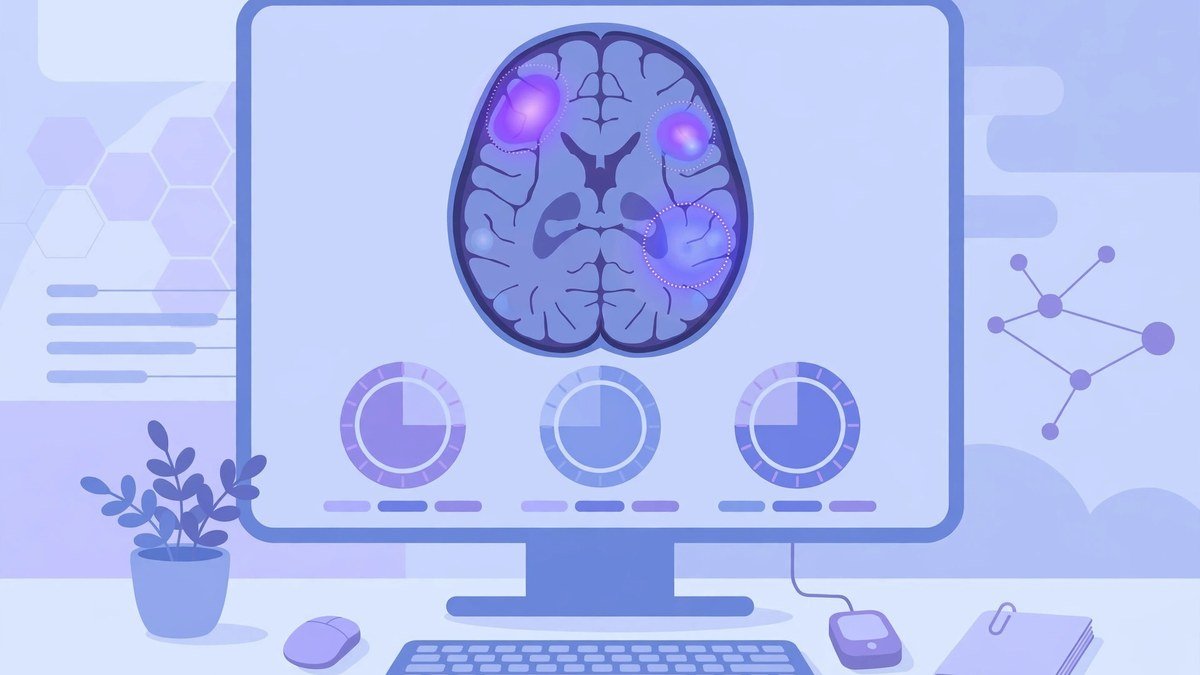
Diagnosis is where AI first proved itself in medicine. In 2027, AI tools can spot a tumour on a scan, flag a stroke in minutes, read a retinal image for early diabetes damage, and read pathology slides with accuracy that rivals experienced specialists. For overstretched radiology and pathology departments, that speed is not a luxury — it is the difference between a same-day answer and a three-week wait.
The best diagnostic tools do not replace clinicians. They triage: pushing the urgent cases to the top of the list, drafting a first read for the specialist to check, and catching the subtle finding a tired eye might miss at 2 a.m. Used that way, they make diagnosis faster, more consistent, and safer.
We compared seven platforms on clinical validation, regulatory clearance, accuracy, workflow fit, and value. Aidoc leads for radiology triage, while Viz.ai is the strongest choice for stroke care. Here is the full shortlist.
Key takeaways
- Aidoc is the best overall pick for radiology departments that need AI triage across many conditions.
- Viz.ai is the strongest choice for stroke care, where minutes decide outcomes.
- PathAI leads for pathology labs that want AI-assisted slide reading.
- Expect enterprise pricing quoted per site or per scan — most tools are sold to hospitals, not individuals.
- AI findings must always be confirmed by a qualified clinician — the tools flag and prioritise, they do not diagnose alone.
At a glance: the shortlist
| Product | Best for | Starting price | Standout limit |
|---|---|---|---|
| Aidoc | Best overall | Custom pricing, per site | Needs PACS integration to work well |
| Viz.ai | Best for stroke care | Custom pricing, per hospital | Focused mainly on neuro and vascular |
| PathAI | Best for pathology | Custom pricing, per lab | Needs digital slide scanners |
| Paige | Best for cancer pathology | Custom pricing, per lab | Focused on a few cancer types |
| Qure.ai | Best for chest imaging | Custom pricing, per site | Less known outside radiology |
| Nanox AI | Best for incidental findings | Custom pricing, per site | Smaller ecosystem than Aidoc |
| Arterys | Best for cardiac imaging | Custom pricing, per site | Focused on cardiology |
Aidoc — Best overall
Aidoc is the most widely deployed AI triage platform in radiology. Its algorithms scan every CT and X-ray as it arrives, flagging pulmonary embolisms, brain bleeds, fractures, and other urgent findings, then push the critical cases to the top of the radiologist’s worklist. Hospitals report cutting the time to diagnosis for critical cases from hours to minutes.
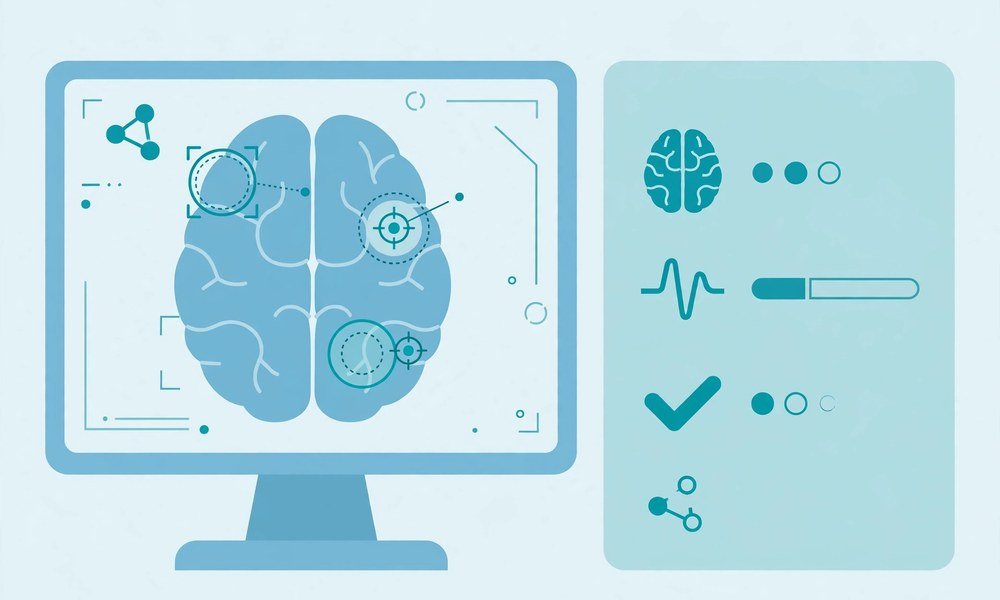
The platform covers more conditions than any rival in this roundup, and it integrates with the PACS systems radiologists already use. The trade-off is that it needs a well-run imaging department to shine — poor image quality or messy worklists blunt its value.
Pros: Widest condition coverage; proven time savings; strong PACS integration.
Cons: Enterprise pricing; depends on good imaging workflows.
Diagnostic AI is only as good as the data behind it — our guide to the Best AI Tools for Data Analysis in 2027 covers the analytics underneath.
Viz.ai — Best for stroke care
Viz.ai is built for the most time-critical diagnosis in medicine: stroke. Its AI reads a CT scan in minutes, detects a large vessel occlusion, and alerts the whole stroke team on their phones with the images attached. That speed directly affects outcomes, because every minute of delay in stroke treatment costs brain tissue.
Hospitals using Viz.ai report significantly faster treatment times and better patient outcomes. The platform has expanded into aneurysms, pulmonary embolism, and aortic disease, but stroke remains its strongest suit by far.
Pros: Life-saving speed for stroke; excellent team alerts; strong clinical evidence.
Cons: Narrower scope than Aidoc; pricing is enterprise-level.
PathAI — Best for pathology
PathAI brings AI to the pathology lab, where tissue samples are still read by eye under a microscope. Its algorithms analyse digitised slides to detect cancer, grade tumours, and measure biomarkers — work that is slow, tiring, and variable between pathologists.
Labs report more consistent grading and faster turnaround, especially for high-volume cancers such as prostate and breast. PathAI also powers clinical trial work, matching patients to studies based on their pathology. The catch is that labs must digitise their slides first, which needs scanner investment.
Pros: More consistent cancer grading; strong trial matching; reduces pathologist workload.
Cons: Requires digital pathology setup; pricing is quote-based.
Paige — Best for cancer pathology
Paige made history as the first AI pathology tool cleared by the FDA for cancer detection. Its flagship product spots prostate cancer on slides with high sensitivity, and it has since expanded to breast and other cancers, with tools that predict biomarkers from a standard slide.
For pathology labs, the appeal is a second pair of eyes that never gets tired: Paige flags suspicious regions for the pathologist to review, which reduces missed cancers. It is narrower than PathAI in scope, but deeper in the cancers it covers.
Pros: First FDA-cleared AI pathology; excellent prostate cancer detection; strong biomarker prediction.
Cons: Limited cancer coverage; needs digital slides.
Qure.ai — Best for chest imaging
Qure.ai focuses on chest X-rays and CT scans, with AI that detects tuberculosis, lung nodules, and other chest conditions. Its tools are used in more than 90 countries, including large screening programmes where radiologists are scarce and the AI reads the routine cases first.
For hospitals and screening programmes in low-resource settings, Qure.ai is genuinely impactful: it brings expert-level chest reading where no radiologist is available. In well-staffed hospitals it works as a triage and second-reader tool, with solid accuracy across its range.
Pros: Strong in TB and lung screening; works where radiologists are scarce; good value.
Cons: Narrower than full radiology platforms; brand is less known in the US and Europe.
Nanox AI — Best for incidental findings
Nanox AI, formerly Zebra Medical Vision, scans routine imaging for findings nobody was looking for: a vertebral fracture on a chest CT, early heart disease on a scan ordered for something else. These incidental findings often matter more than the original reason for the scan.
Hospitals use it to catch disease earlier and to populate population-health programmes, since the AI reviews every scan in the archive, not just new ones. It is a clever complement to a triage tool such as Aidoc, rather than a replacement for one.
Pros: Catches disease others miss; works on archived scans; good for population health.
Cons: Smaller partner ecosystem; needs a clear workflow for acting on findings.
Arterys — Best for cardiac imaging
Arterys applies AI to cardiac MRI and other complex imaging, measuring heart function automatically and producing reports in minutes instead of the hours manual measurement takes. Its cloud platform lets cardiologists read from anywhere, which helps hospitals share expertise across sites.
For cardiac imaging departments, the time saving is dramatic, and the measurements are more consistent than manual tracing. Arterys also covers lung and liver imaging, but cardiac remains its strongest and most proven area.
Pros: Fast, consistent cardiac measurements; cloud-based reading; strong for multi-site teams.
Cons: Cardiology-focused; pricing is enterprise-level.
How to choose
Start with your specialty and your bottleneck. A radiology department drowning in scans needs Aidoc. A stroke centre needs Viz.ai. A pathology lab needs PathAI or Paige. Buying a general tool for a specialist problem wastes money and time.
Check regulatory clearance and validation. Diagnostic AI is a medical device in most countries, so ask for the clearance status and the studies behind the accuracy claims — and check the tool was tested on patients like yours.
Finally, test the workflow. The AI must fit into the radiologist’s or pathologist’s day without adding clicks. A tool that is accurate but awkward will sit unused, while a slightly less accurate tool that fits the workflow gets used on every case.
Finally, plan for the follow-up. An AI that flags more findings creates more work for the team that acts on them. Make sure you have the reporting, the referral pathways, and the staff time to handle what the AI finds — otherwise the flags pile up unread.
Speed matters most when the finding is urgent — see our Best AI Tools for Automation in 2027 for routing alerts and results automatically.
Checklist: before you pay
- Match the tool to your specialty and bottleneck.
- Check regulatory clearance in your country.
- Ask for validation studies on patients like yours.
- Trial it inside your real PACS or lab workflow.
- Confirm who reviews and signs off every AI finding.
- Check pricing — per scan, per site, or per user.
Frequently asked questions
What do AI tools for medical diagnosis actually do?
They analyse scans, slides, and patient data to flag abnormalities, prioritise urgent cases, draft first reads, and predict risk. They work as a triage and second-reader tool — a qualified clinician always confirms the diagnosis.
Can AI diagnose patients on its own?
No. Current tools flag, rank, and suggest, but the final diagnosis and treatment decision stay with a qualified clinician. Regulators in most countries require human oversight for diagnostic AI.
Are these tools approved by regulators?
The leading tools carry FDA clearance in the US and CE marking in Europe for specific uses. Always check the clearance status for your country and for the exact condition the tool claims to detect.
How accurate is AI diagnosis?
Top tools match or beat specialists on specific, narrow tasks — such as spotting a brain bleed on a CT — in published studies. Accuracy varies by condition and by the population tested, so ask for evidence relevant to your patients.
How much do AI diagnostic tools cost?
Most are enterprise products priced per hospital or per scan, typically starting in the tens of thousands per year. Some offer per-scan pricing, which suits smaller imaging centres.
Will AI replace radiologists and pathologists?
No. It handles volume and triage, which lets specialists focus on the hard cases and on talking to patients. Demand for imaging keeps growing faster than the specialist workforce, so AI is filling a gap, not removing jobs.
The results still need to reach the right clinician fast — our Best AI Tools for Scheduling in 2027 covers getting patients booked in without delay.
The bottom line
For most radiology departments, Aidoc is the strongest overall choice, with the widest coverage and the best evidence for faster triage. Stroke centres should look at Viz.ai first, and pathology labs at PathAI or Paige.
Whatever you choose, pilot it on real cases, measure the time saved and the findings caught, and keep a clinician in charge. The best diagnostic AI is the kind specialists trust — because it makes them faster and more accurate, not because it replaces them.
Keep the evidence file up to date as well. Accuracy claims age fast in this field, so review new validation studies every year and be ready to switch if a rival tool proves safer or more accurate on your patient mix.
Note: Prices and plans change. Check the product’s current plan details before buying — no link is provided here by design, all links in this article go to other occcy.com guides.