
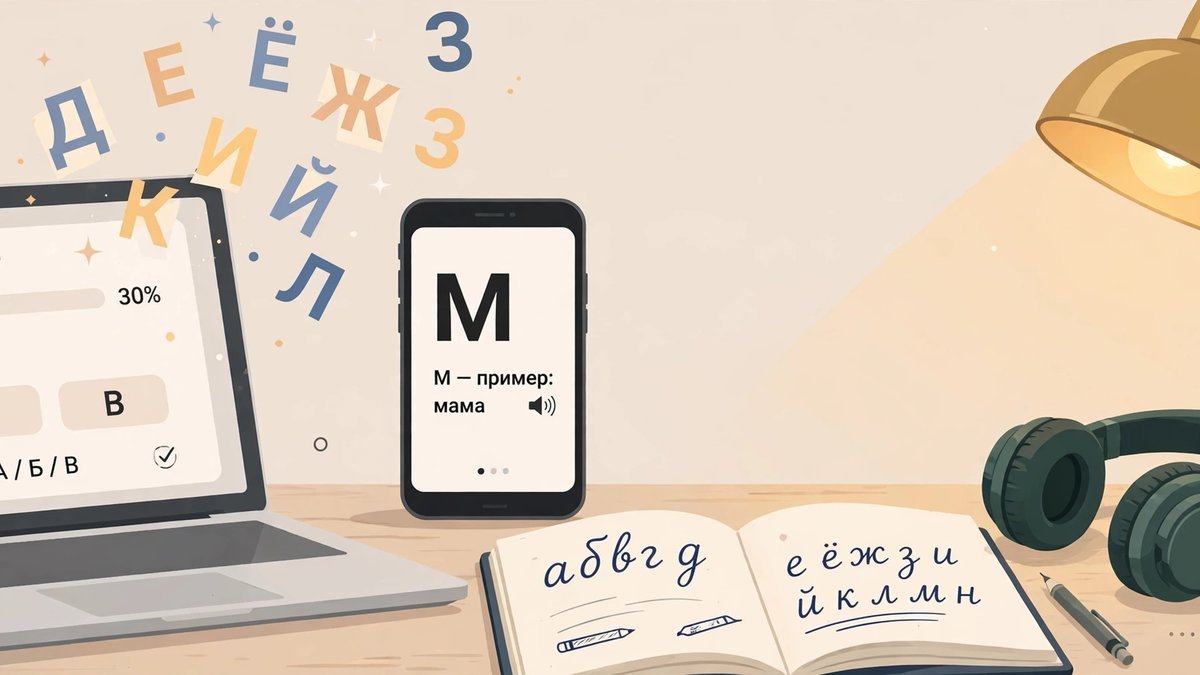
Russian is one of the most rewarding languages to learn, and one of the most intimidating to start. The Cyrillic alphabet looks unfamiliar, the grammar has six cases, verbs of motion behave like a puzzle of their own, and stress can move from syllable to syllable without warning. The good news is that artificial intelligence has changed how all of that is taught. Modern language apps no longer hand you a fixed textbook and hope for the best. They listen to your pronunciation, correct your grammar in context, adapt the difficulty of every lesson to your mistakes, and generate conversation practice on demand.
This guide compares eight AI tools for learning Russian in 2027, chosen for the quality of their Russian courses specifically, not just their general reputation. Some are built for complete beginners who need to master Cyrillic first. Others suit intermediate learners who want to read real Russian texts, hold conversations, or prepare for an exam. We weighed speech recognition for Russian sounds, explanations of grammar, the size and quality of the Russian content library, offline access, and price, because a tool that is brilliant for Spanish is not automatically brilliant for Russian.
The shortlist below covers every budget, from a genuinely useful free tier to premium courses that cost less than a weekly coffee habit. Duolingo leads for beginners, Babbel is the strongest all-round paid course, and LingQ is the best choice once you can read simple Russian and want to move into real texts. The rest of the list fills specific gaps: pronunciation, vocabulary, listening, and speaking practice.
Key takeaways
- Duolingo is the best free starting point for Russian, with a gentle Cyrillic introduction and daily streaks that keep beginners practising.
- Babbel is the best overall paid course, with structured lessons, clear grammar explanations, and speech recognition tuned for Russian sounds.
- LingQ is the best tool for intermediate learners, because it turns real Russian articles, books, and podcasts into interactive lessons.
- No single app covers everything: pair a structured course with a speaking or listening tool for the fastest progress.
- Check the renewal price before you subscribe, because several tools discount the first year heavily and charge far more afterwards.
At a glance: the shortlist
| Product | Best for | Starting price | Standout limit |
|---|---|---|---|
| Duolingo | Beginners, free start | Free; Super from about $7 per month | Grammar explanations are thin |
| Babbel | Structured all-round course | From about $14 per month | No lifetime Russian-only plan |
| Rosetta Stone | Immersion and pronunciation | From about $12 per month | Little explicit grammar teaching |
| Memrise | Vocabulary and video | Free; Pro from about $9 per month | Less structured than Babbel |
| Mondly | Conversation phrases | Free; Premium from about $10 per month | Depth fades past intermediate |
| Pimsleur | Speaking and listening | From about $15 per month | Reading and writing are secondary |
| LingQ | Intermediate reading | Free; Premium from about $13 per month | Weak for absolute beginners |
| Busuu | Feedback and community | Free; Premium from about $10 per month | Smaller Russian course than rivals |
Duolingo — Best for beginners
Duolingo remains the easiest way to start Russian from zero, and that matters more than it sounds. The first lessons teach the Cyrillic alphabet one letter at a time, pairing each character with its sound, a familiar example, and a tap-to-match exercise that makes the new script feel manageable within a few days. From there the course builds short sentences, introduces the nominative case before the others, and uses its mascot, streaks, and leagues to keep learners returning every day. For a language with a reputation for difficulty, that low-friction start is a genuine advantage.
The AI side of Duolingo has improved noticeably. Its adaptive engine tracks which words and endings you miss and brings them back at spaced intervals, while the speaking exercises use speech recognition to judge whether your pronunciation of Russian sounds such as the rolled r and the soft consonants is close enough. The paid Super tier adds unlimited hearts, offline lessons, and an AI conversation feature that lets you practise short role-play dialogues, such as ordering food or asking for directions, without the fear of speaking to a real person. Learners who want to see how the same approach works for another language can read our guide to the best AI tools for learning German, which uses the same shortlist structure.
Pros: Free tier is genuinely usable; excellent Cyrillic introduction; strong daily habit design; speech practice included.
Cons: Grammar explanations are brief; advanced learners will outgrow it within a year; ads on the free tier interrupt lessons.
Babbel — Best overall
Babbel takes a more serious approach than Duolingo, and for Russian that seriousness pays off. Lessons are built around real conversations rather than isolated sentences, and each one introduces a small piece of grammar with a clear explanation in English before asking you to use it. The Russian course covers cases gradually, explains why an ending changes instead of simply marking it wrong, and revisits difficult patterns in review sessions that adapt to your error history. Dialogue practice uses speech recognition that is sensitive to Russian stress and vowel reduction, so saying a word with the wrong stress is flagged rather than waved through.

The course is organised into levels that map roughly to the Common European Framework, from complete beginner through intermediate, with dedicated units for travel, work, and everyday life. Babbel Live adds small-group classes with a real teacher for learners who want human conversation on top of the app, although that costs extra. Offline mode downloads lessons for travel, and the review manager builds a personal deck from your own mistakes, which is exactly the kind of targeted revision Russian grammar demands.
Pros: Clearest grammar explanations of any app here; realistic dialogues; good speech recognition; structured levels.
Cons: No free tier beyond a trial lesson; subscription renews at a higher rate; no dedicated advanced literature content.
Rosetta Stone — Best for immersion and pronunciation
Rosetta Stone has taught languages the same way for decades: no translations, only pictures, audio, and context, so you learn Russian the way a child learns a first language. In 2027 that method is backed by TruAccent speech recognition, which compares your pronunciation against native speaker models and gives immediate feedback on individual sounds. For Russian, where the difference between a hard and soft consonant can change a word entirely, that instant correction is valuable, and the app repeats difficult sounds until they improve.
The course moves slowly and deliberately through core vocabulary, verb forms, and sentence patterns, always in Russian, with images carrying the meaning. There is no English explanation when you are confused, which some learners love and others find frustrating, particularly when cases are involved. The extended learning features add stories, audio companion lessons for listening on the move, and live tutoring sessions in some plans. It is best seen as a pronunciation and listening foundation rather than a complete grammar course, and it pairs well with a textbook or a grammar-focused app for the rules Rosetta Stone never explains.
Pros: Excellent pronunciation feedback; true immersion method; strong listening and speaking focus; lifetime plans often discounted.
Cons: Almost no explicit grammar instruction; slow pace frustrates fast learners; vocabulary can feel repetitive.
Memrise — Best for vocabulary and video
Memrise is built around a simple idea: you remember words better when you see real people use them. Its Russian course mixes AI-generated practice with thousands of short video clips of native speakers saying phrases in everyday situations, so you hear how Russians actually speak, including the fast, reduced forms that textbooks omit. The spaced repetition system schedules reviews just before you are likely to forget a word, and the AI tutor, MemBot, holds text and voice conversations that adapt to your level, correcting mistakes as you go.
The app is at its best as a vocabulary builder and listening trainer. It teaches useful phrases for travel, food, and small talk quickly, and the video clips give you a feel for intonation and rhythm that audio-only courses miss. It is less strong as a standalone course, because grammar is introduced lightly and the lesson path is looser than Babbel or Duolingo. Used alongside a structured course, though, Memrise is one of the fastest ways to grow a usable Russian vocabulary and to train your ear for real speech.
Pros: Real native-speaker video; strong spaced repetition; AI conversation practice; quick to learn everyday phrases.
Cons: Grammar coverage is light; course structure is loose; some advanced content is limited.
Mondly — Best for conversation phrases
Mondly focuses on getting you speaking useful Russian fast, and its lessons reflect that priority. Each day brings a short lesson built around a theme, such as a restaurant, a hotel, or a train station, with speech recognition, listening exercises, and a chatbot that simulates a conversation partner. The app also offers augmented reality lessons and a virtual reality mode on supported devices, which place vocabulary in a visual scene, a gimmick that works surprisingly well for concrete nouns such as food and objects around a room.
The AI adapts the difficulty of exercises based on your answers, and the phrasebook style means you can learn the sentences you need for a trip in a few weeks. The weakness is depth. Once you pass the intermediate threshold, Mondly has less to offer on Russian grammar, cases, and aspect, the areas where learners need the most help. It is an excellent travel companion and a fun daily supplement, but it should not be your only Russian course if you plan to study seriously for more than a few months.
Pros: Fast route to useful phrases; good speech recognition; daily lessons are short; AR features aid memory.
Cons: Limited depth beyond intermediate; grammar explanations are brief; some features need a premium plan.
Pimsleur — Best for speaking and listening
Pimsleur is the oldest method on this list and still one of the best for speaking. Its Russian course is entirely audio-based, built around thirty-minute lessons that ask you to listen, repeat, and answer prompts out loud. The method uses graduated interval recall, bringing a word back at increasing intervals, and it teaches grammar through patterns in speech rather than written rules. After a few weeks of daily lessons, most learners can handle basic Russian conversations, introduce themselves, ask questions, and understand simple replies.
The AI elements are subtler than in newer apps, but they are there: voice recognition checks your responses, the app tracks your progress across lessons, and the newer subscription adds reading lessons, flashcards, and skill-building games. The main trade-off is that reading and writing take a back seat, and Cyrillic is introduced later than in other courses, so you can speak before you can read. For commuters, drivers, and anyone who learns best by listening, Pimsleur is still hard to beat, and it complements a visual app such as Duolingo or Babbel perfectly.
Pros: Best audio method for speaking; strong recall system; hands-free learning; builds real conversational confidence.
Cons: Reading and Cyrillic come late; expensive per month; lessons can feel repetitive.
LingQ — Best for intermediate reading
LingQ is the tool to reach for once you can read simple Russian and want to move beyond textbook sentences. It lets you import Russian articles, books, podcasts, and videos, then turns every unknown word into a flashcard with one tap. The built-in dictionary, sentence translation, and AI-generated explanations help you understand real texts, while the spaced repetition system keeps the vocabulary you meet in context. The library already contains a large amount of Russian content, from beginner stories to news and literature, with audio synced to the text.
The AI features include automatic transcription of imported audio, sentence-by-sentence translation, and vocabulary review that prioritises the words you meet most often. That makes LingQ unusually efficient: instead of memorising word lists, you learn the words that actually appear in the material you care about. The trade-off is that absolute beginners will struggle, because there is no hand-holding through Cyrillic or basic grammar. Start LingQ after three to six months with another app, and it becomes the fastest route to reading real Russian.
Pros: Learn from real Russian texts; huge content library; excellent vocabulary tracking; audio synced to text.
Cons: Not suitable for complete beginners; interface takes time to learn; free tier limits known words.
Busuu — Best for feedback and community
Busuu combines a structured Russian course with a community of native speakers who correct your writing and speaking exercises. You complete a lesson, record yourself or write a short answer, and a native Russian speaker reviews it, often within hours, with corrections and comments. That human feedback catches the mistakes that automated systems miss, particularly word choice and natural phrasing, and reviewing other learners’ English exercises in return reinforces your own understanding.
The course itself covers grammar, vocabulary, and dialogues across beginner to upper-intermediate levels, with AI-powered review sessions and a study plan that adapts to your goal and available time. Offline mode, grammar units, and certificates for completed levels come with the premium plan. The Russian course is smaller than the Spanish or French courses, and the community feedback depends on other users being active, but for learners who value a human eye on their Russian, Busuu offers something no fully automated app can match.
Pros: Real native-speaker corrections; structured course and study plan; good grammar units; certificates on completion.
Cons: Russian course is smaller than major languages; feedback speed varies; some features need premium.
How to choose
Start with your level and your goal, not with the app that has the best marketing. Complete beginners should pick Duolingo or Babbel, because both teach Cyrillic properly and build grammar step by step. If you already speak some Russian, LingQ or Busuu will move you faster, because they expose you to real language and real feedback instead of repeating beginner material. Travellers who need phrases in weeks should add Mondly or Pimsleur, while anyone whose pronunciation worries them should prioritise Rosetta Stone or Babbel, whose speech recognition is the most demanding on this list.
Budget matters too, but think in terms of a year rather than a month. A free tier is fine for testing an app for two weeks, yet most learners need a paid plan to remove limits and unlock offline mode. Compare the annual price, not the monthly teaser rate, and set a reminder before renewal. The sibling guides follow the same method, including our roundup of the best AI tools for learning Chinese, which faces similar challenges with a non-Latin script and tonal pronunciation.
Finally, plan to use two tools, not one. A structured course plus a listening or speaking tool covers the gaps every single app leaves. A practical combination is Babbel for grammar and structure with Pimsleur for speaking, or Duolingo for daily habit with LingQ once you can read. Two apps used for fifteen minutes each beat one app used for an hour, because they train different skills and keep study fresh.
Checklist: before you pay
- Try the free tier or trial for at least a week, including the Cyrillic and speaking lessons.
- Check the annual renewal price, not just the discounted first-year rate.
- Confirm offline downloads work on your device before a trip.
- Test the speech recognition with Russian words you find hard, not easy ones.
- Check whether the Russian course reaches your target level, not just beginner.
- Confirm you can cancel in the app and export or keep your progress and vocabulary.
Frequently asked questions
Can AI tools really teach Russian from scratch?
Yes, for the beginner and intermediate stages. AI apps handle Cyrillic, core vocabulary, basic grammar, and pronunciation practice well, and adaptive review keeps you moving. They are weaker at advanced grammar, nuanced writing, and natural conversation, so plan to add a teacher, a tutor, or a language exchange partner once you reach the intermediate level.
How long does it take to learn Russian with an app?
With thirty minutes of daily practice, most learners can read Cyrillic comfortably within a month, hold simple conversations within six months, and reach a solid intermediate level within a year. Russian grammar, especially cases and verb aspect, takes longer than the vocabulary, so expect progress to feel uneven, with listening improving faster than speaking.
Is Duolingo enough to learn Russian on its own?
Duolingo is enough to start and to build a daily habit, but it is not enough on its own for fluency. Its grammar explanations are thin and its sentences are simpler than real Russian. Pair it with Babbel for grammar, LingQ for reading, or a tutor for conversation once you finish the beginner tree.
Which app is best for Russian pronunciation?
Rosetta Stone has the most demanding speech recognition for Russian sounds, with Babbel close behind. Both flag wrong stress and soft consonants rather than accepting approximate pronunciation. Pimsleur is also strong, because its audio method trains your ear and your mouth together, lesson after lesson.
Do I need to learn the Cyrillic alphabet first?
Yes, and it is easier than it looks. Most learners can recognise all thirty-three letters within a week, because many resemble Latin or Greek characters and the rest follow patterns. Every app on this list teaches Cyrillic early, so do not skip those lessons or rely on transliteration, which slows reading later.
What is the cheapest way to learn Russian with AI tools?
Start with the free tiers of Duolingo, Memrise, and LingQ, which together cover vocabulary, listening, and reading. When you are ready to pay, look for annual plans and seasonal discounts, which often cut the price by half. The same value-first approach applies across languages, as our guide to the best AI tools for learning Korean shows for another language with a different writing system.
The bottom line
For most learners, Babbel is the best single purchase for Russian in 2027, because it explains the grammar other apps skip and its speech recognition holds your pronunciation to a real standard. If you want to start free, Duolingo is the obvious choice, and if you already read Russian, LingQ will take you further than any other tool on this list. The best combination is a structured course for grammar and a second tool for speaking or reading, used together every day.
Whichever tool you choose, the deciding factor is consistency. Fifteen focused minutes a day, with speaking out loud and regular review, will beat occasional long sessions every time. Pick the app you will actually open tomorrow, set a modest daily goal, and let the adaptive review do its work.
Note: Prices and plans change. Check the product’s current plan details before buying — no link is provided here by design, all links in this article go to other occcy.com guides.



