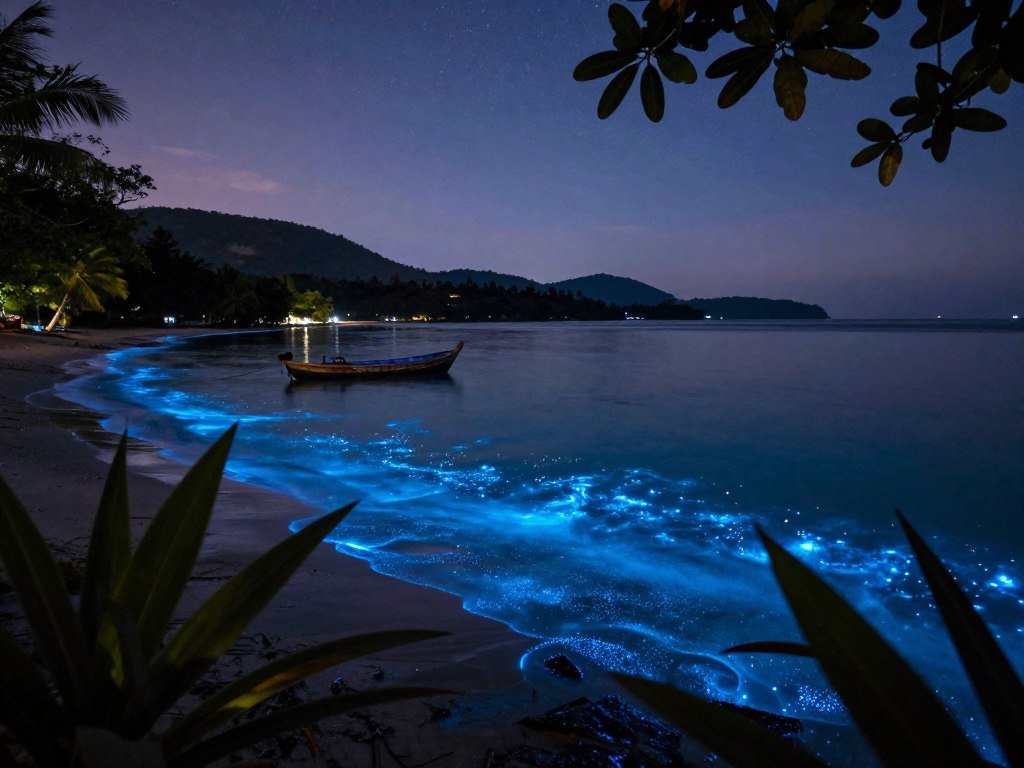
Some of the most memorable night views come from water that flashes blue or green when something moves through it. This natural phenomenon can turn an ordinary paddle or beach walk into an unforgettable experience. The best places to see bioluminescence range from tropical bays to coastlines close to home, but the glow depends on living organisms and changing conditions.
Across the world, you can seek out Puerto Rico’s famous Mosquito Bay, Florida’s Space Coast, California’s beaches, and Jervis Bay in Australia. Other options include the Maldives, Jamaica, Krabi, Taiwan’s Matsu Islands, and Japan’s Toyama Bay. For a land-based visit, Waitomo’s New Zealand caves offer a different kind of glow. Each place has its own setting, access, and viewing style.
A glowing display is a natural event, not a guaranteed attraction. This list helps you compare destinations, trip formats, and the kind of experience each one can offer. Treat the glow as a possible reward for a well-planned trip, not a show that runs on demand.
Key Takeaways
- Florida’s Space Coast is a practical choice for a planned U.S. paddle.
- Mosquito Bay is Puerto Rico’s brightest bioluminescent bay.
- California’s glowing waves can appear without a set schedule.
- Jervis Bay and several Asian destinations offer seasonal marine displays.
- Waitomo gives you a cave visit instead of a water outing.
- Plan around access, viewing style, and local conditions.
What Makes the Water Glow?
The blue-green spark is a chemical reaction inside a living organism, not reflected moonlight. Bioluminescence is light made by a living thing through a chemical reaction. Luciferin and luciferase are chemicals that react inside many living organisms to produce light.
Bioluminescent dinoflagellates are tiny, single-celled plankton that can emit bluish-green light when disturbed. The National Geographic explanation of how living organisms make light also describes luciferin and luciferase. Many dinoflagellate ecosystems form in warm lagoons with narrow openings to the open sea.
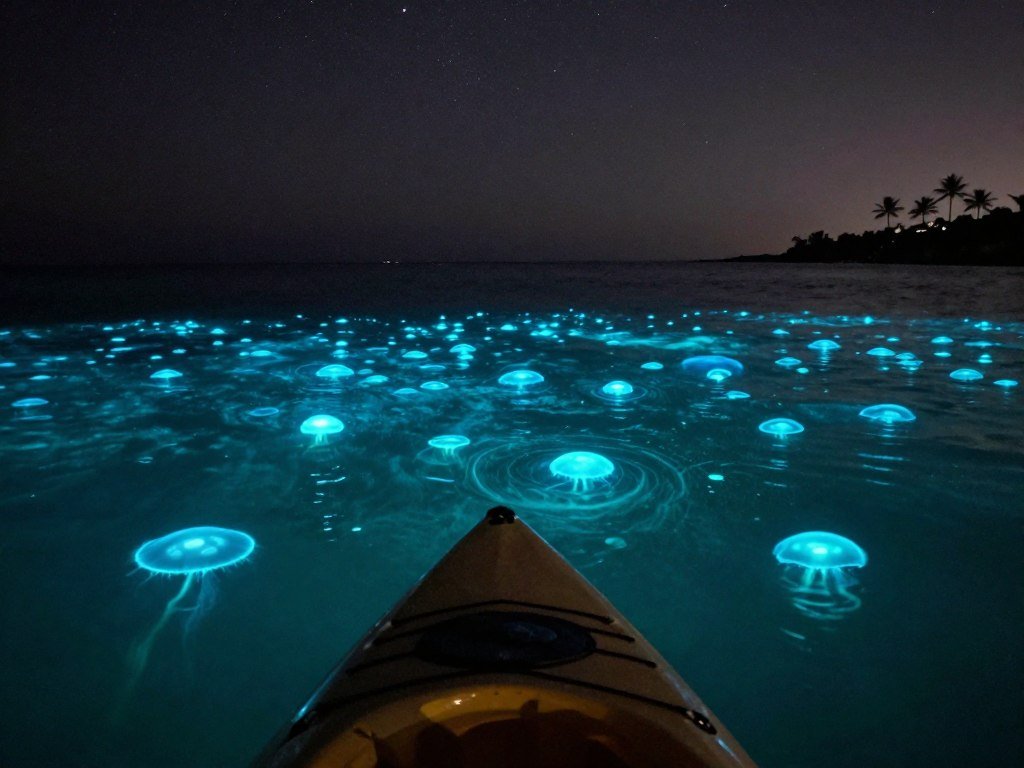
Dinoflagellates are not the same as larger glowing animals. Firefly squid are animals, and glowworms live on land, while dinoflagellates are plankton. A moving object can disturb the tiny organisms and make a brief flash easier to see.
- A paddle stroke cuts through the water.
- A fish moves through a patch of plankton.
- A hand disturbs the surface near shore.
The glow is usually brief and appears when the organism is disturbed.
In calm darkness, a flash may stand out more clearly than it would under bright light. The effect can look like a spark trailing a paddle, or a small streak along a wave. The living organisms make the light themselves; the water does not glow on its own.
Where Are the Best Places to See Bioluminescence?
For a planned U.S. paddle, Florida’s Space Coast is the most practical choice in this group, while Puerto Rico is the pick for a famous glowing bay. Trip style matters: you can paddle a lagoon, watch a coastal wave, or visit a cave. Bioluminescence on shallow shores is rare and difficult to predict.
Warm, calm, windless water and low-lit new-moon nights favor strong displays. Mosquito Bay is a standout bay experience, while California offers a chance to see glowing coastal waves. Waitomo is the cave option, with glowworms instead of marine plankton. For bioluminescence around world destinations, the viewing format can shape the whole trip.
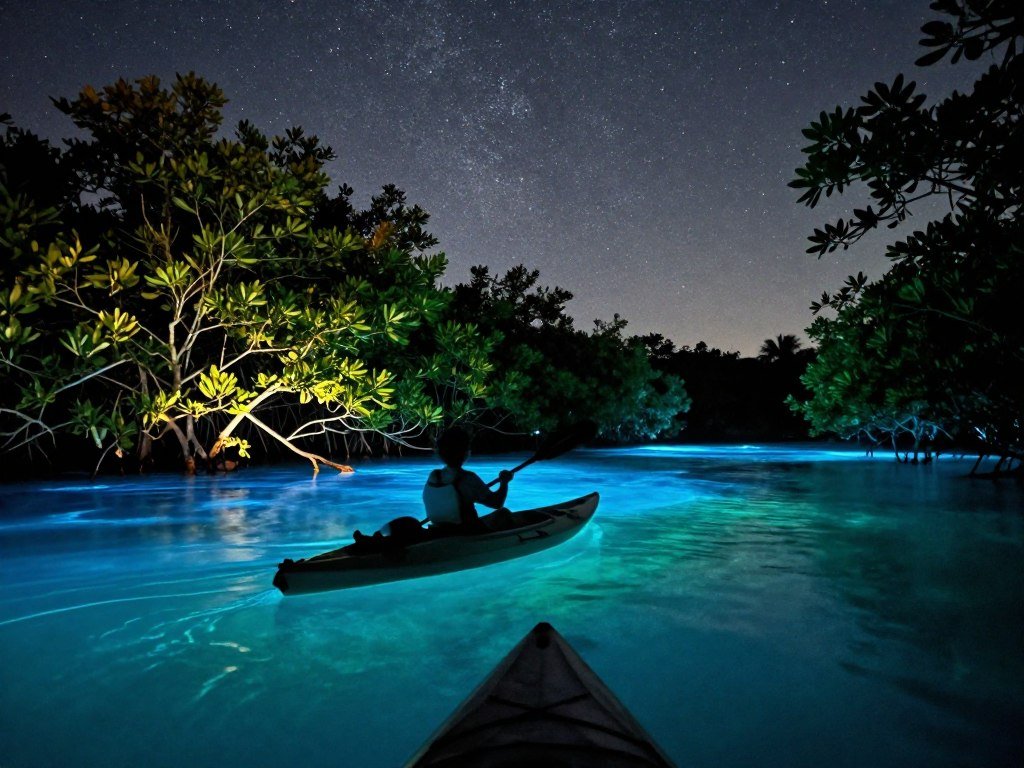
These are among the best places to see bioluminescence, but the best places for your trip depend on access and expectations. The table compares places around the world, from a guided lagoon outing to a sea-based animal display. It can help you decide where to see bioluminescence around world travel plans, whether you prefer a boat, shore, or cave.
| Destination | Setting | Viewing format | Best fit |
|---|---|---|---|
| Florida’s Space Coast | Lagoon | Guided kayak or boat | Planned U.S. water outing |
| Mosquito Bay | Bay | Clear-bottomed kayak | Puerto Rico bay experience |
| California coast | Beaches and bays | Shoreline, paddle, or cruise | Unpredictable coastal display |
| Toyama Bay | Sea | Firefly squid viewing | A larger glowing animal |
| Waitomo | Cave | Guided cave visit | A land-based alternative |
Some of the best places see bioluminescence in a controlled outing are lagoons with guided tours. The best places to see bioluminescence around the world also include less predictable beaches and wildlife events. Search terms such as “places see bioluminescence” often blur these different experiences, but the format is a real distinction.
Choose based on the nights you have, the kind of water access you want, and your tolerance for a missed display. Favor a guided trip when the location is remote or the glowing event is difficult to predict.
Why Is Mosquito Bay a Standout in Puerto Rico?
Mosquito Bay in Vieques is the strongest choice if you want Puerto Rico’s brightest bioluminescent bay. Its dark waters make the glow a memorable part of a visit to the island. Mosquito Bay is the brightest of Puerto Rico’s three bioluminescent bays, while La Parguera is the least bright.
Clear-bottomed kayaks let you look beneath the boat as the water moves. The trip is distinct from a quick stop near San Juan: Vieques requires travel beyond Puerto Rico’s main island. Laguna Grande, another of the three bays, is near Fajardo and San Juan.
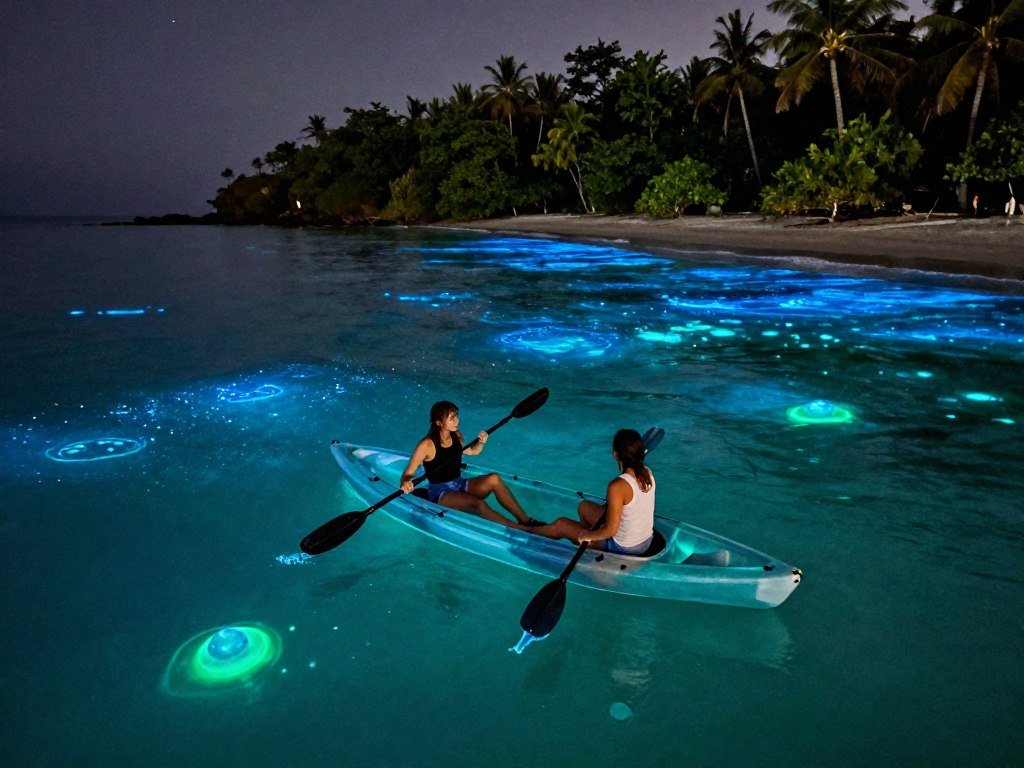
La Parguera is the only one of the three bays where motorboats and swimming are allowed. Mosquito Bay’s dry season runs from December through April. For a stronger view, cloudy or moonless nights are often favored, while bright moonlight can make the glow harder to see.
Plan the logistics as carefully as the bay visit:
- Fly from San Juan and take the ferry to Vieques.
- Choose a local clear-bottomed kayak tour.
- Favor cloudy or moonless nights, and avoid the five to eight nights before a full moon and a day or two after it.
Ferry seats and tour times both affect how easily you can reach the bay. Check ferry and tour schedules together before settling on a night in Vieques.
Where Can You See Bioluminescence on Florida’s Space Coast?
The Space Coast’s three main viewing waters are Mosquito Lagoon, Banana River, and Indian River Lagoon. These sheltered waters make the area a practical home base for guided night trips. Florida’s Space Coast viewing centers on its lagoons, including launches near Cocoa Beach and waters near Cape Canaveral.
An Indian River Lagoon bioluminescence tour can use a kayak or boat, depending on the operator and launch. The Indian River Lagoon system includes the Banana River, Indian River, and Mosquito Lagoon. Merritt Island National Wildlife Refuge covers about 140,000 acres, while Banana River Aquatic Preserve has roughly 30,000 acres of surface water.
The lagoon system and its launch areas
Mosquito Lagoon and the Banana River are part of the connected Indian River Lagoon system. Their waters give visitors several possible launch areas along the central coast. Near Cape Canaveral, the refuge and preserve protect large stretches of habitat around the viewing routes.
When conditions are right, Space Coast waters can contain 200,000-300,000 dinoflagellates per liter. A 2015-2020 study of harmful algae in the Indian River Lagoon tracked several bloom types across lagoon areas and seasons. The Indian River Lagoon study looks at bloom patterns, not guaranteed tour conditions.
Florida Adventurer, Fin Expeditions, Viking EcoTours, BK Adventures, BK Adventure, A Day Away Kayak Adventures, Cocoa Kayaking, Calypso Kayaking, Adventure Kayak of Cocoa Beach, Wildlife Watersports, Sobe Surf, A1A Beach Rentals and Outdoor Center, Banana River Boat Tours, and Geo Trippin’ Adventure Co. offer area outings.
Dinoflagellates and comb jellies have different seasons
The central Florida dinoflagellate season runs May-November, with a peak from June-October. On the Space Coast, it can begin in late May or June, peak from July-September, and continue into October. July and August tend to bring the brightest displays, and almost any night can be favorable then.
Comb jellies usually appear from November through May. They are not true jellyfish and do not sting. The two seasons offer different kinds of viewing, so check which organism a tour expects before choosing a date.
BK Adventure lists launches at Haulover Canal, Kiwanis Island Park, and Beacon 42. Its Cocoa Beach listings show May-October for dinoflagellates and November-May for comb jellies. A clear-kayak tour from Kiwanis Island Park lasts about 1.5 hours. If you want the brightest dinoflagellate display, aim for July or August, when the water can glow on almost any night.
Which California Shores Can Glow at Night?
California is the U.S. choice for spontaneous glowing waves, but no season or beach guarantees a display. Local conditions can change quickly, even along a familiar stretch of shore. California beaches can glow, but a red tide does not guarantee visible light.
San Diego-area reports include Scripps Pier, La Jolla, Mission Beach, Black’s Beach, Del Mar Beach, Torrey Pines State Beach, Pacific Beach, and Coronado Beach. Farther north, Laguna Beach, Newport Beach, and Tomales Bay are known viewing areas. A red tide is a bloom of tiny algae, but not every bloom produces visible blue light.
San Diego and Orange County beaches
California beaches including La Jolla Shores, Torrey Pines, Laguna Beach, and Newport Beach have reported displays, but no beach guarantees one. Red tides occur most often from February through September between Santa Barbara and San Diego. Spring and early summer bring more reports, especially in years with good rain and warm weather.
The timing and length of a display remain hard to predict. Glowing waves were reported at La Jolla Shores and Torrey Pines State Beach in November 2023. Torrey Pines Beach and Ponto Beach also had reports in February 2024, but those events do not promise a repeat.
Tomales Bay paddles and Dana Point cruises
Tomales Bay offers a guided paddle in a sheltered Marin County setting. Blue Waters Kayaking and Napa Valley Paddle run guided outings there. At Dana Point, the Ocean Institute offers seasonal bioluminescence night cruises, a boat-based option rather than a bay paddle.
| Area | Named places | Guided option | Timing certainty |
|---|---|---|---|
| San Diego | La Jolla, Scripps Pier, Torrey Pines, and other beaches | Reported shoreline viewing | Unpredictable |
| Orange County | Laguna Beach and Newport Beach | Reported shoreline viewing | Unpredictable |
| Tomales Bay | Marin County bay | Blue Waters Kayaking or Napa Valley Paddle paddle | Depends on conditions |
| Dana Point | Ocean Institute | Seasonal night cruise | Seasonal |
For places to see bioluminescence on the coast, a beach visit has less structure than a booked paddle or cruise. A guided outing gives you a set launch and route, though it cannot promise a natural display. Check local conditions before traveling to a specific beach, since a red tide can occur without visible blue light.
When Does Jervis Bay Glow?
Jervis Bay’s southern-hemisphere summer, September through February, is the clearest seasonal window for a visit. Blue shoreline ripples have been reported along this New South Wales coast. The season is a useful guide, not a guarantee, because weather and blooms affect sightings.
Barfleur Beach and Blenheim Beach are reported viewing areas. Jervis Bay lies about a 2.5-hour drive south of Sydney Airport, so it can fit a coastal road trip. The area gives you a chance to watch from shore rather than joining a boat tour.
New South Wales has a summer season that falls during the Northern Hemisphere’s winter. That difference can help you compare Jervis Bay with travel plans in the United States. Still, a date inside the window does not mean the water will glow on demand.
Keep time in your schedule for local updates and changing conditions. Allow flexibility in your schedule because the calendar cannot guarantee a bloom.
Can You See Glowing Water in the Maldives or Jamaica?
Vaadhoo Island is the Maldives choice for a shoreline glow, while Jamaica’s Luminous Lagoon offers a shallow-water boat outing. The trip logistics differ: one includes an island transfer, while the other centers on a lagoon boat. Vaadhoo’s listed viewing window is June-October, and Jamaica’s is December-April.
Vaadhoo lies in the Raa Atoll. Reaching the island from Velana International Airport in Malé involves a domestic flight and a boat transfer. The journey takes more planning than a simple beach stop, so allow for both parts of the route.
Vaadhoo Island in the Maldives
The island’s shoreline is the setting for a possible glow in the sea. A night visit can pair with an island stay, but getting there requires both air and boat travel. June through October is the listed season for viewing.
Jamaica’s Luminous Lagoon
Jamaica’s Luminous Lagoon is 3-8 feet deep. It sits near Montego Bay, where sunset boat tours take visitors onto the water. Some tours let guests enter the lagoon, and the Jamaica tourism guide to the lagoon describes boat trips and swimming.
The lagoon’s listed season runs from December through April. Its shallow water and boat access create a different outing from an island shoreline, where reaching the destination takes more transfers. Choose the format that fits your travel time and comfort on the water.
Confirm the transfer and tour arrangements before committing to either island or lagoon trip.
Which Asian Destinations Offer a Different Kind of Glow?
Asia offers three distinct choices here: beach and cove water in Krabi, Matsu’s blue tears, and firefly squid in Toyama Bay. The source of the glow changes the way you see each place. Krabi’s beach displays, Matsu’s boat tours, and Toyama’s squid season call for different plans.
Krabi is the beach option, Matsu is a boat-based island outing, and Toyama Bay centers on a larger glowing animal. These places offer a different experience from plankton glowing in shallow tropical waters. Match your route to the organism and viewing style you hope to see.
Krabi’s beaches and coves
Krabi’s listed season runs from November through May. Ao Nang Beach and Phra Nang Beach are reported viewing areas. Phra Nang is reachable by boat from Ao Nang, so include the transfer when planning an evening there.
Beach access makes Krabi a straightforward choice for visitors already staying nearby. The glow is still a natural display, not a scheduled show. Local conditions shape whether the water lights up on a given night.
Matsu Islands’ blue tears
The Matsu Islands’ blue tears are most concentrated from April through June. The name refers to the blue glow seen in the sea around the islands. Dusk boat tours depart around Beigan, making the trip a good fit if you want to watch from the water.
Plan around the departure point and the evening boat schedule. Matsu offers a different way to see bioluminescence than a beach walk, with the boat bringing you out toward the glowing water.
Toyama Bay’s firefly squid
Toyama Bay’s firefly squid season runs from April through May. These squid are larger animals, not bioluminescent plankton. Their display gives visitors a chance to see a glowing marine animal in its own sea setting.
The Hokuriku Shinkansen connects Tokyo with Toyama. That rail link makes the bay a distinct trip from the island boat tours around Matsu. The three destinations each reward a different kind of planning, from beach access to a dusk cruise or train ride.
Match the destination to the organism you want to see, since the viewing method changes with it.
Where Can You See Glowworms Instead of Glowing Water?
Waitomo is the list’s year-round alternative if you want a glowing natural display without entering the ocean. Glowworms create the light in caves, not plankton in seawater. Waitomo Glowworm Caves operate tours throughout the year.
The caves are about 120 miles south of Auckland Airport. Visitors pass through quietly, giving the glowworms a calm setting. The attraction has welcomed visitors for more than 130 years.
A cave visit changes the whole feel of the experience. Instead of following flashes across water, you look up at small lights against the dark cave. It is a useful choice if you would rather stay on land during your night outing.
Allow time for the drive from Auckland and for the guided visit. Bring comfortable walking shoes and a warm layer for the cave visit.
How Can You Plan a Responsible Night Visit?
A glowing surface is not a safety test, so check local water conditions and the activity rules before entering. Choose your viewing style based on the site, your group, and current guidance. A visible glow does not prove that the water is safe to touch or swim in.
A guided boat or kayak trip gives you a planned route and help from someone who knows the area. Shoreline viewing avoids a boat booking, but it may be harder to find a display. Most Florida tours require children to be at least five years old, and some last about an hour.
Choose a guided outing or shoreline visit
Check the minimum age and tour length before you book. A clear-kayak tour from Kiwanis Island Park lasts about 1.5 hours. Other Florida trips may be closer to an hour, so compare the time on the water with your group’s needs.
Shoreline viewing gives you more freedom to leave when you want. A guided outing can help you reach a launch point and understand what you are seeing. Neither format can promise a strong glow on a particular night.
| Activity | Main concern | Practical choice |
|---|---|---|
| Swimming or touching | Harmful blooms can cause skin rashes | Follow local guidance and avoid contact when conditions raise concern |
| Ingesting water or seafood | Severe illness is possible if harmful algae are ingested | Do not drink water or eat organisms taken from a glowing bloom |
| Watching fragile plankton | The organisms are delicate | Observe from a distance and follow a guide’s instructions |
Protect yourself and the glowing habitat
Swimming is not prohibited everywhere, and some tours allow it. Harmful algal blooms can cause skin rashes or severe illness if swallowed. Fragile phytoplankton also need room, so a visible glow is a reason to observe carefully, not to disturb the water.
If an official advisory or guide warns against water contact, watch from shore or skip the outing.
Pack for a dark, wet outing, even if the evening begins warm. A small preparation list can prevent a missed launch or a chilly ride back:
- Confirm the launch point and age limit.
- Wear clothes that can get wet.
- Bring insect repellent.
- Take water and a towel.
- Keep bright lights and phone flashes off while viewing.
Keep the guide’s instructions in mind once the trip begins. The habits that protect your group can also help limit disturbance to the glowing habitat.
Conclusion
The right destination depends on whether you want a planned paddle, a rare beach display, or a cave visit. Florida’s Space Coast is a strong choice for a planned U.S. outing, while other places offer shore, boat, or cave views. Choose the kind of glow and travel day that suit you, rather than chasing a promise of a perfect display.
Before you book, look at access, tour format, and the latest local conditions. A flexible plan gives you more room to enjoy the trip even if the water stays dark. Choose a destination, check its current conditions, and confirm the tour or access details before booking.
FAQ
What is bioluminescent plankton?
Bioluminescent plankton includes single-celled dinoflagellates that emit bluish-green light when disturbed. The organisms make light through a chemical reaction inside their cells. A paddle stroke, wave, or moving fish can disturb them and trigger a brief flash. Dinoflagellates are tiny plankton, unlike larger glowing animals such as firefly squid.
Where can I go in Florida to see bioluminescence?
Florida’s Space Coast viewing areas include Mosquito Lagoon, Banana River, and Indian River Lagoon. These waters form part of a connected lagoon system, with guided outings often launching from nearby parks or canals. You can choose a kayak or boat tour. The best display depends on conditions, so a tour date does not guarantee bright water.
Which bioluminescent bay is best?
Mosquito Bay in Vieques is the brightest of Puerto Rico’s three bioluminescent bays, while La Parguera is the least bright. La Parguera is also the only one of the three where swimming and motorboats are allowed. Mosquito Bay uses clear-bottomed kayak tours. The best fit depends on whether you value the brightest display or a different way to visit.
What beach has bioluminescent plankton?
California reports include La Jolla Shores, Torrey Pines, Laguna Beach, and Newport Beach, but no beach guarantees a display. Glowing waves can appear during a red tide, yet a red tide does not always produce visible light. Timing also changes from year to year. Check local conditions before making a long trip to one beach.
What month is best for bioluminescence?
July and August are often the strongest months for dinoflagellate displays on Florida’s Space Coast. The best window differs by destination and organism, though. Florida comb jellies are usually seen in a separate season, while firefly squid appear in Toyama Bay during spring. Choose a month based on the specific place and display you hope to see.
Is it safe to swim in bioluminescent bays?
Swimming is allowed in some places, but a glow alone does not show that the water is safe. Harmful algal blooms can cause skin rashes, and swallowing harmful algae can lead to severe illness. Local rules and conditions matter at each bay. Follow current guidance, and avoid contact when officials or tour guides warn against it.
Why can’t you swim in bioluminescent water?
There is no universal ban on swimming in bioluminescent water. Some places and tours allow it, while other sites restrict water contact or swimming. Harmful algal blooms can cause skin rashes or severe illness if ingested, so the glow is not a safety signal. Follow local rules and avoid entering water when an advisory warns against contact.