
Running a small business in 2027 means running an IT department, whether you planned to or not. Every laptop, printer, cloud account, and Wi-Fi router in your office is a piece of infrastructure that needs patching, monitoring, and protecting, and when something breaks, the whole team feels it within minutes. The right IT management software for small business turns that chaos into a single dashboard where you can see every device, push updates, fix problems remotely, and spot security risks before they become expensive outages.
The market has changed a lot in the last few years. Tools that used to be built for large enterprises with dedicated IT teams now ship in small-business-friendly packages with per-technician pricing, cloud consoles, and automation that does the repetitive work for you.
This guide compares the eight best IT management platforms for small businesses in 2027, based on ease of setup, remote monitoring and management features, patching, automation, help desk tools, and value for money. Whether you have five employees or fifty, one office or a fully remote team, you will find a platform here that fits your budget and your technical comfort level.
Key takeaways
- Atera is the best all-round pick for small businesses that want remote monitoring, patching, and a help desk in one simple per-technician plan.
- NinjaOne leads on endpoint management and automation, with a fast cloud console that scales cleanly from five devices to five hundred.
- ManageEngine Endpoint Central is the strongest value option, with a free edition for up to 25 endpoints and deep patching controls.
- Spiceworks remains the best free starting point for very small teams that need a help desk and basic network inventory at no cost.
- Buy for the team you will have in two years, not the team you have today
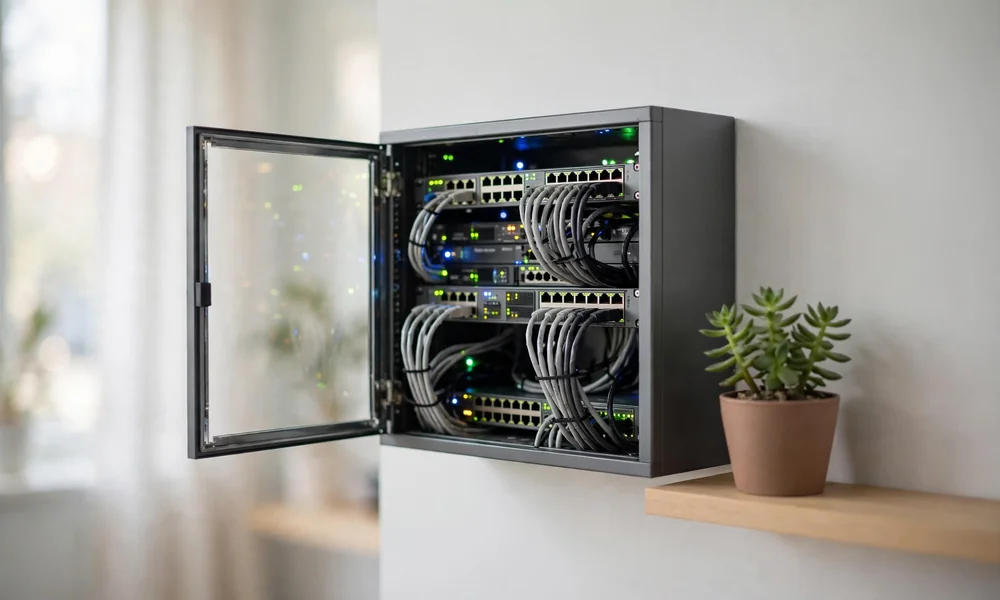
IT Management Software for Small Business Compared
Before the detailed reviews, here is how the eight platforms stack up on the features that matter most to a small business: remote monitoring and management, patch management, automation, help desk, and pricing model.
| Platform | Best for | Remote monitoring | Patch management | Help desk | Pricing model |
|---|---|---|---|---|---|
| Atera | All-in-one simplicity | Yes | Yes | Built in | Per technician, from about $129/month |
| NinjaOne | Endpoint management | Yes | Yes | Add-on | Per device, quote based |
| ManageEngine Endpoint Central | Value and patching | Yes | Yes | Integration | Free to 25 endpoints, paid from about $795/year |
| SolarWinds | Network monitoring depth | Yes | Yes | Separate product | Perpetual and subscription, from about $2,995 |
| ConnectWise RMM | Managed service providers | Yes | Yes | Via ConnectWise PSA | Per device, quote based |
| Datto RMM | Cloud-first monitoring | Yes | Yes | Via Autotask PSA | Subscription, quote based |
| Kaseya VSA | Automation at scale | Yes | Yes | Via BMS | Per endpoint, quote based |
| Spiceworks | Free help desk | Basic | Basic | Built in, free | Free |
1. Atera
Atera is the most complete all-in-one IT management platform for small businesses that want one tool instead of five. It combines remote monitoring and management, patch management, remote access, and a built-in help desk with ticketing, and it charges per technician rather than per device, which makes it unusually affordable once you have more than a handful of computers. A small team with one or two people handling IT can cover an unlimited number of endpoints on a single plan, and that pricing model alone makes Atera worth a serious look.
Setup is genuinely fast. You install a lightweight agent on each Windows or Mac device, and within minutes the dashboard shows hardware details, installed software, disk health, and outstanding patches. The remote access tools are strong, with unattended access, file transfer, and multi-monitor support, and the built-in automation lets you schedule patching, run scripts, and restart services without touching each machine.
The help desk is a genuine strength rather than an afterthought. Tickets arrive by email or through the customer portal, they link automatically to the device and user involved, and service level timers keep response times visible. Reporting covers patch compliance, device health, and technician workload, and the mobile app is good enough to handle urgent alerts away from the desk. On the downside, advanced network monitoring is lighter than dedicated network tools, and very large environments may eventually outgrow it. For a small business, though, Atera is the easiest recommendation on this list: one console, one price, and very little to learn. Pairing it with dedicated cybersecurity software for small business gives a small team strong protection without adding a second full platform to manage.
Atera pros and cons
Pros: per-technician pricing covers unlimited devices; built-in help desk and ticketing; strong remote access; useful AI ticket features; fast setup.
Cons: network monitoring is lighter than specialist tools; reporting is good rather than exceptional.
2. NinjaOne
NinjaOne is a cloud-native endpoint management platform that has become the favourite of IT professionals who manage lots of devices and want everything to feel fast. The console is quick, the interface is clean, and patching, software deployment, and remote access all work with very little friction. If your main problem is keeping dozens of laptops and desktops healthy, updated, and secure, NinjaOne does that job better than almost anything else on this list.
Patch management is the standout feature. NinjaOne handles operating system patches and third-party application updates from the same policy, it can reboot devices on a schedule your team actually accepts, and patch compliance reporting shows exactly which machines are behind and why. Automation is equally strong: you can run scripts on a schedule, auto-remediate common problems such as a stopped service or a full disk, and trigger actions when an alert fires. Remote access is built in, with fast connections, background tools, and file transfer, and the platform covers Windows, Mac, and Linux endpoints as well as mobile devices.
Pricing is per device and quoted rather than published, which means you will need a sales call to get a firm number. That is the main drawback, along with the fact that the help desk and documentation tools are add-ons rather than part of the core product. For a growing small business that expects to add devices steadily, NinjaOne is the platform most likely to still feel right in two years, and its monitoring pairs naturally with employee monitoring software for small business when a team needs visibility into how work devices are used as well as how healthy they are.
NinjaOne pros and cons
Pros: excellent patch management and automation; fast cloud console; strong remote access; supports Windows, Mac, and Linux.
Cons: pricing is quote-only; help desk costs extra; no published starting price.
3. ManageEngine Endpoint Central
ManageEngine Endpoint Central, formerly Desktop Central, is the value champion of IT management software. It offers unified endpoint management for desktops, laptops, servers, and mobile devices, with deep patch management, software deployment, remote control, and asset management, and its free edition covers up to 25 endpoints, which is enough for many small businesses to run it at no cost at all. Paid editions start at around $795 per year, which is far below most competitors for the depth of features included.
Patching is where Endpoint Central earns its reputation. It covers Windows, Mac, and Linux operating systems plus more than 850 third-party applications, it can test patches on a small group before rolling them out, and it enforces patch policies automatically so machines do not drift out of compliance. The remote control tools include remote desktop, file transfer, and chat, and the asset management features track hardware warranties, software licences, and prohibited software.
The trade-off is the learning curve. The interface packs a lot of capability into dense menus, and first-time setup takes longer than Atera or NinjaOne. The cloud edition is simpler to run than the on-premises version, and for a small business without a dedicated IT administrator, the cloud edition is the sensible choice. Mobile device management is included rather than bolted on, which matters if your team uses company phones or tablets. If your budget is tight and your priority is patching and control rather than a polished help desk, Endpoint Central delivers more capability per pound than any other paid platform here.
ManageEngine Endpoint Central pros and cons
Pros: free edition for up to 25 endpoints; outstanding patch coverage; software deployment and asset management included; low paid pricing.
Cons: steeper learning curve; interface feels dense; help desk requires a separate ManageEngine product.
4. SolarWinds
SolarWinds is the established name in network monitoring, and its IT management tools are the deepest on this list when it comes to watching networks, servers, and applications. The flagship product, Network Performance Monitor, maps your network automatically, tracks bandwidth, alerts on device failures, and shows exactly where a slowdown is happening. For a small business with a complex network, a server room, or multiple sites, that visibility is hard to match.
The catch is cost and complexity. Network Performance Monitor starts at around $2,995, and building a full SolarWinds stack with several products gets expensive quickly. The tools also assume a reasonable level of networking knowledge, so a non-technical owner will need help to set them up properly. SolarWinds is best suited to small businesses that already have someone technical on staff or an IT provider managing the network, and it makes the most sense when network uptime is directly tied to revenue. Smaller teams that mainly manage laptops will find Atera or NinjaOne simpler and cheaper, but for network-heavy environments SolarWinds remains the benchmark.
SolarWinds pros and cons
Pros: best-in-class network monitoring and mapping; mature alerting and reporting; strong remote support with Dameware.
Cons: expensive starting price; products sold separately; needs networking knowledge to configure well.
5. ConnectWise RMM
ConnectWise RMM is built for businesses that sell IT support as a service, but it also works well for small companies with an in-house IT team that wants professional-grade automation. It grew out of ConnectWise Automate, one of the longest-running remote monitoring tools in the industry, and it now pairs with ConnectWise PSA for ticketing, billing, and customer management. If you plan to offer IT services to clients, or you simply want the same tooling that managed service providers use, ConnectWise RMM is a serious option.
ConnectWise RMM is not the simplest tool on this list. It assumes the person setting it up knows their way around IT, and the pricing is quote-based per device, so you will need to talk to sales. The interface carries years of accumulated features, which is a strength for power users and a hurdle for beginners. For a small business with a technical lead who wants deep control and plans to grow an IT service offering, it is an excellent long-term choice. For a non-technical owner who just wants devices patched and monitored, Atera or NinjaOne will be easier to live with day to day.
ConnectWise RMM pros and cons
Pros: deep automation and scripting; strong PSA integration; mature monitoring; supports Windows, Mac, and Linux.
Cons: quote-only pricing; complex for non-technical users; best suited to IT providers.
6. Datto RMM
Datto RMM, now part of Kaseya, is a cloud-first remote monitoring and management platform designed for IT teams that manage many endpoints across multiple locations. It runs entirely in the browser, deploys through a lightweight agent, and gives you a clear view of device health, patch status, and security alerts without any on-premises server to maintain. For a small business with remote workers spread across different places, that cloud-first design is a real advantage.
Patch management covers operating systems and third-party applications, with policies that can be tuned per site or per device group. The platform includes ransomware detection, which watches for suspicious encryption activity and can isolate an affected machine automatically, and its remote access tools support unattended sessions, file transfer, and remote command execution. Monitoring is flexible, with hundreds of built-in checks for disk space, services, antivirus status, and hardware health, and alerts can be routed by severity so the urgent problems surface first.
Datto RMM pros and cons
Pros: fully cloud-based with no server to run; built-in ransomware detection; strong patching and monitoring; good Autotask integration.
Cons: quote-only pricing; geared toward IT providers; some features assume multi-client management.
7. Kaseya VSA
Kaseya VSA is a remote monitoring and management platform built around automation, and it sits at the centre of Kaseya’s IT Complete suite of tools. It manages endpoints, servers, and networks from a single console, with patch management, software deployment, remote control, and monitoring, and it connects to sister products for backup, security, documentation, and ticketing. For a small business that expects to grow into a fuller IT stack, VSA is a platform that can grow with it.
Pricing is per endpoint and quoted, and the full IT Complete suite can become expensive if you add many modules. The interface is powerful but takes time to learn, and smaller teams may find the sheer number of features overwhelming at first. VSA makes the most sense for a small business with a technical person who will use its automation properly, or for a company planning to bring IT support in-house as it grows. Used well, it can replace several separate tools and cut the manual work of IT management dramatically.
Kaseya VSA pros and cons
Pros: powerful automation and scripting; part of a broad IT Complete suite; fast remote access; strong monitoring.
Cons: quote-only pricing; learning curve; suite costs add up with extra modules.
8. Spiceworks
Spiceworks takes a different approach from every other platform on this list: its cloud help desk and network inventory tools are free. For a very small business with a handful of employees and a tight budget, Spiceworks gives you a working ticketing system, basic device inventory, and a huge community of IT professionals to learn from, all without spending anything. That makes it the best starting point if you are not yet ready to pay for IT management software.
The limitations are real, though. Remote monitoring is basic compared with dedicated RMM tools, patch management is limited, and there is no proper remote access built in, so you will still need a separate tool to fix a remote machine. The free model is supported by advertising, which some teams find distracting. Spiceworks is best seen as a first step: use it to organise your support requests and inventory while the business is small, then move to Atera, NinjaOne, or ManageEngine Endpoint Central when you need proper patching, automation, and remote access. As a free way to bring order to IT chaos, though, it is hard to beat.
Spiceworks pros and cons
Pros: completely free help desk and inventory; large helpful community; quick to set up.
Cons: basic monitoring; limited patch management; no built-in remote access; ad-supported.
How to Choose IT Management Software for Your Small Business
Start by counting what you actually need to manage. Make a list of every laptop, desktop, server, printer, and mobile device in the business, including the ones people use at home, and check whether each platform you are considering supports all of them. A tool that only covers Windows will not help if half your team uses Macs.
Next, decide how much automation you will genuinely use. Patch management is the single most valuable feature for most small businesses, because unpatched software is the most common way attackers get in, so make sure your shortlist handles both operating system and third-party application patches. Remote access matters just as much if your team works from different locations, since it lets one person fix a problem in minutes instead of waiting for a site visit.
Security features should be part of the decision, not an afterthought. Look for antivirus integration, ransomware detection, and alerting on suspicious activity, and check how the platform handles user access: every person who logs into your IT console should have their own account with multi-factor authentication, and shared admin passwords should be replaced with a proper password manager for small business so credentials are stored securely and can be revoked when someone leaves.
Small Business IT Management Checklist
- Count every device, including remote and home-office machines, before comparing prices.
- Confirm the platform supports all your operating systems: Windows, Mac, and Linux where needed.
- Check that patching covers third-party applications, not just the operating system.
- Test remote access on a real device over a normal home internet connection.
- Make sure every admin account uses multi-factor authentication and individual logins.
- Set up automated alerts for failed patches, low disk space, and antivirus problems.
Frequently Asked Questions
What is IT management software for small business?
IT management software is a platform that lets a small business monitor, update, secure, and support all of its computers and devices from one place. It typically includes remote monitoring, patch management, remote access, asset inventory, and often a help desk, so one person or a small team can look after the whole IT estate without visiting each machine in person.
How much does IT management software cost for a small business?
Costs vary widely. Spiceworks is free, ManageEngine Endpoint Central is free for up to 25 endpoints with paid editions from around $795 per year, and Atera starts at about $129 per technician per month with unlimited devices. NinjaOne, ConnectWise RMM, Datto RMM, and Kaseya VSA are quote-based, so always get a written quote and trial the product first.
Do I need IT management software if I only have five employees?
Yes, even five employees generate enough IT work to justify a tool. Five laptops still need patches, antivirus, backups, and occasional remote fixes, and doing that work manually takes far longer than managing it from a single console. A free or low-cost platform such as Spiceworks or ManageEngine Endpoint Central is a good fit at this size, and you can move to a paid platform as the team grows.
What is the difference between RMM and endpoint management?
Remote monitoring and management, or RMM, is the broader discipline of watching devices, alerting on problems, and fixing them remotely. Endpoint management focuses on the devices themselves: deploying software, enforcing policies, and keeping them patched and compliant. Most modern platforms do both.
Can IT management software replace an IT support company?
For many small businesses, yes, at least for day-to-day work. A good platform automates patching, alerts you to problems, and lets you fix machines remotely, which covers most of what a support company does. You may still want outside help for larger projects such as network design, server setup, or a security audit, but the routine work can usually be handled in-house with the right tool and a little training.
Is cloud-based IT management software safe?
Yes, provided you choose a reputable vendor and secure your own access properly. Cloud platforms encrypt data in transit and at rest, and they are updated and patched by the vendor, which is often more reliable than a small business maintaining its own server. Protect the console with strong passwords, multi-factor authentication, and limited admin rights.
The Bottom Line
For most small businesses in 2027, Atera is the best overall choice: it combines remote monitoring, patching, remote access, and a help desk in one simple per-technician plan that covers unlimited devices. NinjaOne is the strongest pick if endpoint management and automation are your top priorities, and ManageEngine Endpoint Central is the best value, with a genuinely useful free edition and deep patching at a low price. Spiceworks is the right free starting point for the smallest teams. Whichever platform you choose, trial it on your own devices, check the true cost at the size you expect to be in two years, and make patching and remote access your first tests, because those two features will save your team the most time every single week.